2026 Amethyst Tennis Necklace Value Guide: Pricing & Quality
Discover the true value of an amethyst tennis necklace in 2026. Compare natural vs. lab-grown stones, metal costs, and expert pricing benchmarks.

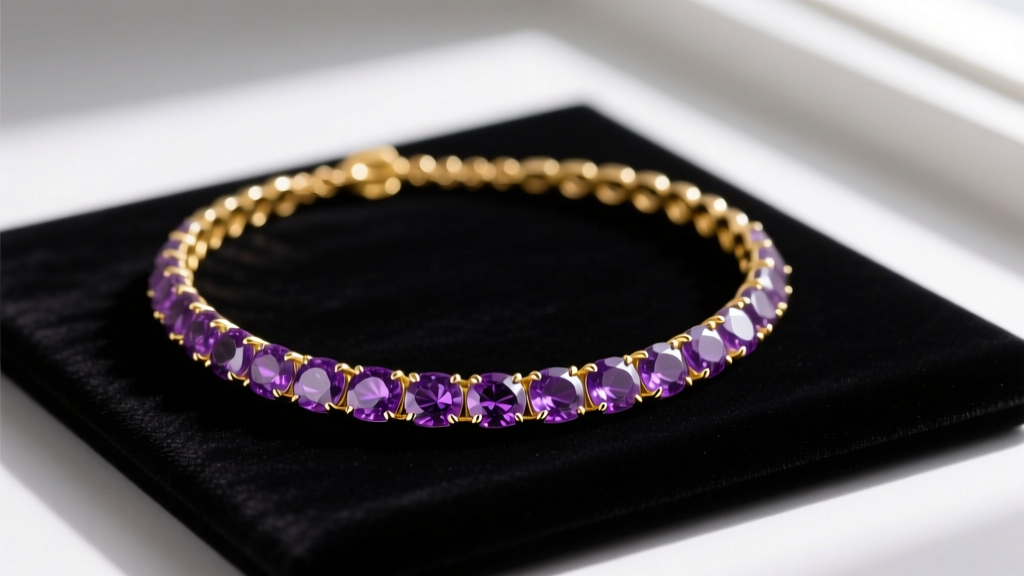
The Anatomy of Amethyst Tennis Necklace Pricing
Evaluating the true market value of an amethyst tennis necklace requires looking far beyond the initial price tag. As we navigate the 2026 fine jewelry market, the gap between mass-produced commercial pieces and heirloom-quality craftsmanship has widened significantly. A tennis necklace is defined by its continuous, symmetrical line of identically sized gemstones. When those stones are amethyst, the pricing variables multiply based on geographic origin, color saturation, cut precision, and the structural integrity of the metalwork.
Unlike diamond tennis necklaces, where carat weight is the primary driver of cost, amethyst is a semi-precious quartz variety that remains relatively abundant. Therefore, the value of an amethyst tennis necklace is heavily weighted toward the quality of the cut, the uniformity of the color matching across dozens of individual stones, and the durability of the setting. According to GIA's Amethyst Quality Factors, the most prized amethysts possess a strong reddish-purple or dark purple color with no visible color zoning. Finding 40 to 60 perfectly matched, eye-clean stones of this caliber for a single necklace commands a premium that separates a $300 accessory from a $3,000 investment piece.
Natural vs. Lab-Created Amethyst: A 2026 Cost Comparison
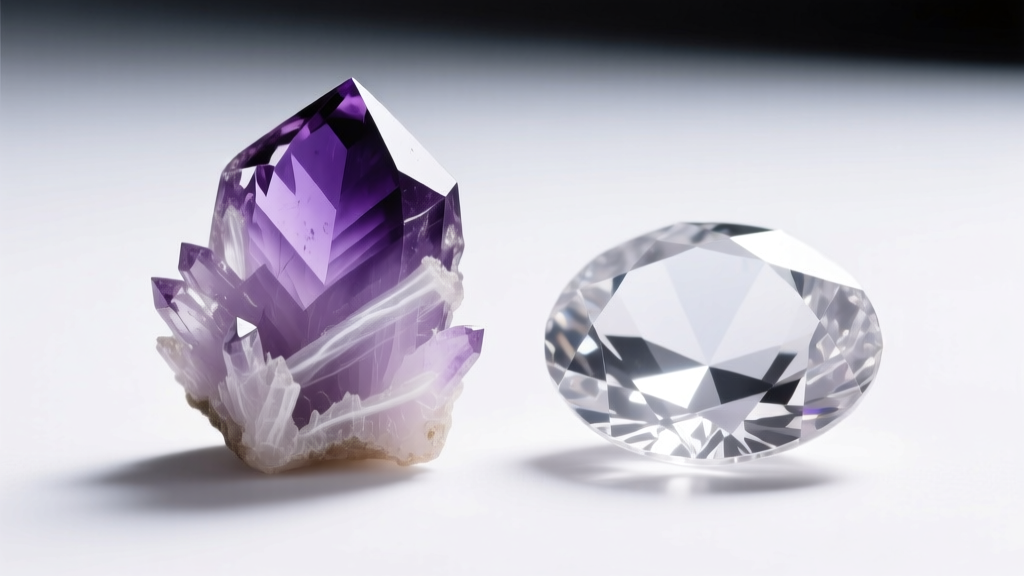
The most significant budget decision you will make is choosing between natural, earth-mined amethyst and lab-created alternatives. Hydrothermal synthesis has advanced to the point where lab-grown amethyst is chemically and optically identical to natural quartz, but the pricing structures are vastly different.
| Feature | Natural Amethyst (Uruguayan/Siberian) | Lab-Created (Hydrothermal) |
|---|---|---|
| Price per Carat (Calibrated) | $15 - $45+ | $2 - $8 |
| Color Uniformity | Requires expert matching; slight zoning possible | Flawless, 100% uniform across all stones |
| Inclusions | Often contains tiger-eye inclusions or silk | Generally eye-clean, may have seed plate remnants |
| Long-Term Value Retention | Moderate (highly dependent on metal and brand) | Low (commodity pricing, no rarity premium) |
| Ideal For | Heirloom pieces, collectors, fine jewelry investors | Fashion-forward buyers, strict budget constraints |
If you are purchasing an amethyst tennis necklace strictly for its visual impact and plan to wear it as a fashion statement, a lab-created stone set in sterling silver offers undeniable value. However, if you are seeking a piece with intrinsic gemological value, natural Siberian amethyst—which exhibits highly sought-after flashes of red and blue under direct lighting—is the only path forward.
Metal Choices and Their Impact on Long-Term Value
The metal framework of a tennis necklace dictates not only its upfront cost but its long-term wearability and maintenance budget. Because a standard 16-inch tennis necklace requires anywhere from 45 to 65 individual settings, the metal weight adds up quickly.
Sterling Silver and the Rhodium Factor
Sterling silver (925) is the most common metal for budget amethyst tennis necklaces, typically priced between $200 and $600. However, raw silver tarnishes and lacks the bright white luster of platinum or white gold. To solve this, manufacturers apply a rhodium flash plating. The hidden cost here is maintenance: rhodium plating on a high-friction item like a necklace will wear off within 12 to 18 months of daily wear, requiring professional replating that costs $60 to $120 per session. When assessing a silver tennis necklace's value, factor in this recurring maintenance cost.
14k Gold: The Sweet Spot for Durability
A 14k gold amethyst tennis necklace represents the optimal intersection of luxury and durability. Priced generally between $1,800 and $4,500 (depending on total carat weight), 14k gold provides the necessary tensile strength to hold prongs securely over decades of wear. Unlike 18k gold, which is slightly softer, or 10k gold, which can become brittle, 14k gold withstands the micro-impacts of daily wear without compromising the structural integrity of the setting.
Prong Setting Durability: Where Budget Pieces Fail
The most common point of catastrophic failure in budget-friendly tennis necklaces is the prong setting. In mass-produced, cast-in-place sterling silver or low-karat gold pieces, the prongs are often thin and porous due to rapid cooling during the casting process.
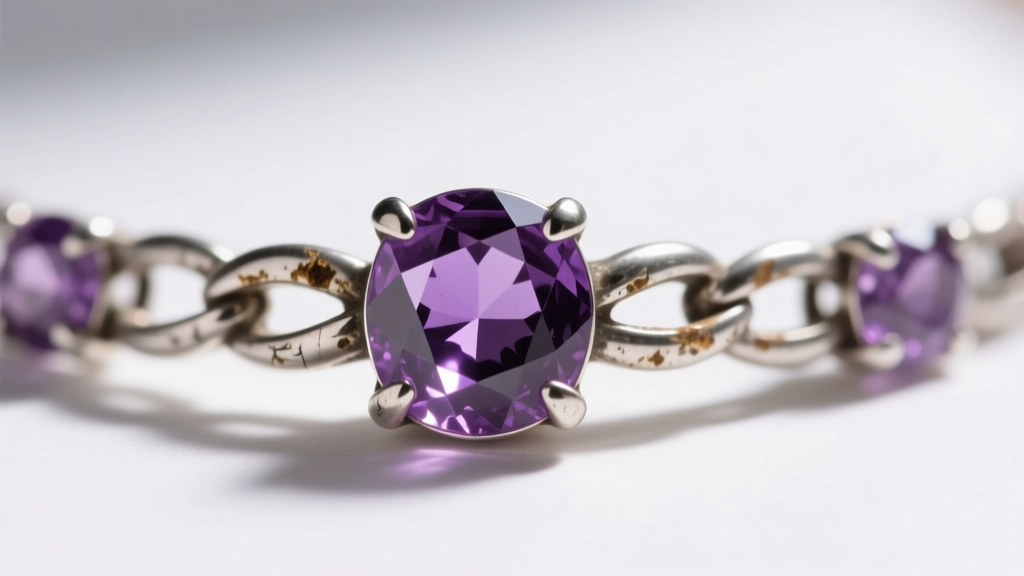
Over time, the natural malleability of silver causes these thin prongs to bend outward when snagged on clothing, leading to stone loss. A high-value amethyst tennis necklace will feature hand-tipped or die-struck settings where the metal is compressed, increasing its density and hardness. When inspecting a piece, use a jeweler's loupe to check the prong thickness. Prongs should be at least 0.8mm wide at the tip and smoothly burnished over the girdle of the stone without excessive metal covering the crown facets.
2026 Market Benchmarks: What You Should Actually Pay
To help you navigate the current market, we have categorized the expected pricing tiers for a standard 16-inch to 18-inch amethyst tennis necklace (approximately 15 to 25 total carats) in 2026. Use these benchmarks to identify overpriced fashion jewelry or suspiciously underpriced pieces that likely feature glass or synthetic spinel instead of true quartz.
- Entry-Level / Fashion ($150 - $400): Lab-created or heavily included Bahian amethyst, set in rhodium-plated sterling silver or gold vermeil. Stones are often glued or set with extremely thin cast prongs. Expect a lobster clasp, which is a structural weak point for heavier necklaces.
- Mid-Tier / Fine Jewelry ($800 - $2,200): Natural Uruguayan amethyst with good color saturation, set in solid 10k or 14k gold (yellow, white, or rose). Features properly calibrated 4mm or 5mm round brilliant cuts. Should include a secure box clasp with at least one figure-eight safety catch.
- Luxury / Collector ($3,000 - $6,500+): Top-tier natural Siberian amethyst displaying the coveted reddish-purple secondary hues. Set in 18k gold or platinum with hand-finished, six-prong settings. Stones are custom-cut for maximum light return rather than being standard calibrated sizes. Includes a double-safety box clasp and hidden hinges for fluid drape.
How to Authenticate and Assess Amethyst Quality
When evaluating an amethyst tennis necklace in person or reviewing high-resolution vendor imagery, you must scrutinize the stones for specific gemological traits that dictate value. As noted in the GIA's Amethyst Overview, color is the paramount quality factor, but cut and clarity play vital roles in a multi-stone piece.
Spotting Windowing and Extinction
Because tennis necklaces require dozens of identically sized stones, cutters often prioritize carat weight retention over optical precision. This results in "windowing"—a phenomenon where the pavilion of the stone is cut too shallow, causing light to leak out the bottom rather than reflecting back to the eye. When you look straight down at the stones in the necklace, a windowed stone will look washed out or transparent in the center, revealing the skin or clothing beneath it. Conversely, "extinction" occurs when a stone is cut too deeply, creating a dark, lifeless black void in the center. High-value necklaces feature stones with a balanced cut that ensures edge-to-edge brilliance.
The Importance of Calibration and Hinges
A true luxury tennis necklace is not just a string of stones; it is an engineered piece of mechanics. The stones must be perfectly calibrated (e.g., exactly 4.00mm +/- 0.05mm). If the calibration is poor, the necklace will kink, twist, and lay unevenly against the collarbone. Furthermore, premium pieces incorporate micro-hinges between every 5 to 10 stones, allowing the necklace to articulate and drape fluidly like a ribbon rather than sitting rigidly like a plastic collar.
The Verdict: When budgeting for an amethyst tennis necklace, do not pay luxury prices for commercial-grade silver settings, and do not expect investment returns on lab-created stones. The true value lies in natural, deeply saturated Uruguayan or Siberian stones, precisely calibrated and secured in solid 14k gold with a reinforced box clasp. Assess the engineering of the piece just as critically as the color of the gems.


