Expert Care Guide: Cleaning Your Purple Gold Necklace
Discover expert care, cleaning, and storage tips for your purple gold necklace. Learn how to protect this brittle 18k intermetallic alloy from damage.

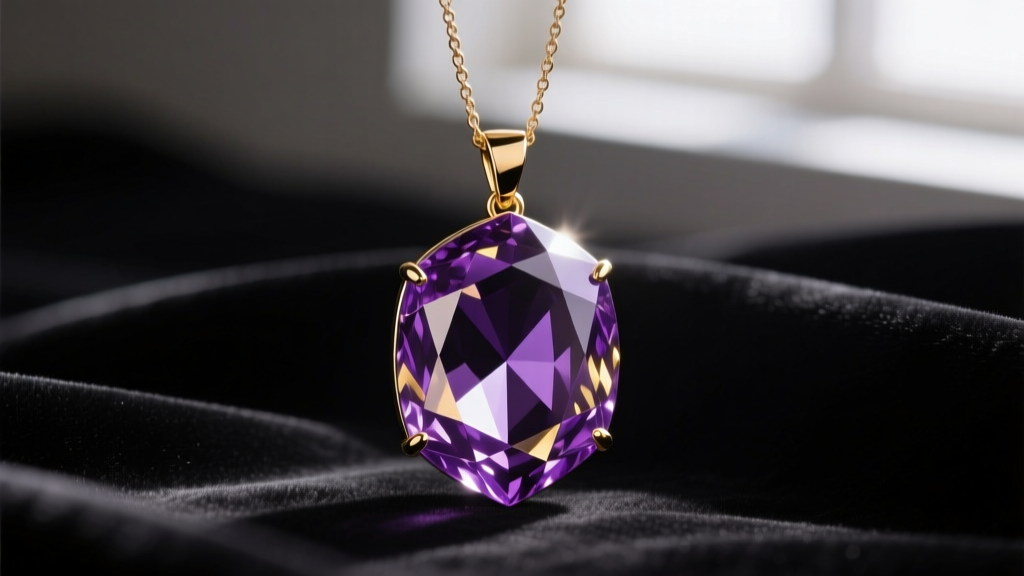
Owning a purple gold necklace is a statement of exclusivity and metallurgical fascination. Unlike traditional yellow, white, or rose gold, purple gold (often referred to as amethyst gold) is not a standard alloy but an intermetallic compound. Its striking violet hue and unique light-reflecting properties make it a highly coveted centerpiece in fine jewelry. However, this unique atomic structure also means that standard jewelry care practices can be catastrophic for your piece. To maintain the structural integrity and vibrant color of your purple gold necklace, you must adopt a specialized care, maintenance, and cleaning regimen tailored to its specific material science.
The Metallurgy of Purple Gold: Why It Needs Special Care
To understand how to clean and protect your necklace, you must first understand what it is made of. Purple gold is an intermetallic compound composed of approximately 79% pure gold and 21% aluminum, which classifies it as 18-karat gold. According to the Gemological Institute of America (GIA), while traditional gold alloys mix metals in a solid solution that allows for malleability and ductility, intermetallic compounds like AuAl2 form a rigid, highly ordered crystal lattice.
This specific crystalline structure gives purple gold its beautiful color but results in extreme brittleness. On the Vickers hardness scale, purple gold is harder than 18k yellow gold, but its fracture toughness is remarkably low. In practical terms, this means your purple gold necklace behaves more like glass or ceramic than traditional metal. A hard impact against a granite countertop or excessive bending tension on the chain can cause the purple gold elements to shatter, chip, or develop micro-fractures. Furthermore, the aluminum content makes the material highly reactive to alkaline substances and certain chemicals that are typically deemed safe for standard gold jewelry.
Daily Wear Precautions for Amethyst Gold
Preventative maintenance is the most critical aspect of caring for a purple gold necklace. Because the material lacks the tensile strength of standard gold alloys, how and when you wear it dictates its lifespan.
- Avoid Impact and Tension: Never wear your purple gold necklace during physical activities, gym sessions, or manual labor. The pendant is highly susceptible to shattering upon impact, and the chain links (if made of purple gold) can snap under sudden tension.
- Chemical Exposure: The aluminum in the AuAl2 compound is reactive. Apply all perfumes, hairsprays, lotions, and cosmetics at least 15 minutes before putting on your necklace. The alcohols and volatile organic compounds (VOCs) in cosmetics can cause surface dulling over time.
- Perspiration and pH Levels: Human sweat is mildly acidic, but the breakdown of urea in sweat can produce ammonia over time. Ammonia induces stress corrosion cracking in aluminum-bearing alloys. Always remove your necklace before exercising or entering a sauna.
Step-by-Step Cleaning Protocol
When your purple gold necklace loses its luster due to natural skin oils and environmental dust, it requires a gentle, highly controlled cleaning process. Never use commercial jewelry dips, polishing cloths infused with abrasive compounds, or mechanical cleaners.
What You Will Need
- Distilled water (tap water contains chlorine and minerals that can react with aluminum)
- pH-neutral, phosphate-free dish soap (e.g., a mild, clear liquid soap with a pH of exactly 7.0)
- Ultra-soft microfiber cloths (lint-free)
- A soft-bristled makeup brush (such as a clean, unused goat-hair blending brush)
- White cotton gloves
The Washing Technique
- Prepare the Solution: In a glass bowl, mix one cup of room-temperature distilled water with two drops of the pH-neutral soap. Do not use warm or hot water, as thermal shock can exacerbate existing micro-fractures in the brittle intermetallic lattice.
- Surface Dusting: Before introducing moisture, gently brush the necklace with the dry, soft-bristled makeup brush to remove loose particulate matter. Rubbing dust into the surface can cause microscopic scratching.
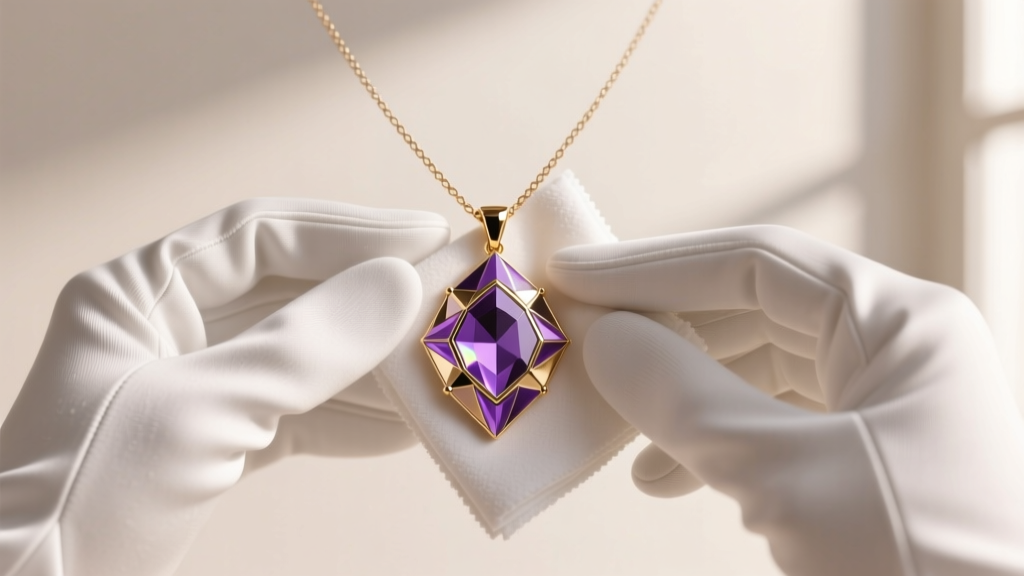
- Gentle Cleansing: Put on your white cotton gloves to prevent transferring new oils to the piece. Dip a corner of the microfiber cloth into the soapy distilled water and wring it out until it is barely damp. Gently dab and wipe the purple gold elements. Do not scrub.
- Rinsing: Dampen a fresh microfiber cloth with pure distilled water and wipe away any soap residue. Again, avoid submerging the piece if it features porous gemstone inlays or adhesive settings.
- Drying: Pat the necklace completely dry with a fresh, dry microfiber cloth. Allow it to air dry in a low-humidity room for 30 minutes before storage.
The Danger Zone: Cleaners and Tools to Avoid
The most common way owners destroy their purple gold jewelry is by treating it like standard 18k yellow or white gold. The Jewelers of America frequently warns against using generic cleaning methods on specialized alloys. Below is a breakdown of common cleaning agents and their devastating effects on purple gold.
| Cleaning Agent / Tool | Chemical / Physical Action | Result on Purple Gold (AuAl2) |
|---|---|---|
| Ultrasonic Cleaners | High-frequency cavitation bubbles create microscopic shockwaves in the liquid. | Causes immediate micro-fractures or complete shattering due to low fracture toughness. |
| Baking Soda Pastes | Sodium bicarbonate is highly alkaline (pH ~9). | Alkaline corrosion eats away at the aluminum matrix, leaving a pitted, grey surface. |
| Ammonia-Based Dips | Ammonia reacts aggressively with aluminum and copper-bearing alloys. | Triggers stress corrosion cracking, leading to structural failure and color loss. |
| Steam Cleaners | High-pressure, high-temperature steam jets. | Thermal shock and pressure can snap brittle settings and fracture the intermetallic compound. |
| Silver Polishing Cloths | Impregnated with mild abrasives and anti-tarnish chemicals. | Scratches the surface and strips the polished finish, leaving a dull, matte appearance. |
Proper Storage to Prevent Micro-Fractures
How you store your purple gold necklace is just as important as how you clean it. Because the material is brittle, it must be protected from compressive forces, tangling, and environmental humidity.
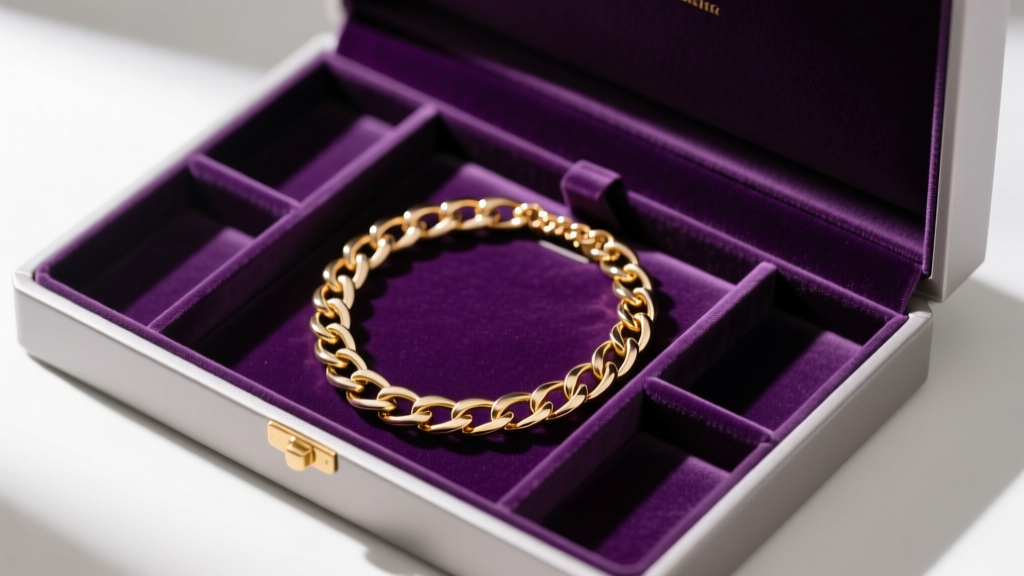
- Use Hard-Shell Compartments: Never toss your necklace into a soft jewelry pouch where it can be crushed by heavier items. Store it in a hard-shell, velvet-lined jewelry box with individual compartments.
- Prevent Chain Tangling: If the chain becomes tangled, the tension required to pull the knots apart can easily snap a purple gold link or fracture the pendant's bail. Fasten the clasp and lay the necklace flat in a dedicated, wide compartment.
- Humidity Control: While gold does not tarnish, the aluminum in purple gold can oxidize in high-humidity environments, leading to a dull, chalky white film on the surface. Store your jewelry box in a climate-controlled room and consider placing a silica gel desiccant packet inside the storage compartment to maintain a dry micro-environment.
Professional Maintenance and Re-polishing
Even with meticulous home care, your purple gold necklace may eventually require professional attention to restore its mirror finish or repair a damaged clasp. When seeking a jeweler, you must verify their expertise with intermetallic compounds.
Standard jewelry repair involves using a torch and solder to fuse broken links or reattach settings. However, applying heat to purple gold destroys the AuAl2 crystal lattice. If a jeweler attempts to solder purple gold, the material will melt into a dull, brownish-grey sludge, permanently ruining the piece and its color. According to materials science research indexed by ScienceDirect, intermetallics cannot be traditionally cast or soldered. Any structural repairs to a purple gold necklace must be performed using specialized laser welding techniques, which apply highly localized, micro-second bursts of heat that do not compromise the surrounding crystal structure. Re-polishing must be done with specialized, non-abrasive rouge compounds designed specifically for aluminum-gold matrices. Always request a consultation and ask the jeweler to detail their exact methodology for handling intermetallic gold before handing over your necklace.


