The Red Bandana Necklace: Enamel, Beadwork & Hardware Guide
Explore the technical construction of the red bandana necklace. We break down enamel techniques, beadwork grades, and hardware for streetwear styles.

The Evolution of the Bandana Motif in Jewelry
The red bandana necklace has transcended its roots as a simple streetwear and Western heritage accessory to become a staple in contemporary jewelry design. While the literal cotton bandana tied around the neck remains a cultural touchstone, modern jewelers have translated the iconic crimson and white paisley motif into high-end enamel pendants, intricate seed beadwork, and mixed-media hardware pieces. Understanding the technical construction of these variations is crucial for both designers and collectors who demand durability, colorfastness, and structural integrity in their neckwear.
In this deep dive, we examine the material grades, manufacturing techniques, and hardware specifications that separate a premium red bandana necklace from a fast-fashion novelty. Whether you are evaluating a vitreous enamel pendant or a loom-woven beaded choker, the devil is in the microscopic details.
Technical Breakdown: Enamel and Metal Pendants
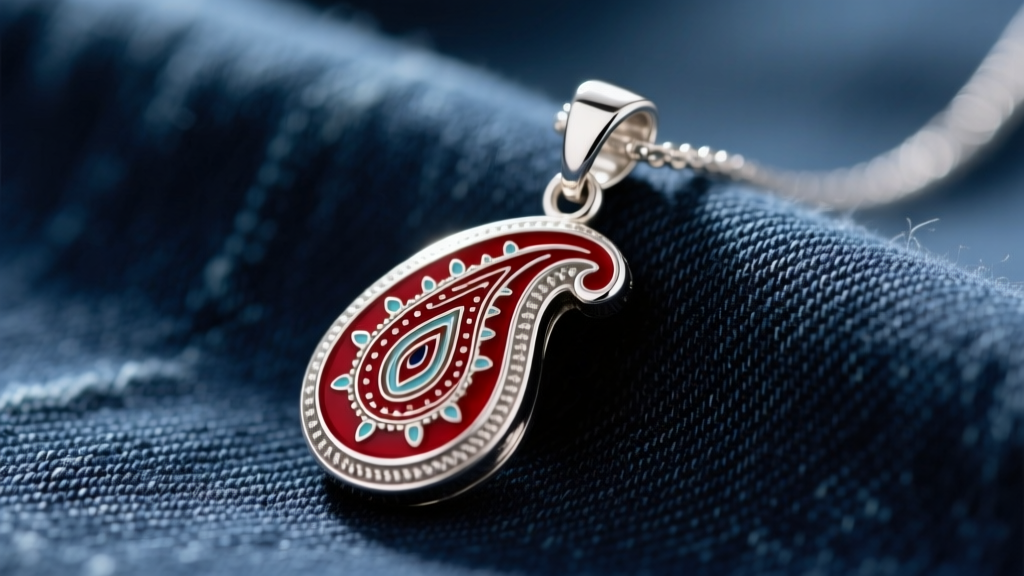
The most common fine jewelry interpretation of the red bandana necklace is a metal pendant featuring the classic paisley pattern rendered in enamel. The quality of these pieces depends entirely on the enameling technique and the base metal preparation.
Champlevé vs. Cloisonné Enameling
High-end bandana pendants typically utilize the champlevé technique. According to The Enamelists Society, champlevé involves carving or etching troughs into a thick metal base (usually 1.2mm to 1.5mm sterling silver or brass) and filling those recesses with vitreous enamel powder. The piece is then fired in a kiln at temperatures between 1400°F and 1600°F. This creates a deep, opaque crimson background that is highly resistant to scratching and UV fading.
In contrast, cheaper alternatives use cold enamel (epoxy resin). While cold enamel can mimic the bright cherry red of a traditional bandana, it lacks the glass-like hardness of vitreous enamel. Over time, epoxy resins will yellow, chip, and degrade when exposed to the oils and acids present on human skin. When sourcing a red bandana necklace, always verify that the piece uses kiln-fired vitreous enamel.
Base Metal and Plating Specifications
If the pendant base is brass rather than sterling silver, it must undergo rigorous surface treatment. Raw brass will oxidize and leach copper, turning the wearer's skin green. Premium manufacturers apply a PVD (Physical Vapor Deposition) coating or a rhodium flash over a nickel barrier layer to ensure the antique silver or blackened finish remains stable against the neck's moisture.
Beaded Variations: Seed Beads and Loom Work
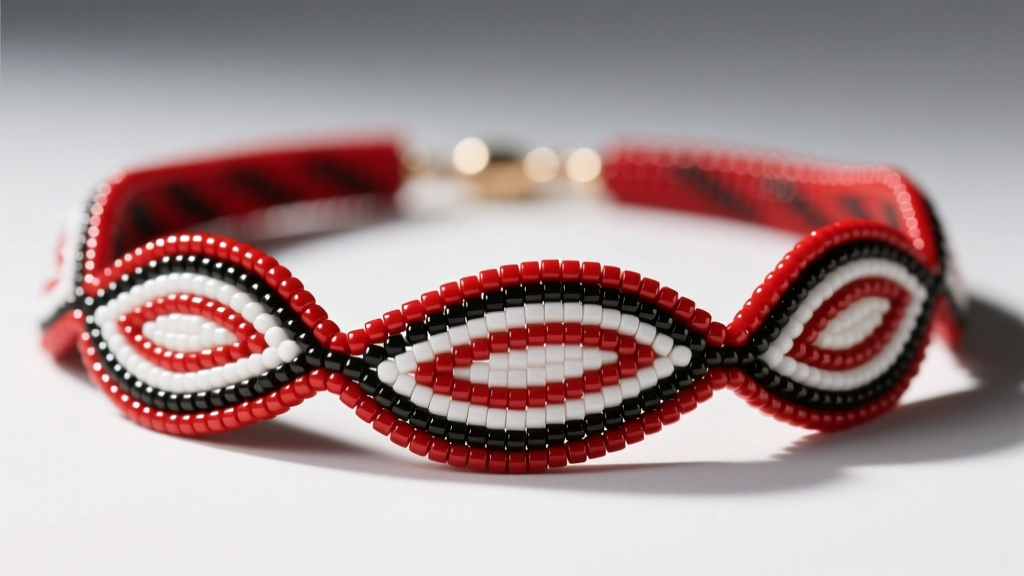
For a more textured, artisanal approach, the red bandana necklace is frequently rendered in seed beadwork. This requires precision weaving to capture the intricate curves of the paisley motif without distorting the pattern.
Material Grades: Miyuki Delica vs. Czech Glass
The structural integrity of a beaded bandana necklace relies on the uniformity of the beads. The industry standard for flat weave patterns is the Miyuki Delica or Toho Treasure bead. Unlike round seed beads, these are precision-cut cylinders that snap together like bricks, creating a flat, fabric-like drape that mimics actual textiles.
According to the Fire Mountain Gems Encyclopedia, using size 11/0 cylinder beads (measuring exactly 1.6mm x 1.3mm) allows for high-resolution patterning. The classic bandana palette requires opaque crimson red (e.g., DB-0031), opaque white (DB-0010), and jet black for the outline details. Cheaper alternatives use Czech glass round beads, which result in a bumpy, uneven surface that fails to capture the sharp geometry of the paisley teardrops.
| Bead Type | Shape Profile | Size (11/0) | Pattern Resolution | Avg. Price (per 5g) |
|---|---|---|---|---|
| Miyuki Delica | Precision Cylinder | 1.6mm x 1.3mm | Ultra-High (Flat Weave) | $1.80 - $2.50 |
| Toho Treasure | Precision Cylinder | 1.6mm x 1.3mm | Ultra-High (Flat Weave) | $1.70 - $2.40 |
| Czech Charlotte | Round w/ Single Cut | 1.5mm (varies) | Low (Textured/Bumpy) | $0.90 - $1.20 |
| Standard Round Seed | Sphere | 1.8mm (varies) | Medium (Peyote Stitch) | $0.60 - $0.80 |
Thread and Tension Management
A beaded red bandana necklace must be woven using a high-tensile, UV-resistant thread. Wildfire or FireLine (6lb test, 0.008 inch diameter) are the preferred choices. These thermally fused, braided polyethylene threads do not stretch, ensuring the beadwork maintains its structural tension and does not sag when worn as a choker or princess-length necklace.
Fabric and Hardware Integration (The Literal Bandana)
When styling an actual fabric bandana as a necklace or choker, the technical challenge lies in securing the cotton without fraying the edges or relying on bulky, unsightly knots. Standard bandanas are woven from 100% cotton voile with a 68x68 thread count, measuring 22x22 inches. This lightweight fabric requires specialized jewelry findings to function as a secure necklace.
Slide Clasps and Cord Ends
To convert a rolled cotton bandana into a secure choker, jewelers utilize sterling silver or brass slide beads (also known as cord ends or tube clasps). A 5mm inner diameter slide bead allows the tightly rolled cotton voile to pass through while gripping it via an internal silicone O-ring. This eliminates the need to pierce or glue the fabric.
For the termination points, heavy-duty jump rings are mandatory. The Gemological Institute of America (GIA) notes that structural failure in mixed-media jewelry most commonly occurs at the clasp connection. Use 18-gauge (1.0mm) stainless steel or sterling silver jump rings with a 5mm outer diameter. Soldered jump rings are highly recommended to prevent the ring from pulling apart under the 30-to-50-gram dynamic weight of a knotted bandana.

Knotting Techniques for Neckwear
If hardware is not used, the knot itself becomes the structural focal point. The Lark's Head knot (or cow hitch) is superior to the standard square knot for bandana necklaces. It distributes tension evenly across the width of the rolled fabric, preventing the cotton from twisting and unraveling throughout the day. For a secure, non-slip finish, a micro-drop of flexible fabric glue (such as Jewel-Tac) applied to the inner tail of the knot will lock the fibers without staining the visible red dye.
Care and Maintenance for Mixed Media
Maintaining a red bandana necklace requires specific protocols depending on its construction:
- Vitreous Enamel Pendants: Avoid thermal shock. Do not wear the necklace in saunas or plunge pools, as rapid temperature shifts can cause the glass enamel to craze or crack away from the metal base.
- Seed Beadwork: Store flat in a dark, climate-controlled environment. Prolonged UV exposure can fade galvanized or dyed red seed beads, turning the vibrant crimson into a dull pink.
- Cotton Fabric: Hand wash the bandana in cold water with a pH-neutral detergent before attaching any metal hardware. This removes excess dye and prevents the red pigment from bleeding onto the wearer's skin or tarnishing the silver findings.
Conclusion
Whether executed in kiln-fired champlevé enamel, precision-loomed Miyuki Delica beads, or raw cotton voile anchored by 18-gauge soldered hardware, the red bandana necklace is a masterclass in mixed-media jewelry construction. By understanding the material grades and structural requirements outlined above, collectors and designers can ensure their pieces are not just visually striking, but engineered to withstand the rigors of daily wear.