Genuine Tiger Eye Beaded Necklace: Material Properties & Fakes
Discover how to authenticate a tiger eye beaded necklace. We compare genuine quartz properties against glass and dyed agate imitations.
The Pseudomorphic Origins of Tiger Eye
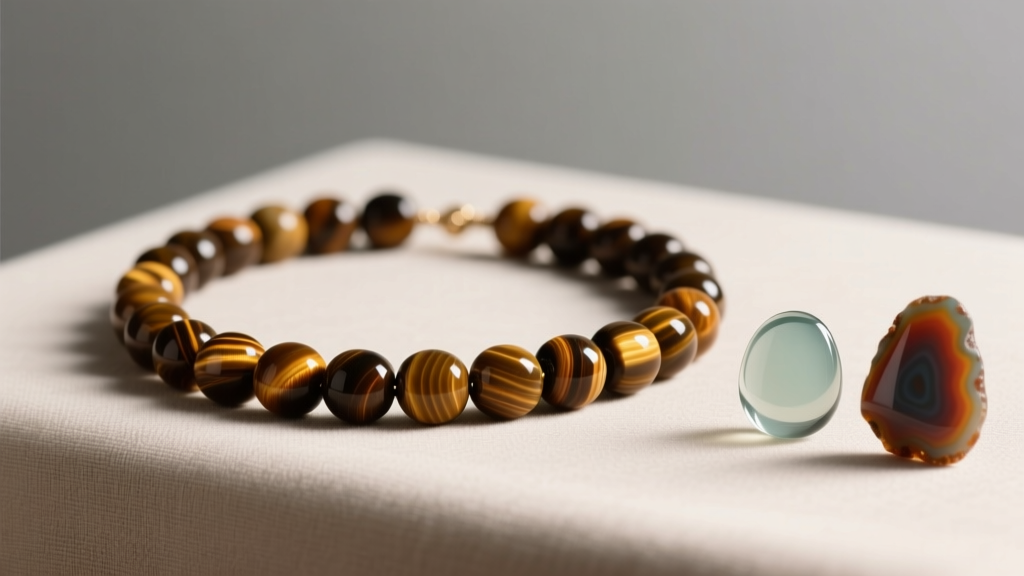
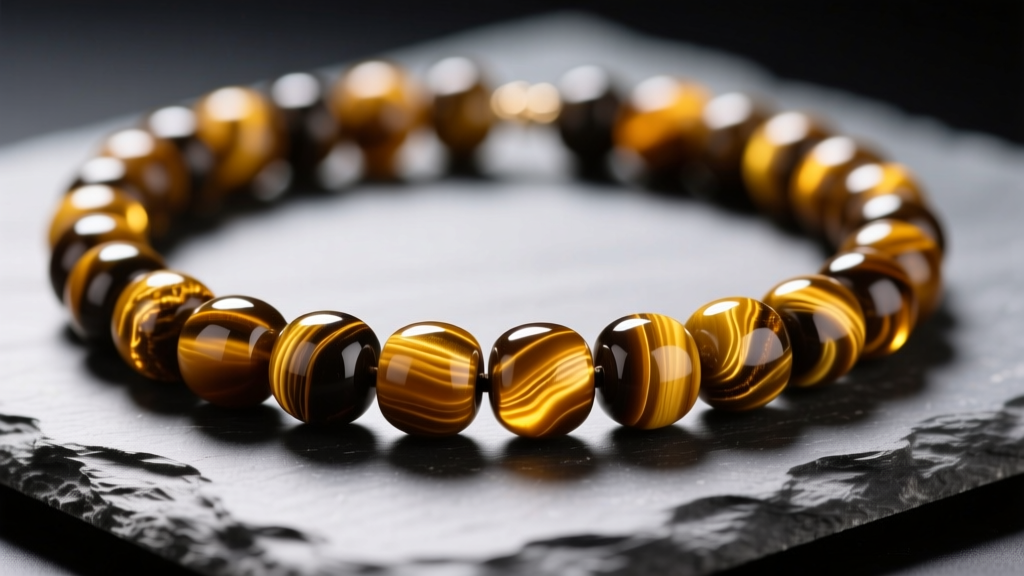
A genuine tiger eye beaded necklace is more than just a striking fashion accessory; it is a geological marvel. Tiger eye is a pseudomorph—a mineral that has taken the external form of another mineral. In this case, it begins as crocidolite, a fibrous blue asbestos mineral. Over millions of years, silica-rich groundwater permeates the crocidolite, replacing the asbestos fibers with quartz while perfectly preserving the original fibrous structure. The iconic golden-brown hue is the result of iron oxidation (specifically limonite) within these microscopic fibers. Understanding this complex formation is critical when evaluating the material properties of any tiger eye beaded necklace, as this fibrous architecture dictates both its optical phenomena and its physical vulnerabilities.
According to the Mindat.org Quartz Database, tiger eye registers a 7 on the Mohs hardness scale, making it highly resistant to everyday scratching. However, its specific gravity (SG) ranges from 2.64 to 2.71, meaning it is significantly denser and heavier than organic gems or synthetic resins. This density directly impacts how a tiger eye beaded necklace must be engineered and strung to withstand long-term wear without structural failure.
Material Showdown: Genuine vs. Common Imitations
As of 2026, the global gemstone market has seen a massive influx of highly deceptive simulants. While traditional fakes were easy to spot, modern manufacturing has produced glass composites and pressure-dyed agates that mimic the banded appearance of tiger eye. To protect your investment, it is essential to compare the physical properties of genuine tiger eye against the most common market alternatives.

| Material | Mohs Hardness | Chatoyancy Type | Specific Gravity | Avg. Price (8mm Strand) |
|---|---|---|---|---|
| Genuine Tiger Eye | 7.0 | Fibrous, undulating | 2.64 - 2.71 | $15 - $45 |
| Dyed Agate | 6.5 - 7.0 | None (banded only) | 2.60 - 2.65 | $8 - $18 |
| Chatoyant Glass | 5.5 - 6.0 | Single sharp line | 2.80 - 3.20 | $3 - $10 |
| Resin / Plastic | 2.0 - 3.0 | Printed / None | 1.05 - 1.20 | $1 - $5 |
The 'Red Tiger Eye' Myth
One of the most pervasive material misrepresentations in the beaded jewelry market is 'red tiger eye.' Genuine tiger eye does not occur in deep red hues. What is frequently sold as red tiger eye is actually standard agate that has been heat-treated and pressure-dyed with iron salts. While agate shares a similar chemical composition (SiO2) and hardness to tiger eye, it completely lacks the parallel fibrous structure required to produce chatoyancy—the shimmering 'cat's eye' effect. If a red beaded necklace lacks this distinct optical phenomenon, it is definitively dyed agate, not tiger eye.
The Threat of Fiber-Optic Glass
Modern chatoyant glass, often manufactured using bundled fiber-optic strands encased in lead glass, poses the biggest challenge for buyers. Unlike genuine tiger eye, where the 'eye' shifts and undulates organically as the bead rotates due to natural irregularities in the crocidolite fibers, glass composites produce a rigid, perfectly straight, and static line of light. Furthermore, glass lacks the crystalline structure of quartz, making it susceptible to micro-fractures and thermal shock.
Non-Destructive Authentication Tests
Before restringing or wearing a vintage tiger eye beaded necklace, you can perform several non-destructive tests to verify its material authenticity. The Gemological Institute of America (GIA) recommends relying on optical and thermal properties rather than destructive scratch tests.
- Thermal Conductivity Test: Genuine quartz has a high thermal inertia. When you press a tiger eye bead against your lower lip or the inside of your wrist, it should feel distinctly cool and take several seconds to warm to your body temperature. Glass and resin simulants will feel warm almost immediately upon contact.
- Magnification Inspection: Using a 10x jeweler's loupe, examine the surface and drill holes of the beads. Genuine tiger eye will reveal parallel, fibrous inclusions and natural color banding that fades organically. Glass imitations will often reveal tiny, spherical air bubbles trapped near the drill hole, or a 'swirl' pattern indicative of molten cooling.
- Specific Gravity Water Displacement: If you have a loose strand, weigh it dry, then weigh it suspended in water. Divide the dry weight by the difference between the dry and wet weights. Genuine tiger eye will consistently yield a ratio between 2.64 and 2.71. Resin beads will float or yield a ratio near 1.1.
Structural Engineering: Stringing Heavy Quartz
The most common point of failure in a tiger eye beaded necklace is not the stone itself, but the stringing material. Because tiger eye is a dense macrocrystalline quartz, a standard 18-inch necklace featuring 8mm beads contains approximately 55 beads and weighs roughly 75 grams. If the bead diameter increases to 12mm, the weight can easily exceed 130 grams. This concentrated kinetic mass creates severe friction at the drill holes and immense tension on the stringing core.
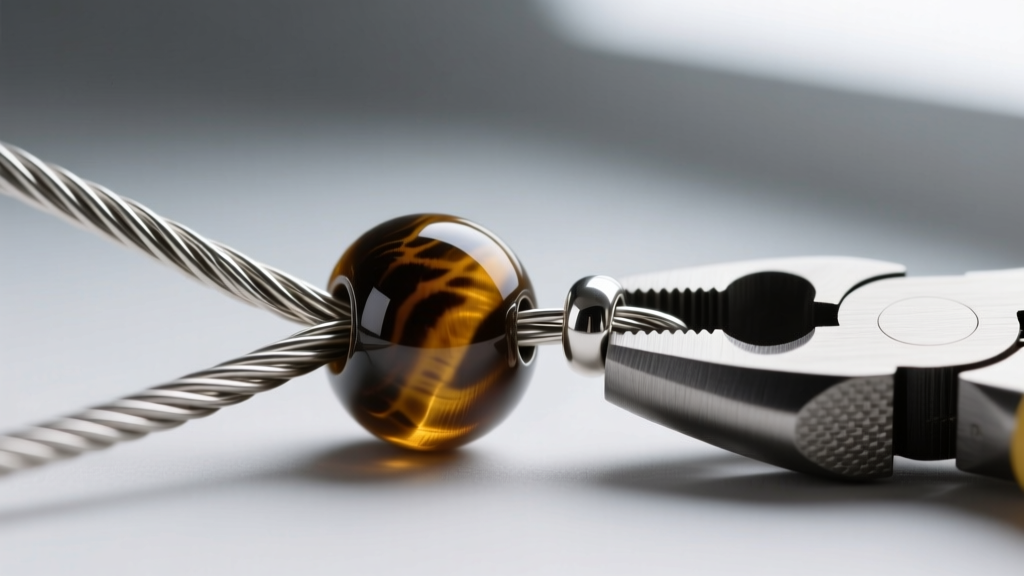
Historically, silk thread was the standard for knotted pearl and stone necklaces. However, silk is highly susceptible to degradation from ambient humidity, cosmetics, and the microscopic sharp edges left inside poorly drilled quartz beads. For modern tiger eye beaded necklaces, professional jewelers exclusively recommend micro-fused stainless steel beading wire.
Expert Specification: For 8mm to 10mm tiger eye beads, use a 49-strand stainless steel beading wire (such as Soft Flex 0.018-inch diameter). The 49-strand construction provides the necessary drape and flexibility to lay flat against the collarbone, while the nylon coating prevents the quartz edges from shearing the steel core. Always secure the wire with sterling silver or gold-filled crimp beads, flattened with a micro-crimping tool to fold the metal securely around the wire.
Bead Diameter and Ergonomic Weight Limits
When selecting or designing a tiger eye beaded necklace, understanding the ergonomic limits of bead diameters is crucial for daily wearability. The visual impact of the chatoyancy scales with the surface area of the bead, but so does the physical burden on the cervical spine.
6mm Beads: The Layering Standard
At 6mm, a tiger eye necklace weighs approximately 40 grams. This size is ideal for 24-inch to 32-inch rope lengths intended for layering over clothing. The smaller beads allow the necklace to drape fluidly without pulling on the neckline of delicate fabrics.
8mm Beads: The Versatile Classic
The 8mm diameter is the industry standard for men's and women's everyday tiger eye beaded necklaces. Weighing between 70 and 85 grams for an 18-inch strand, it offers a substantial, premium feel without causing neck fatigue. The 8mm size also provides enough surface curvature to display a wide, highly visible chatoyant band.
12mm and Above: Statement Pieces
Beads exceeding 12mm are exceptionally heavy and should be reserved for short, 16-inch choker lengths or statement pieces worn for limited durations. At this size, the drill holes must be perfectly smoothed; otherwise, the sheer weight of the beads will rapidly abrade even heavy-duty nylon-coated wire, leading to sudden catastrophic failure.
Long-Term Care and Fracture Vulnerabilities
While tiger eye is hard enough to resist scratching from everyday metals and dust (which is primarily composed of quartz particles with a Mohs hardness of 7), it possesses distinct cleavage vulnerabilities. The parallel fibrous structure that creates the chatoyancy also creates natural planes of weakness. A sharp impact against a hard surface, such as a granite countertop, can cause a tiger eye bead to cleave or fracture along these fibrous lines.
Furthermore, avoid cleaning your tiger eye beaded necklace in ultrasonic jewelry cleaners. While the quartz itself can withstand the high-frequency vibrations, the microscopic fractures naturally present in the stone can expand, and the harsh chemical solutions can degrade the protective nylon coating on your beading wire. Instead, wipe the beads down with a damp microfiber cloth and a mild, pH-neutral soap to remove sebum and cosmetic buildup, ensuring the golden chatoyancy remains vibrant for decades.