White Opal Gold Necklace Trends: 2026 Style Guide
Discover 2026 trends for the white opal gold necklace. We analyze stone origins, gold karat pairings, pricing tiers, and advanced layering techniques.

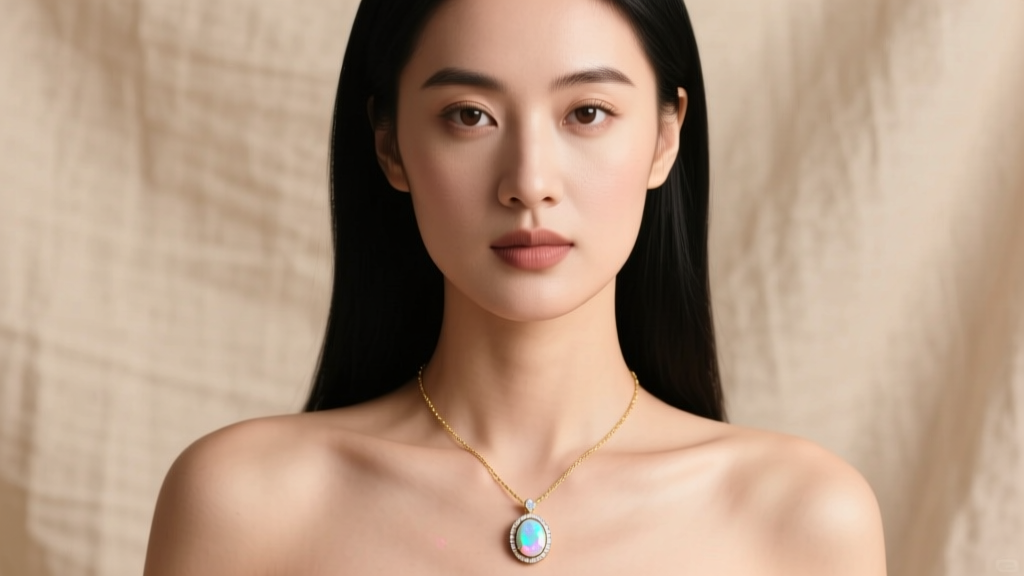
The 2026 Shift: Ethereal Minimalism Meets Organic Textures
The white opal gold necklace has firmly established itself as a cornerstone of contemporary fine jewelry, but the stylistic execution has evolved dramatically as we move through 2026. The market has pivoted away from the mass-produced, perfectly calibrated cabochons of the early 2020s. Today’s discerning collectors and style enthusiasts are gravitating toward organic, uncalibrated slices, East-West oriented settings, and asymmetrical silhouettes. This shift reflects a broader industry movement toward 'ethereal minimalism'—where the natural, unforced play-of-color within the opal takes precedence over rigid, traditional geometry.
When evaluating a white opal gold necklace this year, the focus is on the interplay between the stone's internal fire and the metallurgical warmth of the gold. Designers are intentionally pairing the milky, translucent base of white opals with the rich, buttery hues of 14k and 18k yellow gold, creating a striking contrast that enhances the gem's spectral flashes without overwhelming its delicate nature.
Decoding the Stone: Australian vs. Ethiopian White Opals
Not all white opals are created equal, and understanding the geological origin is critical for both valuation and long-term wearability. According to the Gemological Institute of America (GIA), opals are classified by their body color and transparency, but their structural integrity varies wildly by origin.
Australian Solid White Opals
Mined primarily in Coober Pedy and Lightning Ridge, Australian white opals are non-porous and structurally stable. They possess a Mohs hardness of 5.5 to 6.5, making them the superior choice for daily-wear pendants. Their play-of-color tends to be more subtle and pastel compared to black opals, but high-grade stones exhibit a brilliant, rolling flash of green, blue, and violet. Expect to pay between $150 and $400 per carat for commercial-grade stones, with gem-quality specimens exceeding $1,500 per carat.
Ethiopian Welo Opals
Ethiopian Welo opals have flooded the market due to their intense, neon-like play-of-color and accessible price points ($15 to $80 per carat). However, they are hydrophane, meaning they absorb water and oils. When exposed to moisture, a Welo opal can temporarily lose its fire and turn completely transparent or yellowish. While visually stunning, an Ethiopian white opal gold necklace requires strict environmental control and is best reserved for occasional, careful wear.
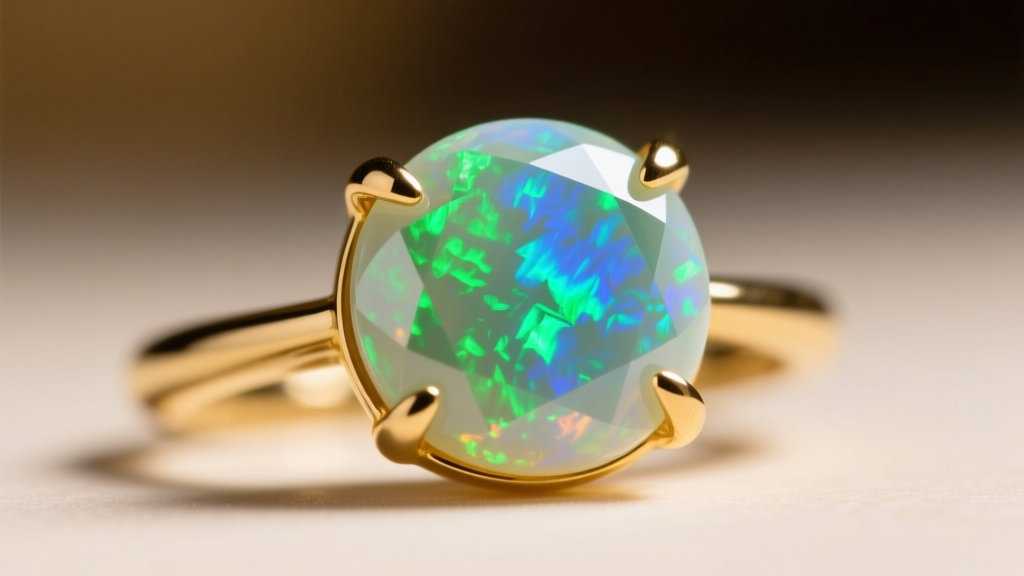
Metallurgy and Setting Architecture
The structural integrity of your necklace relies heavily on the gold karat and the setting architecture. Because opals are relatively soft and prone to chipping at the girdle, the setting must offer maximum protection without sacrificing light exposure.
- 14k Yellow Gold (58.5% pure gold): The optimal choice for daily wear. The higher alloy content (usually copper and silver) provides the necessary tensile strength to hold a bezel securely and resist scratching.
- 18k Yellow Gold (75% pure gold): Offers a deeper, richer yellow color that beautifully complements the milky white body of the opal. However, it is softer and more prone to denting, making it better suited for special-occasion pieces.
- The Full Bezel vs. Half-Bezel: For opals, a full bezel is highly recommended. Prong settings leave the vulnerable edges of the cabochon exposed to impact. A tapered full bezel in 14k gold protects the girdle while allowing light to enter from the top, maximizing the play-of-color.
| Opal Origin & Type | Gold Pairing | Setting Style | Price Range (USD) | Durability Profile |
|---|---|---|---|---|
| Australian Solid White | 14k Yellow Gold | Full Bezel | $800 - $3,500+ | High (Daily Wear Safe) |
| Ethiopian Welo White | 18k Yellow Gold | Half-Bezel / Prong | $150 - $600 | Low (Occasional Wear) |
| Australian Doublet | 14k Gold Vermeil | Full Bezel (Sealed) | $200 - $500 | Medium (Avoid Water) |
| Lab-Created (Gilson) | 10k or 14k Gold | Prong or Bezel | $80 - $250 | High (Impact Resistant) |
2026 Silhouette Trends: Beyond the Solitaire Pendant
The traditional solitaire pendant on a 16-inch rolo chain is giving way to more dynamic, architectural silhouettes. This year, jewelry designers are reimagining how the white opal gold necklace sits on the collarbone.
The East-West Orientation
Instead of setting oval or marquise-cut white opals vertically, 2026 trends heavily favor East-West (horizontal) settings. This orientation creates a modern, streamlined look that sits flush against the sternum, reducing the likelihood of the pendant flipping over—a common frustration with top-drilled or vertically set cabochons.
Asymmetrical Station Chains
For a more avant-garde approach, designers are integrating smaller, uncalibrated white opal slices as 'stations' along a 0.9mm gold chain. These asymmetric placements break the rules of traditional symmetry, offering a bespoke, curated aesthetic that pairs exceptionally well with structured blazers and deep V-necklines.
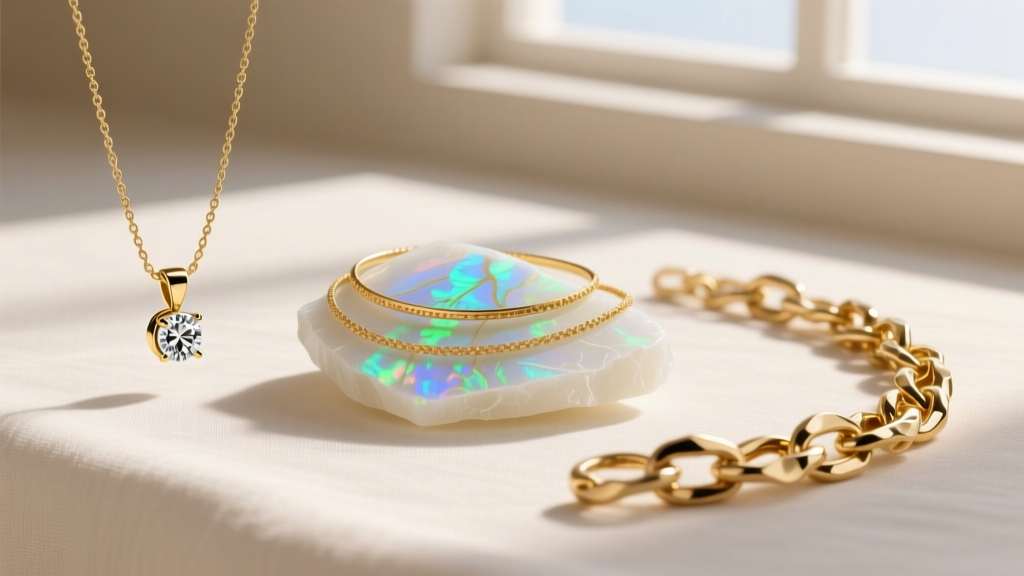
Styling Frameworks: Necklines and Layering
Mastering the white opal gold necklace requires an understanding of visual weight and chain gauge. Because white opals are generally lighter in visual tone than black opals or emeralds, they require strategic layering to anchor them against the skin.
Pro-Tip: When layering, always maintain a minimum 2-inch gap between chains to prevent the gold links from tangling and scratching the opal's surface. A 14-inch choker, a 16-inch opal pendant, and an 18-inch textured gold chain create the perfect cascading effect.
Neckline Pairing Guide
- Crew Necklines: Opt for a 14-inch to 15-inch choker-style white opal necklace. The high placement ensures the stone rests above the fabric line, allowing the gold and opal to catch the light unobstructed.
- V-Necklines: Utilize an 18-inch Y-drop or lariat style. The vertical drop of the gold chain elongates the neck, while the white opal rests precisely at the apex of the V-neck, acting as a focal anchor.
- Square Necklines: A 16-inch East-West set oval white opal pendant perfectly mirrors the horizontal geometry of a square neckline, creating a harmonious, balanced silhouette.
Longevity and Care Protocols
The beauty of a white opal gold necklace is matched only by its vulnerability. As outlined in the GIA's official opal care guidelines, opals contain between 3% and 21% water. Extreme dryness can cause 'crazing' (a network of fine cracks), while sudden temperature changes can fracture the stone.
Never use ultrasonic or steam cleaners on any opal jewelry. The high-frequency vibrations can easily shatter the stone, especially if it has internal inclusions or is a doublet/triplet where the adhesive layers can separate. Instead, clean your necklace using a soft, lint-free microfiber cloth slightly dampened with room-temperature distilled water. For the gold chain, a mild solution of dish soap and warm water applied with a soft-bristled baby toothbrush will restore the metal's luster without risking the gemstone. Always store your necklace in a padded pouch with a slightly damp cotton ball to maintain ambient humidity, ensuring the opal's play-of-color remains vibrant for generations.
By understanding the nuanced differences in stone origin, selecting the appropriate gold karat and setting, and adhering to strict care protocols, your white opal gold necklace will remain a versatile, luminous staple in your 2026 wardrobe and beyond. For further geological context, the encyclopedic breakdown of opal formation provides excellent background on how these silica spheres create their legendary diffraction of light.


