Amor Fati Necklace Metals: Silver, Gold, and Steel Compared
Discover the best metals for your amor fati necklace. We compare sterling silver, solid gold, and surgical steel for durability, patina, and skin safety.

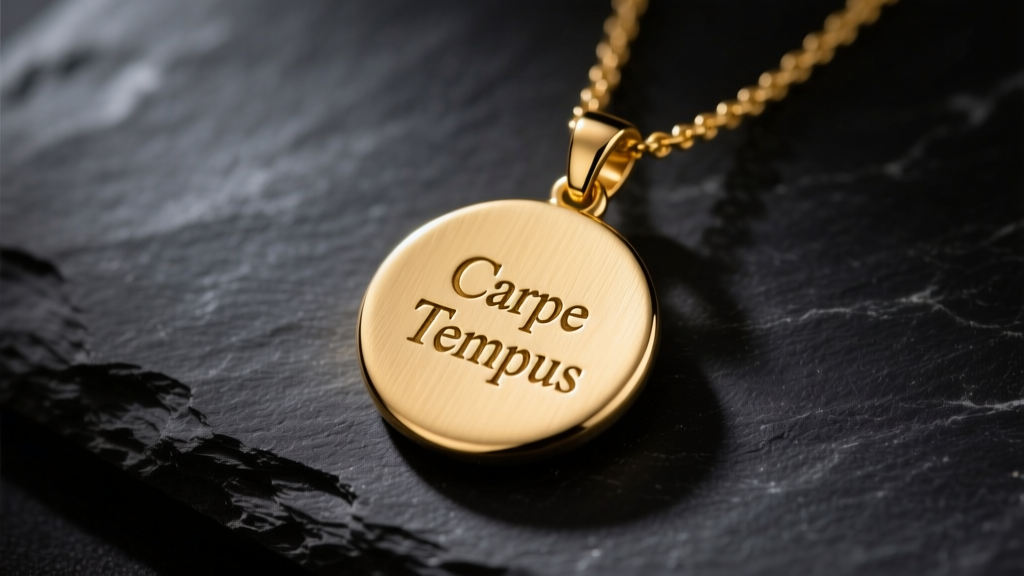
The phrase Amor Fati—Latin for "love of fate"—is a cornerstone of Stoic philosophy and a concept later championed by Friedrich Nietzsche. It represents an enthusiastic acceptance of everything that happens in life, both good and bad. Because an amor fati necklace is designed to be a daily talisman, a constant physical reminder of this mindset, it is subjected to the relentless rigors of everyday wear. It will encounter sweat, friction, varying skin pH levels, and environmental pollutants.
Choosing the right material for your amor fati pendant is not merely an aesthetic decision; it is an exercise in applied metallurgy. A pendant that degrades, tarnishes beyond recognition, or triggers contact dermatitis will quickly become a burden rather than a source of philosophical grounding. In this comprehensive guide, we break down the exact material properties, alloy compositions, and failure modes of the most popular metals used for amor fati necklaces in 2026, helping you select a piece that will endure as long as your commitment to the philosophy itself.
The Daily Wear Imperative: Why Metallurgy Matters
Unlike statement jewelry worn occasionally, an amor fati necklace lives on your skin. The average human epidermis has a slightly acidic pH of around 5.5, and human sweat contains water, sodium chloride (salt), lactic acid, and urea. This creates a mildly corrosive electrolyte environment. Furthermore, a pendant resting on the chest is subject to continuous micro-abrasion from clothing and skin movement. Therefore, the ideal metal must possess high corrosion resistance, adequate Vickers hardness (HV) to prevent deep scratching, and biocompatibility to prevent heavy metal leaching into the skin.
Metal Breakdown: Properties of Popular Amor Fati Pendants
Sterling Silver (925): The Classic but High-Maintenance Choice
Sterling silver is an alloy comprising 92.5% pure silver and 7.5% copper. Pure silver is too soft for detailed engravings of "Amor Fati" text, so the copper addition provides necessary structural integrity. However, copper is highly reactive to sulfur compounds in the air and sweat, resulting in silver sulfide—the black tarnish commonly seen on neglected jewelry.
To combat this, many modern silver amor fati pendants are plated with a micro-thin layer of rhodium. While rhodium provides a brilliant, tarnish-resistant white finish, it will eventually wear away on the high-friction edges of the pendant, exposing the reactive 925 alloy beneath. If you choose silver, you must commit to regular polishing with a treated jeweler's cloth to mechanically remove the sulfide layer without stripping the remaining rhodium.
Solid Gold (14k vs 18k): The Heirloom Standard
Gold is the ultimate standard for a lifelong daily-wear pendant due to its noble metal status; it does not oxidize or tarnish in normal atmospheric conditions. However, pure 24k gold is far too malleable (approx. 25 HV) and would quickly lose its shape and engraving detail. According to the Gemological Institute of America (GIA), alloying gold with metals like copper, silver, and zinc is essential for durability.
- 18k Gold (75% Au): With a Vickers hardness of roughly 125 HV, 18k gold offers a rich, warm color but is slightly more prone to micro-scratching. It is ideal for those with sensitive skin, as the lower alloy content reduces the risk of metal allergies.
- 14k Gold (58.5% Au): Harder and more scratch-resistant (approx. 140 HV), 14k gold is often the superior choice for heavily detailed amor fati coin replicas or hourglass pendants, as it holds crisp edges and deep enamel work far better over decades of wear.
Surgical Stainless Steel (316L): The Indestructible Option
For those who want a "wear it and forget it" talisman, 316L surgical stainless steel is unparalleled. The "L" stands for low carbon, but the real hero in this alloy is the addition of 2-3% molybdenum, which drastically increases resistance to pitting corrosion from chlorides (like salt in sweat). 316L steel forms a passive chromium-oxide layer on its surface that self-repairs when scratched in the presence of oxygen.
With a Vickers hardness ranging from 150 to 190 HV, steel will not easily scratch or dent. The primary concern with steel is nickel content. While 316L contains nickel, the alloy's tight crystalline structure generally keeps nickel migration well below the 0.5 µg/cm²/week threshold set by the EU REACH directive for prolonged skin contact, making it safe for the vast majority of wearers. However, those with severe, clinically diagnosed nickel allergies should still opt for solid gold or titanium, as noted in dermatological studies on contact dermatitis.
Bronze and Brass: The Authentic Coin Replica
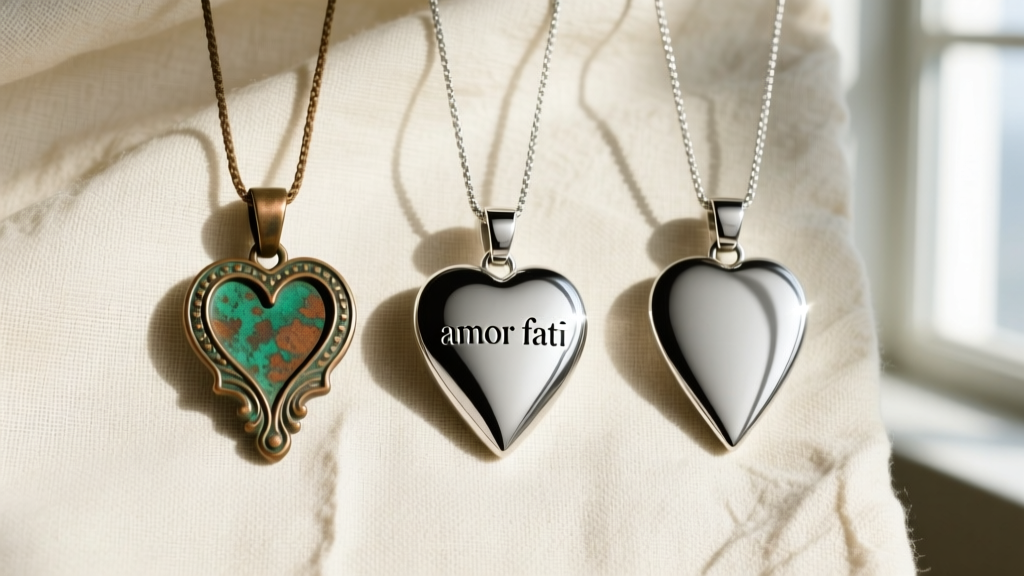
Many artisan jewelers cast amor fati pendants in bronze (copper and tin) or brass (copper and zinc) to mimic the look of ancient Roman or Greek stoic coins. While visually stunning and historically evocative, these copper-heavy alloys are highly reactive. When exposed to the acidity and salt of human skin, they rapidly produce copper chloride, resulting in the infamous "green skin" effect. To wear bronze comfortably, the pendant must be regularly sealed with a micro-crystalline wax (like Renaissance Wax) to create a physical barrier between the metal and your epidermis.
Comparative Data: Hardness, Tarnish, and Price Ranges
Understanding the physical properties of these alloys allows you to match the metal to your lifestyle. The table below outlines the critical metallurgical data and current market pricing for standard-sized (15mm - 25mm) amor fati pendants.
| Metal Alloy | Vickers Hardness (HV) | Tarnish & Corrosion Profile | 2026 Avg. Price Range |
|---|---|---|---|
| 925 Sterling Silver | 60 - 70 HV | High (Silver Sulfide tarnish) | $45 - $120 |
| 14k Solid Gold | ~140 HV | None (Noble metal) | $350 - $650 |
| 18k Solid Gold | ~125 HV | None (Noble metal) | $450 - $850 |
| 316L Surgical Steel | 150 - 190 HV | Extremely Low (Passivation layer) | $25 - $60 |
| Cast Bronze | 60 - 90 HV | High (Verdigris / Copper Chloride) | $80 - $150 |
The Galvanic Corrosion Trap: Mixing Metals
One of the most frequent and costly mistakes made when assembling an amor fati necklace is mixing different metals between the pendant and the chain. This introduces the risk of galvanic corrosion. When two dissimilar metals (like a 316L stainless steel pendant and a sterling silver chain) are connected and exposed to an electrolyte (human sweat), a tiny galvanic battery is formed.
Because silver is more anodic (less noble) than stainless steel on the galvanic series, the silver will act as a sacrificial anode. The silver jump ring or chain link touching the steel bail will rapidly corrode, turn black, and eventually snap, resulting in the loss of your pendant. Always ensure your chain and pendant are made of the exact same base metal, or use a neutral separator like a silicone o-ring or a high-grade titanium jump ring to break the electrical circuit.
Chain Selection: Gauge, Bail Sizing, and Friction
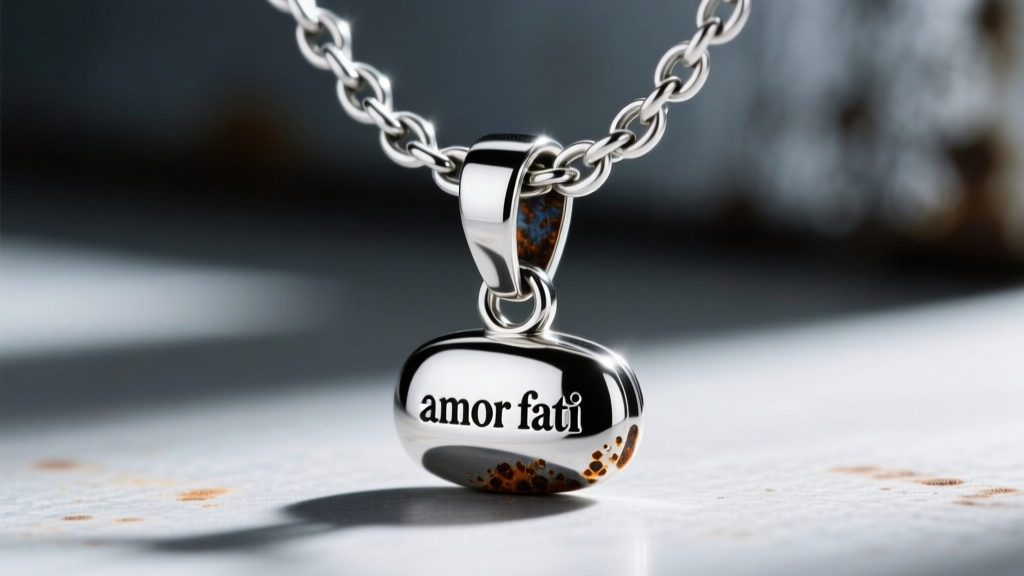
The pendant is only half the equation; the chain must be engineered to support it without failing. For a standard solid metal amor fati pendant weighing between 5 and 15 grams, avoid delicate, hollow-cored chains.
- Chain Style: A solid cable chain or a wheat chain offers the best tensile strength and resists kinking. Avoid box chains, as their sharp internal corners can act like tiny saws, slowly grinding away the bail of your pendant over years of friction.
- Gauge Thickness: A 1.2mm to 1.5mm gauge is the sweet spot for daily wear. Anything thinner than 1.0mm risks snapping if the pendant catches on a sweater; anything thicker than 2.0mm becomes visually overwhelming and stiff.
- Bail Tolerance: Ensure the inner diameter of the pendant's bail (the loop it hangs from) is at least 0.5mm wider than the chain's thickness. If a 1.5mm chain is forced through a 1.5mm bail, the lack of articulation will cause severe stress on the chain links near the clasp, leading to premature metal fatigue.
Care and Maintenance by Alloy
Proper maintenance extends the life of your talisman and keeps the engraved text legible.
- Silver: Store in an anti-tarnish cloth pouch containing activated charcoal or silver-chloride absorbing agents. Clean with a mild dish soap and warm water solution, using a soft baby toothbrush to gently clear out the "Amor Fati" engraving grooves.
- Gold: Requires minimal maintenance. An ultrasonic cleaner is safe for solid gold pendants without gemstones or enamel, effectively vibrating away sebum and dead skin cells trapped in the lettering.
- Steel: Virtually maintenance-free. Can be sanitized with 70% isopropyl alcohol after heavy workouts to remove salt buildup and prevent any superficial surface clouding.
- Bronze: Must be kept dry. Reapply a thin coat of micro-crystalline jewelry wax every 3 to 4 months to seal the porous metal surface against skin acids.
Final Verdict: Choosing Your Fate
An amor fati necklace is a deeply personal artifact. If you view it as a rugged, indestructible companion for gym sessions, outdoor labor, and constant wear, 316L surgical steel is the most pragmatic choice, offering immense durability at an accessible price point. If you desire a historical, vintage aesthetic and don't mind the ritual of regular waxing and polishing, a cast bronze coin replica offers unmatched character. However, for those seeking a true heirloom piece that will outlast them and remain pristine against the skin without chemical reactions or galvanic risks, a 14k solid gold pendant on a matching solid gold cable chain remains the undisputed pinnacle of metallurgical perfection. Choose the metal that aligns not just with your aesthetic, but with the reality of your daily life.


