Ankh Necklace Meaning: A Step-By-Step Styling & Sizing Guide
Discover the true ankh necklace meaning and follow our step-by-step guide to choosing, sizing, and layering this ancient Egyptian symbol.

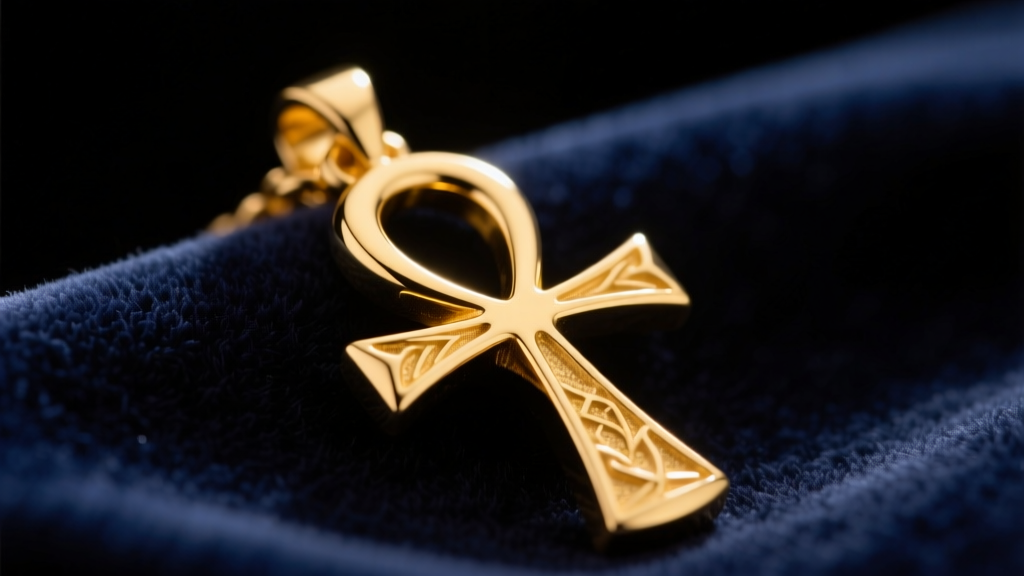
Decoding the Ankh: Beyond the Aesthetic
The ankh, often referred to as the crux ansata or "handle cross," is one of the most recognizable symbols from ancient Egypt. But understanding the true ankh necklace meaning is essential before making it a permanent fixture in your jewelry wardrobe. Historically, the ankh represents eternal life, the breath of life, and the divine union of masculine and feminine energies (often associated with Osiris and Isis). According to the Metropolitan Museum of Art's Egyptian Art Department, the ankh was frequently depicted in tomb art, held by deities offering the breath of life to pharaohs.
When you wear an ankh pendant today, you are carrying a talisman of vitality and protection. However, translating this ancient amulet into a modern 2026 wardrobe requires a strategic approach to metallurgy, proportion, and chain pairing. This step-by-step guide will walk you through selecting, sizing, and styling an ankh necklace that honors its profound history while elevating your personal aesthetic.
Step 1: Define Your Intent and Symbolism
The first step in choosing your ankh necklace is determining your primary intent. Are you wearing it as a spiritual talisman, a nod to Afrocentric heritage, or purely as an architectural fashion statement? Your intent dictates the material and design you should pursue.
- Spiritual & Talismanic: Opt for unadorned, solid metals like pure copper or 24k gold plating over silver. In metaphysical traditions, copper is highly conductive to spiritual energy, amplifying the ankh's life-force symbolism.
- Heritage & Historical Accuracy: Look for cast bronze or brass pendants with a deliberate patina. Ancient Egyptian artisans frequently used electrum (a natural gold-silver alloy) and bronze. A weathered finish connects the piece to its archaeological roots.
- Modern Minimalist: Choose a high-polish 14k gold or 925 sterling silver ankh with sharp, geometric lines and a flat profile, stripping away ornate hieroglyphic engravings for a sleek, contemporary look.
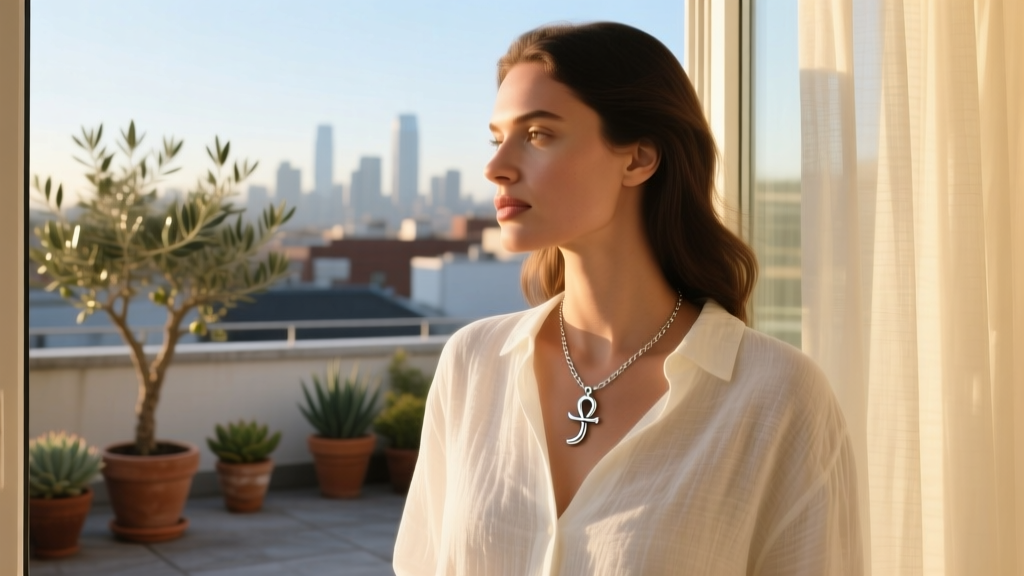
Step 2: Select the Right Metal Grade for Daily Wear
The ankh necklace meaning of "eternal life" should ideally reflect in the durability of the metal you choose. Pendants rest against the sternum, an area prone to sweat and friction. Here is a breakdown of the most common metals used for ankh pendants, complete with pricing and maintenance data.
| Metal Grade | Composition | Avg. Price Range | Durability & Care |
|---|---|---|---|
| 925 Sterling Silver | 92.5% Silver, 7.5% Copper | $45 - $150 | Prone to tarnish; requires monthly polishing with a microfiber cloth. |
| 14k Solid Gold | 58.5% Gold, 41.5% Alloy | $350 - $850 | Highly durable, hypoallergenic, and ideal for 24/7 wear without oxidizing. |
| 18k Gold Vermeil | 2.5 microns 18k Gold over 925 Silver | $80 - $200 | Will wear off after 1-2 years of daily use; keep away from perfumes. |
| Solid Bronze | Copper and Tin Alloy | $30 - $90 | Develops a green patina (verdigris); requires lemon juice and salt baths to restore shine. |
Expert Tip: If you have a nickel allergy, avoid cheap "gold-plated" brass or mystery metals. Always verify that the base metal is nickel-free. The Gemological Institute of America (GIA) recommends sticking to 14k or 18k gold for sensitive skin, as the alloy mixtures are strictly regulated and generally hypoallergenic.
Step 3: Master the Proportions (Pendant and Bail Sizing)
A common mistake when buying symbolic pendants is ignoring the scale of the loop (the oval or teardrop at the top) relative to the crossbar and stem.
The Golden Ratio of the Ankh
For a visually balanced ankh pendant, the loop should constitute roughly 35% to 40% of the total pendant length. If you are purchasing a pendant that is 2 inches (50mm) long, the loop should be approximately 0.75 inches (19mm) tall.
Furthermore, you must check the bail dimensions. The bail is the loop that the chain threads through. Many heavy, cast-bronze ankh pendants feature thick, integrated bails. If the inner diameter of the bail is 4mm, you cannot use a delicate 1.5mm cable chain. You will need a thicker rope or box chain (2.5mm to 3.5mm) to ensure the pendant slides freely and doesn't cause premature wear on the chain links.
Step 4: Chain Selection and Length Pairing
The chain you choose alters the ankh necklace meaning from a subtle personal reminder to a bold outerwear statement. Here is how to pair chain styles with specific ankh designs based on neckline and occasion:
- The 18-Inch Box Chain (1.5mm): Best for small, lightweight silver or gold ankhs (under 1 inch). Sits perfectly at the collarbone, ideal for V-neck and scoop-neck tops. The geometric links of a box chain mirror the structured lines of the ankh.
- The 22-Inch Rope Chain (2.5mm): Best for medium-to-heavy bronze or gemstone-inlaid ankhs. The twisted rope texture adds a vintage, archaeological feel. The 22-inch length drops the pendant to the upper sternum, making it visible over crew-neck t-shirts and turtlenecks.
- The 24-Inch Black Cord (2mm): Best for raw crystal ankhs (like carved obsidian or lapis lazuli). Leather or waxed cotton cords lean into the bohemian and spiritual aspects of the talisman, keeping the focus entirely on the stone.
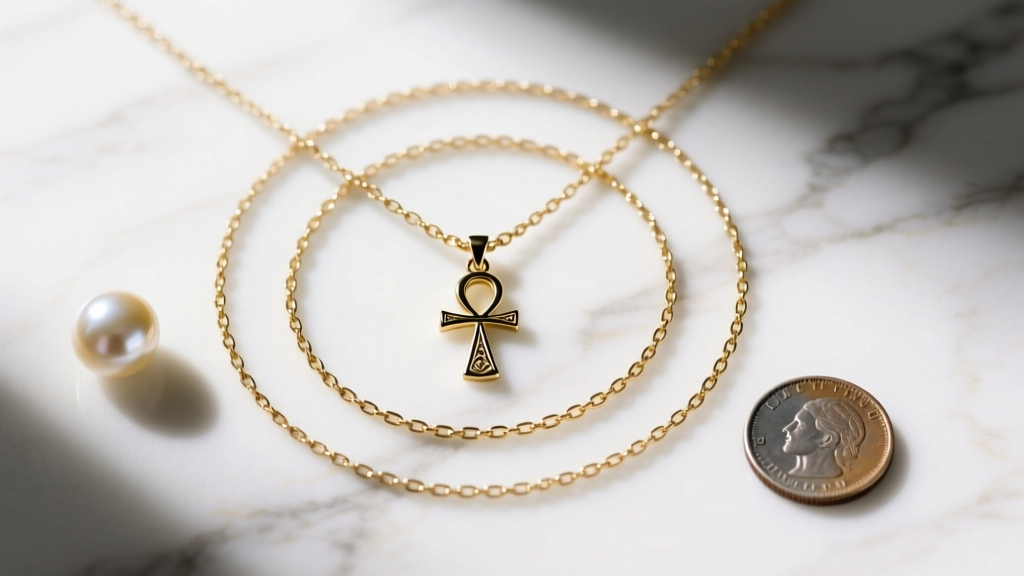
Step 5: How to Layer the Ankh Without Diluting Its Power
Layering is a dominant trend in 2026, but layering a symbol as potent as the ankh requires a disciplined approach. If you surround the ankh with too many competing charms, you dilute its visual and symbolic impact. Follow the "Anchor, Focal, Accent" framework:
- The Anchor (16 inches): Start with a simple, minimalist chain. A 16-inch choker-length chain with a tiny 3mm bezel-set diamond or a plain gold bead keeps the upper neckline grounded without drawing attention away from the main piece.
- The Focal (18 to 20 inches): This is where your ankh pendant lives. Ensure the ankh is at least 1.5 inches long so it commands the center of the layering stack. The visual weight of the ankh should be at least double that of the other pendants in the stack.
- The Accent (22 to 24 inches): Finish with a longer, heavier chain that features no pendant, or a very subtle, abstract geometric shape (like a simple bar or an unadorned hoop). This draws the eye downward and frames the ankh, reinforcing its status as the centerpiece.
"When layering historical talismans, always give the symbol 'breathing room.' A minimum gap of 1.5 inches between the bottom of one pendant and the top of the next ensures that each piece retains its individual integrity and meaning."
Step 6: Cleansing and Charging Your Talisman
Maintaining your ankh necklace involves both physical metallurgy care and, for many, spiritual cleansing. Because the ankh is a conduit for life-force energy, many wearers believe it absorbs environmental energies over time.
Physical Cleaning Protocol
For 14k gold and sterling silver, mix a few drops of mild, phosphate-free dish soap into warm distilled water. Use an extra-soft baby toothbrush to gently clean the crevices where the crossbar meets the stem. Never use ultrasonic cleaners on ankh pendants that feature inlaid turquoise, lapis lazuli, or malachite, as the high-frequency vibrations and harsh chemicals can fracture or discolor these porous stones.
Spiritual Maintenance
If you wear the ankh for its protective and spiritual properties, consider cleansing it during the new moon. Place the necklace on a piece of selenite or clear quartz overnight. Avoid leaving silver or bronze pendants in direct sunlight for extended periods or in salt water, as these elements will accelerate oxidation and tarnish, regardless of the spiritual benefits.
Final Thoughts on Wearing the Key of Life
Understanding the ankh necklace meaning transforms it from a mere accessory into a profound personal artifact. By carefully selecting the right metal grade, respecting the architectural proportions of the loop and stem, and layering it with intentional restraint, you honor the ancient Egyptian legacy of the "Key of Life." Whether you choose a historically accurate bronze cast or a sleek, modern 14k gold silhouette, the ankh remains a timeless testament to vitality, balance, and eternal style.


