Anthropologie Turquoise Necklace: 2026 Material Deep Dive
Expert analysis of the Anthropologie turquoise necklace. Discover gemological facts, stabilization methods, metal grades, and how to spot simulants.

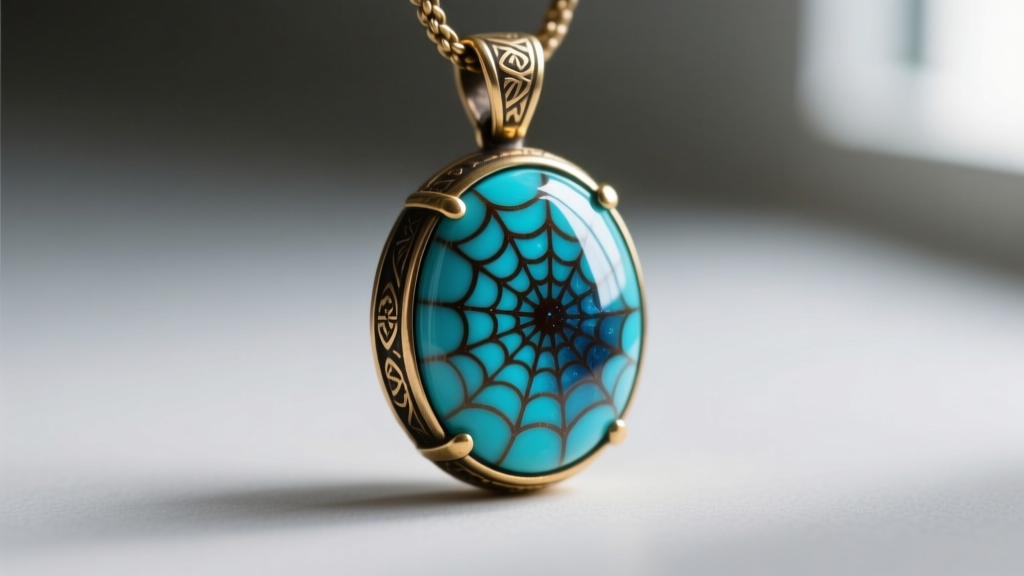
The bohemian aesthetic has long been anchored by the vibrant, sky-blue to blue-green hues of turquoise. When browsing the curated accessories collections at popular boutique retailers, the anthropologie turquoise necklace frequently emerges as a staple piece for layering and statement styling. However, beneath the beautiful artisan-inspired settings lies a complex gemological reality. As a domain expert in jewelry materials, I am pulling back the curtain on what you are actually purchasing when you buy fashion-grade turquoise, exploring the stabilization techniques, metal alloys, and simulant diagnostics you need to know in 2026.
The Gemological Spectrum: Natural vs. Treated vs. Simulated
To understand the value and longevity of your jewelry, you must first understand the material science of turquoise. Natural, untreated turquoise is a porous, hydrous phosphate of copper and aluminum. On the Mohs scale of hardness, it ranges from a relatively soft 5 to 6, making it highly susceptible to scratching, chemical alteration, and structural fracturing.
Because high-grade, untreated natural turquoise (often sourced from now-closed mines like Sleeping Beauty or Lander Blue) commands premium gemstone pricing, mass-market fashion jewelry rarely utilizes it. Instead, retailers rely on three primary alternatives to achieve the desired aesthetic at an accessible price point ($48 to $128 on average).
1. Stabilized Turquoise
Stabilization is a widely accepted industry practice. Lower-grade, chalky turquoise is subjected to a vacuum process where a clear epoxy or polymer resin is forced into the stone's microscopic pores. This hardens the material, allowing it to be cut, polished, and set without shattering. According to the Gemological Institute of America (GIA), stabilization is considered a permanent enhancement that improves durability without necessarily altering the stone's fundamental chemical composition.
2. The Zachery Treatment
A more advanced, premium stabilization method is the Zachery treatment. Unlike traditional polymer impregnation, this proprietary process uses a non-toxic, non-polymer chemical bath that reduces porosity and improves the stone's ability to take a high polish. Zachery-treated stones do not show the plastic-like fluorescence under UV light that epoxy-stabilized stones often exhibit, making them highly desirable in mid-tier boutique jewelry.
3. Dyed Howlite and Magnesite
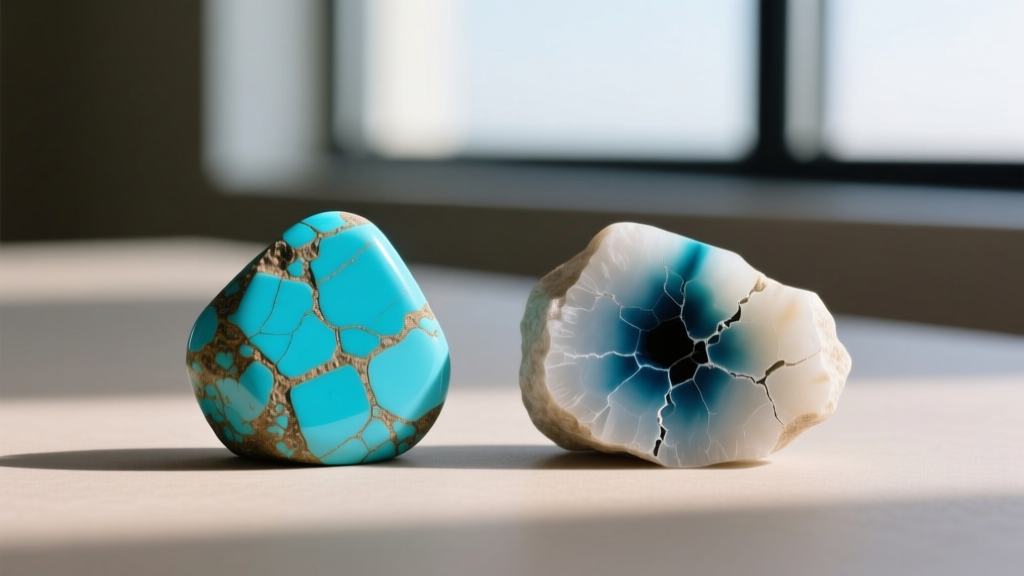
The most common simulant in fashion jewelry is howlite (a calcium borosilicate) or magnesite (magnesium carbonate). Both are naturally white or gray with prominent gray veining. When dyed blue, they visually mimic the spiderweb matrix of genuine turquoise. Mindat.org notes that howlite has a specific gravity of 2.53 to 2.59, which is noticeably lighter than genuine turquoise (2.60 to 2.90), a fact gemologists use to separate the two.
Material Breakdown and Identification Matrix
When evaluating your necklace, use this technical matrix to determine the likely composition of the center stone based on visual and tactile feedback.
| Material Type | Visual Characteristics | Tactile / Thermal Feel | UV Fluorescence |
|---|---|---|---|
| Natural Turquoise | Deep color variation, natural pitting, organic matrix | Cool to the touch, heavy | Inert to weak greenish-yellow |
| Epoxy Stabilized | Uniform color, high gloss polish, plastic-like luster | Room temperature, slightly waxy | Strong chalky blue/white (epoxy glow) |
| Dyed Howlite | Veins look painted, dye pools in cracks, flat blue hue | Lightweight, warms quickly in hand | Inert |
| Reconstituted | Speckled, uniform matrix, lacks natural webbing flow | Feels like dense plastic or resin | Variable, often patchy white |
Metallurgy: Base Alloys and Plating Thickness
The stone is only half the equation. The hardware, chains, and bezels of an anthropologie turquoise necklace dictate its structural integrity and skin compatibility. Fashion jewelry lines typically utilize one of two metallurgical approaches.
Brass Alloys and Flash Plating
The majority of bohemian-style pendants are cast from brass (an alloy of copper and zinc). Brass provides excellent fluidity for intricate, artisan-style mold casting. To achieve a gold or silver finish, these pieces are electroplated. In fashion jewelry, this is often "flash plating," meaning the gold or silver layer is exceptionally thin—typically between 0.1 and 0.5 microns. While visually stunning on day one, flash plating is highly susceptible to friction wear and chemical degradation from skin acidity.
Sterling Silver and Vermeil Standards
Higher-end capsule collections may upgrade to a 925 sterling silver base. If gold-toned, these pieces might qualify as "vermeil" (pronounced ver-may). By FTC guidelines, vermeil requires a sterling silver base plated with at least 10k gold that is a minimum of 2.5 microns thick. This thickness provides vastly superior longevity and is generally hypoallergenic, making it a safer choice for those with nickel or copper sensitivities.
Expert Tip: Check the clasp and jump rings. If the hallmark reads '925', you have a sterling base. If it is unmarked or stamped with a maker's mark only, assume a brass or zinc-alloy base and avoid wearing it in high-humidity environments to prevent verdigris (copper oxidation).
Degradation Mechanics and Preventative Care
Turquoise, whether natural or stabilized, is fundamentally vulnerable to chemical attack. The porous nature of the stone—or the microscopic gaps in the epoxy resin—acts as a sponge for environmental contaminants.
- Chemical Exposure: Perfumes, aerosol hairsprays, and lotions contain alcohols and lipids that will permanently darken natural turquoise and degrade epoxy stabilizers over time, leading to a cloudy, yellowed appearance.
- Ultrasonic Cleaners: Never use ultrasonic jewelry cleaners on any turquoise piece. The high-frequency acoustic cavitation will shatter the stone or strip the dye from howlite simulants instantly.
- Thermal Shock: Sudden temperature changes can cause the resin in stabilized stones to expand at a different rate than the host rock, resulting in internal micro-fractures.
The Verdict: Value and Wardrobe Integration
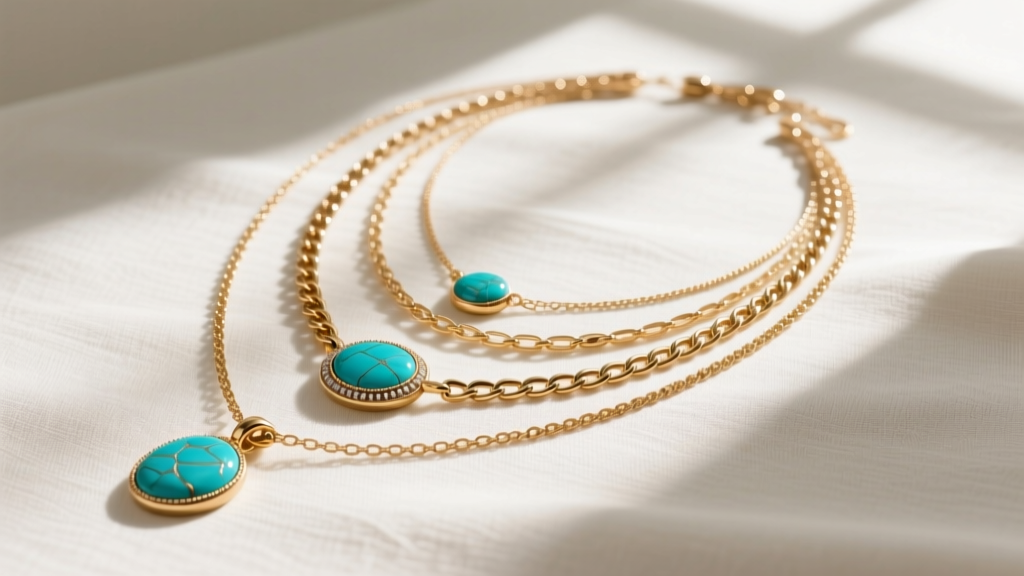
When purchasing an anthropologie turquoise necklace, you are paying for design, curation, and aesthetic versatility rather than intrinsic gemological value. The stones are almost certainly stabilized or simulated, and the metals are plated base alloys. However, from a styling perspective, these pieces offer unparalleled bohemian flair.
To maximize your investment, practice the "last on, first off" rule. Put your necklace on after your cosmetics and perfumes have fully dried, and remove it before showering or exercising. By understanding the material science beneath the beautiful facade, you can properly manage your expectations, care for the piece appropriately, and enjoy its vibrant aesthetic for years to come.


