How to Restore and Authenticate an Antique Chinese Necklace
Learn how to authenticate, clean, and restore an antique Chinese necklace. Expert troubleshooting for jade, silver filigree, and silk cord repairs.

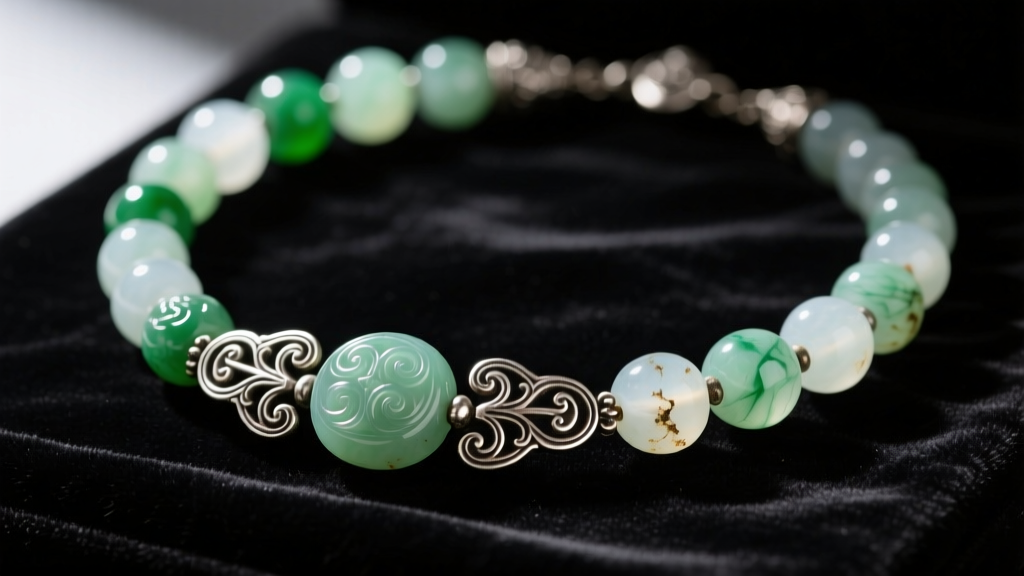
The Complex Anatomy of Antique Chinese Necklaces
Troubleshooting an antique Chinese necklace requires a fundamental understanding of its modular anatomy. Unlike Western continuous-chain necklaces, traditional Chinese neckpieces—particularly those from the Ming (1368–1644) and Qing (1644–1912) dynasties—are composite structures. They typically consist of a central focal pendant (often a ruyi scepter head, a longevity lock, or a carved jade plaque), flanked by symmetrical beadwork, and terminated by intricate metal clasps or silk toggle knots.
When evaluating a piece for restoration, you must assess three distinct material categories: the hardstones (jadeite, nephrite, turquoise, coral), the metalwork (silver gilt filigree, repoussé, or cast bronze), and the structural textiles (silk cord, woven ribbons). Failure in any one of these categories compromises the entire piece. Furthermore, the antique market is saturated with 20th-century tourist-trade replicas and modern synthetic composites. Accurate authentication must precede any conservation effort to avoid damaging historical artifacts or wasting resources on modern pastiches.
Troubleshooting Authentication: Spotting Fakes and Fractures
Before restringing or cleaning, you must verify the age and authenticity of the materials. The most common point of failure in authentication involves jade and silver purity.
Jade and Hardstone Verification
Jadeite and nephrite are the cornerstones of Chinese jewelry. However, the market is flooded with Type B (polymer-impregnated) and Type C (dyed) jade. According to the Gemological Institute of America (GIA), Type A jade is completely natural and untreated, making it the only acceptable standard for genuine antique pieces.
- Specific Gravity Test: Genuine jadeite has a specific gravity of 3.30 to 3.38, while nephrite ranges from 2.90 to 3.03. If a heavy bead floats or feels suspiciously light, it is likely glass, resin, or serpentine.
- Refractive Index: Jadeite consistently reads 1.66 on a refractometer. Nephrite reads 1.61 to 1.63.
- UV Fluorescence: Under long-wave UV light (365nm), polymer-impregnated Type B jade will exhibit a chalky, bluish-white fluorescence due to the epoxy resins used in the 1980s and beyond. Genuine antique Type A jade will remain inert.
Silver Gilt and Filigree Analysis
A common misconception is that antique Chinese silver should be stamped "925" for sterling. In reality, Qing dynasty silver jewelry was typically crafted from coin silver or mixed alloys ranging from 800 to 900 parts per thousand. The absence of a 925 stamp is actually a positive indicator of age. Furthermore, antique pieces were often fire-gilded (mercury gilding), which leaves a distinct, soft, matte yellow patina that wears away at high-friction contact points, revealing the darker oxidized silver beneath. Modern electroplating, by contrast, wears off in sharp, uniform flakes.
Structural Failures and Restoration Frameworks
Once authenticated, the physical restoration of an antique Chinese necklace presents unique engineering challenges. The original materials degrade over time, and modern jewelry repair techniques can cause catastrophic damage if applied incorrectly.
Silk Cord Rot and Restringing Protocols
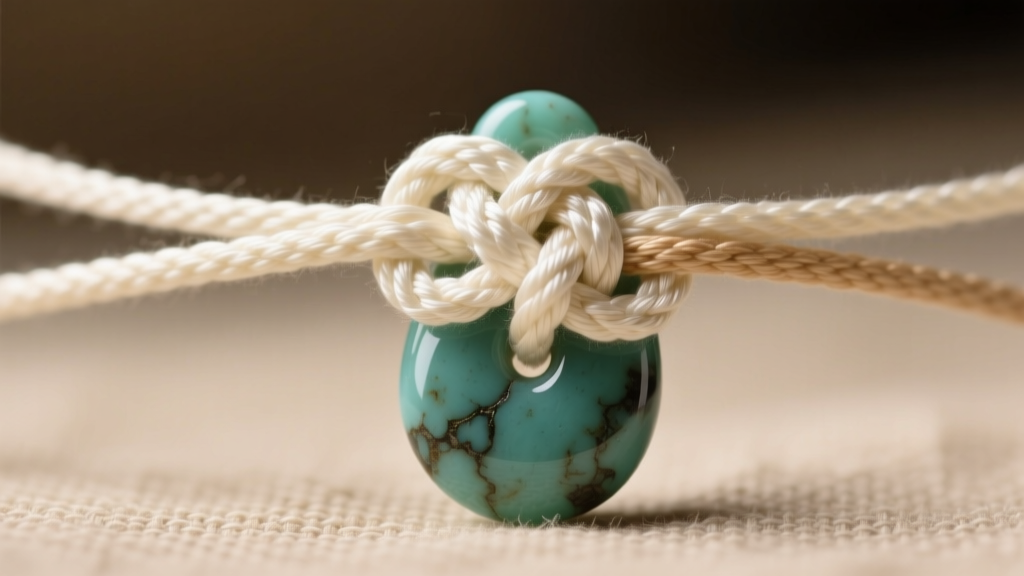
Natural silk is highly susceptible to hydrolysis and degradation from skin oils, cosmetics, and UV exposure. If the original cord is brittle, fraying, or shows signs of "black rot" (fungal degradation), it must be replaced. Never use beading wire or nylon monofilament for antique Chinese hardstones; the sharp edges of carved bead holes will shear wire over time, and the rigid drape ruins the historical silhouette.
The Solution: Use 100% natural silk or high-grade synthetic Chinese knotting cord. For small seed beads and coral, use a 0.8mm cord. For heavy jade pendants and large turquoise beads, step up to a 1.5mm or 2.0mm cord. When finishing the necklace, avoid metal crimp beads. Instead, utilize traditional macramé techniques such as the Pan Chang (endless knot) or a simple sliding square knot, which allows for adjustable tension and maintains historical accuracy.
Filigree Snags and Metal Fatigue
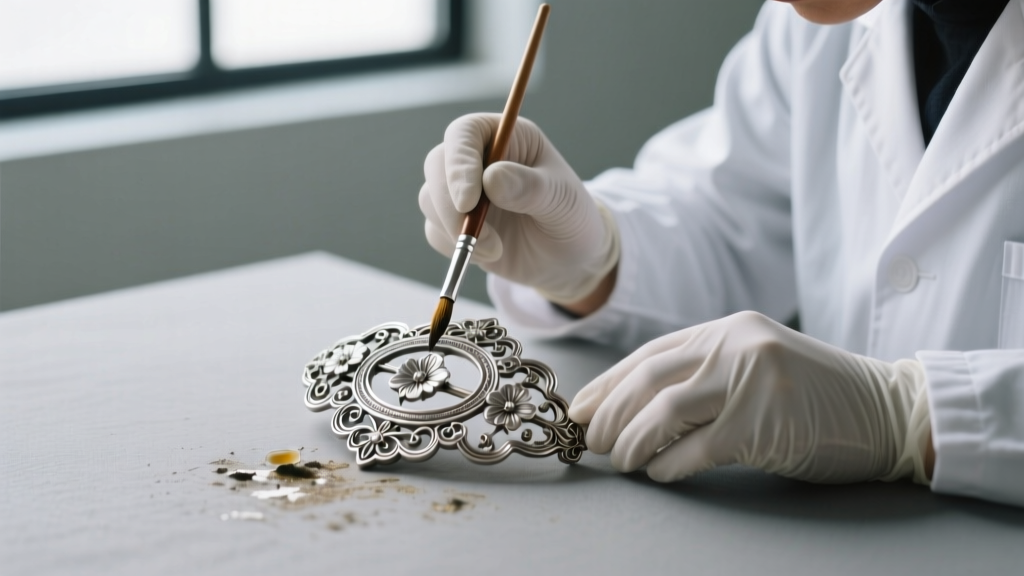
Antique Chinese filigree is constructed from incredibly fine silver wire, often drawn down to 24-gauge or thinner. These wires are soldered at microscopic junctions. A common troubleshooting scenario is a snagged or crushed filigree clasp. Do not attempt to bend the wire back into place with standard flat-nose pliers; the antique silver will suffer from work-hardening and snap.
Instead, use a brass stump and a rawhide mallet to gently reshape the base plate, and employ a fine-tip soldering iron with silver paste to re-adhere lifted wires. For cleaning, avoid ultrasonic cleaners and rotary polishing tools, which will rip the delicate wires apart. The Victoria and Albert Museum recommends using a soft hagiwara brush with a mild solution of deionized water and non-ionic detergent, followed by careful drying with compressed air to prevent water spots in the crevices.
Material-Specific Cleaning and Troubleshooting Matrix
Use the following diagnostic matrix to identify failure modes and apply the correct conservation strategy for your antique Chinese necklace.
| Material | Common Failure Mode | Diagnostic Test | Safe Conservation Method |
|---|---|---|---|
| Type A Jadeite | Surface grime, dullness from oils | Visual inspection, 1.66 RI | Wipe with damp microfiber; avoid harsh chemicals. |
| Type B/C Jade | Yellowing polymer, dye bleeding | UV Fluorescence, Chelsea filter | Do not clean with solvents; stabilize and isolate from skin. |
| Silver Filigree | Crushed wires, heavy sulfide tarnish | Magnet test (non-magnetic), visual | Calcium carbonate paste, soft brush, no ultrasonics. |
| Silk Cord | Biodegradation, stretching, rot | Pull test, visual fraying | Replace with 1.5mm synthetic knotting cord; use sliding knots. |
| Kingfisher Feather | Feather loss, moth damage, fading | Microscopic barb analysis | Consolidate with Paraloid B-72; never use modern replacements. |
Ethical Conservation: The Tian-Tsui Dilemma
One of the most complex troubleshooting scenarios involves Tian-tsui (kingfisher feather) jewelry. Highly prized in the Qing dynasty, these pieces feature iridescent blue feathers glued into silver gilt cells. Over time, the organic adhesive dries out, and the feathers flake away or are eaten by carpet beetles.
Replacing missing feathers is both ethically problematic and legally restricted. Kingfishers are protected under CITES Appendix II, and the trade of their feathers is heavily regulated or banned outright. Furthermore, modern dyed goose or turkey feathers lack the microscopic structural coloration that gives genuine Tian-tsui its electric blue-violet shift.
Expert Troubleshooting: Do not attempt to source replacement feathers. Instead, stabilize the remaining feathers using a conservation-grade acrylic consolidant like Paraloid B-72 dissolved in acetone. Apply it with a micro-brush to secure lifting barbs. For completely empty cells, leave them bare as a testament to the piece's history, or fill them with a reversible, tinted conservation wax that mimics the original color without attempting to deceive the viewer.
Sourcing Replacement Parts and Hardware
When an antique Chinese necklace is missing a toggle clasp or a specific carved bead, sourcing period-accurate replacements is difficult. Avoid using modern mass-produced findings from standard jewelry suppliers, as their bright, rhodium-plated finishes and machine-stamped patterns will clash violently with the antique patina.
Instead, source "donor" pieces from damaged, unsalvageable antique jewelry of the same era. If a silver toggle must be fabricated, cast it using the lost-wax method from an original mold, and artificially age it using liver of sulfur to match the surrounding 800-silver components. For missing jade or coral beads, consult specialized estate liquidators or gemological dealers who specialize in antique Asian hardstones, ensuring the new bead matches the specific gravity, color saturation, and tooling marks of the original Qing-era lapidary work.
Conclusion
Restoring an antique Chinese necklace is an exercise in historical preservation, material science, and structural engineering. By rigorously authenticating the jade and silver, employing traditional silk knotting techniques, and adhering to strict conservation ethics regarding fragile elements like kingfisher feathers, you ensure that these wearable artifacts survive for future generations. Always prioritize reversible, non-destructive methods, and when in doubt, consult a certified jewelry conservator before applying any chemical or mechanical treatment to a centuries-old masterpiece.


