How to Clean and Maintain a White Rock Necklace Safely
Learn expert care, cleaning, and storage tips for your white rock necklace. Discover safe methods for porous stones like howlite and white turquoise.

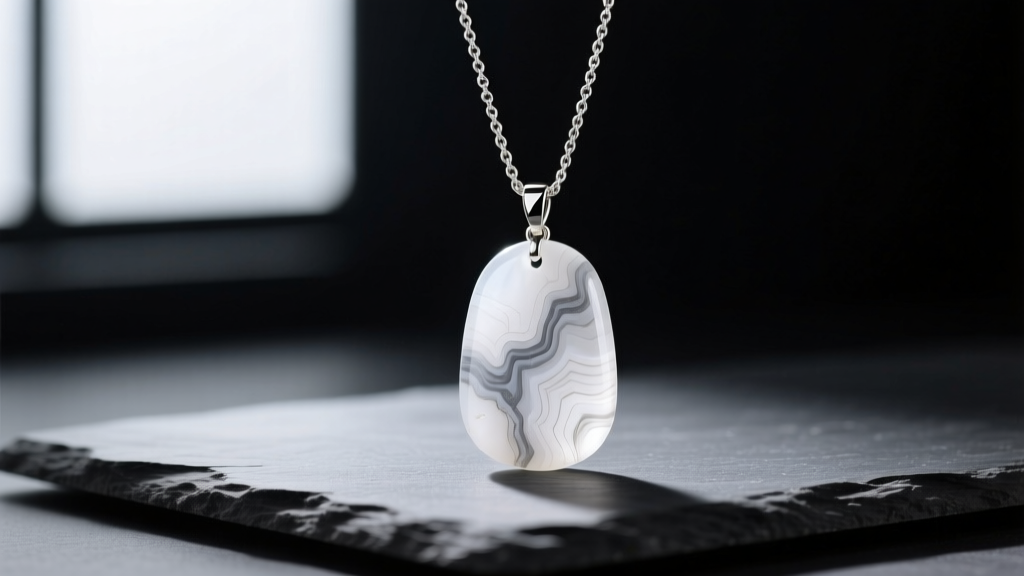
White rock necklaces—typically crafted from porous or semi-porous minerals like howlite, white turquoise, white agate, or unpolished moonstone—present unique maintenance challenges. Unlike faceted diamonds or sapphires, these organic and semi-organic matrices feature microscopic capillary structures that readily absorb oils, chemicals, and moisture. Improper cleaning can permanently stain the stone, degrade its natural matrix, or cause catastrophic structural fracturing.
As a jewelry care specialist, I frequently see beautiful white rock pendants ruined by well-meaning owners who treat them like standard gemstones. This comprehensive guide details the exact chemical, mechanical, and environmental protocols required to preserve the pristine appearance and structural integrity of your white rock necklace.
Understanding Your White Rock Matrix
Before applying any moisture or cloth to your necklace, you must accurately identify the specific "white rock" material. The term is a colloquialism used in the jewelry trade for several distinct minerals, each with vastly different tolerances to cleaning agents.
Howlite vs. White Turquoise vs. Agate
Howlite (a calcium borosilicate hydroxide) is the most common material sold as "white rock." It is highly porous and exceptionally soft. White turquoise is rarer and often stabilized with epoxy resins to prevent crumbling, while white agate (a cryptocrystalline quartz) is much denser and less reactive. According to mineralogical data from Mindat.org, howlite's low Mohs hardness and high porosity make it incredibly susceptible to chemical etching and oil absorption.
| Stone Material | Mohs Hardness | Porosity Level | Ultrasonic Safe? | Primary Risk Factor |
|---|---|---|---|---|
| Howlite | 3.5 | High | No | Absorbs skin oils, leading to yellowing |
| White Turquoise | 5.0 - 6.0 | Moderate-High | No | Ammonia destroys copper-based matrix |
| White Agate | 6.5 - 7.0 | Low | Yes (Caution) | Hard knocks can cause conchoidal chipping |
| Moonstone | 6.0 - 6.5 | Low | No | Perfect cleavage planes; thermal shock |
The Four Fatal Mistakes in White Rock Care
The Gemological Institute of America (GIA) strictly advises against using commercial jewelry cleaners on porous stones. To protect your white rock necklace, you must completely avoid the following four practices:
- Ultrasonic Cleaners: The high-frequency cavitation bubbles created by ultrasonic machines will literally vibrate the porous matrix of howlite and untreated turquoise apart, causing micro-fractures and eventual crumbling.
- Commercial Silver Dips: If your white rock is set in sterling silver, never use liquid silver dips (like Tarn-X). The thiourea-based acids in these dips will permanently bleach and pit the surface of porous white stones.
- Steam Cleaning: Sudden thermal shock can cause cryptocrystalline fractures, particularly in moonstone and agate, while forcing dissolved impurities deeper into the pores of howlite.
- Alcohol and Acetone: Rubbing alcohol or nail polish remover will strip the natural waxes and stabilization resins from white turquoise, leaving a chalky, brittle finish.
Step-by-Step Safe Cleaning Protocol
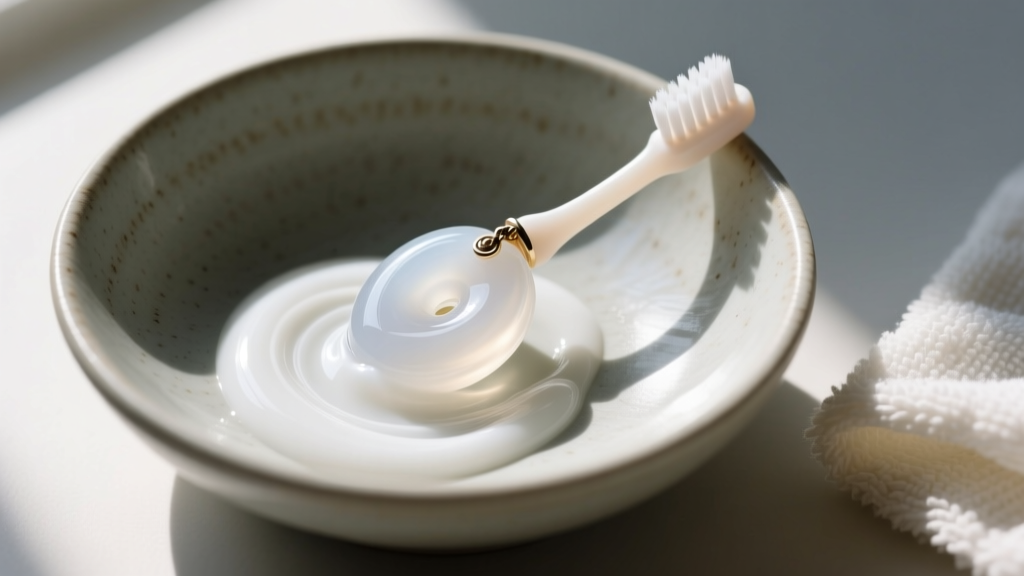
For routine maintenance and the removal of surface sebum (skin oils) and environmental dust, follow this precise, pH-neutral cleaning methodology. This process is safe for howlite, stabilized turquoise, and agate.
Required Materials
- Distilled water (tap water contains chlorine and hard minerals that can leave microscopic deposits)
- pH-neutral liquid castile soap (e.g., Dr. Bronner’s Unscented Baby Mild)
- Extra-soft baby toothbrush (bristles must be flagged/split-ended to avoid micro-scratching)
- 100% cotton or untreated microfiber lint-free cloth
The Cleaning Process
- Prepare the Solution: Mix 1 cup of lukewarm distilled water with exactly two drops of the pH-neutral castile soap in a ceramic or glass bowl. Avoid metal bowls to prevent any galvanic reactions with the necklace's metal findings.
- Dampen, Do Not Soak: Dip the baby toothbrush into the solution and tap off the excess. Never submerge a howlite or white turquoise pendant. You want to introduce moisture only to the surface via the bristles.
- Gentle Agitation: Using light, circular motions, gently work the lather over the surface of the white rock. Pay special attention to the bezel setting or prongs where cosmetic residue and dead skin cells accumulate.
- The Rinse: Hold the pendant under a very slow, lukewarm stream of distilled water for no more than 5 seconds to rinse the soap. Do not use high water pressure.
- Immediate Drying: Pat the stone immediately with the microfiber cloth. Follow up by placing the necklace on a dry cotton towel in a well-ventilated room for 2 hours to allow any residual moisture trapped near the metal settings to evaporate completely.
Storage & Environmental Protection
How a white rock necklace is stored is just as critical as how it is cleaned. Environmental factors are the primary catalysts for the irreversible yellowing of howlite and the degradation of turquoise matrices.
Expert Insight: Prolonged exposure to ultraviolet (UV) light breaks down the molecular bonds in the epoxy resins used to stabilize white turquoise, and it accelerates the oxidation of natural oils trapped inside howlite. Always store white rock jewelry away from direct sunlight.
Optimal Storage Conditions
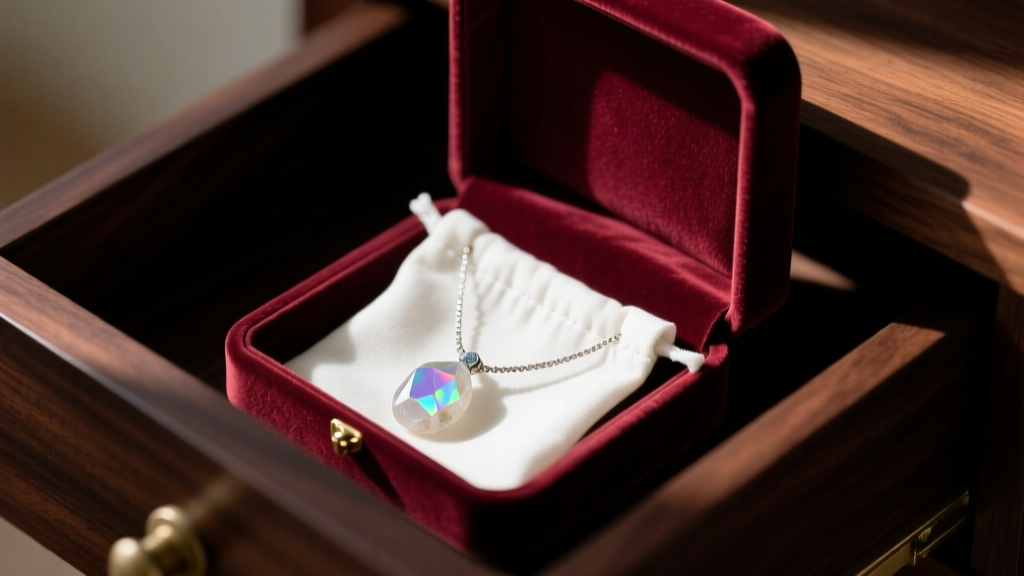
- Isolation: Because howlite ranks at a mere 3.5 on the Mohs scale, it will be severely scratched if stored in a communal jewelry box alongside diamond, sapphire, or even quartz pieces. Store the necklace in an individual soft cotton pouch.
- Humidity Control: High humidity environments can cause the sterling silver chains often paired with white rock pendants to tarnish rapidly, which can then transfer sulfur compounds onto the porous stone. Include a silica gel desiccant packet in your jewelry drawer.
- The "Last On, First Off" Rule: Always put your white rock necklace on after applying perfumes, hairsprays, and lotions. The alcohol and essential oils in cosmetics will immediately seep into the stone's capillaries, causing dark, unremovable grease spots.
Restoring and Polishing: When to Call a Professional
If your howlite or white turquoise pendant has already yellowed from prolonged contact with skin acids and cosmetics, surface cleaning will not reverse the damage. The discoloration penetrates deep into the porous matrix.
Do not attempt to sand or bleach the stone at home. Household bleach (sodium hypochlorite) will chemically react with the calcium in howlite, causing the surface to dissolve and become permanently chalky. Instead, take the piece to a certified lapidary or bench jeweler. A professional can carefully lap the surface of the stone using specialized diamond abrasives to remove the stained outer layer, followed by a safe polishing compound like cerium oxide to restore the original factory luster without compromising the stone's structural integrity.
Summary Maintenance Checklist
Keep your white rock necklace looking pristine by adhering to this simple maintenance schedule:
- After Every Wear: Wipe the stone gently with a dry, clean microfiber cloth to remove daily sebum and sweat before putting it away.
- Monthly: Perform the damp-brush castile soap cleaning protocol detailed above.
- Annually: Inspect the metal bail and chain links for wear, and have a jeweler check the structural integrity of the bezel or prongs holding the porous stone.


