Necklace Body Materials Compared: Durability, Grades & Care
Compare necklace body materials like platinum, titanium, and gold-filled. Learn about metal grades, durability, pricing, and skin safety.

Defining the Necklace Body: The Structural Foundation
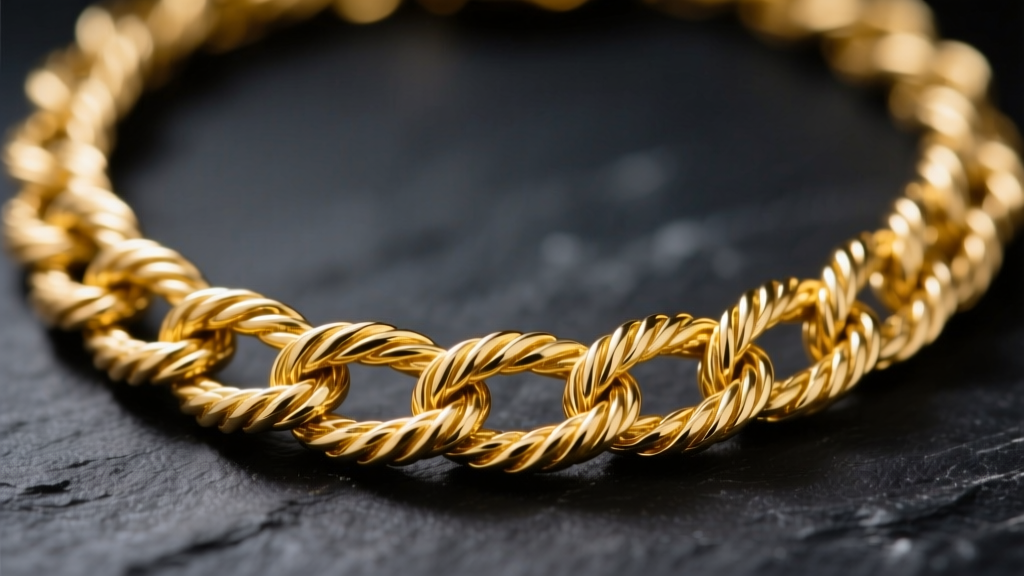
When master jewelers and metallurgists evaluate a piece of jewelry, the term necklace body refers strictly to the continuous structural foundation—the chain, cord, wire, or mesh that bears the tensile load and suspends the clasp and pendant. While consumers often fixate on the carat weight of a diamond pendant or the aesthetic of a clasp, the necklace body dictates the garment's longevity, drape, and ultimate failure rate. According to manufacturing standards outlined by Rio Grande, a leading jewelry supplier, the metallurgical properties of the chain dictate its work-hardening rate, tensile strength, and resistance to environmental degradation.
As of 2026, the market has expanded far beyond traditional yellow gold and sterling silver. Modern wearers demand hypoallergenic properties, extreme tensile strength for heavy pendants, and low-maintenance finishes. Choosing the correct necklace body requires a deep understanding of material science, alloy compositions, and mechanical failure modes. This guide breaks down the exact properties of the most prominent necklace body materials available today.
Metallurgical Breakdown: Precious Metal Alloys
Platinum: The Heavyweight Standard
Platinum remains the apex material for high-end necklace bodies due to its density and unique wear characteristics. The most common alloy used in modern chain manufacturing is 950 Pt / 50 Ru (95% Platinum, 5% Ruthenium). Ruthenium is added to increase the Vickers Hardness (HV) from roughly 50 HV (pure platinum) to approximately 135 HV. Unlike gold alloys, which lose microscopic layers of metal when scratched, platinum displaces. This means a 2mm platinum curb chain will retain its structural mass over decades of wear, merely developing a patina rather than thinning out.
However, platinum's high density means a solid 18-inch, 2mm rope chain can weigh upwards of 25 grams, making it heavy on the cervical spine and exceptionally expensive, with retail prices frequently exceeding $2,500.
Gold Alloys: Balancing Purity and Tensile Strength
Gold necklace bodies are defined by their karatage, which directly impacts their mechanical strength. 14k Gold (58.5% pure gold) is alloyed with copper, silver, and zinc. This higher alloy content increases the tensile strength, making 14k gold highly resistant to stretching and deformation, ideal for supporting heavy lockets. 18k Gold (75% pure gold) offers a richer, warmer color and higher hypoallergenic properties but is significantly softer. An 18k gold box chain under 1.2mm in gauge is highly susceptible to permanent stretching if subjected to sudden tensile shocks.
"The structural integrity of a gold necklace body is not just about the gold content, but the specific trace elements used in the master alloy. Nickel-free white gold, utilizing palladium, requires careful annealing to prevent intergranular cracking during the drawing process." — GIA Gem Encyclopedia
High-Performance Alternative Metals
Titanium: G23 ELI Grade
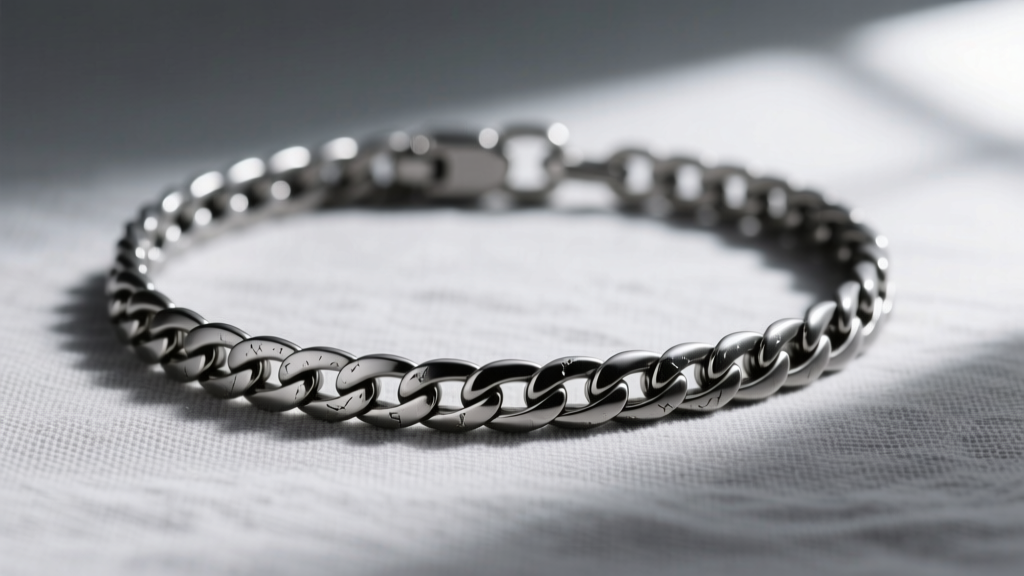
For lightweight durability and absolute biocompatibility, Grade 23 Titanium (Ti 6Al-4V ELI) is the industry benchmark. Originally developed for aerospace and medical implants, G23 titanium boasts a Vickers Hardness of roughly 350 HV and a tensile strength exceeding 860 MPa. A titanium necklace body will not tarnish, rust, or react with highly acidic skin pH levels. The primary drawback is manufacturing complexity; titanium cannot be traditionally soldered with a jeweler's torch. If a link breaks, it requires specialized laser welding, and resizing is virtually impossible.
Tungsten Carbide: Extreme Hardness vs. Brittleness
Tungsten carbide necklace bodies (often marketed simply as tungsten) register an astonishing 1500+ HV. They are virtually scratch-proof and maintain a permanent mirror polish. However, this extreme hardness comes with a severe mechanical trade-off: brittleness. While a tungsten chain will not stretch or dent, it is susceptible to shattering if dropped onto a hard surface or subjected to sharp, high-impact torsional stress. It is best suited for rigid collar-style necklace bodies rather than flexible, draping chains.
Non-Metallic and Hybrid Necklace Bodies
Not all necklace bodies are metallic. High-end pendants are frequently suspended on organic or synthetic cords, which require entirely different maintenance protocols:
- Mulberry Silk Cord: Offers a luxurious drape and high initial tensile strength. However, silk is highly susceptible to UV degradation and hydrolysis. Sweat and perfumes will rapidly degrade the protein fibers, requiring annual replacement.
- Grade-A Leather: Provides a rugged aesthetic but is prone to dry rot and stretching when exposed to moisture. Leather bodies require periodic conditioning with specialized mink oils to maintain structural integrity.
- Polytetrafluoroethylene (PTFE / Teflon) Cord: The modern standard for heavy gemstone beads. PTFE is chemically inert, UV resistant, and possesses immense tensile strength, though it lacks the traditional drape of silk.
Comprehensive Material Comparison Matrix
| Material | Alloy Grade | Hardness (HV) | 18" 2mm Chain Price | Primary Failure Mode |
|---|---|---|---|---|
| Platinum | 950 Pt / 50 Ru | ~135 HV | $2,200 - $3,500 | Clasp ring wear / Link distortion |
| Yellow Gold | 14k (585) | ~125 HV | $600 - $950 | Stretching under heavy loads |
| Sterling Silver | 925 Ag | ~65 HV | $80 - $150 | Sulfide tarnishing / Work-hardening snaps |
| Gold-Filled | 1/20 14k GF | ~110 HV | $60 - $120 | Delamination at solder points |
| Titanium | G23 ELI | ~350 HV | $45 - $90 | Unrepairable via traditional soldering |
| Tungsten | WC-Co | ~1500 HV | $100 - $250 | Shattering under impact / Brittle fracture |
Critical Failure Modes in Necklace Bodies
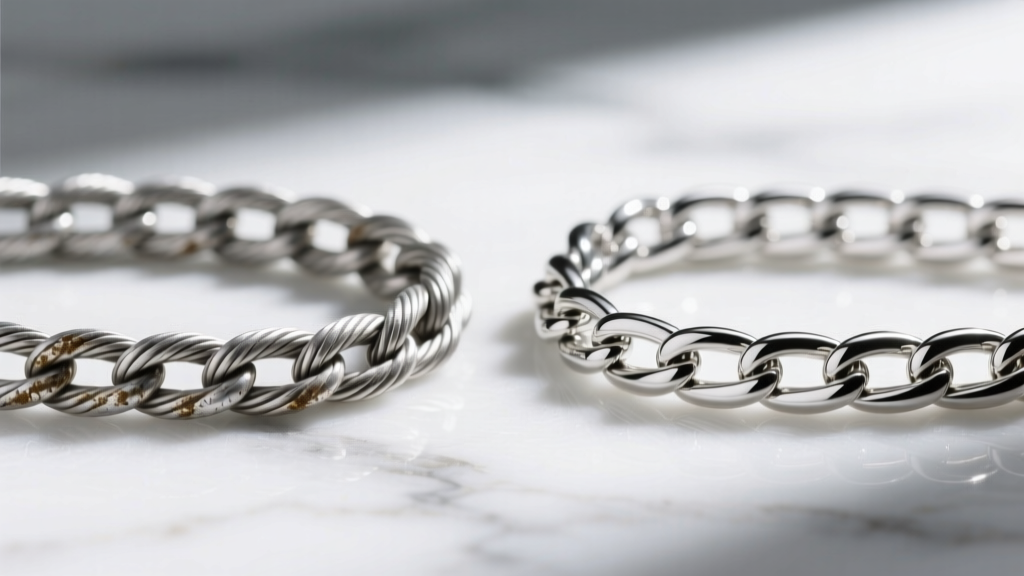
Understanding how necklace bodies fail is crucial for both consumers and designers. The most common mechanical and chemical failure modes include:
Work-Hardening and Metal Fatigue
Metals like sterling silver and certain brass alloys undergo work-hardening. When a chain link is repeatedly bent or twisted, the crystal lattice structure of the metal deforms, becoming harder but significantly more brittle. This is particularly prevalent in Omega chains and Herringbone chains. If an Omega necklace body is bent backward past its natural curvature, the work-hardened metal will micro-fracture and eventually snap without warning.
Galvanic Corrosion
When two dissimilar metals are in constant contact in the presence of an electrolyte (such as human sweat), galvanic corrosion occurs. For example, pairing a sterling silver necklace body with a base-metal pendant bail will cause the less noble metal to corrode rapidly. To prevent this, high-end jewelers ensure that the jump rings, clasps, and chain links are all cast from the exact same master alloy.
Intergranular Corrosion in Lower Karat Golds
In humid or highly polluted environments, 10k and 14k gold chains can suffer from intergranular corrosion. The non-gold alloy metals (like copper and zinc) at the grain boundaries react with environmental chlorides and sulfur, leading to a microscopic crumbling of the chain links from the inside out. This is why Stuller and other major manufacturers heavily promote nickel-free, high-purity master alloys for tropical climates.
Expert Sourcing and 2026 Pricing Benchmarks
The pricing of a necklace body is dictated by the spot price of precious metals, the complexity of the chain weave (e.g., a Byzantine weave requires significantly more labor and metal than a standard cable chain), and the finishing processes. In 2026, the rise of direct-to-consumer CAD/CAM jewelry manufacturing has slightly compressed margins on standard machine-made chains, but hand-forged artisan links command a 300% to 500% premium.
For buyers seeking the optimal balance of durability, skin safety, and cost, 1/20 14k Gold-Filled remains the most pragmatic choice for everyday wear. Unlike gold-plated chains, which feature a microscopic layer of gold (often less than 0.5 microns) that wears off in months, gold-filled wire is mechanically bonded under extreme heat and pressure, guaranteeing that the gold layer constitutes at least 5% of the total metal weight. This provides a necklace body that can withstand decades of daily wear, resisting both tarnish and delamination, at a fraction of the cost of solid gold.


