Antique Squash Blossom Necklace: Authenticity & Value Guide
Discover how to authenticate and value an antique squash blossom necklace. Learn about Navajo silver hallmarks, turquoise grades, and market pricing.

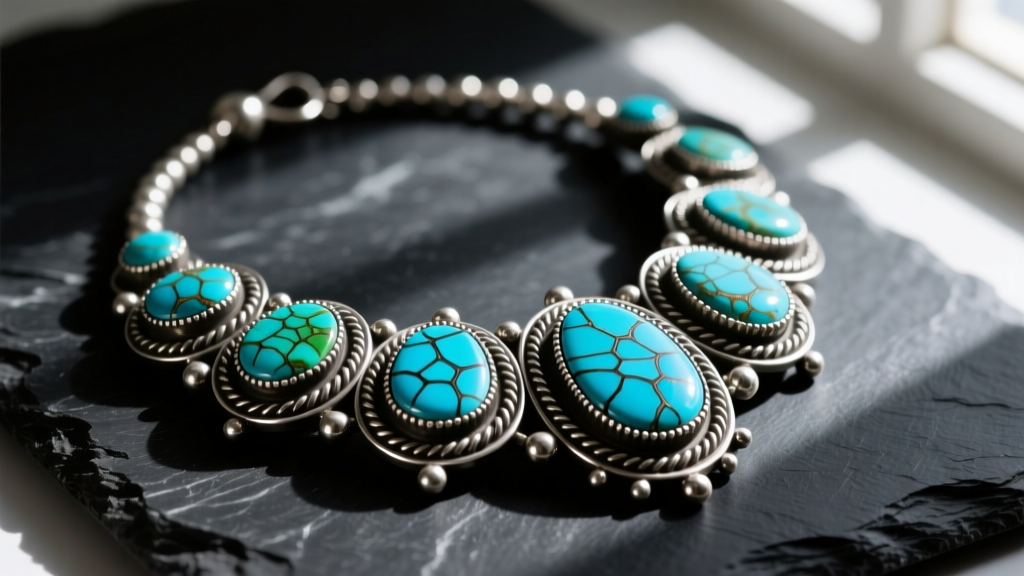
The Historical Anatomy of the Squash Blossom
Despite the ubiquitous name, the iconic beads of an antique squash blossom necklace were not originally modeled after the Native American squash. Instead, historical evidence suggests they were inspired by Spanish pomegranate motifs, which were brought to the Americas by conquistadors and later adopted by Navajo and Pueblo silversmiths. When evaluating these pieces today, understanding this cross-cultural lineage is essential for identifying genuine antique squash blossom necklace examples versus later, mass-produced tourist trade replicas.
The necklace is fundamentally composed of three distinct elements: the plain silver beads (often round or melon-shaped), the fluted tri-petal 'blossom' beads, and the central naja pendant. According to the National Museum of the American Indian, the naja (a crescent-shaped pendant) has Moorish origins, initially used as a talisman to ward off the evil eye, and was introduced to the Plains Indians by the Spanish before being masterfully adapted by Navajo artisans in the late 19th century.
Metallurgy: Coin Silver vs. Sterling Ingot
The silver composition is one of the most reliable indicators of age and value. Early Navajo silversmiths (circa 1880–1920) did not have access to commercial sterling silver sheet or wire. Instead, they melted down US silver coins, primarily Morgan dollars. This resulted in 'coin silver,' which typically assays between .850 and .900 purity, slightly lower than the .925 standard of sterling. Coin silver has a distinct, softer patina and often shows subtle variations in thickness due to hand-hammering.
By the 1930s, commercial sterling silver became widely available. Pieces from this era are lighter, more uniform, and often feature die-stamped designs rather than hand-chiseled repoussé work. When examining a potential acquisition, look for the deep, irregular oxidation that naturally accumulates in the crevices of hand-stamped coin silver over a century of wear.
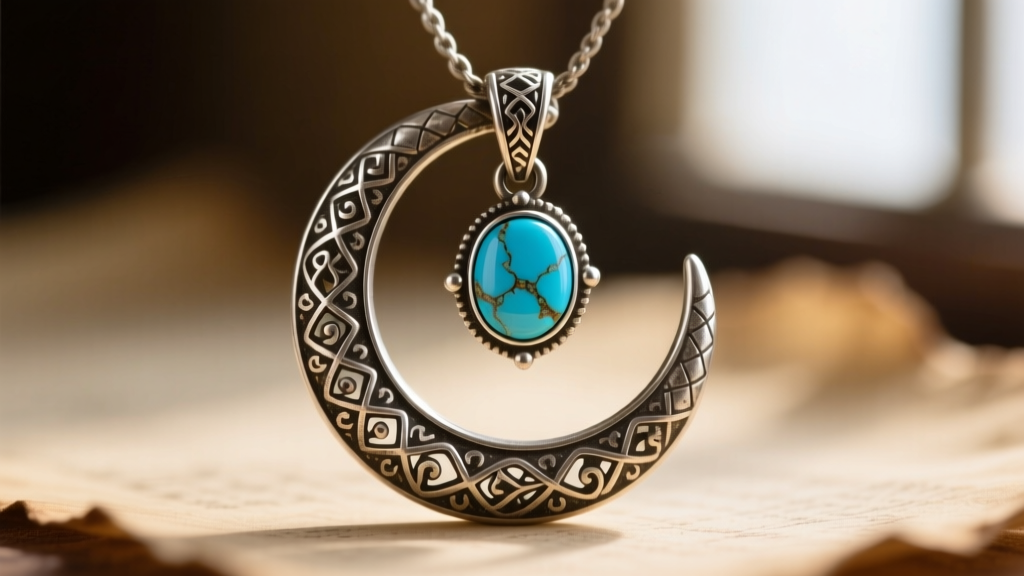
Decoding the Turquoise Cabochons
The introduction of turquoise into squash blossom necklaces did not become widespread until the late 1880s and early 1900s. When assessing the stones, buyers must differentiate between natural, untreated turquoise and modern stabilized or dyed alternatives. Natural turquoise is porous and will often change color slightly over decades of contact with skin oils, developing a rich, personalized patina.
| Turquoise Type | Characteristics | Impact on Antique Value |
|---|---|---|
| Natural / Untreated | Raw stone, porous, may show matrix (host rock). Prone to color shifting over decades. | Highest premium. Essential for museum-quality antiques. |
| Stabilized | Treated with epoxy or resin under pressure to harden the stone and lock in color. | Acceptable in mid-century (1960s+) pieces, but devalues pre-1940s antiques. |
| Dyed / Enhanced | Chemically altered to mimic high-grade blue. Often shows dye concentration in cracks. | Severe negative impact. Indicates a piece is likely a modern reproduction. |
| Block / Synthetic | Man-made composite of plastic and copper dust to fake the matrix. | Disqualifies the piece as an authentic antique. |
For authoritative gemological verification of vintage stones, the Gemological Institute of America (GIA) notes that early 20th-century stones were almost exclusively natural, sourced from historic mines like Bisbee, Number 8, or Candelaria. A black or brown spiderweb matrix is highly desirable and should show natural, asymmetrical patterning rather than uniform, painted-on lines.
Construction Clues: Clasps, Bezels, and Solder
The hardware and setting techniques offer critical forensic evidence regarding a necklace's era. True antique squash blossom necklaces from the late 19th and early 20th centuries did not feature metal clasps. They were strung on leather thongs or woven horsehair and tied at the back of the neck. If a piece features an original silver hook-and-eye, figure-eight, or lobster clasp, it was likely manufactured post-1940s, or the clasp is a later addition.
Examine the bezels (the silver rims holding the turquoise). Early silversmiths hand-cut and filed their bezels, resulting in slightly irregular, sometimes scalloped edges with visible solder pooling at the base. Later 'Fred Harvey' era tourist pieces often feature machine-stamped, perfectly uniform serrated bezels. Furthermore, the Indian Arts and Crafts Association (IACA) warns buyers to inspect the back of the naja pendant; early pieces were often hollow or backed with a simple piece of soldered silver, whereas modern fakes may show obvious casting seams or sprue marks from rubber mold reproduction.
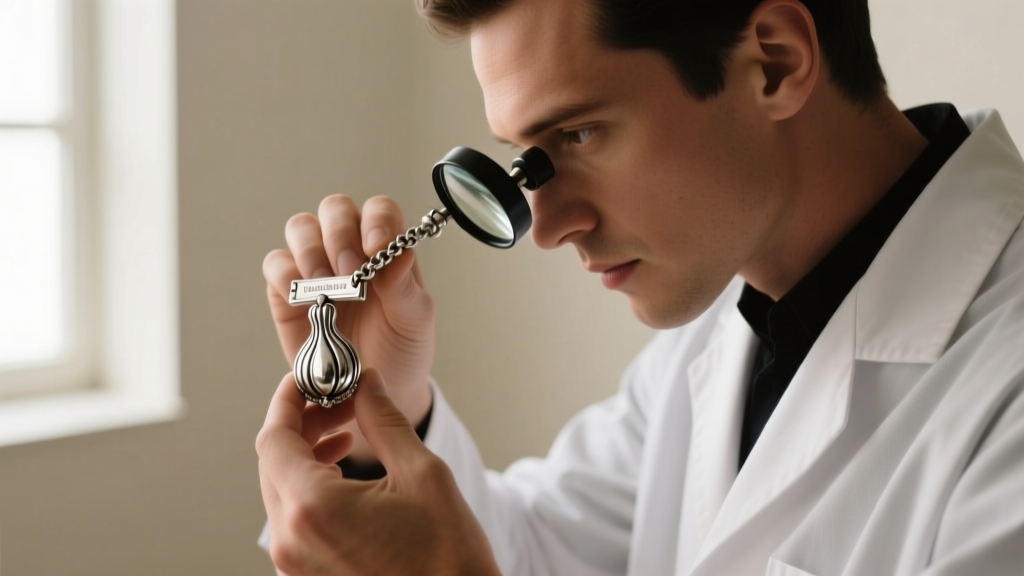
2026 Market Valuation and Pricing Tiers
The market for Native American antique jewelry has matured significantly, with collectors prioritizing provenance, silver weight, and stone quality over sheer size. As of 2026, the pricing landscape for an authentic antique squash blossom necklace is segmented into distinct tiers:
- Tier 1: The Fred Harvey / Tourist Trade Era (1930s–1950s)
Characterized by lighter sterling silver, smaller stones, and uniform stamp work. Price Range: $800 – $2,500. - Tier 2: Mid-Century Heavy Sterling (1960s–1970s)
The 'Boom' era featuring massive silver weight (often 150g–250g+), large natural turquoise cabochons, and prominent artist hallmarks. Price Range: $3,000 – $8,000. - Tier 3: Museum-Quality Early Ingots (1880s–1920s)
Unmarked or early hallmark coin silver, hand-forged beads, natural patina, and historical provenance. Price Range: $12,000 – $45,000+.
Collector's Tip: Never buy an antique squash blossom necklace based solely on weight. While heavy silver is a hallmark of the 1970s boom, the most valuable 1890s coin silver pieces are often surprisingly delicate and lightweight, prized instead for their historical scarcity and masterful hand-forging.
Red Flags: Spotting Reproductions and Fakes
The secondary market is flooded with imported reproductions designed to mimic the Navajo style. When conducting your due diligence, watch for these immediate disqualifiers:
- Casting Seams: Run your fingernail along the edges of the silver beads and the naja. If you feel a raised line running down the center, the piece was cast in a mold, not hand-soldered from sheet silver.
- Glued Stones: Authentic antique settings rely on mechanical tension (the bezel pushed over the stone). If you see epoxy residue or the stone rattles, it is a modern repair or a cheap import.
- Suspicious Patina: Fakers often use liver of sulfur or bleach to artificially age silver. Artificial patina tends to be uniformly black and sits on the surface, whereas genuine century-old oxidation is deeply embedded in the stamping and has a soft, gunmetal-grey warmth to it.
Acquiring an antique squash blossom necklace is an investment in wearable history. By rigorously examining the metallurgy, stone treatments, and construction techniques, you can confidently navigate the market and secure a genuine masterpiece of Southwestern silversmithing.


