Anxiety Necklace Materials: Titanium, Steel, and Silver
Discover the best materials for an anxiety necklace. Compare titanium, surgical steel, and silver for durability, skin safety, and fidget resistance.

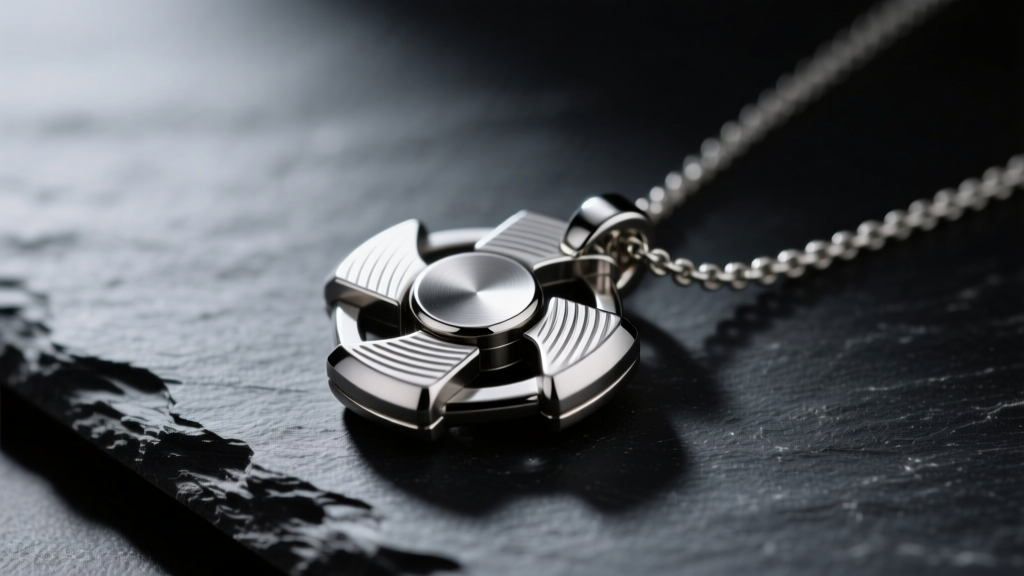
The Biomechanics of Fidget Jewelry: Why Material Matters
An anxiety necklace is not merely a decorative accessory; it is a functional tactile tool designed to ground the wearer during moments of psychological stress. Whether the pendant features a kinetic spinner mechanism, a textured surface for rubbing, or a chewable silicone drop, the physical demands placed on these pieces are vastly different from those of traditional fine jewelry. As of 2026, the market for therapeutic fidget jewelry has matured, yet many consumers still overlook the metallurgical and biomechanical properties that dictate a piece's longevity and safety.
When you interact with an anxiety necklace, you introduce continuous friction, mechanical torque, and prolonged exposure to the skin's microbiome and sebum. Human sweat has a pH ranging from 4.5 to 7.0 and contains chlorides, urea, and lactic acid. Over time, this corrosive environment can degrade inferior alloys, leading to skin irritation or catastrophic mechanical failure. Choosing the correct material requires a deep understanding of hardness scales, tensile strength, and biocompatibility standards.
Core Material Breakdown: Properties and Performance
Implant-Grade Titanium (Ti-6Al-4V ELI)
For kinetic anxiety necklaces—specifically those with rotating spinner elements—Implant-Grade Titanium (ASTM F136 compliant) is the undisputed gold standard. Unlike commercially pure titanium, Grade 23 (Ti-6Al-4V ELI) is alloyed with aluminum and vanadium, yielding a Vickers hardness of approximately 350 HV. This high hardness prevents the surface deformation that often plagues softer metals subjected to repetitive thumb-rubbing.
More importantly, titanium possesses a naturally low coefficient of friction and is highly resistant to galling (cold welding). When two metal surfaces rub together under pressure, softer metals can microscopically tear and fuse. Titanium's self-lubricating oxide layer prevents this, ensuring that spinner pendants remain smooth and silent for years. Furthermore, it contains zero nickel, making it entirely hypoallergenic and safe for those with severe contact dermatitis.
316L Surgical Stainless Steel
316L stainless steel is the most common material in mid-tier anxiety necklaces due to its excellent balance of cost and durability. The 'L' denotes low carbon, which improves corrosion resistance. With a Vickers hardness of roughly 150-200 HV, it is highly resistant to scratching from everyday wear. However, 316L contains 10-14% nickel. While it generally complies with the EU Nickel Directive (EN 1811:2011) by releasing less than 0.5 µg/cm²/week of nickel, individuals with hyper-sensitive allergies may still experience reactions during heavy sweating, as noted by the Mayo Clinic.
Mechanically, steel-on-steel spinner mechanisms are prone to galling if the machining tolerances are too tight or if the piece is not periodically cleaned and lubricated. If you opt for a steel anxiety necklace, ensure the spinner bearing utilizes a secondary material, such as a ceramic or PTFE washer, to mitigate friction.
925 Sterling Silver
Sterling silver (92.5% silver, 7.5% copper) is a poor choice for kinetic or heavy-fidget anxiety necklaces. With a Vickers hardness of only 60-70 HV, it is exceptionally soft. Repetitive rubbing will quickly wear away textured patterns, and the mechanical stress of a spinner mechanism will warp the silver housing. Additionally, the copper content reacts with sulfur compounds in human sweat, causing rapid tarnishing. Silver is best reserved for static grounding pendants—such as smooth worry stones or heavy geometric shapes—where mechanical friction is minimal.
Medical-Grade Silicone
For oral sensory seekers or those who require a soft, yielding texture, silicone is the material of choice. However, not all silicone is equal. You must seek out platinum-cured medical-grade silicone (often rated Shore A 40-50 for optimal chew resistance). Peroxide-cured silicone, often found in cheap imports, leaves toxic chemical residues and degrades rapidly when exposed to UV light and skin oils. Platinum-cured silicone is biocompatible, non-porous, and can be sterilized in boiling water without losing its structural integrity.
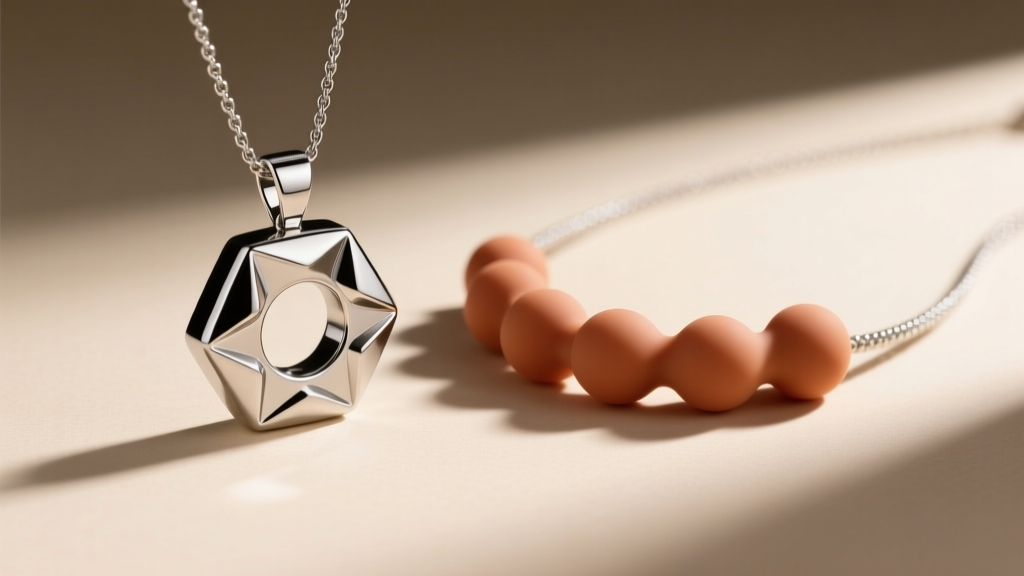
Comparative Data: Hardness, Tensile Strength, and Cost
The following table synthesizes the critical material properties relevant to therapeutic fidget jewelry. Use this framework to match your specific sensory needs with the appropriate metallurgical profile.
| Material | Vickers Hardness (HV) | Nickel Release | Tensile Strength | Best Use Case |
|---|---|---|---|---|
| Ti-6Al-4V ELI (Titanium) | ~350 HV | Zero | 860 MPa | Kinetic spinners, heavy friction |
| 316L Surgical Steel | 150 - 200 HV | <0.5 µg/cm²/week | 485 MPa | Budget spinners, textured rubbing |
| 925 Sterling Silver | 60 - 70 HV | Zero | 250 MPa | Static grounding stones, light touch |
| Platinum-Cured Silicone | N/A (Shore A 40-50) | Zero | 8 MPa | Chewable pendants, soft sensory |
Mechanical Failure Modes in Spinner and Fidget Pendants
Understanding how anxiety necklaces fail is crucial for making an informed purchase. The most common point of failure is not the pendant itself, but the junction between the moving parts and the bail (the loop that connects the pendant to the chain).
- Galling and Seizure: As mentioned, steel-on-steel friction generates microscopic heat and debris. Without proper clearance (ideally 0.05mm to 0.1mm in CNC-machined spinners), the mechanism will seize entirely.
- Bail Shearing: During an acute anxiety episode, users may unconsciously yank or pull the necklace. If the bail is soldered with a weak alloy or is too thin (under 1.5mm in diameter), the sheer force will snap it.
- Silicone Tearing: In chewable necklaces, the hole where the cord passes through is a high-stress concentration point. High-quality designs reinforce this area with a thicker silicone collar or a recessed steel core to prevent the pendant from being bitten off and swallowed.
"When designing kinetic jewelry for neurodivergent users, the tolerance of the moving parts must account for the introduction of skin oils and environmental dust. Sealed bearing systems or open-channel designs that are easily flushed with isopropyl alcohol are vastly superior to enclosed, un-serviceable mechanisms."
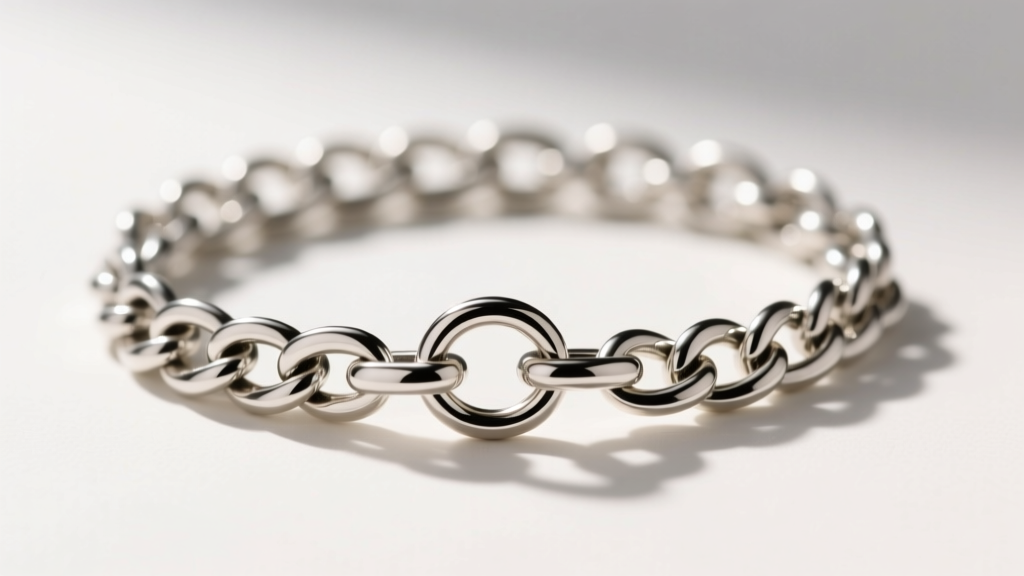
Chain Selection: Matching the Pendant's Durability
An anxiety necklace is only as strong as its weakest link—literally. The chain must withstand not just the weight of the pendant, but the sudden, high-impact tensile loads generated by pulling or tugging. Avoid snake chains and herringbone chains at all costs; their interlocking plate structures have very low shear strength and will kink or snap under minimal lateral stress.
Instead, opt for structurally robust weaves:
- Rolo Chains: Featuring uniform, thick circular or oval links, rolo chains distribute force evenly and resist kinking. A 2.5mm to 3.5mm 316L steel rolo chain can withstand upwards of 15 lbs of tensile force before failing.
- Wheat (Spiga) Chains: Woven in a continuous braided pattern, wheat chains offer exceptional flexibility and high tensile strength, making them ideal for heavy titanium or steel spinner pendants.
- Cable Chains: The classic oval link design is reliable, provided the wire gauge is sufficiently thick (minimum 1.2mm wire thickness for a 2.0mm overall chain width).
Final Verdict: Choosing Your Ideal Anxiety Necklace
Selecting the right material for your anxiety necklace requires aligning your sensory needs with the physical properties of the metal or polymer. If your coping mechanism involves rapid, repetitive spinning or aggressive rubbing, Implant-Grade Titanium (Ti-6Al-4V) is the only material that guarantees long-term mechanical smoothness and absolute biocompatibility. For those on a budget who require textured feedback without kinetic movement, 316L Surgical Steel offers excellent durability, provided you monitor for nickel sensitivities. Finally, if your anxiety manifests as oral fixation, invest exclusively in platinum-cured medical silicone paired with a breakaway safety clasp to prevent choking hazards.
By prioritizing metallurgical integrity and structural design over superficial aesthetics, you ensure that your therapeutic jewelry remains a reliable, safe, and effective grounding tool for years to come.


