Finding the Perfect Budget Masculine Necklace in 2026
Discover how to evaluate a budget masculine necklace in 2026. We break down metal grades, chain gauges, and hidden costs for true value.


The New Standard for Men's Jewelry Value
The landscape of men's jewelry has shifted dramatically over the last few years. In 2026, finding a high-quality, budget-friendly masculine necklace is no longer about settling for cheap alloys or overly flashy, poorly constructed pieces. Today's market rewards the informed buyer who understands metallurgy, chain mechanics, and long-term wearability. A true budget masculine necklace isn't just the cheapest option on the shelf; it is a piece that offers maximum cost-per-wear value without degrading, tarnishing, or snapping after a few months of daily use.
Whether you are looking for a subtle everyday chain or a standout pendant piece, understanding the material hierarchy and structural integrity of men's chains is essential. According to style experts at GQ, the modern approach to men's necklaces favors minimalist durability over excessive ornamentation. This guide breaks down exactly how to assess value, avoid common failure modes, and select a chain that punches far above its price tag.
The Material Hierarchy: What to Buy Under $150
When evaluating a budget masculine necklace, the base metal dictates longevity, skin compatibility, and overall aesthetic. Many budget brands obscure their material origins, using vague terms like 'surgical steel' or 'titanium alloy' without specifying the exact grade. Here is the definitive breakdown of what you should actually be buying in the sub-$150 category.
316L Stainless Steel: The Budget Workhorse
316L stainless steel is the most common material in budget men's jewelry. It is highly resistant to tarnish, incredibly strong, and very affordable. However, it contains trace amounts of nickel, which can cause contact dermatitis in roughly 10% of the population. If you have sensitive skin, 316L is a gamble. Furthermore, while it won't rust, it can develop a dull, cloudy patina over time that requires polishing with a specialized compound to restore its original luster.
Grade 23 Titanium (Ti 6Al-4V): The Ultimate Value
Grade 23 titanium, also known as aerospace-grade titanium, is the undisputed king of value in 2026. It is completely hypoallergenic, 45% lighter than steel, and impervious to water, sweat, and chlorine. While it costs slightly more than 316L steel (expect to pay $60-$120 for a quality chain), its lifespan is virtually infinite. It will never turn your skin green, rust, or degrade, making it the smartest investment for a daily-wear masculine necklace.
925 Sterling Silver: The Classic with Caveats
Sterling silver offers a premium, bright white luster that steel and titanium cannot replicate. However, as noted by the Gemological Institute of America (GIA), sterling silver is an alloy containing 7.5% copper, which makes it highly susceptible to oxidation and tarnishing when exposed to sulfur and moisture. A budget silver necklace requires regular maintenance. If you are unwilling to polish your jewelry weekly or store it in anti-tarnish bags, silver is a poor value proposition for daily wear.
| Material Grade | Avg. Price (20-inch) | Tarnish Resistance | Weight Profile | Allergy Risk |
|---|---|---|---|---|
| 316L Stainless Steel | $35 - $65 | High | Heavy / Dense | Moderate (Nickel) |
| Grade 23 Titanium | $60 - $120 | Absolute | Ultra-Lightweight | Zero |
| 925 Sterling Silver | $80 - $150 | Low (Requires Care) | Medium | Low (Copper alloy) |
| Brass w/ PVD Coating | $20 - $45 | Very Low (Fails Fast) | Medium | High |
Chain Styles and Gauge Thickness: The Value Sweet Spot
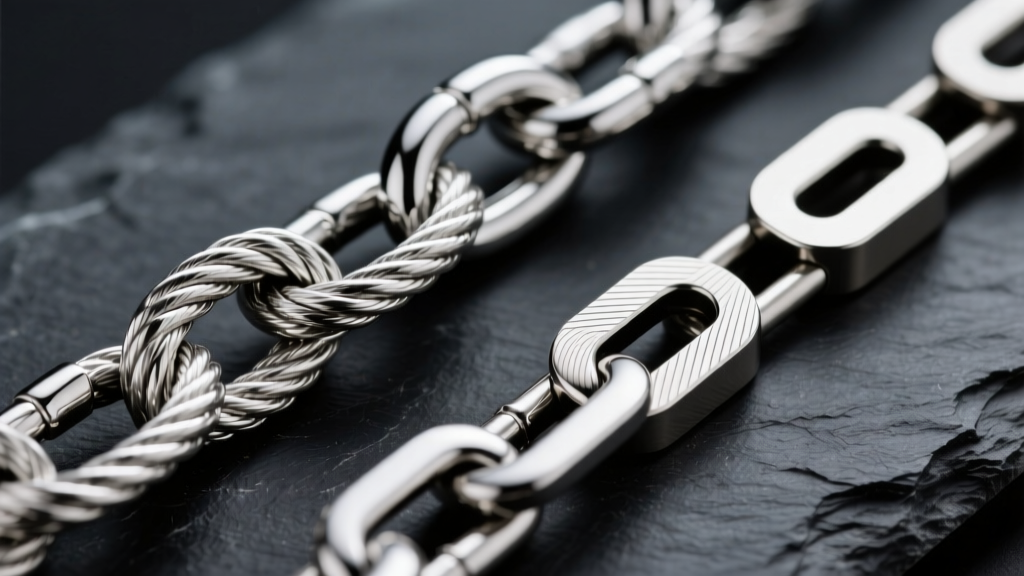
The physical dimensions of the chain dictate both its visual presence and its structural integrity. A common mistake when buying a budget masculine necklace is prioritizing extreme thickness to achieve a 'bold' look, only to end up with a hollow, easily crushed chain. Conversely, chains that are too thin look fragile and snap under minor tension.
The 3mm to 5mm Sweet Spot
For a standalone masculine necklace that balances presence with subtlety, a width between 3mm and 5mm is ideal. In wire gauge terms, this translates roughly to an 8-gauge (3.2mm) to 6-gauge (4.1mm) chain. This thickness is substantial enough to catch the light and frame the neckline without looking ostentatious. More importantly, solid links in this size range are highly resistant to kinking and snapping.
Best Chain Links for Budget Buyers
- Cuban Link: The undisputed classic. The interlocking, flattened oval links lay perfectly flat against the chest. Ensure the links are soldered shut; unsoldered budget Cubans will pull apart within months.
- Figaro Chain: Featuring a pattern of three short links followed by one long link, the Figaro offers visual texture without the heavy weight (and higher price) of a thick Cuban.
- Box Chain: Composed of square links connected at 90-degree angles. Box chains are incredibly strong and rarely kink, making them the best choice for holding heavier pendants.
- Rope Chain: While beautiful, budget rope chains are notorious for trapping dirt, sweat, and dead skin cells in their twisted crevices. They require frequent ultrasonic cleaning to maintain their shine.
Hidden Costs and Failure Modes in Budget Men's Jewelry
The true cost of a budget necklace isn't just the sticker price; it's the cost of replacement when the piece inevitably fails. Understanding the common failure modes of cheap men's jewelry will save you hundreds of dollars in the long run.
The Plating Trap: PVD vs. Electroplating
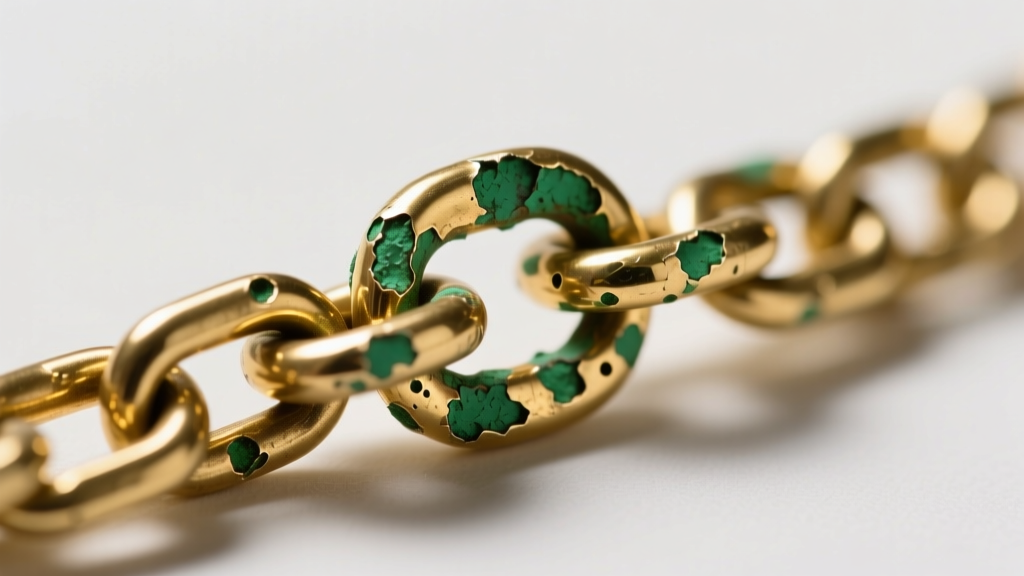
Never buy a gold- or black-plated necklace if the base metal is brass or zinc alloy. These pieces are typically electroplated, a process that applies a microscopically thin layer of color that will wear off in a matter of weeks, exposing the reactive base metal underneath. This leads to the dreaded 'green neck' phenomenon, caused by copper oxidizing against your skin's natural acids. If you must buy a colored chain, ensure it uses PVD (Physical Vapor Deposition) coating over a stainless steel base. PVD bonds the color at a molecular level, offering vastly superior scratch and fade resistance, though it still won't last a lifetime on high-friction areas like the clasp.
Hollow vs. Solid Links
Many budget retailers sell thick-looking chains (8mm and above) at suspiciously low prices. These are almost always hollow electroformed links. While they look impressive on display, hollow links are essentially metallic foil. They dent easily if bumped against a doorframe, crush under the weight of a heavy pendant, and are virtually impossible for a jeweler to repair once broken. Always opt for a thinner, solid link over a thick, hollow one.
Clasp Mechanics: The Weakest Link
The clasp is the most common point of failure on any necklace. Budget chains often come with tiny, flimsy lobster clasps that lack the spring tension to stay closed, or cheap magnetic clasps that detach the moment the chain catches on a shirt collar. For a secure, long-lasting masculine necklace, look for a sturdy, oversized lobster clasp with a reinforced jump ring. If you prefer a seamless look, a well-machined fold-over box clasp with a safety latch is the premium standard, though it is rarely found on chains under $80.
The 2026 Value Assessment Framework
When shopping for your next piece, run it through this quick value assessment checklist to ensure you are getting a genuine budget masculine necklace that will last:
- Verify the Metal Grade: Look for '316L', 'Grade 23 Titanium', or '925'. Avoid 'stainless steel' without a grade number, and completely avoid 'alloy' or 'brass base'.
- Check the Link Solder: Inspect the links closely. Are the seams welded or soldered shut? If the links are just bent closed, they will pull apart.
- Test the Weight: Pick it up. A solid 4mm steel chain should have a satisfying, dense heft. If a thick chain feels suspiciously light, it is hollow.
- Examine the Clasp: Flick the lobster clasp lever. It should snap back with immediate, firm resistance. A sluggish lever indicates a cheap internal spring that will fail.
Final Verdict: Building a Lasting Collection
Investing in a budget masculine necklace doesn't mean compromising on quality; it means being strategic about where your money goes. By prioritizing Grade 23 titanium or 316L stainless steel, sticking to the 3mm-5mm solid link sweet spot, and avoiding the trap of hollow, plated brass, you can build a jewelry collection that looks premium and survives daily wear. True value in men's jewelry is defined by longevity, comfort, and timeless design—attributes that are entirely accessible if you know exactly what to look for in 2026.


