Archangel Necklace Trends: 2026 Styling & Layering Guide
Discover how to style the archangel necklace in 2026. Explore material grades, layering techniques, and trend forecasts for this spiritual jewelry staple.

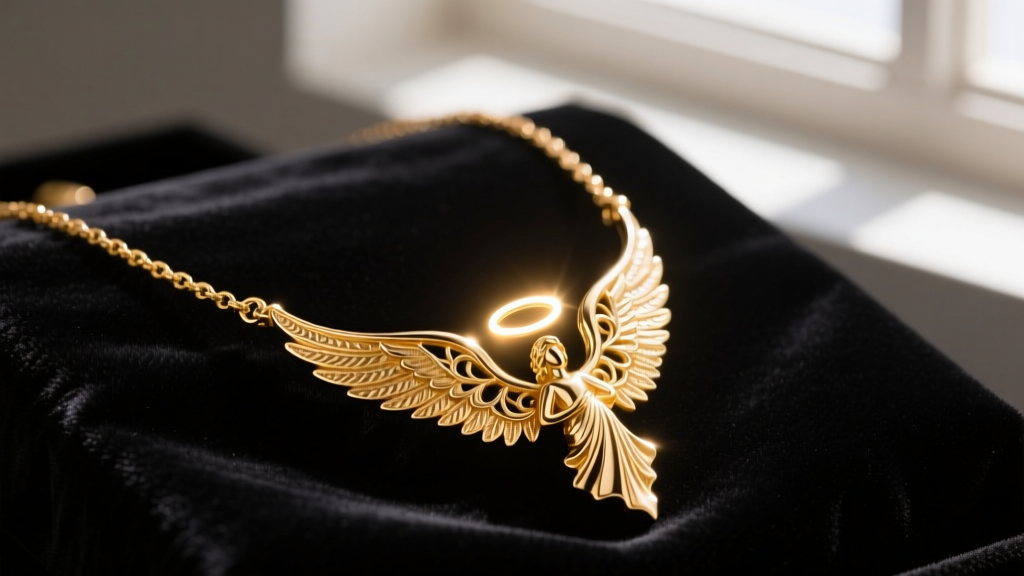
The Cultural Shift: Why the Archangel Necklace Dominates 2026
The jewelry landscape of 2026 has decisively pivoted from the ultra-minimalist, barely-there chains of the early 2020s toward bold, narrative-driven symbolism. At the forefront of this maximalist renaissance is the archangel necklace. No longer confined to traditional religious contexts, the archangel motif has been reclaimed by the 'Etherealcore' and 'Dark Academia' aesthetics, serving as a powerful emblem of protection, guidance, and personal sovereignty. According to recent market analyses tracked by Vogue Jewelry Trends, searches for celestial and warrior-angel motifs have surged by over 140% year-over-year, signaling a consumer desire for jewelry that carries profound emotional weight and striking visual presence.
Unlike standard angel wing pendants, which often lean delicate and passive, the archangel necklace introduces elements of action and authority. Whether depicted with drawn swords, expansive wingspans, or holding scales of justice, these pieces demand attention. However, styling such a commanding piece requires a strategic approach to proportion, metallurgy, and layering to ensure it elevates rather than overwhelms your wardrobe.
Material Breakdown: Choosing the Right Metal Grade
Because archangel pendants often feature intricate, high-relief casting with deep undercuts (such as the folds of wings or the details of a miniature sword), the choice of metal drastically affects both the longevity and the legibility of the design. The GIA Gem Encyclopedia emphasizes that intricate castings require metals with excellent flow properties and structural integrity. Below is a comparative analysis of the most common metal grades used for these necklaces in 2026.
| Metal Grade | Composition & Standards | Pros for Intricate Pendants | Cons & Maintenance | Price Range |
|---|---|---|---|---|
| 925 Sterling Silver | 92.5% pure silver, 7.5% copper alloy | Excellent for capturing fine details; naturally bright white. | Prone to sulfide tarnish; requires rhodium plating (0.1-0.5 microns) for protection. | $45 - $120 |
| Gold Vermeil | Sterling silver base with minimum 2.5 microns of 14k/18k gold | Offers the warm tone of gold at a fraction of the cost; heavy base feels luxurious. | Gold layer will eventually wear off on high-friction areas like the bail. | $80 - $250 |
| Solid 14k Gold | 58.3% pure gold, alloyed with copper/zinc | Hypoallergenic, highly durable, holds prongs and thin wing tips without bending. | Higher initial investment; slightly less yellow than 18k. | $350 - $900 |
| Solid 18k Gold | 75% pure gold, premium alloy mix | Rich, buttery color that enhances the 'halo' effect of celestial designs. | Softer metal; delicate wing tips (under 1mm) may bend if snagged. | $800 - $2,500+ |
Expert Insight: If you are purchasing a sterling silver archangel necklace, ensure the bail (the loop that connects the pendant to the chain) is reinforced. A heavy 15-gram silver pendant will quickly wear through a thin, unplated silver bail due to friction against the chain.
Decoding the Motifs: Michael, Gabriel, and Abstract Wings
The term 'archangel' encompasses several distinct figures, each offering a unique visual vocabulary for jewelry designers. Understanding these motifs allows you to select a piece that aligns with your personal narrative.
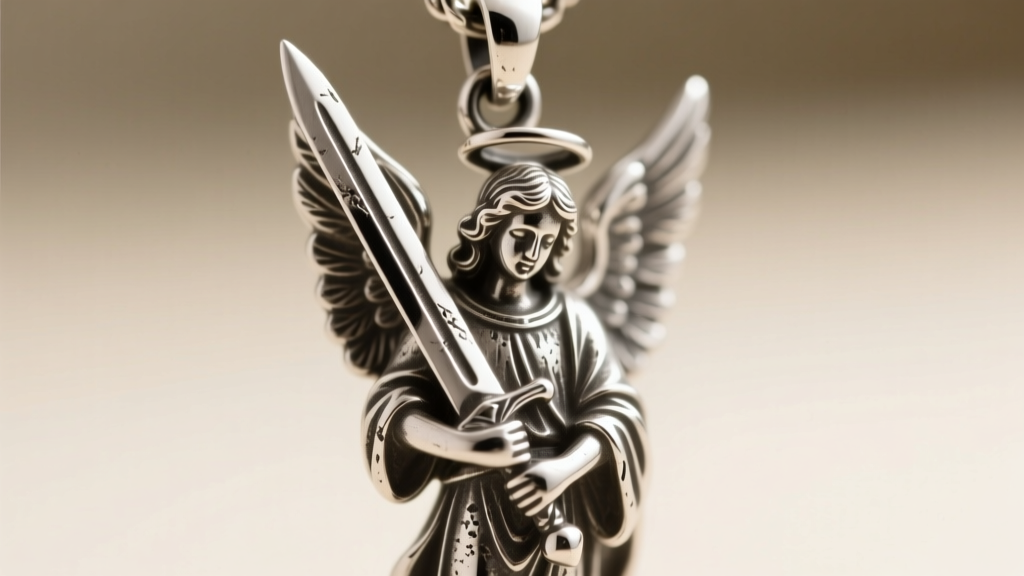
- Archangel Michael (The Warrior): The most popular motif in 2026's dark academia trend. Michael is typically depicted with a drawn sword, a shield, or standing over a dragon. Designers often use deep oxidation (blackening) in the recesses of the armor and wings to create stark contrast. Pendants range from 25mm to 45mm in height.
- Archangel Gabriel (The Messenger): Associated with communication and revelation, Gabriel's jewelry motifs often incorporate a lily, a lantern, or a horn. These designs tend to be more fluid and art-nouveau-inspired, utilizing sweeping, asymmetrical wing spans that measure up to 50mm across.
- Archangel Raphael (The Healer): Often shown with a traveler's staff or a fish, Raphael motifs appeal to the wanderer and the holistic wellness community. These pendants are usually cast in a more rustic, matte-finished gold or bronze, emphasizing earthy protection.
- Abstract / Seraphim Wings: For those who prefer the aesthetic without the literal figure, abstract six-winged Seraphim designs or interlocking geometric halos provide a modern, avant-garde alternative that pairs beautifully with architectural fashion.
The 2026 Layering Framework: Proportions and Chain Types
Wearing an archangel necklace in isolation is a classic choice, but the prevailing 2026 styling technique involves the 'Ethereal Stack'—a carefully calibrated three-tier layering method that balances the heavy visual weight of the pendant with complementary textures.
'The secret to layering a heavy, narrative-driven pendant like an archangel is to anchor it with contrasting textures. You need the structural rigidity of a woven chain to support the weight, flanked by organic or geometric elements to frame the face.' — Elara Vance, Senior Jewelry Stylist
The 3-Tier Ethereal Stack
To execute this look without tangling or visual clutter, adhere to these exact length and gauge specifications:
- Tier 1 (The Anchor - 14 to 15 inches): A 2mm to 3mm freshwater pearl choker or a sleek, 1.5mm solid gold herringbone chain. This sits snugly at the base of the throat, providing a luminous backdrop.
- Tier 2 (The Focal Point - 18 to 20 inches): Your archangel necklace. The chain must be structurally sound; a 1.5mm to 2.0mm wheat chain or box chain is ideal. Avoid delicate cable chains (under 1.0mm), as the dynamic movement of a 10g+ pendant will cause micro-fractures in the links over time. Ensure the clasp is a heavy-duty lobster or a box clasp with a safety figure-8, rather than a fragile spring-ring.
- Tier 3 (The Elongator - 24 to 28 inches): A delicate 1.0mm rope chain featuring a simple, non-competing geometric drop (like a 4mm raw diamond or a plain gold sphere). This draws the eye downward, elongating the torso and balancing the top-heavy nature of the archangel wings.
Neckline Pairings: Maximizing the Pendant's Impact
The architectural nature of an archangel necklace means it interacts heavily with the neckline of your garment. The wrong pairing can result in the pendant getting lost in fabric folds or clashing with structural collars.
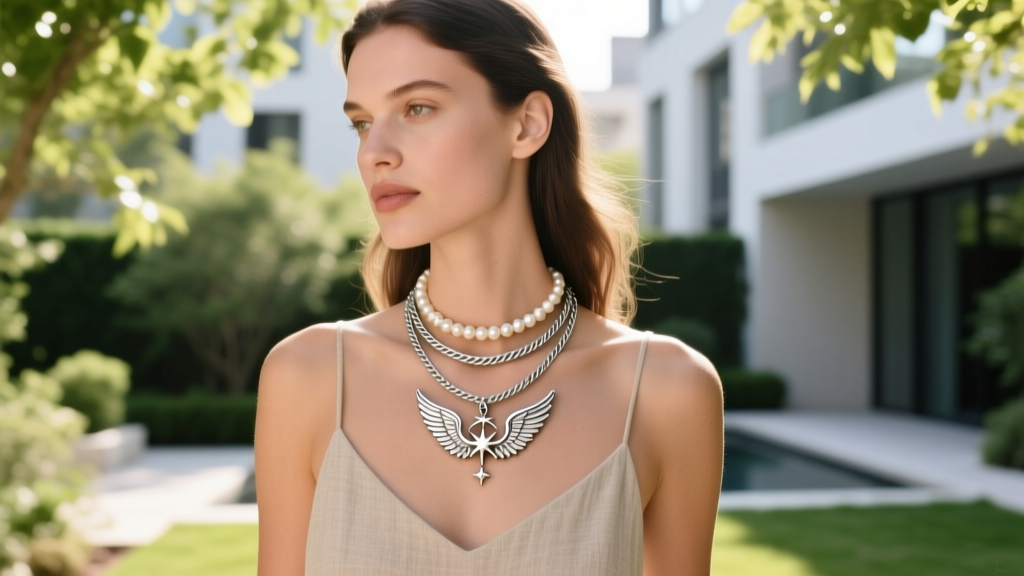
- Deep V-Neck & Plunge: The optimal canvas. A 20-inch chain allows the pendant to rest precisely in the negative space of the V-neck, framing the wings against the skin. Avoid pendants wider than 30mm here, or they may touch the fabric edges.
- Crew Neck & Turtleneck: Requires a longer drop (22 to 24 inches). The pendant must rest entirely below the collarbone line. Dark, solid-colored knits (like charcoal cashmere or black ribbed cotton) provide the best contrast for oxidized silver or bright gold.
- Square Neck & Corsetry: Highly synergistic with the Dark Academia and Renaissance-revival aesthetics. Choose a shorter 16-to-18-inch chain so the archangel sits just above the horizontal hem of the square neckline, creating a striking geometric intersection.
- Off-the-Shoulder & Asymmetric: Proceed with caution. The horizontal expanse of bare skin can make a single, heavy pendant look unbalanced. If wearing off-the-shoulder, opt for a multi-strand archangel lariat that distributes weight horizontally across the collarbones.
Investment & Pricing Tiers
When investing in an archangel necklace, you are paying for both the metallurgical value and the artistry of the 3D CAD modeling or traditional wax carving. The market is currently segmented into three distinct tiers:
- Entry-Level Artisan ($40 - $120): Typically cast in 925 sterling silver or brass with gold plating. Details may be slightly softer due to the use of mass-produced rubber molds. Excellent for trend-testing.
- Mid-Tier Fine Jewelry ($150 - $600): Features solid 10k or 14k gold, or heavy gold vermeil over sterling. These pieces are often cast using high-resolution 3D resin printing, allowing for microscopic details like individual feathers and facial expressions. Brands in this tier frequently use secure, laser-welded bails.
- Luxury & Heirloom ($800 - $3,000+): Solid 18k gold or platinum, often featuring accent gemstones (e.g., pavé diamonds in the halo, or a cabochon sapphire in the sword hilt). These are hand-finished by master jewelers, with polished high-points and matte recesses to maximize light play.
Conclusion: Wearing Your Armor
The archangel necklace is far more than a fleeting trend; it is a testament to the jewelry industry's broader shift toward talismanic, deeply personal adornment. By understanding the structural requirements of heavy pendants, selecting the appropriate metal grade for your lifestyle, and mastering the art of the three-tier layering stack, you can seamlessly integrate this powerful motif into your daily rotation. Whether you align with the warrior spirit of Michael or the communicative grace of Gabriel, the right archangel necklace serves as both a striking style anchor and a wearable piece of personal armor.


