Anatomy of the Ari Heart Necklace: A Technical Teardown
An expert technical teardown of the Ari heart necklace, analyzing chain gauge, metal purity, clasp mechanics, and long-term durability for daily wear.

The Engineering of Delicate Heart Pendants
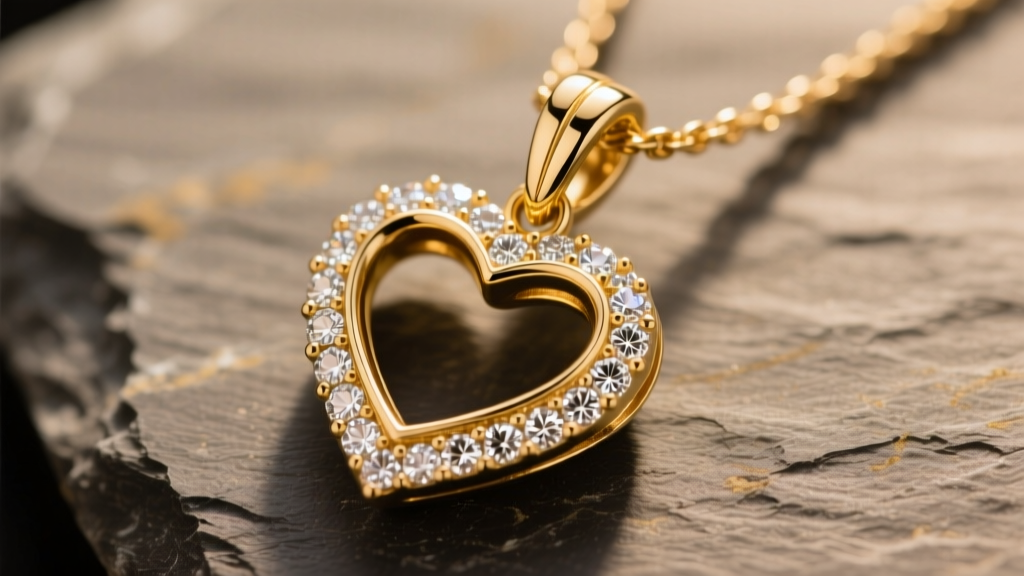
The 'Ari heart necklace' has transcended seasonal trends to become a permanent staple of modern minimalist fine jewelry. Characterized by its delicate 10-14mm heart silhouette, usually featuring a single bezel-set or micro-pavé diamond suspended on a micro-cable chain, it represents a specific engineering challenge for jewelers. When precious metal jewelry scales down to sub-2-gram weights, structural compromises become the primary cause of catastrophic failure. As a jewelry technical analyst, I evaluate these pieces not just on their aesthetic merits, but on their metallurgical integrity and mechanical resilience.
The foundation of any Ari-style heart pendant begins in the CAD (Computer-Aided Design) phase. The thickness of the heart's profile dictates its longevity. A high-quality Ari heart necklace will feature a Z-axis depth of at least 1.8mm to 2.2mm. Anything thinner risks warping under minor compressive forces, such as being slept on or pressed against a hard surface. Furthermore, the placement of the casting sprue—the channel through which molten gold enters the mold—is critical. In premium manufacturing, the sprue is attached at the bottom cleft of the heart to avoid visible filing marks or structural weak points on the primary visual face of the pendant.
Bezel vs. Prong: Stone Retention in the Ari Design
While some variations of the Ari heart necklace utilize a 4-prong basket setting, the most durable iterations employ a full bezel setting. A precision-machined bezel wall, typically measuring 0.25mm to 0.35mm in thickness, is burnished over the girdle of the diamond. According to the Gemological Institute of America (GIA), a properly executed bezel setting offers superior protection to the stone's edges compared to prongs, which are prone to snagging on textiles and lifting over time. In micro-settings, a 14k gold bezel provides the optimal balance of malleability for the setter and rigidity for long-term stone retention.
Chain Metallurgy and Gauge Tolerances
The chain is the unsung hero of the Ari heart necklace, bearing the dynamic load of the pendant while resisting the corrosive effects of human skin chemistry. The industry standard for this style is a 0.8mm to 1.0mm cable chain. However, the true measure of durability lies in the alloy composition and the welding of the links.
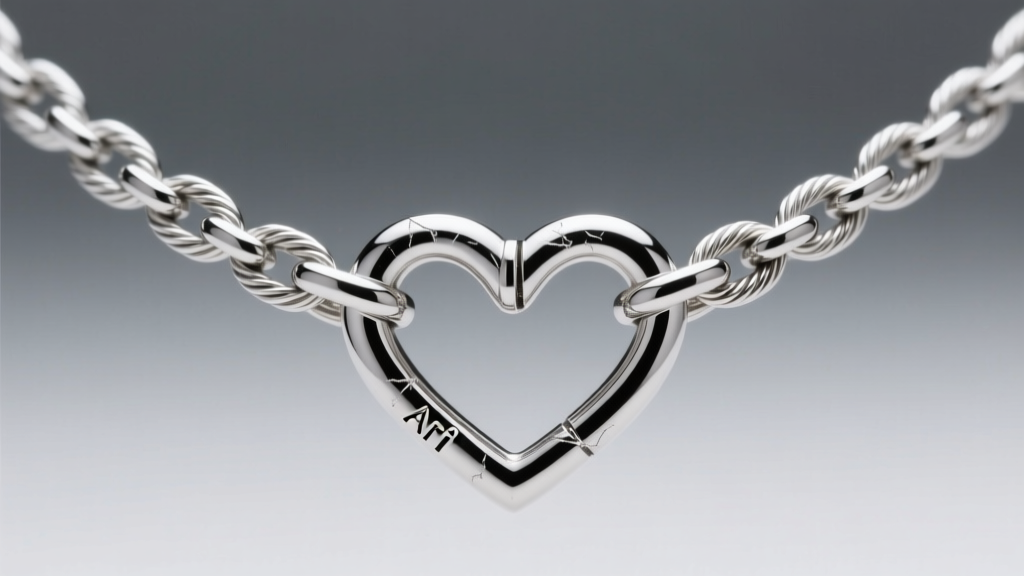
Premium manufacturers utilize laser welding to close each individual link. Traditional torch soldering introduces a lower-karat solder alloy that creates a weak point and a visible color mismatch. Laser welding fuses the exact same 14k or 18k gold alloy, maintaining the chain's uniform tensile strength. When evaluating gold purity, 14k gold (58.5% pure gold, alloyed with copper, silver, and zinc) possesses a Vickers hardness (HV) of approximately 120-140. In contrast, 18k gold (75% pure gold) is significantly softer, hovering around 90-110 HV. For a delicate 0.9mm chain supporting a pendulum weight, 14k gold is metallurgically superior due to its higher resistance to elongation and link deformation.
| Chain Specification | Alloy Purity | Vickers Hardness (HV) | Elongation Risk | Recommended Use |
|---|---|---|---|---|
| 0.8mm Cable | 18k Yellow Gold | ~95 HV | High | Occasional wear, lightweight pendants |
| 0.9mm Cable | 14k Yellow Gold | ~130 HV | Low | Daily wear, standard Ari heart pendants |
| 1.0mm Cable | 14k White Gold (Nickel) | ~145 HV | Very Low | Heavy daily wear, high-tension environments |
Clasp Mechanics: The Weak Point of Fine Jewelry
The clasp assembly is invariably the most vulnerable mechanical component of any fine necklace. The Ari heart necklace typically utilizes a 5mm spring ring clasp to maintain a seamless, delicate aesthetic. However, the internal mechanics of a spring ring reveal a complex material science compromise.
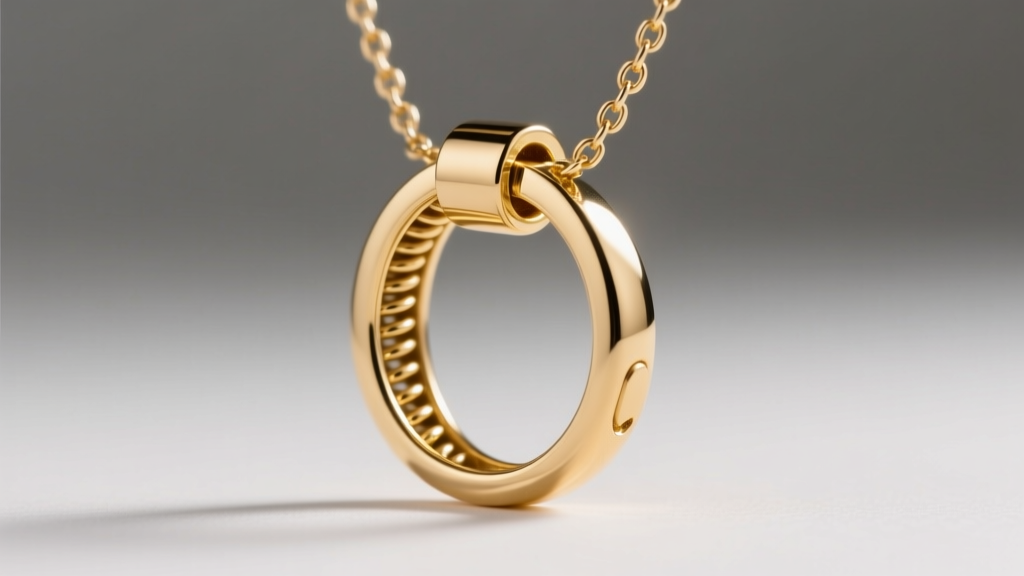
Pure gold and standard karat gold alloys lack the elastic modulus required to function as a spring; they would permanently deform after a few actuations. Therefore, the internal spring wire of a 5mm spring ring is almost universally manufactured from stainless steel or beryllium copper. This creates a bimetallic junction inside the clasp housing. When exposed to the saline and acidic environment of human sweat, this junction can trigger galvanic corrosion over a period of 3 to 5 years, leading to spring failure. Furthermore, the jump ring connecting the clasp to the chain must be hard-soldered or laser-welded. An unsoldered, simply closed jump ring will pull apart under just 2 to 3 pounds of tensile stress, a threshold easily exceeded if the necklace is snagged on clothing.
Material Degradation and Failure Modes
The most common failure mode specific to heart-shaped pendants on fine chains is what bench jewelers refer to as the 'pendulum effect.' Because the heart pendant hangs from a single bail, it acts as a pendulum, swinging laterally with the wearer's movements. Over thousands of cycles, this microscopic sawing action can wear through the interior of the bail or the specific chain link passing through it.
To mitigate the pendulum effect, high-end Ari heart necklaces feature a hardened steel or platinum-lined insert inside the gold bail, or utilize a slightly oversized, heavy-gauge jump ring that distributes the friction across a wider surface area, drastically reducing localized wear.
Another critical degradation factor is rhodium plating wear in white gold iterations. 14k white gold is naturally a pale, slightly yellowish-gray color. To achieve the bright, reflective white finish consumers expect, it is electroplated with a microscopic layer of rhodium. On a necklace that rests against the collarbone, friction from skin and clothing will wear away this plating in 12 to 18 months, requiring professional re-plating to maintain the aesthetic.
Pricing Tiers and Value Proposition
Understanding the cost breakdown of an Ari heart necklace requires separating raw material value from manufacturing labor. A standard 16-inch, 0.9mm 14k gold cable chain with a 12mm solid gold heart pendant and a 0.05ct diamond weighs approximately 2.2 grams. The intrinsic melt value of the gold and the wholesale cost of the melee diamond total roughly $75 to $95. However, a reputable retail price of $350 to $650 is entirely justified when accounting for CAD modeling, precision casting, stone setting, laser welding, and quality control. When shopping, avoid 'hollow-cast' or 'electroformed' heart pendants that boast a large visual footprint but weigh less than a gram; these cannot be repaired if crushed and represent poor long-term value.
Final Verdict: Is the Ari Heart Necklace Built to Last?
When engineered with strict adherence to gauge tolerances, proper alloy selection, and laser-welded linkages, the Ari heart necklace is a triumph of miniature metallurgy. It successfully bridges the gap between ethereal, minimalist design and the rigorous demands of daily wear. For the informed buyer, the key to longevity lies in prioritizing 14k gold over 18k for the chain, insisting on a bezel-set stone, and routinely inspecting the soldered jump ring at the clasp. As noted by manufacturing experts at Rio Grande Jewelry Supply, the lifespan of delicate jewelry is ultimately dictated by the precision of its assembly, not just the purity of its metals. Choose structural integrity over sheer carat weight, and your Ari heart necklace will endure as a permanent fixture in your collection.


