Budget Guide: Finding the Best Necklace With Letter K
Discover how to evaluate a necklace with letter K for true value. We compare solid gold, vermeil, and steel pricing to help you budget wisely.

The Market Anomaly of the Letter K Initial
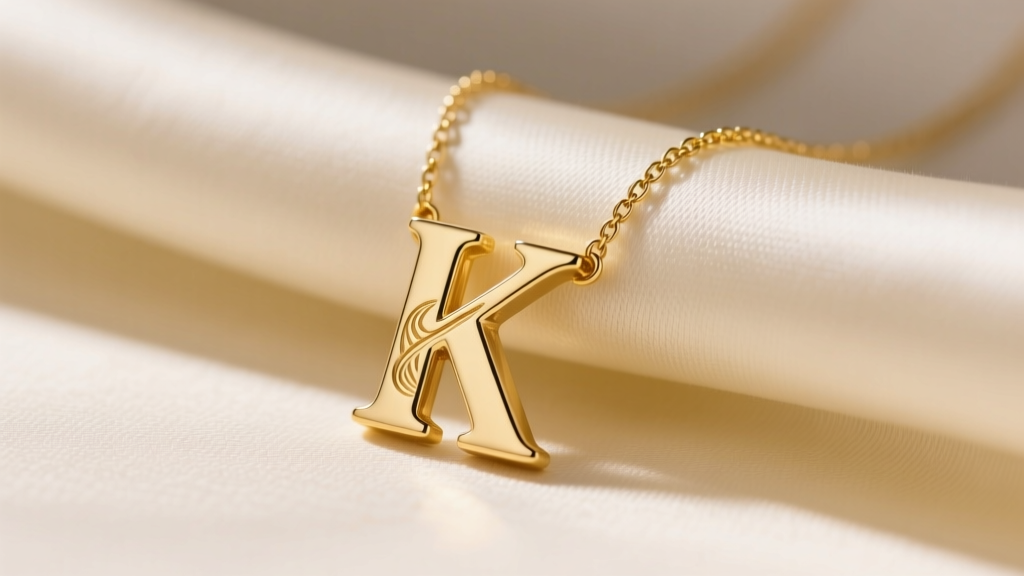
When shopping for personalized jewelry, the initial pendant remains a dominant trend in 2026. However, not all letters are created equal in the manufacturing world. The letter 'K' represents approximately 2.2% of first initials in the US (think Katherine, Kevin, Kylie). Because it falls into the mid-tier frequency bracket, mass-market fast-fashion jewelers often overstock top-tier letters (A, C, J, M, S) and understock the rest.
This supply chain quirk means that finding a high-quality necklace with letter K in a physical retail store can be frustrating, often pushing buyers toward online artisans and specialized casters. While this opens the door to superior craftsmanship, it also introduces a wider variance in pricing. Small-batch lost-wax casting, which many independent jewelers use for mid-tier letters, can add a 10% to 15% premium compared to stamped, mass-market letters. Understanding where your money goes is critical to ensuring you don't overpay for a simple initial.
Material Breakdown: Where Your Budget Actually Goes
The price of an initial necklace is dictated almost entirely by its metallurgical composition. Here is how the three primary market tiers break down in terms of intrinsic value and longevity.
Solid 14k Gold (The Lifetime Investment)
Solid 14k gold consists of 58.5% pure gold, alloyed with metals like copper, zinc, or silver to provide structural integrity. According to the Gemological Institute of America (GIA), 14k is the optimal balance of purity and durability for daily-wear pendants. A solid 14k yellow gold letter K pendant (approx. 1.2 grams) paired with an 18-inch 1.2mm cable chain will typically cost between $180 and $320 in 2026. The value here lies in the intrinsic melt value of the gold and the fact that it will never tarnish, flake, or turn your skin green. Note that 14k white gold requires periodic rhodium plating, which adds $35-$50 to your long-term maintenance budget.
Gold Vermeil (The Strategic Compromise)
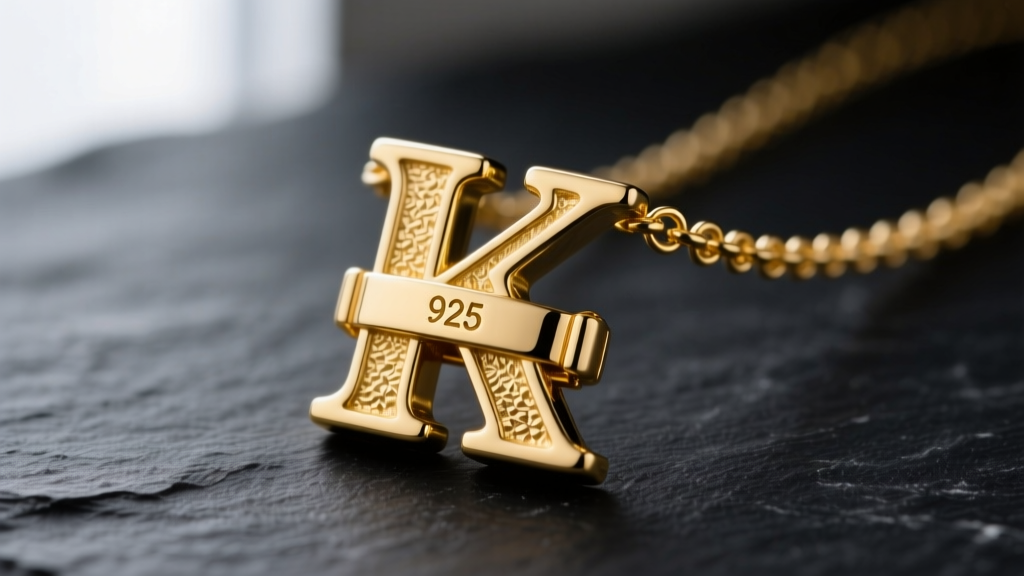
Vermeil (pronounced ver-may) is the sweet spot for budget-conscious buyers who want the look and feel of precious metals. The Federal Trade Commission (FTC) strictly regulates the term 'vermeil': it must consist of a sterling silver (925) base coated with a minimum of 2.5 microns of 10k gold or higher. A high-quality gold vermeil necklace with letter K usually retails between $55 and $95. The sterling silver base gives the piece structural weight and hypoallergenic properties, while the thick gold layer ensures the pendant's edges won't rub bare for at least 2 to 4 years of daily wear.
PVD-Coated 316L Stainless Steel (The Budget Utility)
Physical Vapor Deposition (PVD) coating over surgical stainless steel is the undisputed king of the sub-$40 market. PVD bonds gold color at a molecular level, making it highly resistant to sweat and friction. However, it possesses zero intrinsic melt value. You are paying strictly for the labor and design. Expect to pay $18 to $35. While the chain may last a decade, the gold color on the high-friction edges of the letter K will eventually fade to a dull gray.
2026 Price & Value Matrix
Use this comparison chart to align your budget with your expectations for a letter K necklace.
| Material Grade | Avg. Price Range | Intrinsic Melt Value | Daily Wear Lifespan | Tarnish Resistance |
|---|---|---|---|---|
| Solid 14k Yellow Gold | $180 - $320 | High | Lifetime (Generational) | Excellent |
| Gold Vermeil (2.5μm / 925) | $55 - $95 | Low (Silver base) | 2 - 5 Years | Moderate |
| Gold Plated Brass (0.5μm) | $20 - $40 | None | 3 - 6 Months | Poor |
| PVD Coated 316L Steel | $18 - $35 | None | 1 - 3 Years (Color) | High (Base metal) |
The Hidden Cost of Chains and Clasps
A common budgeting mistake is allocating 90% of the budget to the letter K pendant and ignoring the chain. A 1.5-gram solid gold pendant will easily snap a hollow, 22-gauge rope chain within weeks.
- Chain Gauge & Style: For initial pendants, a solid 1.2mm to 1.5mm cable chain or box chain (approx. 18 to 16 gauge) is mandatory. Box chains distribute weight evenly and resist kinking, protecting your investment.
- Clasp Mechanics: Avoid spring-ring clasps on chains over $50. They are notoriously difficult to operate and feature a thin internal spring that fails under tension. Insist on a solid lobster clasp, which features a robust internal mechanism and a wider gate for secure attachment.
Hallmark Verification: Protecting Your Investment
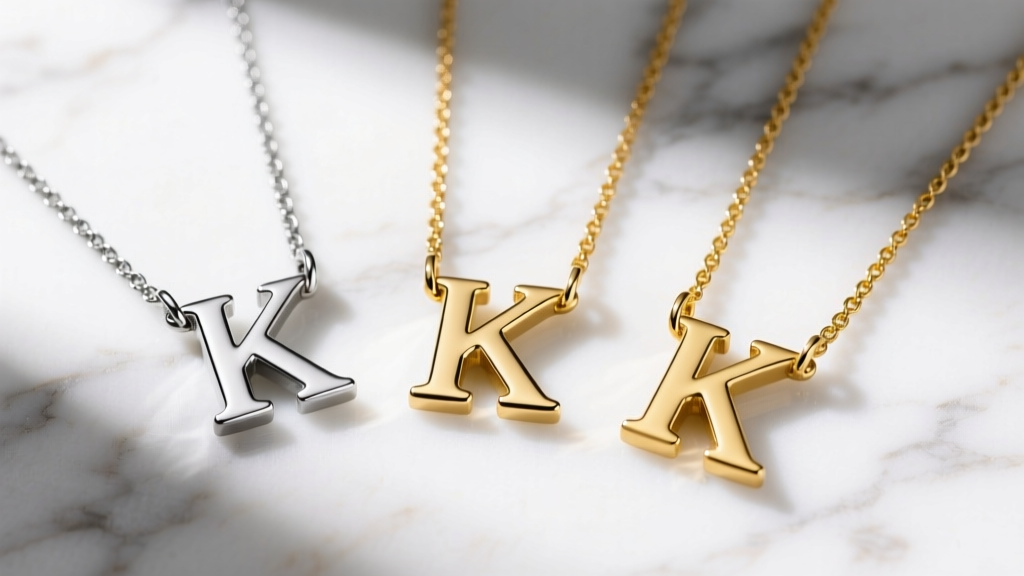
When evaluating the value of a necklace with letter K, always inspect the hallmark stamped on the pendant bail or the clasp tag.
Look for 14k, 585 (the European equivalent for 14k), or 925 (sterling silver). Beware of deceptive stamps like 14k HGE (Heavy Gold Electroplate) or 14k GP (Gold Plated). HGE is a marketing term used to describe a thick layer of gold plated over a cheap brass core. While it may look identical to solid gold on day one, it holds absolutely no resale value and will eventually corrode when exposed to skin acids and perfumes. If a vendor is selling a 'heavy' letter K pendant for $45 and it is stamped HGE, you are overpaying for brass.
Calculating Cost-Per-Wear (CPW)
To truly assess budget value, jewelry economists use the Cost-Per-Wear formula: Total Cost ÷ (Days Worn per Year × Years Kept).
If you buy a $35 gold-plated brass necklace with letter K and wear it daily, it will likely tarnish and break within 4 months (120 days). Your CPW is $0.29 per day.
If you invest $220 in a solid 14k gold necklace and wear it daily for 5 years (1,825 days), your CPW drops to $0.12 per day—and at the end of those 5 years, the piece still retains roughly 60% of its intrinsic gold melt value. In the long run, the higher upfront budget often yields superior financial value.
'The true cost of personalized jewelry isn't just the retail price tag; it's the intersection of material longevity, structural engineering, and the frequency of the initial itself. Mid-tier letters like K require a more strategic approach to sourcing than ubiquitous letters like A or M.' — Industry Standard Jewelry Valuation Framework, 2025
Final Verdict: Which Necklace With Letter K Should You Buy?
Your budget should dictate your material, but never compromise on the chain's structural integrity.
- The $20 - $40 Budget: Opt for PVD-coated 316L stainless steel. It offers the best scratch resistance and color retention in the ultra-budget tier. Avoid gold-plated brass entirely.
- The $50 - $95 Budget: Gold vermeil is your best choice. Ensure the retailer explicitly guarantees a 2.5-micron thickness over a 925 sterling silver base. This provides a luxurious weight and hypoallergenic wear.
- The $150 - $300+ Budget: Invest in solid 14k yellow gold. Not only does it eliminate all maintenance and tarnish concerns, but it also serves as a permanent, generational keepsake that retains intrinsic commodity value.
By understanding the unique market dynamics of the letter K and the metallurgical realities of modern jewelry, you can confidently select a necklace that offers both aesthetic beauty and genuine financial value.


