Art Deco Gold Necklace Guide: Vintage vs Modern Metal Alloys
Explore the metallurgy of the art deco gold necklace. Compare vintage 1920s alloys, die-struck fabrication, and modern casting properties.

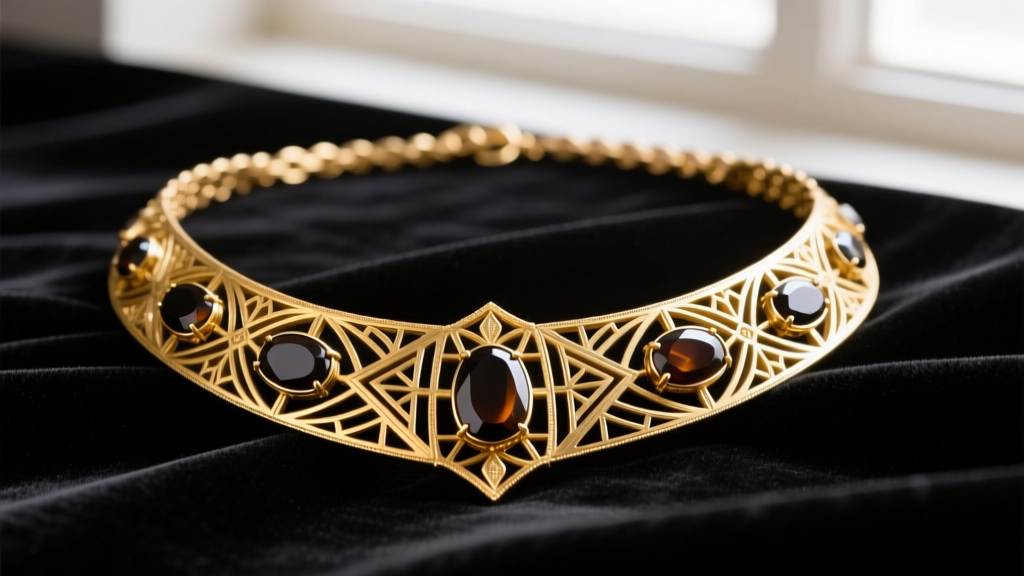
The Metallurgy of the 1920s: Authentic Art Deco Gold Alloys
The allure of an authentic art deco gold necklace extends far beyond its striking geometric silhouettes and bold symmetry. For serious collectors and jewelry historians, the true value lies in the metallurgy. The 1920s and 1930s represented a transitional era in gold alloying, driven by the demands of intricate filigree work and the sudden, explosive popularity of white metals. Understanding the specific chemical compositions of vintage gold is critical when evaluating structural integrity, skin sensitivities, and long-term preservation.
The Evolution of White Gold
While platinum was the premier white metal of the Art Deco era, its high cost and density made it difficult to use for entire necklace chains and large pendants. Enter white gold. Early 20th-century white gold alloys, notably those developed by the Belais brothers, relied heavily on nickel, zinc, and copper to bleach the yellow hue of pure gold. A vintage 14k or 18k white gold necklace from 1925 will often exhibit a slightly warmer, grayish undertone compared to modern iterations. More importantly, the high nickel content in these vintage alloys is a known trigger for contact dermatitis. Modern wearers with metal sensitivities must be cautious when wearing unlined vintage white gold against the décolletage.
Vintage Yellow and Pink Gold Formulations
Yellow gold alloys from the Art Deco period typically utilized a higher silver-to-copper ratio than contemporary standards. This resulted in a slightly greener, softer yellow hue—often referred to by antique dealers as "antique yellow." Conversely, the era's "pink gold" (the precursor to modern rose gold) contained up to 20-25% copper. This high copper content gave vintage pink gold necklaces a rich, salmon-red depth that modern 14k rose gold, which is often alloyed with additional zinc to lighten the color, simply cannot replicate. According to the Victoria and Albert Museum's jewelry archives, these specific copper-heavy alloys were highly prized for their contrast against dark materials like black onyx and lapis lazuli.
Fabrication Methods: Die-Struck vs. Lost-Wax Casting
The most profound difference between a genuine 1920s art deco gold necklace and a modern 2026 reproduction is not the karat weight, but the fabrication method. This distinction fundamentally alters the physical properties of the gold itself.
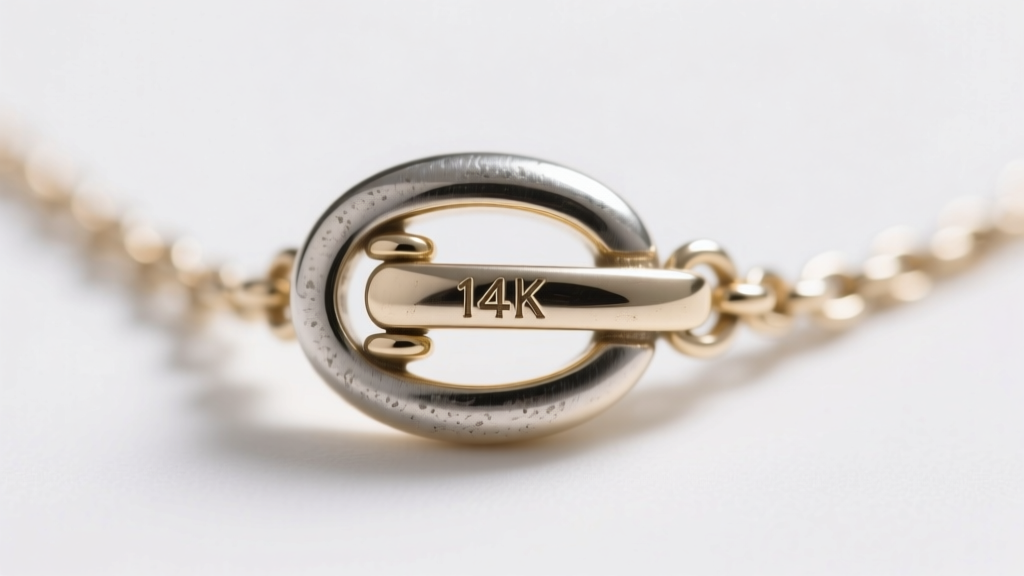
The Physics of Die-Striking
Authentic Art Deco filigree pendants and chain links were predominantly die-struck. This process involved forcing sheets of gold alloy into hardened steel dies under immense pressure (often hundreds of tons). This extreme compression aligns the gold's crystalline grain structure, drastically increasing its tensile strength and Vickers hardness. As a result, vintage die-struck gold can be worked into paper-thin, razor-sharp geometric wires that remain incredibly rigid and resistant to bending.
Modern Lost-Wax Casting and CAD
Today, the vast majority of Art Deco-style reproductions are created using CAD (Computer-Aided Design) and lost-wax casting. Molten gold is poured into a plaster investment mold. While this allows for flawless symmetry and rapid production, the cooling process leaves the gold in an annealed, softer state with a randomized grain structure. Furthermore, cast gold is inherently prone to microscopic porosity—tiny gas bubbles trapped within the metal that weaken the structural integrity of ultra-fine filigree.
| Material Property | Vintage 1920s Die-Struck Gold | Modern 2026 Cast Gold |
|---|---|---|
| Tensile Strength | Exceptionally high; resists warping | Moderate; prone to bending under stress |
| Porosity | Zero (solid compressed sheet metal) | Low to moderate (microscopic gas pockets) |
| Filigree Edge Crispness | Razor-sharp, highly defined edges | Slightly rounded, softer edge transitions |
| White Gold Composition | Nickel/Zinc heavy (allergy risk) | Palladium alloy or Rhodium plated |
Gemstone and Enamel Material Pairings
An art deco gold necklace is rarely just gold; it is a canvas for high-contrast material pairings. The interaction between the gold alloy and these secondary materials dictates the piece's longevity.
Champlevé and Plique-à-Jour Enamel
Enamel work was a hallmark of high-end Art Deco jewelry. However, the copper content in the gold alloy directly impacts enamel stability. When gold with a high copper percentage is heated during the enameling process, the copper can oxidize and cause the overlying vitreous enamel to discolor, craze, or pop off entirely. Master jewelers of the 1920s mitigated this by using specialized fluxes and restricting high-copper alloys to non-enameled sections of the necklace. When inspecting a vintage piece, always check the gold borders surrounding black or white enamel for signs of green copper oxidation, which indicates improper original firing or subsequent repair damage.
Bezel-Set Onyx and Jade
The sharp, geometric lines of Art Deco design heavily favored bezel settings over prongs for cabochon stones like onyx, coral, and jade. The malleability of the gold alloy is crucial here. A vintage 18k yellow gold bezel can be pushed tightly against the stone's edge with a burnisher, creating a seamless, watertight seal. Modern cast 14k gold, being harder and less malleable due to its casting grain and lower gold content, often results in slightly thicker, less precise bezel walls that can catch on clothing. The Gemological Institute of America (GIA) frequently notes that the precision of historical bezel work remains a benchmark for modern bench jewelers.
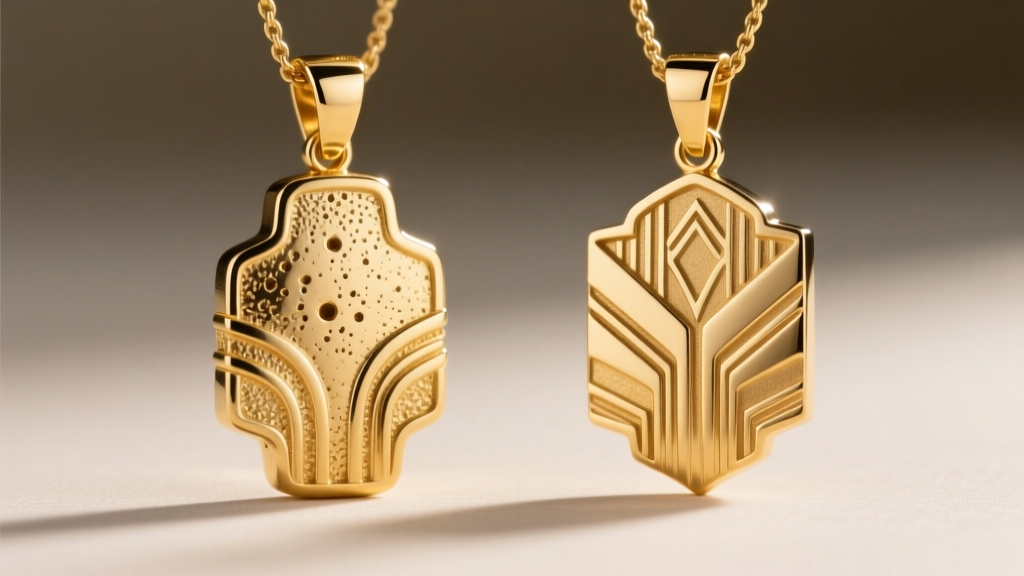
Structural Integrity: Clasps, Prongs, and Failure Modes
When investing in an antique art deco gold necklace, you must evaluate the hardware. The failure modes of vintage necklaces are highly specific to their era's manufacturing techniques.
- Trombone Clasps: Common in early 1920s European pieces, these push-pull clasps rely on a simple friction tube. Over a century of use, the internal tension spring often fatigues, leading to accidental unclasping. Upgrading to a modern lobster clasp is common, but purists prefer retaining the original hardware with a secondary safety chain.
- Geometric Diamond Prongs: Art Deco pendants frequently feature transitional or Old European cut diamonds set in angular, box-like prongs. Because die-struck white gold is so hard, the prongs were often filed down to near-transparency to maximize light return. A century of wear can thin these prongs to the breaking point. Always have a jeweler perform a microscopic prong check before wearing a vintage piece daily.
- Solder Joints: Look closely at the jump rings connecting the pendant to the chain. Vintage pieces were hand-soldered, often leaving slightly visible, uneven seams. Modern laser-welded reproductions will look unnaturally perfect and uniform under a 10x loupe.
Pricing Tiers and Authentication Markers
The market for the art deco gold necklace is sharply divided between authentic antiques and high-quality contemporary reproductions. Understanding the material differences helps justify the pricing disparities.
"The weight of an Art Deco necklace is often deceiving. A delicate, die-struck 14k gold filigree pendant from 1928 will feel remarkably light and rigid, whereas a modern cast replica of the exact same dimensions will feel heavier, softer, and lack the acoustic 'ring' of compressed gold."
Authentic Vintage (1920-1939): Expect to pay between $2,500 and $15,000+ for a genuine gold and gemstone Art Deco necklace. Pieces featuring original, unchipped enamel, matched natural emeralds, or hallmarks from legendary houses like Boucheron or Cartier command premium auction prices. Authentication relies on a combination of blacklight testing for enamel repairs, loupe inspection for casting porosity (which should be absent), and analysis of the specific clasp mechanisms.
Modern Reproductions (2026 Market): High-end reproductions utilizing CAD and 14k or 18k gold typically range from $800 to $3,500. While these offer the aesthetic of the era with the benefit of modern, hypoallergenic white gold alloys and brand-new diamond melee, they lack the historical metallurgical density and the investment-grade appreciation of true antiques.
Ultimately, choosing between a vintage original and a modern interpretation depends on your priorities. If you value historical authenticity, unique antique alloy hues, and the marvel of 1920s die-striking engineering, the vintage market is unmatched. If you require a hypoallergenic, structurally guaranteed piece for daily wear that captures the geometric spirit of the Jazz Age, a modern reproduction offers exceptional material reliability.


