How to Assemble a Sterling Silver Charm Holder Necklace
Learn how to assemble and style a sterling silver charm holder necklace. Discover chain gauges, clasp types, and expert tips for secure charm placement.

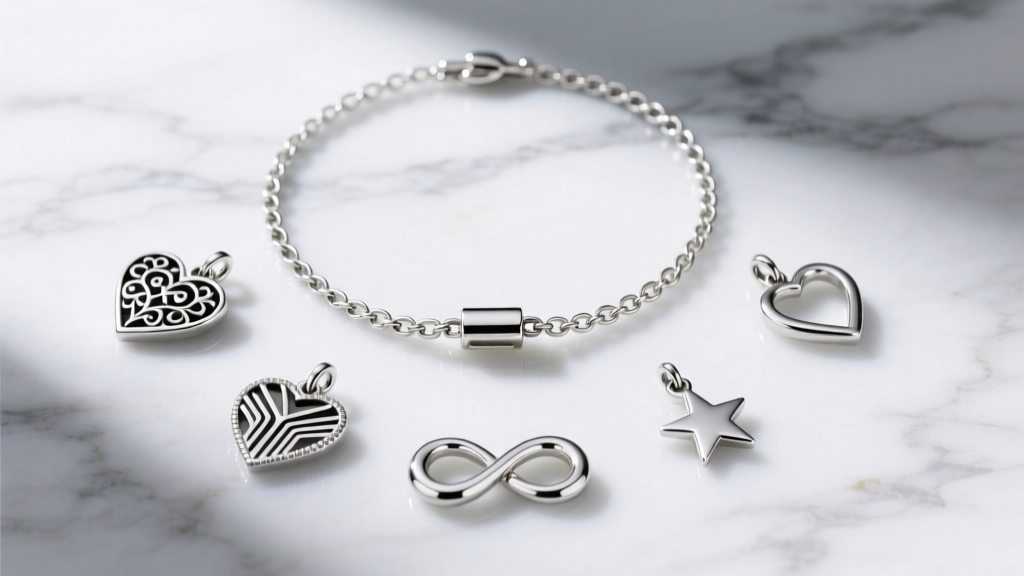
The Anatomy of a Perfect Charm Holder Chain
Building a custom sterling silver charm holder necklace requires more than simply sliding pendants onto a standard chain. Unlike a static pendant, multiple charms create a kinetic load. As you move, the charms swing, pull, and collide, generating stress points that can easily snap a poorly chosen chain or pry open weak jump rings. To create a piece that is both structurally sound and aesthetically balanced, you must understand the metallurgy and mechanics of .925 sterling silver.
Sterling silver is an alloy consisting of 92.5% pure silver and 7.5% copper or other metals, as noted by the Silver Institute. This copper addition provides the necessary tensile strength for jewelry, but it also introduces a vulnerability: tarnish. When selecting your base chain, you must balance the visual delicacy of the links with the physical weight capacity required to support your curated charms.
Chain Gauge vs. Charm Weight Capacity
| Chain Style | Wire Gauge / Thickness | Max Kinetic Weight | Best Application |
|---|---|---|---|
| Standard Cable | 18g (1.0mm) | Up to 15g | 1-2 lightweight, hollow charms |
| Rolo | 14g (1.6mm) | Up to 45g | 3-5 medium-weight solid charms |
| Figaro | 12g (2.0mm) | Up to 70g+ | Heavy statement or enameled charms |
For a versatile sterling silver charm holder necklace, a 2.0mm to 2.5mm Rolo chain is the industry standard. The alternating uniform round links provide excellent surface area for jump rings to rest against, preventing the charms from slipping between the links and tangling.
Step 1: Selecting the Right Base Chain and Clasp
The clasp is the most common point of failure on any charm necklace. The kinetic energy generated by multiple swinging charms will easily pull a standard 4mm spring ring apart over time. Furthermore, as the heavy charms pull the chain downward, the clasp will naturally migrate to the front of your neck—a frustrating issue known in jewelry design as the 'center of gravity' problem.
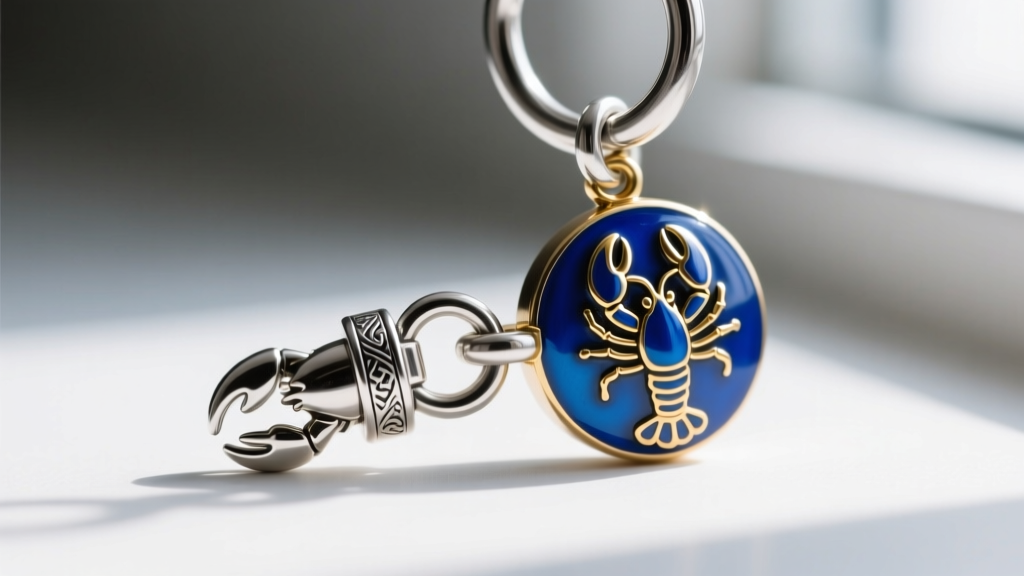
To combat this, upgrade to a 7mm to 10mm solid sterling silver lobster clasp. Lobster clasps feature an internal stainless steel spring mechanism that resists the outward pull of heavy charms. To solve the migration issue, attach a small 'counterweight' charm or a decorative metal tag directly to the jump ring opposite the clasp. This added weight at the nape of the neck anchors the clasp in place, keeping it hidden behind your collarbone.
Step 2: Sourcing and Sizing Your Jump Rings
Never attach charms directly to the chain using the flimsy, split-ring style loops often provided by mass-market jewelry brands. You must use high-quality, unsoldered jump rings. The critical metric here is not just the outer diameter (OD), but the wire thickness (gauge).
- 20-Gauge (0.81mm): Too thin for charm holders. The 'pendulum effect' of walking will cause these to pull apart, dropping your charms.
- 18-Gauge (1.02mm): The minimum acceptable thickness for lightweight charms (under 5g each).
- 16-Gauge (1.29mm): The professional standard for securing medium to heavy sterling silver charms securely to a Rolo or Figaro chain.
When selecting the outer diameter, ensure the jump ring is large enough to slide freely over the chain links but small enough that the charm's bail cannot slip through it. A 5mm OD jump ring in 16-gauge half-hard sterling silver is the most versatile finding for a charm holder necklace.
Expert Insight: Never pull a jump ring apart horizontally to open it. This permanently distorts the circle and weakens the metal's temper. Always grip both sides with two pairs of flat-nose pliers and twist laterally in opposite directions to maintain the structural integrity of the sterling silver.
Step 3: The Art of Spacing and Layering
A common mistake when assembling a sterling silver charm holder necklace is clustering all the charms near the center of the chain. Not only does this create an unbalanced silhouette, but it also guarantees that the charms will constantly rub against one another. Sterling silver sits at a 2.5 to 3 on the Mohs hardness scale, meaning it is highly susceptible to scratching and abrasion.
To protect your pieces and ensure an even drape, utilize spacing techniques:
- Silicone Stopper Beads: Thread tiny, transparent silicone friction beads onto the chain between charms. These grip the silver and keep the charms evenly spaced, roughly 1.5 inches apart.
- Fixed Soldered Links: For a permanent, high-end finish, have a jeweler solder a small metal bead or a decorative link every few inches along the chain to act as a physical barrier.
- Asymmetrical Weight Distribution: Place your heaviest, largest charm in the exact center, and flank it with progressively smaller, lighter charms moving outward toward the collarbone.
Step 4: Securing and Maintaining Your Sterling Silver
Because .925 sterling silver contains copper, it reacts with sulfur and moisture in the environment, leading to tarnish (silver sulfide). The oils from your skin can actually help slow this process on the chain, but charms that sit flat against the skin or rub against clothing will require regular maintenance.
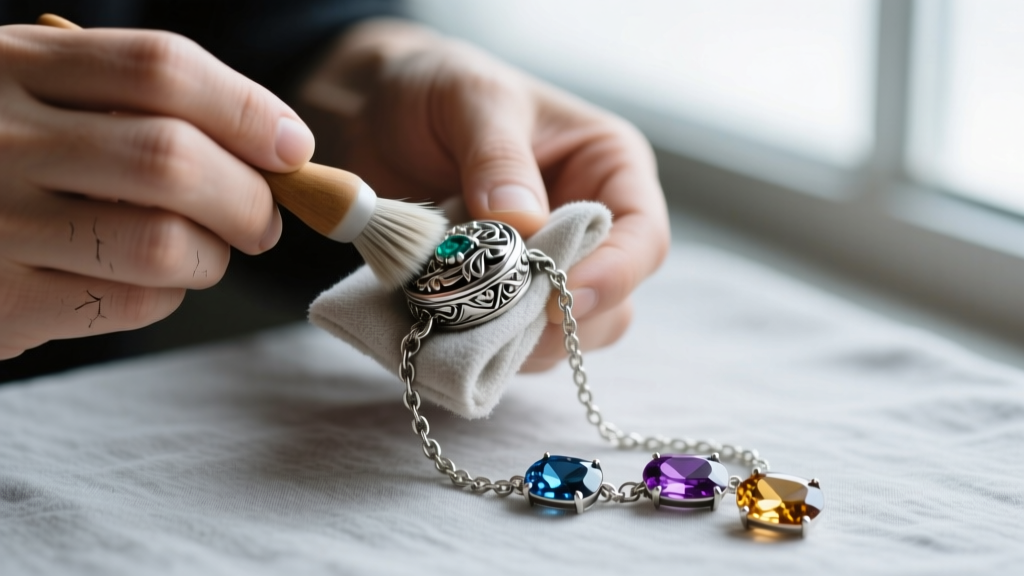
According to the Gemological Institute of America (GIA), the safest way to clean sterling silver is with a specialized microfiber polishing cloth impregnated with mild anti-tarnish compounds. Avoid liquid silver dips, especially if your charms feature porous gemstones like turquoise, opal, or pearls, as the harsh chemicals will permanently ruin the stone's finish.
When storing your charm holder necklace, never toss it into a crowded jewelry box where the charms can scratch the chain. Lay it flat in an airtight polyethylene bag alongside a 3M anti-tarnish strip, which actively absorbs ambient sulfur gases and keeps the silver brilliant for months.
Troubleshooting Common Charm Holder Issues
Issue: Charms Keep Flipping Upside Down
The Fix: This happens when the charm's bail (the loop at the top) is too wide, allowing it to rotate freely on the chain link. Swap the standard bail for a 'fixed bail' or use a smaller, heavier jump ring that restricts the charm's range of motion, forcing it to hang face-forward.
Issue: The Chain Keeps Kinking
The Fix: Kinking occurs when a chain is too thin and lightweight for the heavy charms attached to it, causing the links to fold under pressure. You must upgrade to a heavier wire gauge (like a 12g Figaro) or reduce the total weight of your charm curation. Once a chain kinks, the metal is work-hardened and brittle; attempting to bend it back will often result in a snapped link.
Issue: Jump Rings Keep Snapping Open
The Fix: If you are using dead-soft sterling silver jump rings, they will pull apart under stress. Switch to 'half-hard' tempered sterling silver jump rings, which resist lateral pulling. For ultimate security on a priceless or heavy charm, take the necklace to a bench jeweler to have the jump ring laser-soldered shut.


