Beginner's Guide to Buying a Dinosaur Tooth Necklace
Discover how to spot real fossils, choose ethical sources, and style your dinosaur tooth necklace with our comprehensive beginner's guide.

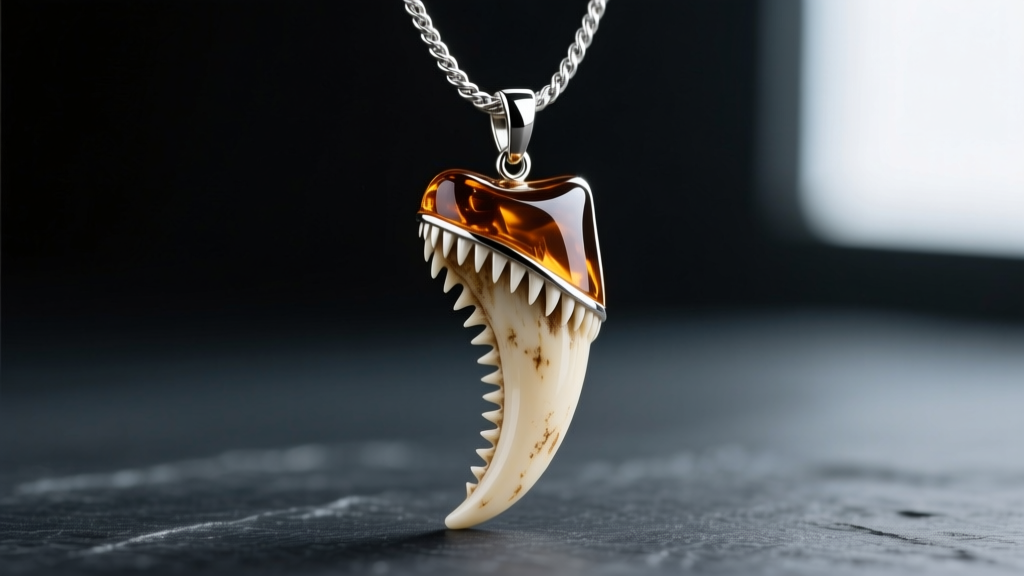
Wearing a piece of prehistoric history around your neck is a conversation starter unlike any other. A genuine dinosaur tooth necklace bridges the gap between natural history and personal adornment, offering a tangible connection to a world that existed millions of years before humanity. However, the paleo-jewelry market is flooded with resin replicas, reconstituted bone dust, and ethically questionable excavations. For beginners stepping into the world of fossil jewelry, navigating authenticity, legal sourcing, and proper setting techniques is crucial.
This comprehensive guide will walk you through everything you need to know before purchasing a dinosaur tooth necklace, ensuring your investment is authentic, ethically sourced, and built to last a lifetime.
Real vs. Fake: Authenticating Your Fossil
The most common pitfall for beginners is purchasing a replica marketed as a genuine fossil. Real dinosaur teeth have undergone permineralization, a process where organic material is replaced by minerals like silica, calcite, or pyrite over millions of years. This fundamentally changes the physical properties of the tooth.
The Weight and Temperature Test
Genuine fossilized teeth are essentially stone. They possess a dense, heavy feel that resin or plastic replicas simply cannot mimic. Furthermore, real fossils are thermally conductive. When you press a genuine fossil to your cheek or the inside of your wrist, it will feel distinctly cool to the touch and will take time to absorb your body heat. Resin fakes will feel room-temperature or warm almost immediately.
Visual and UV Inspection
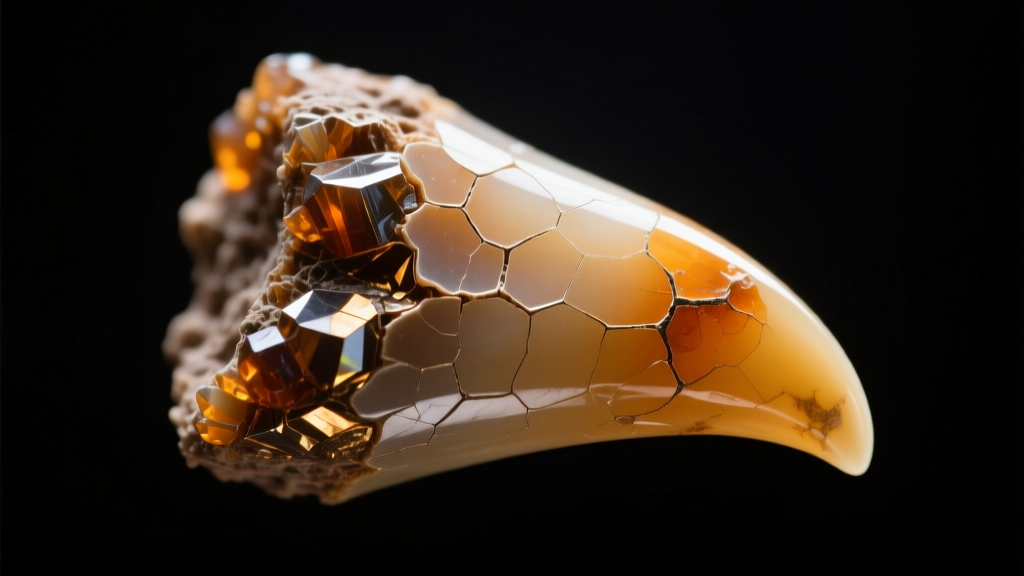
Under a 10x jeweler's loupe, real fossil enamel reveals microscopic pitting, natural fracture lines, and distinct mineral banding. Replicas often display mold lines, perfectly uniform textures, or tiny air bubbles trapped in the resin. Additionally, shining a UV blacklight on the piece can be revealing; while some genuine fossils fluoresce depending on their mineral matrix, many resin fakes will glow uniformly due to chemical optical brighteners. Institutions like the Field Museum frequently highlight these micro-structures when educating the public on fossil identification.
Popular Species and Pricing Matrix
Not all dinosaur teeth are created equal, and the species heavily dictates the price, size, and color of your pendant. Below is a breakdown of the most common fossils used in jewelry.
| Species | Era | Primary Origin | Characteristics | Avg. Price Range |
|---|---|---|---|---|
| Spinosaurus aegyptiacus | Cretaceous | Morocco | Conical, dark brown/black, smooth enamel | $25 - $150 |
| Mosasaurus | Cretaceous | Morocco | Bulbous, molar-like, varied earth tones | $40 - $200 |
| Carcharodontosaurus | Cretaceous | Morocco | Serrated edges, flat, blade-like, fragile | $150 - $500 |
| Tyrannosaurus Rex | Cretaceous | North America | Banana-shaped, heavily rooted, extremely rare | $1,500 - $10,000+ |
Note: Mosasaurus is technically a marine reptile, not a dinosaur, but it is universally grouped into the dinosaur tooth necklace market due to its Cretaceous origins and similar fossilization processes.
Ethical Sourcing and Legal Boundaries
The commercial fossil trade is a complex landscape. The vast majority of affordable Spinosaurus and Mosasaurus teeth on the market are excavated from the Kem Kem Group geological formations in Morocco, where local economies rely heavily on the commercial fossil trade. While this provides vital income for local miners, it can also lead to rushed, destructive excavation methods.
When buying, look for vendors who partner directly with licensed Moroccan cooperatives or who provide certificates of authenticity detailing the exact excavation region. Conversely, be highly wary of any seller claiming to have sourced North American dinosaur teeth (like T-Rex or Triceratops) from private ranches without extensive documentation. According to the National Park Service, collecting vertebrate fossils on federal lands without a scientific permit is strictly illegal and carries severe federal penalties. Always demand provenance paperwork for high-ticket, North American specimens.
Vertebrate fossils are non-renewable scientific resources. While invertebrate and plant fossils can sometimes be collected casually, vertebrate remains on public lands are protected by federal law to preserve them for scientific study.
— U.S. Department of the Interior
Setting Styles: Protecting Brittle Fossils
Fossilized teeth are incredibly hard but notoriously brittle. They lack the crystalline cleavage planes of gemstones but are prone to snapping along ancient, mineralized fracture lines if subjected to uneven pressure.
Wire Wrapping vs. Prong Settings
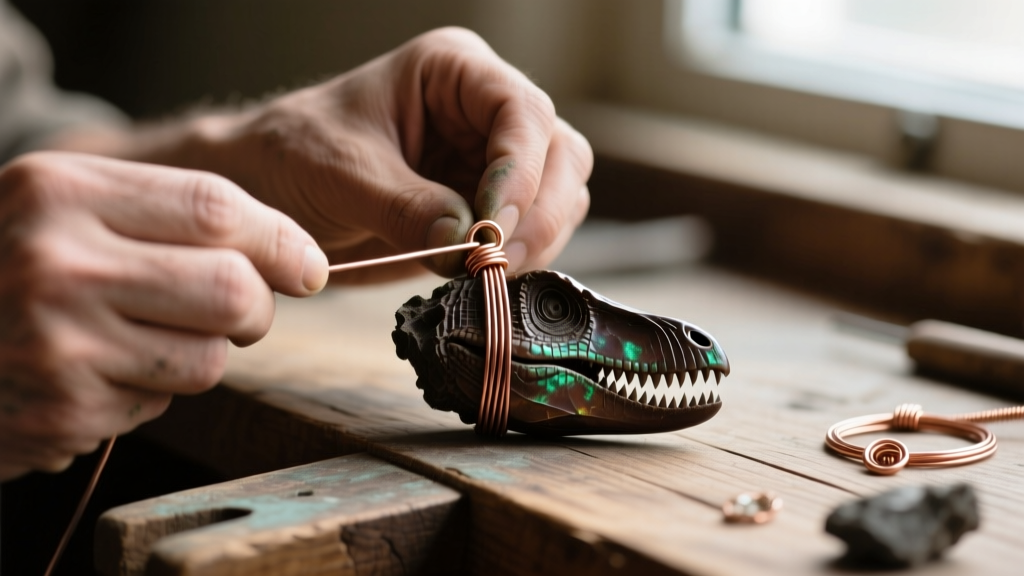
Never allow a jeweler to use a traditional prong setting for a dinosaur tooth. The localized pressure of metal prongs pushed against the fossil will almost certainly cause it to crack. Instead, opt for these beginner-friendly, safe setting methods:
- Wire Wrapping: Using 20-gauge or 22-gauge dead-soft sterling silver or copper wire allows the artisan to cradle the tooth without applying rigid pressure. This is the most popular and affordable method.
- Bezel with Epoxy Backing: A custom-fitted metal bezel that supports the entire back of the tooth with a padded layer of jeweler's epoxy provides excellent shock absorption.
- Bail Caps: For perfectly conical Spinosaurus teeth, a glued metal bail cap attached to the non-enamel root using a two-part cyanoacrylate jewelry adhesive is a clean, minimalist option.
Chain Pairings and Daily Wear
Dinosaur teeth are substantial. A medium-sized Spinosaurus tooth pendant can easily weigh between 15 and 30 grams and measure up to two inches in length. Delicate cable chains or thin box chains will snap under this weight or cause severe neck strain.
For daily wear, pair your fossil pendant with a chain that is at least 2.5mm to 4.0mm in thickness. A sterling silver rope chain or a 316L surgical steel wheat chain offers the necessary tensile strength while complementing the rugged, organic texture of the fossil. If you have metal sensitivities, consider a solid titanium rolo chain, which is lightweight, hypoallergenic, and incredibly strong.
Care and Maintenance for Fossil Pendants
Treating a fossil like a standard diamond or quartz gemstone will ruin it. The Gemological Institute of America (GIA) notes that porous and fractured organic gems require specialized care, and fossilized teeth are no exception.
- Avoid Ultrasonic Cleaners: The high-frequency vibrations of an ultrasonic jewelry cleaner will exploit the micro-fractures in the fossil, potentially shattering the tooth from the inside out.
- No Harsh Chemicals: Bleach, ammonia, and commercial silver dips can strip the natural oils and mineral patina from the tooth, leaving it chalky and brittle.
- Proper Cleaning: Simply wipe the fossil with a slightly damp microfiber cloth after wearing it to remove skin oils and sweat. Dry it immediately.
- Storage: Store your necklace in a soft velvet pouch. Tossing it into a jewelry box where it can strike harder metals or stones will result in chipped enamel.
By understanding the unique geological and physical properties of these ancient artifacts, you can confidently select a dinosaur tooth necklace that is not only a stunning piece of jewelry but also a genuine, ethically sourced relic of Earth's deep history.


