Authentic Huichol Necklace Buying Guide: Beadwork & Origins
Discover how to identify, evaluate, and buy authentic Huichol necklaces. Learn about Wixárika beadwork, materials, motifs, and fair market pricing.

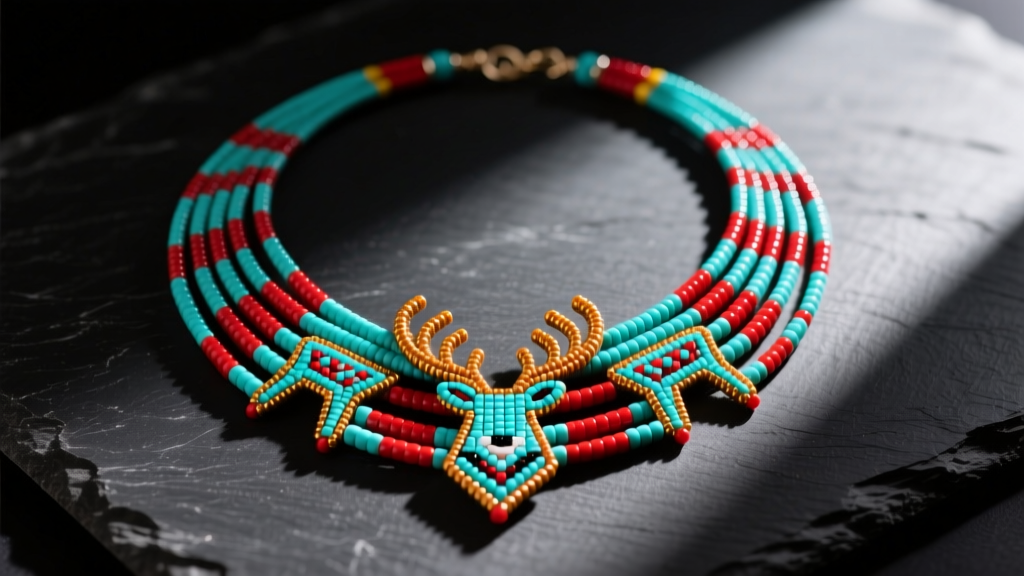
The Huichol necklace is far more than a vibrant fashion accessory; it is a wearable tapestry of indigenous cosmology, painstakingly crafted by the Wixáritari (Huichol) people of Mexico's Sierra Madre Occidental. As global interest in artisanal, culturally rich jewelry continues to surge, the market has become saturated with mass-produced imitations. For serious collectors and conscious consumers, distinguishing between a genuine Wixárika creation and a factory-made knockoff requires a keen eye for materials, construction, and cultural motifs.
This comprehensive buying guide breaks down the exact specifications, material grades, and pricing tiers you need to know before investing in an authentic Huichol beaded collar, choker, or pendant.
The Art of Wixárika Beadwork: Understanding Authenticity
The Wixáritari people, residing primarily in the states of Nayarit, Jalisco, Zacatecas, and Durango, have a deeply rooted spiritual tradition. Historically, their votive offerings took the form of nierikas (yarn paintings) and beaded gourds. The transition to wearable beadwork, particularly the elaborate multi-strand collars and peyote-stitch medallions seen today, evolved as a way to sustain their communities economically while sharing their cosmology with the world.
According to the National Museum of the American Indian, authentic indigenous beadwork is defined not just by its visual pattern, but by the generational transmission of technique and the spiritual intent woven into the piece. When you purchase a genuine Huichol necklace, you are acquiring a piece of living heritage, often crafted by a single artisan over several weeks of continuous labor.
Material Breakdown: What Defines a High-Quality Piece
The longevity, drape, and visual brilliance of a Huichol necklace depend entirely on its raw materials. High-end artisans do not cut corners on glass or thread.
The Beads: Czech Glass vs. Japanese Alternatives
Traditionalists predominantly use Czech glass seed beads (often Preciosa brand) in sizes 11/0 (approx. 2mm) or 15/0 (approx. 1.3mm). Czech beads are prized for their slight organic variations and rich, opaque colors that mimic the natural dyes used in historical yarn paintings. While some contemporary artists use Japanese Miyuki or Toho beads for their laser-like uniformity, authentic Mexican folk art purists generally favor the Czech variants. Beware of plastic acrylic beads, which are a hallmark of cheap tourist-trap imitations.
Thread and Tension: The Hidden Framework
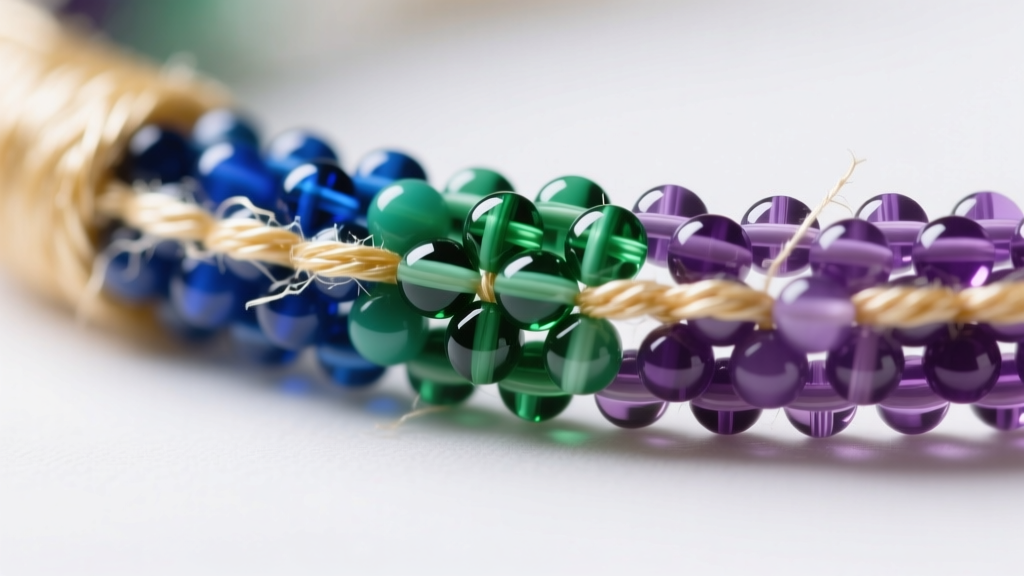
Authentic pieces are woven using high-tensile nylon threads like Nymo (Size D) or C-Lon. Crucially, the thread must be conditioned with natural beeswax. Beeswax prevents fraying, reduces friction, and allows the artisan to pull the tension tight enough to create a fabric-like drape without snapping the thread. As noted by beading experts at Interweave Beading, proper wax conditioning is the primary difference between a necklace that lasts a lifetime and one that unravels after a season.
| Feature | Authentic Wixárika Necklace | Mass-Produced Imitation |
|---|---|---|
| Bead Material | Czech glass (11/0 or 15/0) | Plastic, acrylic, or low-grade glass |
| Thread | Nymo D or C-Lon, beeswax coated | Stiff monofilament or unwaxed cotton |
| Backing | Genuine deer hide or cowhide leather | Synthetic felt, vinyl, or no backing |
| Weight | Heavy (often 100g - 250g+) | Unnaturally lightweight |
Construction Techniques: Multi-Strand vs. Peyote Stitch
When evaluating a Huichol necklace, identify the weaving technique, as this heavily influences both the price and the structural integrity of the piece.
Multi-Strand Weaving (Loom and Hand-Strung)
The iconic, heavy Huichol collar is typically a multi-strand marvel. Artisans string dozens of parallel strands of beads, securing them at the ends with intricate wrap techniques or sewing them onto a sturdy leather backing. The leather backing is non-negotiable for heavy collars; it distributes the weight of the glass (which can exceed 200 grams) and prevents the nylon threads from snapping under their own tension.
Peyote Stitch and Medallions
For pendants and flat chokers, artisans employ the peyote stitch (often called gourd stitch in indigenous contexts). This off-loom technique creates a flexible, interlocking matrix of beads. A high-quality peyote stitch pendant will lay completely flat against the sternum without curling at the edges—a telltale sign of master-level tension control.
Decoding the Motifs: Sacred Symbols in Every Stitch
The geometric patterns on a Huichol necklace are not random; they are a visual language documenting the Wixárika worldview. Understanding these motifs adds profound value to your purchase and helps verify authenticity, as factory machines rarely replicate the nuanced storytelling of indigenous art.
- Tamatsi (The Deer): The most sacred animal, acting as a messenger to the gods. Often depicted in profile with intricate antlers.
- Hikuri (Peyote Cactus): Represented by circular, radiating geometric patterns, symbolizing spiritual enlightenment and the bridge to the divine.
- Nawi (Rain/Water): Wavy lines or zig-zags, crucial for agricultural survival in the arid Sierra Madre.
- Kauyumari (Blue Deer/Spirit Guide): Often represented by specific color combinations of blue and white beads.
- Sun and Fire (Tatewari): Starbursts and diamond shapes in vibrant reds, oranges, and yellows.
Authentic pieces will often feature a symmetrical but slightly organic execution of these motifs, reflecting the human hand. The Mexican Ministry of Culture actively promotes the preservation of these specific iconographies, emphasizing that true Huichol art is a narrative medium, not just decorative geometry.
Pricing Guide: Navigating the Current Market
Fair trade pricing ensures that Wixárika artisans are compensated for the immense time required for beadwork. A single multi-strand collar can take 40 to 80 hours to complete. Here is what you should expect to pay for authentic pieces in the current market:
- Single-Strand Chokers (14-16 inches): $35 – $75. (Simple patterns, minimal backing).
- Peyote Stitch Pendants/Medallions: $50 – $140. (Priced based on diameter and stitch complexity; 15/0 beads command a premium).
- Multi-Strand Collars (6-12 strands, leather-backed): $120 – $350+. (Heavy, elaborate storytelling motifs, sterling silver or high-quality alloy clasps).
- Masterwork Ceremonial Sets (Necklace + Earrings + Bracelets): $400 – $800+.
Red Flag: If you see a heavy, 10-strand beaded collar selling for $25, it is undoubtedly a machine-loomed synthetic fake produced overseas.
How to Spot Fakes and Factory-Made Imitations
The commercialization of indigenous aesthetics has led to an influx of counterfeit beadwork. Protect your investment by running through this physical inspection checklist:
- The Weight Test: Glass is heavy. A genuine 8-strand collar will feel substantial and dense. Plastic imitations feel unnaturally light and clack loudly when the strands hit together.
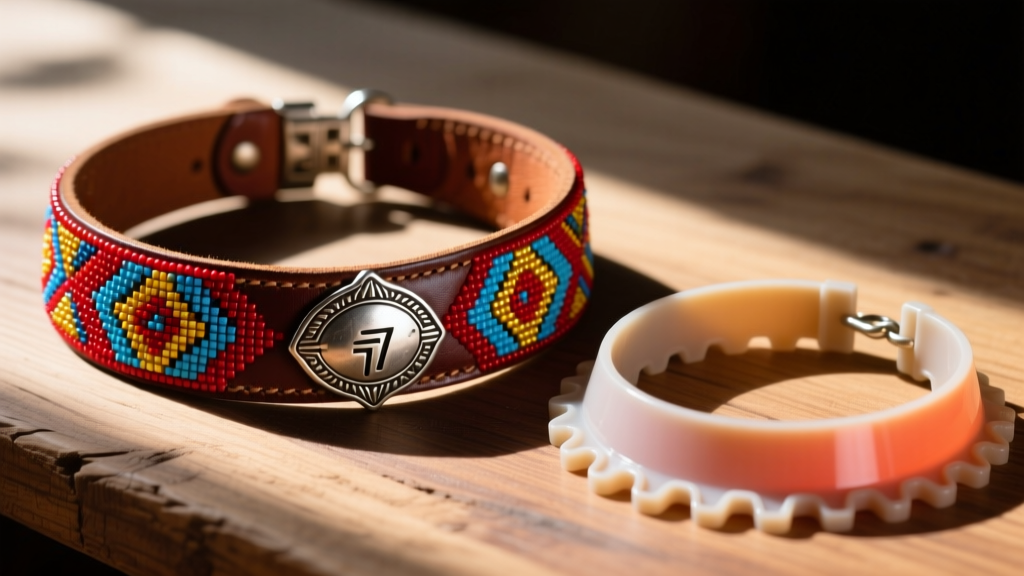
- The Backing Inspection: Flip the necklace over. Authentic heavy collars are backed with supple, genuine leather (often deer or cowhide) that is cleanly stitched or glued with flexible jewelry adhesive. Fakes use stiff synthetic felt, vinyl, or leave the thread knots exposed and messy.
- The Clasp Quality: Artisans who spend 60 hours on a beadwork collar do not finish it with a $0.10 base-metal lobster clasp. Look for sterling silver toggles, high-quality magnetic clasps, or traditional hand-carved bone/wood toggles.
- The Tension Check: Gently pull the beads apart. If you see thick, milky-white thread that looks like fishing line, it is a factory piece. Authentic thread is thin, tightly woven, and often slightly visible as a waxed, matte finish between the glass beads.
Care and Maintenance for Glass Seed Bead Jewelry
Huichol necklaces are durable but require specific care to maintain their structural integrity and vibrant colors.
- Storage: Never hang a heavy multi-strand collar on a standard jewelry hook; the localized gravity will stretch the nylon threads over time, causing permanent sagging. Always store them flat in a drawer or archival box.
- Moisture Avoidance: While glass is impervious to water, the nylon thread and beeswax are not. Prolonged exposure to sweat, humidity, or swimming can degrade the wax coating and weaken the thread. Remove your necklace before exercising or showering.
- Chemical Exposure: Apply perfumes, hairsprays, and lotions before putting on your beadwork. Alcohol-based cosmetics can strip the natural dyes from lower-grade beads and dissolve the beeswax thread conditioner.
- Cleaning: If the beads become dull, gently wipe them with a dry, lint-free microfiber cloth. Never use ultrasonic cleaners or liquid jewelry dips, as the chemicals will seep into the bead holes and rot the thread from the inside out.
By understanding the profound cultural roots, exact material specifications, and proper care techniques, you can confidently invest in a Huichol necklace that serves as both a stunning sartorial statement and a respectful preservation of Wixárika heritage.


