How to Verify and Buy an Authentic 925 Necklace Italy
Learn how to authenticate a genuine 925 necklace Italy hallmark. Our step-by-step guide covers testing, chain weaves, and pricing for Italian silver.

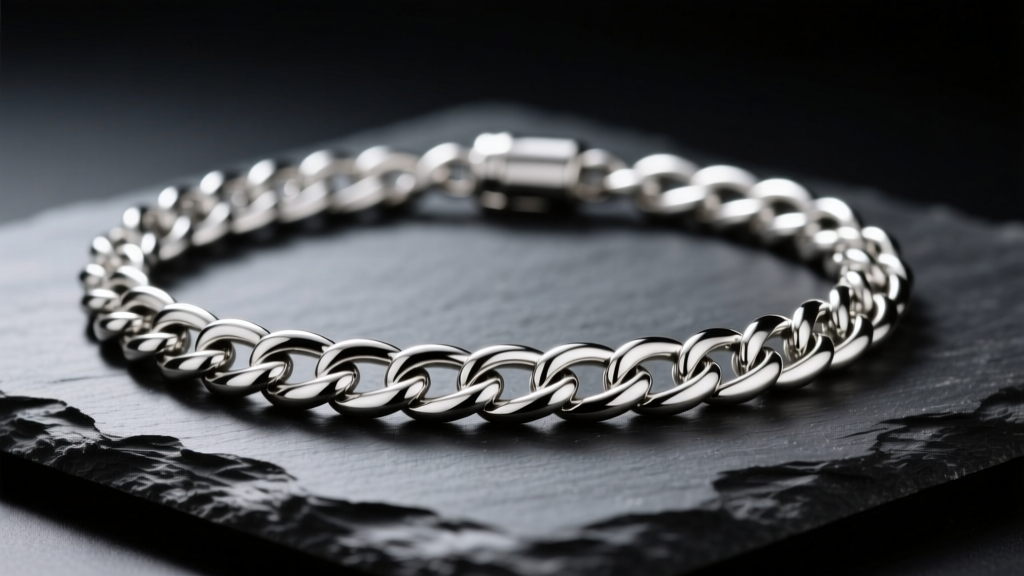
The Allure and Authenticity of Italian Sterling Silver
When it comes to fine silver jewelry, Italian craftsmanship remains the global gold standard. The towns of Arezzo and Vicenza are legendary manufacturing hubs, producing some of the most precise, durable, and beautifully finished chains in the world. However, the prestige of a 925 necklace Italy stamp has also made it a primary target for counterfeiters. Mass-produced, low-quality alloys are frequently stamped with fake Italian hallmarks to deceive buyers.
Whether you are investing in a heavy rope chain for daily wear or a delicate box chain for a pendant, knowing how to verify authenticity is crucial. This step-by-step guide will teach you how to decode Italian assay marks, calculate fair market pricing based on silver spot values, and perform at-home physical tests to ensure your jewelry is genuine.
Step 1: Decoding Italian Hallmarks and Maker's Marks
The first step in authentication is examining the stamps on the clasp or the first few links of the chain. According to the Federal Trade Commission (FTC) Jewelry Guides, precious metal markings must be accurate and accompanied by a manufacturer's trademark. Italy takes this a step further with a highly regulated provincial assay system.
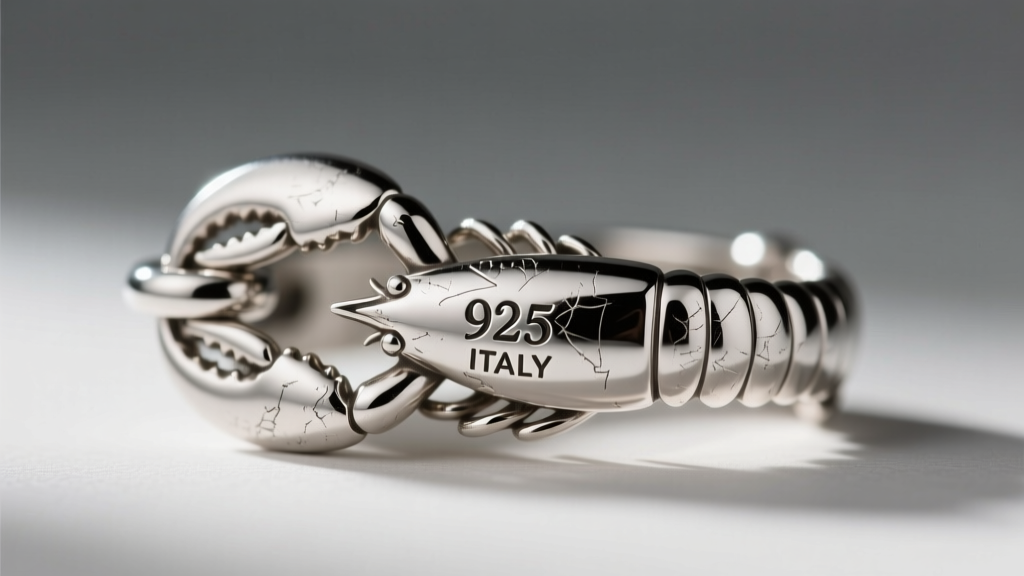
A genuine Italian piece will often feature more than just '925' and 'Italy'. Look for the Italian maker's mark, which consists of a number followed by a two-letter province code. For example, 'AR' stands for Arezzo, and 'VI' stands for Vicenza. If you see a stamp like '123 AR', it identifies the exact registered silversmith in the Arezzo province who manufactured the chain.
| Hallmark | Meaning | Context & Verification |
|---|---|---|
| 925 | 92.5% Pure Silver | The global standard for sterling silver. Must be deeply and cleanly stamped. |
| Italy | Country of Origin | Indicates the chain was manufactured or finished in Italy. |
| 123 AR | Arezzo Maker's Mark | Identifies a specific registered factory in the Arezzo province. |
| 456 VI | Vicenza Maker's Mark | Identifies a specific registered factory in the Vicenza province. |
Expert Tip: Counterfeiters often stamp '925 Italy' but omit the provincial maker's mark because it is harder to forge and trace. While some legitimate vintage or export-specific pieces might lack the provincial code, its presence is a strong indicator of authenticity.
Step 2: Choosing the Right Italian Chain Weave and Weight
Italian manufacturers are renowned for specific chain weaves that balance structural integrity with aesthetic brilliance. When shopping, you must evaluate both the weave type and the gram weight. Hollow chains are technically real silver but are prone to denting and snapping. Always opt for solid or semi-solid weaves for longevity.
- Figaro Chains: Characterized by a pattern of three short links followed by one long link. A high-quality, solid 5mm Italian Figaro chain (20 inches) should weigh between 15 and 20 grams. It is exceptionally resistant to kinking.
- Rope Chains: Twisted links that mimic a rope. Italian diamond-cut rope chains reflect light brilliantly. A 4mm solid rope chain should weigh roughly 12 to 16 grams. Avoid rope chains under 5 grams for a 20-inch length, as they are likely hollow and will stretch over time.
- Franco Chains: A V-shaped, four-sided weave that is incredibly sturdy. Because of the dense interlocking links, a 4mm Franco chain can easily weigh 25+ grams, making it the best choice for holding heavy pendants.
- Box Chains: Square links connected to form a smooth, continuous tube. While elegant, box chains under 2mm are prone to snapping if caught on clothing. Stick to 3mm or thicker for everyday wear.
Step 3: Physical Authentication Tests at Home
If you have already purchased a 925 necklace Italy piece and want to verify its composition, you can perform several non-destructive tests at home. The Silver Institute notes that sterling silver possesses unique thermal and magnetic properties that base metals cannot replicate.

The Neodymium Magnet Test
Silver is paramagnetic, meaning it exhibits no noticeable attraction to magnets. Take a strong neodymium magnet and hold it near the chain. If the chain clings to the magnet or feels a heavy drag, it is likely made of a ferromagnetic base metal like iron or steel, merely plated in silver. Note: The steel spring inside the lobster clasp will attract the magnet, so test the links themselves.
The Ice Test
Silver has the highest thermal conductivity of any common metal. Place an ice cube on the silver chain. The ice should begin to melt almost immediately, significantly faster than it would on a stainless steel or plastic surface. The chain itself will become freezing cold to the touch within seconds as it rapidly transfers the ambient heat into the ice.
The Smell Test
Rub the chain vigorously between your fingers until it warms up, then smell it. Genuine sterling silver is virtually odorless. If you detect a distinct metallic, sulfuric, or 'coppery' scent, the piece is likely a copper or brass alloy with a thin silver plating.
Step 4: Pricing Math and Spotting Fakes
One of the most effective ways to authenticate Italian silver before buying is to do the math. The price of a genuine Italian chain is intrinsically tied to the global spot price of silver, plus a craftsmanship premium.
Let's break down the pricing framework for a 20-gram chain:
- Calculate Melt Value: One Troy Ounce equals 31.1 grams. If the spot price of silver is $28.00 per ounce, one gram of pure silver is worth roughly $0.90.
- Adjust for Purity: Sterling silver is 92.5% pure. Therefore, the melt value of one gram of sterling is about $0.83.
- Determine Base Silver Cost: A 20-gram chain contains roughly $16.60 worth of raw silver.
- Apply the Italian Craftsmanship Premium: Authentic Italian manufacturing involves precision laser welding, diamond-cutting, and anti-tarnish treatments. Retailers typically mark up the melt value by 3x to 6x to cover labor, import duties, and retail margins.
Based on this math, a genuine 20-gram Italian sterling silver chain should retail between $50 and $100. If you find a 'solid' 20-gram Italian chain selling for $18 online, it is mathematically impossible for it to be genuine. It is either severely underweight (hollow) or made of cheap white metal.
Step 5: Long-Term Care for Italian Sterling Silver
Once you have secured an authentic piece, proper maintenance is required to preserve its brilliance. Sterling silver tarnishes when exposed to sulfur compounds in the air, moisture, and everyday chemicals like lotions or perfumes.
- Rhodium Plating: Many premium Italian chains are plated with rhodium (a platinum group metal) to prevent tarnishing and give the silver a bright, white-gold-like finish. If your chain is rhodium-plated, avoid using harsh abrasive polishing cloths, as you will strip the plating off.
- Raw Silver Polishing: For un-plated, raw Italian silver, use a treated silver polishing cloth infused with micro-abrasives and anti-tarnish agents. Gently rub the links in a back-and-forth motion, avoiding circular rubbing which can push tarnish into the crevices of weaves like the rope or Figaro.
- Storage: Store your necklace in an airtight ziplock bag with a 3M anti-tarnish strip. Never store silver in humid environments like bathroom vanities, as the combination of moisture and sulfur from personal care products will accelerate oxidation.
Conclusion
Investing in a genuine 925 necklace Italy piece is an investment in superior metallurgy and centuries-old craftsmanship. By looking past the basic '925' stamp and searching for provincial maker's marks, calculating the gram-weight-to-price ratio, and utilizing simple thermal and magnetic tests, you can confidently navigate the market. Armed with this knowledge, you can build a collection of Italian silver chains that will remain durable, brilliant, and authentic for a lifetime.


