Anatomy of a Cross With a Heart Necklace: A Technical Guide
Discover the metallurgy, soldering techniques, and chain gauges behind a high-quality cross with a heart necklace in this expert technical guide.

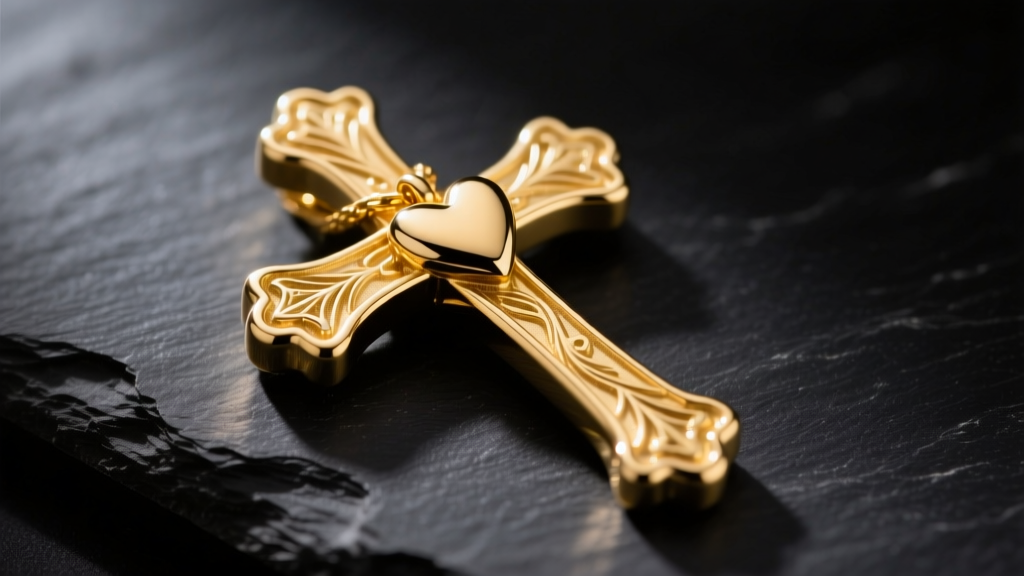
The intersection of faith, love, and metallurgy creates one of the most enduring motifs in jewelry design: the cross with a heart necklace. While consumers often focus on the symbolic resonance of this dual-icon pendant, bench jewelers and CAD designers view it through a lens of structural engineering. The asymmetric weight distribution of the heart's cleft combined with the rigid linear geometry of the cross creates unique stress vectors that demand precise fabrication. In 2026, with advancements in lost-wax casting and laser welding, the manufacturing tolerances for these pendants are tighter than ever. This technical deep dive explores the metallurgy, structural integrity, and chain-pairing mechanics required to produce a high-quality cross with a heart necklace that withstands decades of daily wear.
Metallurgical Breakdown: Choosing the Right Alloy
The longevity of any pendant is dictated by its base alloy. Because a cross with a heart necklace often features intricate inner corners and delicate intersection points, the metal must possess an optimal balance of malleability for casting and tensile strength for daily impact resistance. According to the Gemological Institute of America (GIA), understanding the Vickers hardness (HV) and specific gravity of precious metals is critical for predicting wear patterns.
- 14k Gold (58.5% Pure Gold): With a Vickers hardness rating of approximately 140-160 HV, 14k gold is the industry standard for daily-wear pendants. The higher copper and silver content provides excellent rigidity, preventing the slender arms of the cross from bending under tension.
- 18k Gold (75% Pure Gold): Softer (approx. 120-130 HV) and denser, 18k gold offers a richer color but is more prone to micro-scratches and deformation at the delicate tips of the heart motif.
- Platinum 950/Ruthenium: Platinum is denser and work-hardens over time. While it requires higher casting temperatures, its superior tensile strength makes it ideal for micro-pave settings along the heart's inner curve.
- Argentium Sterling Silver: Traditional sterling silver (92.5% silver) is prone to sulfide tarnishing. Modern Argentium alloys replace some copper with germanium, drastically increasing tarnish resistance and raising the Vickers hardness to nearly 130 HV when heat-treated.
| Alloy | Hardness (HV) | Density (g/cm³) | Casting Shrinkage | Best Application |
|---|---|---|---|---|
| 14k Yellow Gold | 140-160 | 13.5 | 1.5% | Everyday wear, high-detail casting |
| 18k Rose Gold | 125-140 | 15.1 | 1.7% | Luxury pieces, warm skin tones |
| Platinum 950/Ru | 130-135 | 21.4 | 2.0% | Heirloom pieces, diamond setting |
| Argentium Silver | 120-130 | 10.3 | 2.2% | Lightweight, budget-conscious designs |
The Engineering of the Bail and Solder Joints
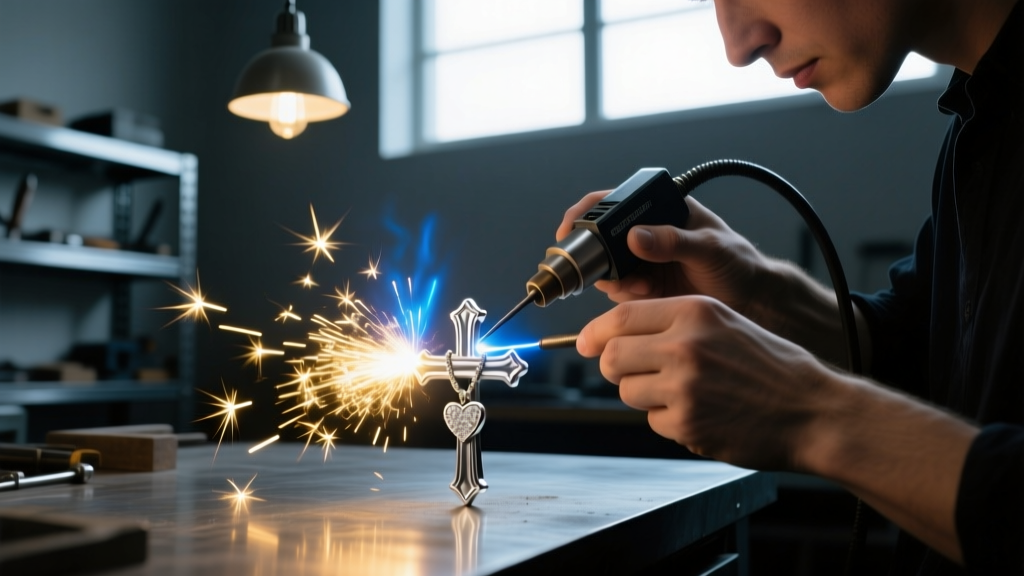
The most common point of catastrophic failure in a cross with a heart necklace is the bail—the loop that connects the pendant to the chain. In complex motifs where the heart overlaps the cross, the bail must be positioned to maintain the pendant's center of gravity. If the bail is soldered too far back, the cross will tilt forward; too far forward, and the heart's bottom point will lift awkwardly against the wearer's sternum.
Historically, torch soldering was used to attach the bail, which often resulted in thermal shock or visible solder seams, especially where the heart's cleft meets the vertical beam of the cross. Today, advanced jewelry fabrication techniques rely heavily on laser welding. Laser welders focus a high-energy beam onto a microscopic area, fusing the bail to the pendant without heating the surrounding metal. This prevents the oxidation of base metals in the alloy and preserves the structural integrity of any heat-sensitive gemstones already set in the piece.
Cast-As-One vs. Multi-Piece Assembly
When evaluating a high-end cross with a heart necklace, examine the intersection points. A "cast-as-one" piece is printed in resin via CAD, then cast in a single pour. While cost-effective, the sharp inner angles where the heart intersects the cross are highly susceptible to porosity—tiny gas bubbles trapped during the cooling phase. Multi-piece assembly, where the heart and cross are cast separately and laser-welded together, allows for superior polishing of internal geometries and eliminates structural porosity at the junctions.
Chain Pairing: Gauge, Link Type, and Tensile Strength
A pendant is only as secure as the chain that holds it. The dual-icon design of a cross with a heart necklace typically weighs between 3.5 and 6.2 grams, depending on the metal and dimensions. Pairing this weight with an inadequate chain is a primary cause of jewelry loss.
- Box Chains (1.2mm - 1.5mm): Box chains feature square links that interlock tightly, distributing weight evenly. A 1.2mm 14k gold box chain boasts a tensile strength of roughly 12-15 pounds, making it the most secure and geometrically complementary choice for the straight lines of a cross.
- Rope Chains (1.5mm - 2.0mm): The twisted helical structure of a rope chain reflects light beautifully but can catch on the intricate edges of a heart motif. If using a rope chain, ensure the pendant bail has a smooth, rounded interior to prevent friction wear.
- Cable Chains (0.9mm - 1.1mm): While delicate and elegant, standard cable chains under 1.0mm have a tensile strength of less than 5 pounds. They are not recommended for solid platinum or heavy 18k gold pendants, as the sudden shock of a snag can easily snap the soldered link at the clasp.
Stone Setting and Micro-Pave Durability
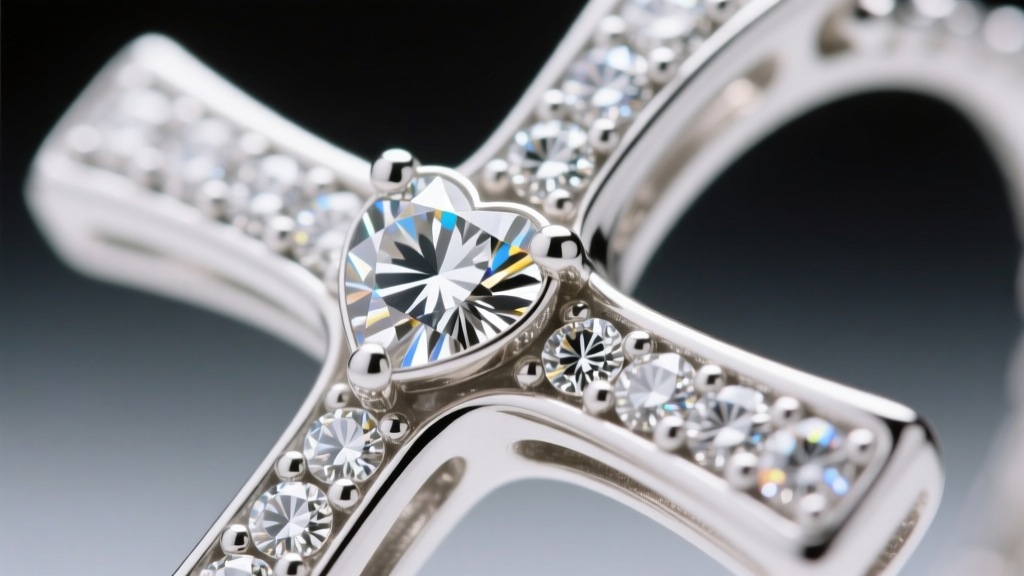
When diamonds or colored gemstones are incorporated into the design, the inner curves of the heart present a unique setting challenge. Standard prong settings require straight vertical access for the setting bur, which is impossible in the tight, concave cleft of the heart. Master jewelers utilize bead setting (micro-pave) for these contours. By raising microscopic beads of metal from the shank itself to secure 1.0mm to 1.3mm melee diamonds, the setter maintains the continuous flow of the metal without interrupting the silhouette with bulky prongs.
For colored stones like rubies or sapphires, the thermal conductivity of the metal must be considered. If the cross with a heart necklace requires resizing or repair later, the heat tolerance of the specific gemstone treatment (e.g., fracture-filled rubies vs. heat-treated sapphires) will dictate whether the stone must be removed before any laser or torch work is performed.
Maintenance and Ultrasonic Cleaning Risks
Proper maintenance ensures the longevity of the piece. While ultrasonic cleaners are excellent for removing sebum and lotion buildup from the intricate crevices of a cross with a heart necklace, they pose severe risks to certain materials. High-frequency vibrations can loosen the microscopic beads in micro-pave settings or shatter tension-fractured emeralds. For daily maintenance, a soft-bristled brush with a mild, phosphate-free dish soap and warm water remains the safest and most effective method for preserving both the metal's polish and the security of the gemstones.


