How to Authenticate, Clean, and Style a BGE 925 Necklace
Learn how to authenticate, deep-clean, and style a vintage BGE 925 necklace with our step-by-step expert guide for sterling silver care.

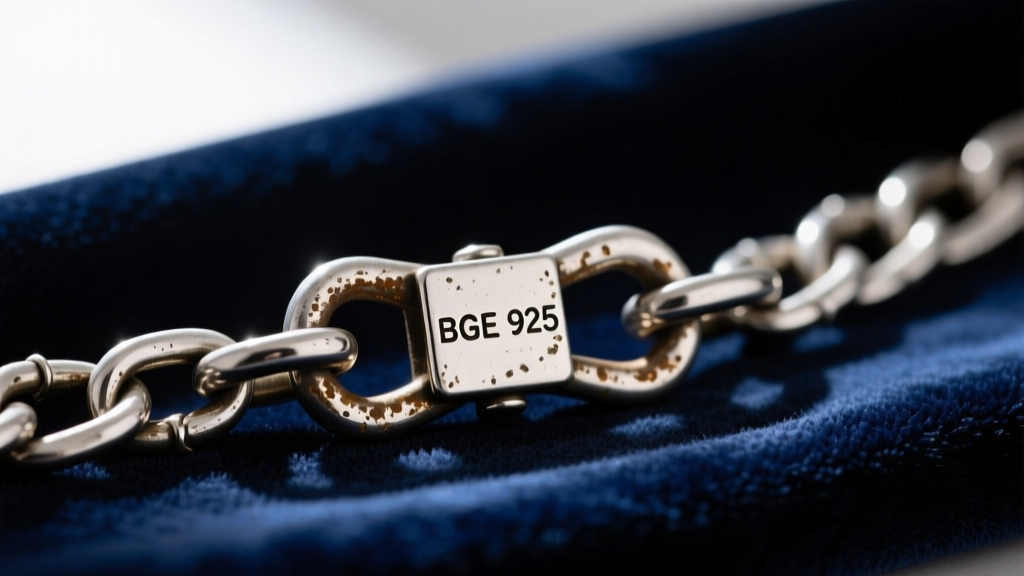
Stumbling upon a vintage or artisan necklace stamped with a BGE 925 hallmark is a genuine thrill for silver enthusiasts and jewelry collectors. The '925' denotes the universal standard for sterling silver, but the 'BGE' maker's mark adds a layer of mystery, history, and artisan value. Whether you have inherited this piece, found it at an estate sale, or purchased it from a vintage curator, knowing how to properly authenticate, restore, and style it is crucial for preserving its integrity.
As of 2026, modern silver collectors and gemologists are moving away from harsh, abrasive chemical dips in favor of scientifically sound, non-destructive restoration methods. In this comprehensive step-by-step guide, we will decode the BGE hallmark, walk you through professional authentication protocols, and provide a masterclass in styling your restored sterling silver necklace.
Decoding the BGE 925 Hallmark
Before applying any cleaning solutions, it is vital to understand what you are holding. The 925 stamp guarantees that the alloy consists of 92.5% pure silver and 7.5% secondary metals (usually copper), which provides the necessary tensile strength for jewelry. Pure silver (999) is too soft for functional chain links and clasps.
The BGE stamp is a registered maker's mark. While hallmark registries like the 925-1000 hallmark database track thousands of silversmiths, BGE is most frequently associated with mid-century imported silver lots and specific regional artisan guilds. Identifying the exact era of your BGE 925 necklace requires examining the font of the stamp, the style of the clasp (e.g., a vintage lobster claw vs. a modern spring ring), and the soldering techniques used on the jump rings.
Step-by-Step Authentication Guide
Counterfeiters frequently stamp base metals with '925' and fake maker's marks. To verify your BGE 925 necklace, follow this non-destructive to micro-destructive testing hierarchy.
Step 1: The Neodymium Magnet Slide Test
Silver is paramagnetic, meaning it exhibits a very weak, almost imperceptible attraction to magnets. Hold a strong neodymium magnet at a 45-degree angle above the chain. If the magnet slides down slowly with a distinct braking effect (due to eddy currents), the silver is likely genuine. If it sticks firmly or drops instantly without resistance, the core is likely brass or steel.
Step 2: The Thermal Conductivity (Ice) Test
Sterling silver possesses the highest thermal conductivity of any common metal. Place an ice cube directly on the thickest part of the BGE pendant or clasp. Genuine 925 silver will transfer heat so rapidly that the ice will begin melting almost instantly, far faster than it would on a stainless steel or silver-plated surface.
Step 3: Schwerter's Acid Testing (Micro-Destructive)
For absolute certainty, use a silver testing acid kit. File a microscopic notch in an inconspicuous area (like the inside of the clasp) and apply a drop of Schwerter's solution.
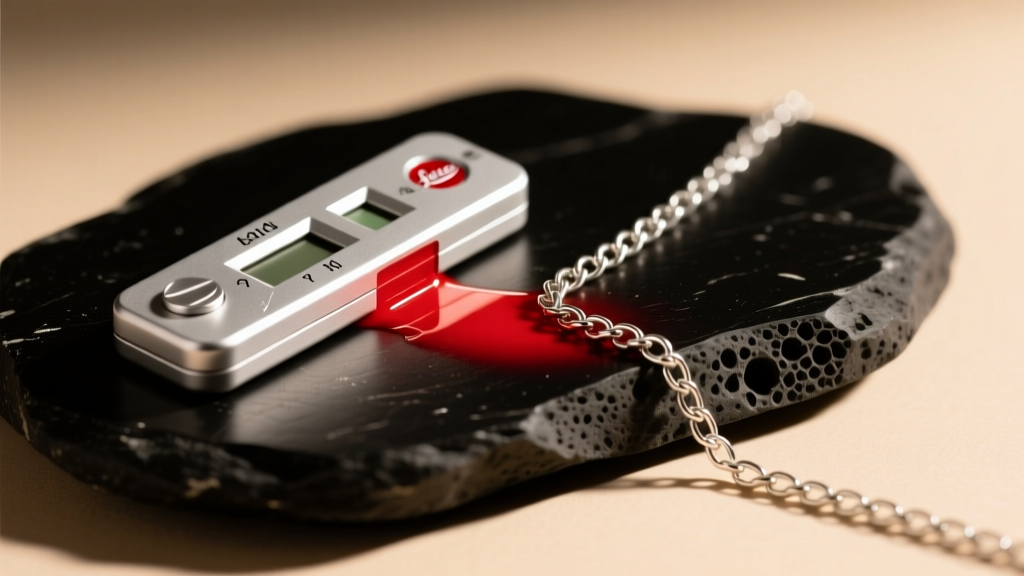
- Bright Blood Red: Confirms .925 Sterling Silver.
- Dark Brown/Green: Indicates .800 silver or lower purity.
- Blue/Green with fizzing: Base metal or silver-plated copper.
For more advanced gemological verification, consult the Gemological Institute of America (GIA) guidelines on precious metal testing and care.
The Electrochemical Restoration Method
If your BGE 925 necklace has developed a dark, grayish-black patina, this is silver sulfide (Ag2S) caused by the copper alloy reacting with atmospheric sulfur. Avoid commercial 'silver dip' liquids, as they strip the silver layer and leave a dull, matte finish. Instead, use the electrochemical reduction method to convert the silver sulfide back into pure silver without removing any metal.
The Setup
- Line a glass baking dish with heavy-duty aluminum foil, shiny side up.
- Place your BGE 925 necklace directly on the foil, ensuring the metal touches the aluminum.
- Boil a pot of distilled water and add 2 tablespoons of baking soda (sodium bicarbonate) per cup of water.
- Carefully pour the hot solution over the necklace until fully submerged.
The Chemistry
You will immediately smell sulfur (like rotten eggs) and see bubbles. The aluminum acts as a sacrificial anode. Because aluminum has a higher oxidation potential than silver, it pulls the sulfur atoms away from the silver sulfide. The chemical equation is: 3Ag2S + 2Al → 6Ag + Al2S3. After 5 minutes, remove the necklace with wooden tongs, rinse in distilled water, and pat dry with a microfiber cloth.
Styling and Layering Framework
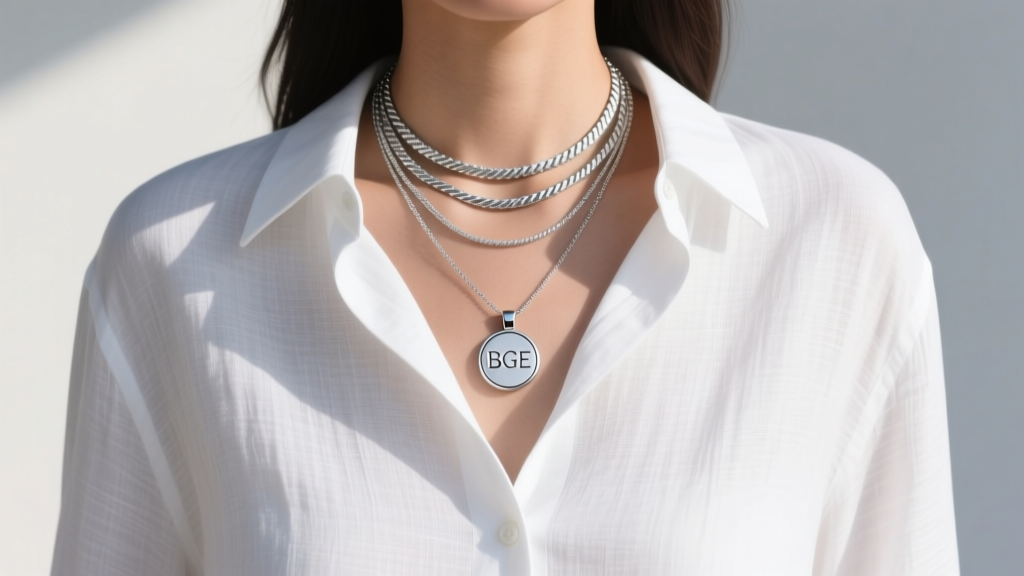
A restored BGE 925 necklace is a versatile staple. To achieve a curated, modern aesthetic in 2026, you must balance chain gauges, lengths, and pendant weights. Mixing identical chain styles creates visual clutter; contrast is key.
| Chain Style & Gauge | Optimal Length | Best Neckline Pairing | Styling Role |
|---|---|---|---|
| 1.2mm Cable Chain | 16 inches (Choker) | V-Neck or Scoop | Base layer, sits on collarbone |
| 2.5mm Figaro Chain | 18 inches (Princess) | Button-down or Crew | Mid-layer, adds textural weight |
| BGE Pendant on 3mm Rope | 22 inches (Matinee) | Turtleneck or Blazer | Focal point, draws eye downward |
Pro-Tip: When layering, ensure there is at least a 2-inch difference in length between each chain to prevent the clasps and jump rings from tangling and abrading one another.
Archival Storage and Anti-Tarnish Protocols
Once your BGE 925 necklace is cleaned and styled, proper storage is the only way to delay the inevitable return of silver sulfide. Do not store silver in cardboard boxes or standard plastic bags, as these emit sulfur gases and trap moisture.
- Pacific Silvercloth: Wrap the necklace in a dedicated silvercloth embedded with microscopic silver particles that absorb sulfur before it reaches your jewelry.
- 3M Anti-Tarnish Strips: Drop a 1-inch strip into an airtight, PVC-free ziplock bag with the necklace. These strips utilize copper-based compounds to neutralize airborne pollutants.
- Silica Gel Packets: Always include a desiccant packet to keep relative humidity below 50%, drastically slowing the oxidation process.
By following these precise authentication, restoration, and storage protocols, your BGE 925 necklace will remain a brilliant, historically rich centerpiece in your collection for decades to come.


