How to Authenticate and Wear a Dragon Jade Necklace
Learn how to authenticate, select, and style a genuine dragon jade necklace with our expert step-by-step guide on jade grades and carving quality.

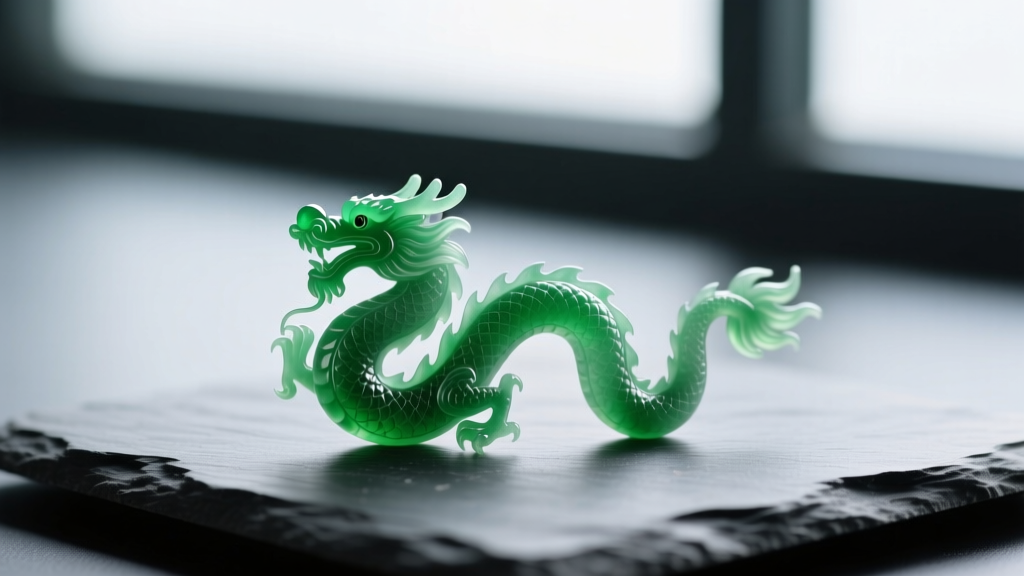
The Enduring Power of the Dragon Motif in Jade
The dragon (or Long) is arguably the most revered motif in Eastern antiquity, symbolizing imperial power, wisdom, and auspicious luck. When carved into jade—a stone historically valued above gold in many Asian cultures—the result is a talisman of immense cultural and aesthetic weight. However, the modern jewelry market is saturated with treated stones, synthetic imitations, and poorly executed carvings. Whether you are investing in a high-end Type A jadeite piece or a classic Hetian nephrite pendant, knowing how to authenticate, string, and style your dragon jade necklace is essential. This step-by-step guide will walk you through the gemological and stylistic nuances of wearing this powerful artifact in 2026.
Step 1: Deciphering Jade Grades and Treatments
Before evaluating the dragon carving itself, you must authenticate the material. The Gemological Institute of America (GIA) categorizes jade into three distinct treatment grades. Understanding these is your first line of defense against overpaying for altered stones.
| Jade Grade | Treatment Process | Durability & Value | Identification Clues |
|---|---|---|---|
| Type A | Completely natural; only cut and polished. | Highest value; structurally sound and durable. | High-pitched chime when tapped; natural color banding. |
| Type B | Acid-bleached to remove impurities, then polymer-impregnated. | Low value; polymer yellows and degrades over time. | Dull thud when tapped; waxy luster; UV fluorescence. |
| Type C | Chemically dyed to enhance or alter color. | Lowest value; color fades with sun and sweat exposure. | Dye concentrates in surface fractures; unnatural, uniform color. |
Pro-Tip for Buyers: Always request a certificate from a reputable gemological lab (like GIA or Gubelin) for any dragon jade pendant priced over $500. For a deeper dive into gemological testing, the International Gem Society offers excellent resources on identifying polymer fillers using magnification and UV light.
Step 2: Inspecting the Dragon Carving Quality
Once the stone's authenticity is verified, evaluate the artistry. Jade is exceptionally tough (nephrite has a higher tensile strength than steel due to its interlocking fibrous structure), making it difficult to carve. The quality of the craftsmanship drastically affects the pendant's value.
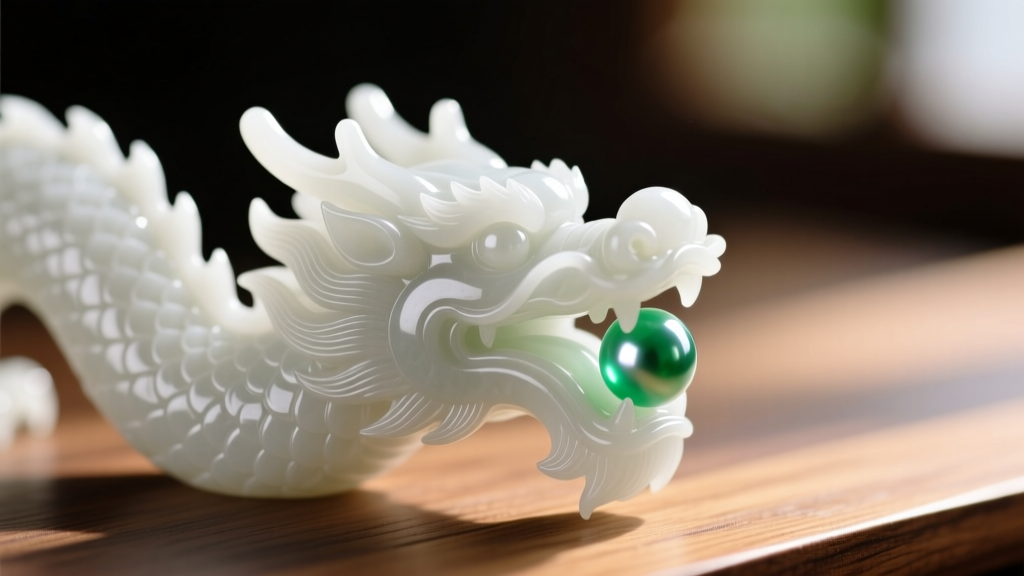
Evaluating the Carving Style
- The Hongshan "Pig Dragon" (Zhulong): A minimalist, C-shaped coiled dragon with a distinct snout. These are often reproduced in modern Hetian nephrite. Look for smooth, unbroken curves and a high, glass-like polish in the recessed areas.
- Imperial Serpentine Dragons: Highly detailed, featuring scales, whiskers, and flaming pearls. In high-grade jadeite, carvers use "piercing" techniques (openwork) to remove internal flaws. Check the openwork edges—they should be smooth and rounded, not sharp or jagged, which indicates rushed, machine-assisted milling.
- Claw Count: Historically, five-clawed dragons were reserved for emperors, while three or four claws were for nobility. Today, this is an aesthetic choice, but precise, symmetrical claw carving is a hallmark of a master artisan.
Step 3: Selecting the Right Cord and Hardware
A common failure mode for heavy jade pendants is improper stringing. Jadeite has a specific gravity of 3.25 to 3.36, meaning a substantial 40x30mm dragon pendant can easily weigh between 25 and 45 grams. Standard 0.8mm metallic chains will eventually stretch, kink, or snap under this concentrated, swinging weight.
The Best Cord Materials for Jade
For daily wear, abandon delicate metallic chains and opt for traditional macrame or braided cords. Braided Nylon or Polyester (1.5mm to 2.0mm thickness): These synthetic cords offer superior tensile strength and are impervious to sweat and moisture. Hand-Knotted Silk: While traditional and beautiful, pure silk degrades when exposed to the acidic pH of human sweat and the oils from your skin. If you choose silk, it must be replaced annually.
Tying the Adjustable Sliding Knot
To allow the dragon pendant to rest at the optimal length for various necklines, use a square sliding knot (often called a macrame slider). This eliminates the need for metal clasps, which can scratch the jade if the pendant flips backward against your neck. Ensure the bail (the hole drilled through the jade) is smoothly polished; a rough, unpolished drill hole will act like a saw blade, eventually fraying and cutting even the strongest nylon cord.
Step 4: Styling Your Dragon Jade Necklace by Neckline
The dragon motif is inherently bold. Styling it requires balancing the visual weight of the stone with your wardrobe. Here is a practical framework for pairing your necklace with different necklines.
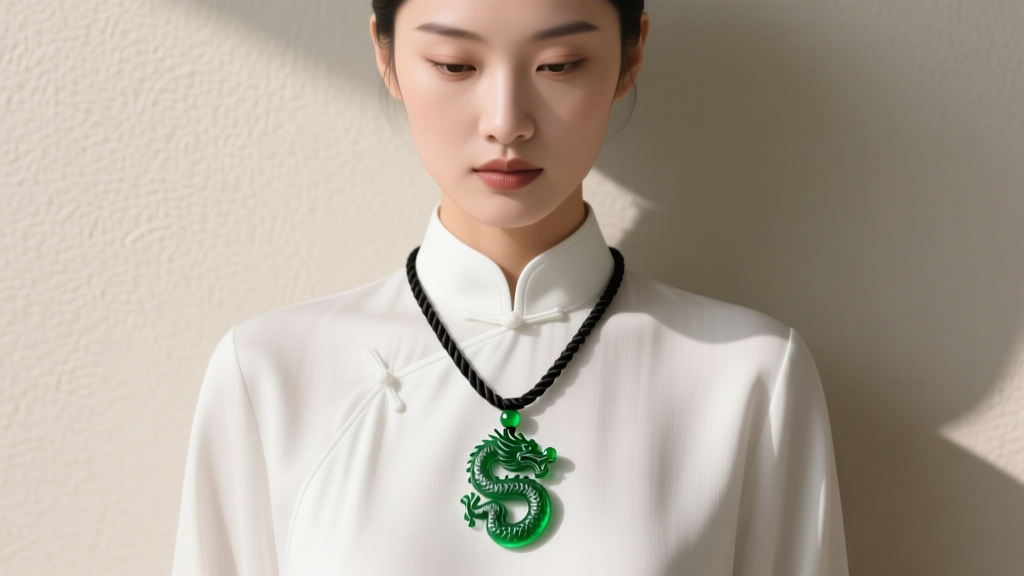
"Jade is not just a gemstone; it is a sculptural centerpiece. The cord you choose should act as an invisible frame, directing the eye straight to the carving." — Senior Stylist, Jewel Style Radar
- The Mandarin Collar: The most culturally harmonious pairing. A dark green jadeite dragon on a black or deep brown braided cord resting just below the collarbone complements the structured neckline of a mandarin or Nehru jacket perfectly.
- The Deep V-Neck: Use a longer cord (24 to 28 inches) to let the dragon pendant drop into the negative space of a V-neck sweater or wrap dress. This elongates the torso and allows the stone's translucency to catch ambient light.
- The Crew Neck / T-Shirt: For a modern, streetwear-inspired look in 2026, pair a chunky, white Hetian nephrite "pig dragon" with a heavy 2.0mm olive or navy cord over a crisp, heavyweight white cotton t-shirt. The contrast between the casual fabric and the ancient motif creates striking visual tension.
Step 5: Long-Term Care and Maintenance
Jade is tough, but it is not invincible. Nephrite and jadeite rank between 6.0 and 7.0 on the Mohs hardness scale, meaning they can be scratched by quartz dust, diamonds, and sapphires. Cleaning: Never use ultrasonic cleaners, especially if you suspect the jade has micro-fractures or is a Type B/C stone. The high-frequency vibrations can shatter compromised stones or strip polymer fillers. Instead, soak the pendant in lukewarm water with a drop of mild, phosphate-free dish soap. Gently agitate with a soft-bristled baby toothbrush to remove skin oils from the dragon's carved scales, then pat dry with a microfiber cloth. Storage: Always store your dragon jade necklace in a soft cloth pouch, completely separated from harder gemstones. Prolonged exposure to direct, intense sunlight can also cause naturally occurring iron oxides in some nephrite stones to oxidize further, subtly altering the color over decades.
Conclusion
Owning a dragon jade necklace is an investment in both geological history and master craftsmanship. By rigorously verifying the Type A status of the stone, scrutinizing the carving techniques, and stringing it on a high-tensile cord, you ensure that your piece will endure. Whether worn as a protective talisman or a bold fashion statement, a well-chosen dragon jade pendant transcends fleeting trends, offering a timeless connection to one of the world's oldest artistic traditions.


