How to Authenticate a Joan Rivers Faberge Egg Necklace
Learn how to authenticate, value, and care for a vintage Joan Rivers Faberge egg necklace with our step-by-step collector's guide.

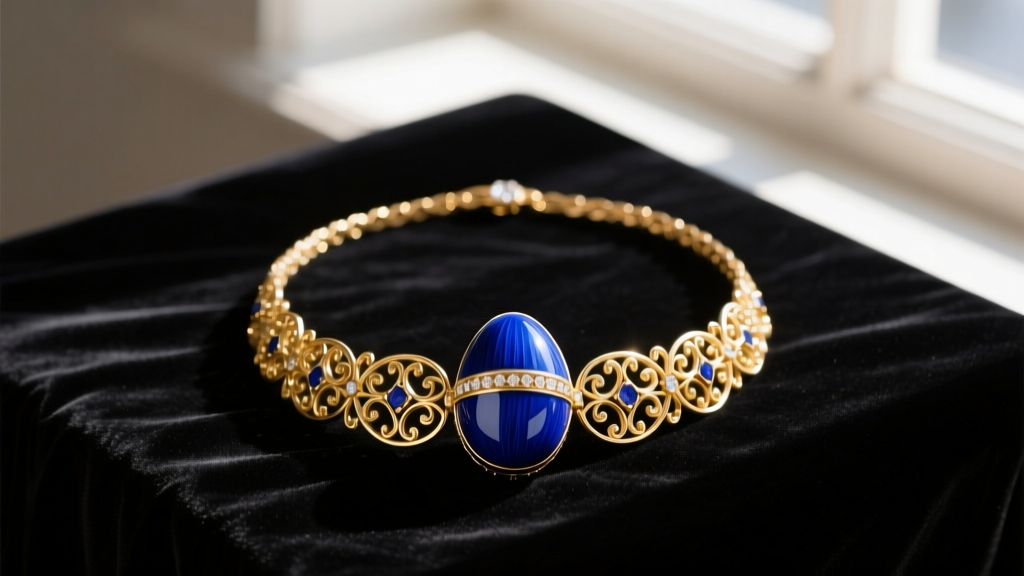
The secondary market for vintage costume jewelry has seen a massive resurgence, and few pieces command as much attention as the ornate, Russian-inspired pendants from the Joan Rivers Classics line. Specifically, the joan rivers faberge egg necklace remains a holy grail for collectors of 1990s and 2000s statement jewelry. However, as prices climb, so does the prevalence of counterfeit and misattributed pieces. Whether you are hunting on estate sale tables or browsing online auctions, knowing how to properly authenticate, value, and preserve these intricate pieces is essential.
The Legacy of Joan Rivers Classics Fabergé-Style Pendants
Before diving into authentication, it is vital to understand what you are actually looking for. The original Fabergé eggs, created by Peter Carl Fabergé for the Russian Imperial family, utilized guilloché enamel—a painstaking process of firing translucent glass over engine-turned metal. Joan Rivers Classics, launched in the late 1980s and peaking in the 1990s, created masterful homages to these imperial treasures. Rather than fired glass, the brand utilized high-grade jeweler's epoxy (cold enamel) over cast base metals, paired with precision-cut Austrian crystals. Understanding this material distinction is the first step in separating genuine Joan Rivers pieces from cheap modern knockoffs.
Step 1: Inspecting the Hallmarks and Stamps
The most definitive way to authenticate a joan rivers faberge egg necklace is by examining the metal stamps. Joan Rivers Classics was meticulous about branding, but the exact stamp varied depending on the decade of production and the size of the pendant.
- The Bail and Jump Rings: Inspect the decorative cap (bail) at the top of the egg. Genuine pieces often feature a tiny 'JR' or '©' stamped directly into the metal loop.
- The Pendant Back: Turn the egg over. Look for the full 'JOAN RIVERS CLASSICS' stamp, often accompanied by a copyright symbol (©) and sometimes a design patent number.
- The Clasp: Premium Joan Rivers chains frequently featured branded lobster clasps stamped with 'JR' on the lever.
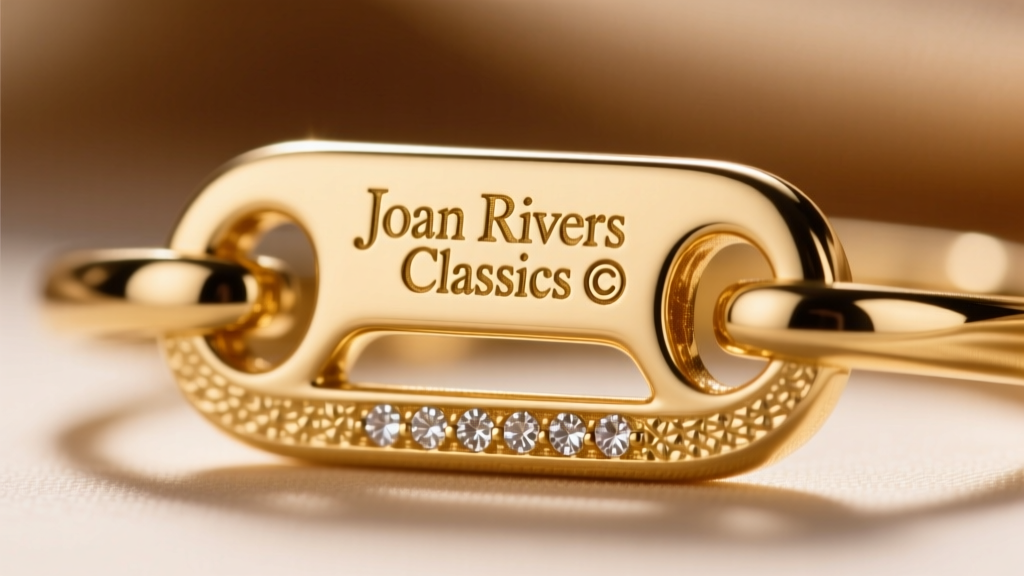
Red Flag: If the piece features a laser-etched serial number, it is likely a modern reproduction. Vintage 1990s Joan Rivers pieces relied on deep-die metal stamping, not laser engraving.
Step 2: Evaluating the Enamel and Crystal Quality
Because Joan Rivers utilized cold enamel rather than traditional fired glass, the tactile and visual cues differ from true antique Fabergé. Here is how to evaluate the materials.
Cold Enamel vs. Generic Resin
Genuine Joan Rivers cold enamel is incredibly smooth, glass-like, and opaque. It should feel cool to the touch and show no visible brush strokes. Counterfeit pieces often use cheap, fast-curing resins that exhibit micro-bubbles, uneven pooling in the metal crevices, or a slightly tacky feel when rubbed vigorously with a thumb.
Crystal Faceting and Foiling
Joan Rivers partnered with top-tier crystal manufacturers, primarily Swarovski, to source the stones for her Fabergé-style eggs. Use a 10x jeweler's loupe to inspect the crystals. Authentic stones will have razor-sharp facets and, in many cases, a pristine aurora borealis (AB) foil backing. Fakes often use acrylic or low-grade molded glass, which will show rounded facet edges and a dull, cloudy appearance under magnification.
Step 3: Assessing the Chain and Hardware
A genuine joan rivers faberge egg necklace was designed to be heavy and substantial. The chains were typically crafted from solid brass with thick gold-tone or rhodium plating. Run the chain through your fingers; it should feel heavy and drape fluidly without kinking. The jump rings connecting the chain to the clasp should be tightly closed, and on higher-end pieces, soldered shut to prevent the heavy pendant from pulling the chain apart.
Valuation Matrix: What Is Your Pendant Worth?
Valuing vintage costume jewelry requires analyzing condition, rarity, and completeness. Based on 2026 secondary market data from platforms like Ruby Lane and eBay's Joan Rivers archive, here is a realistic pricing framework.
| Condition Grade | Description | Estimated Market Value (USD) |
|---|---|---|
| Mint / New Old Stock | Original tags, pristine enamel, no crystal loss, original box. | $180 - $350+ |
| Excellent | No enamel chips, all crystals intact, minor gold-tone wear on high points. | $95 - $175 |
| Good | 1-2 missing crystals, minor surface scratches on enamel, chain replaced. | $45 - $90 |
| Fair / Damaged | Visible enamel chips, missing stones, broken bail, heavy brass showing. | $15 - $40 (Parts/Repair) |
Step-by-Step Cleaning and Preservation Guide
Improper cleaning is the fastest way to destroy the value of a vintage joan rivers faberge egg necklace. Never use ultrasonic cleaners, harsh chemicals, or silver dips. Ultrasonic waves will shatter the foil backing on the crystals, and chemicals will melt the cold enamel.
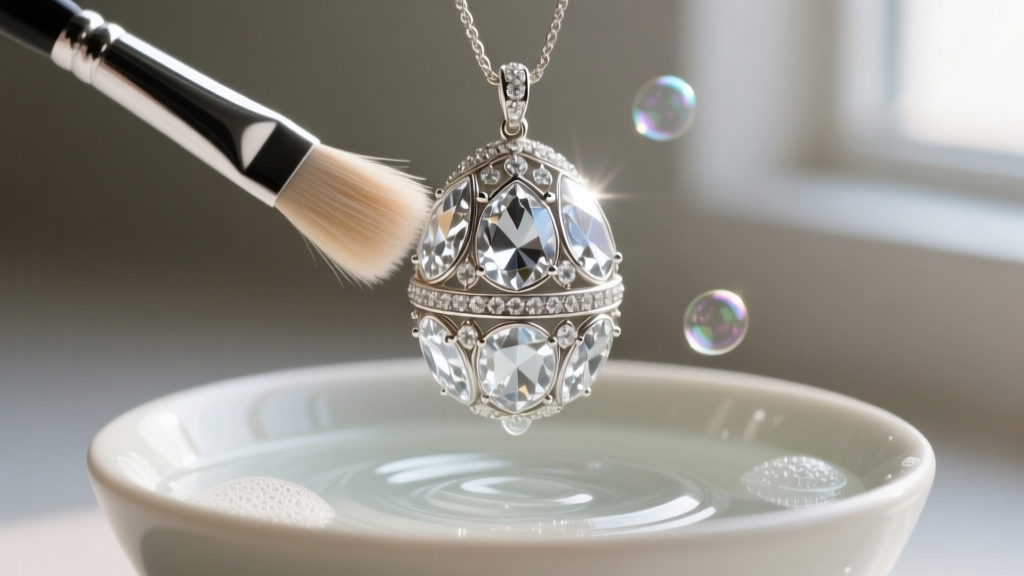
- Prepare a Mild Solution: Mix a few drops of pH-neutral dish soap (like Dawn) into a bowl of lukewarm distilled water. Avoid hot water, which can soften vintage epoxy.
- Surface Dusting: Use a dry, ultra-soft makeup brush to gently sweep away loose dust from the crystal settings and filigree.
- Targeted Cleaning: Dip a cotton swab into the soapy solution, squeeze out excess moisture, and gently roll it over the enamel surfaces and crystal faces. Do not scrub the metal settings, as this can wear away the gold plating.
- Rinsing: Wipe the pendant with a microfiber cloth lightly dampened with plain distilled water to remove soap residue.
- Drying: Pat dry immediately with a lint-free cloth and allow it to air dry completely in a low-humidity room before storing.
Troubleshooting Common Damage
If you acquire a piece that requires minor restoration, proceed with caution. Crystal Loss: If a stone has fallen out, do not use cyanoacrylate (Super Glue), as it releases fumes that will permanently cloud the surrounding crystals and leave a white residue on the enamel. Instead, use a tiny drop of E6000 jewelry adhesive applied with a toothpick, allowing 24 hours to cure. Enamel Chipping: Cold enamel cannot be seamlessly patched at home. If a chip exposes the base metal, apply a microscopic dab of clear, UV-resistant jeweler's resin to seal the metal and prevent oxidation, but understand that professional restoration of cold enamel is rarely cost-effective for costume pieces.
Final Thoughts for Collectors
The joan rivers faberge egg necklace represents a fascinating era of accessible luxury and historical revivalism in American fashion jewelry. By carefully examining the hallmarks, understanding the material science of cold enamel, and practicing meticulous preservation, you can confidently build and maintain a valuable collection of these opulent vintage treasures.