Authenticating the Vintage Pygmy Necklace: A Collector's Guide
Expert guide to authenticating, preserving, and ethically sourcing vintage pygmy necklace trade bead and organic ethnographic jewelry pieces.

Defining the Ethnographic Pygmy Necklace
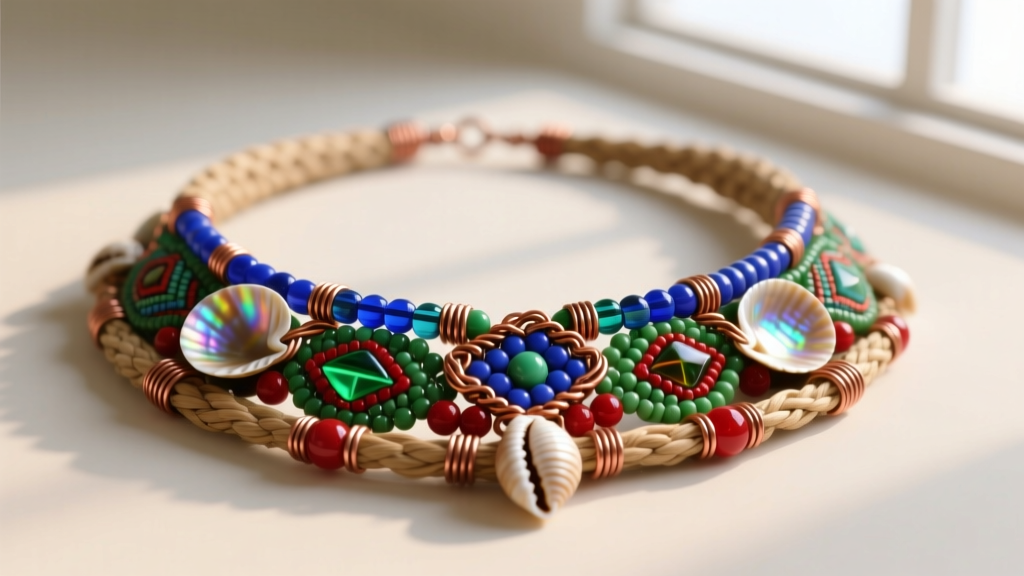
In the upper echelons of ethnographic jewelry collecting, the term pygmy necklace refers to the intricate, multi-strand adornments historically crafted by the semi-nomadic forest peoples of the Congo Basin, most notably the Mbuti, Baka, and Aka communities. Far from simple costume jewelry, these pieces are complex historical documents. They represent a fascinating intersection of indigenous organic craftsmanship and centuries of global trade routes. As of 2026, the market for authentic, untouched ethnographic necklaces has surged, driven by haute couture designers seeking archival inspiration and serious antiquities collectors. However, this rising demand has also triggered a wave of sophisticated reproductions and 'married' pieces (vintage beads restrung on modern materials). This deep dive provides a technical framework for authenticating, valuing, and conserving these remarkable artifacts.
Material Anatomy and Bead Typology
To authenticate a vintage pygmy necklace, one must first understand the precise materials utilized in their construction. These necklaces are rarely homogenous; they are cumulative assemblages of local organic materials and imported trade goods. According to the Metropolitan Museum of Art's Heilbrunn Timeline on African Beads, glass beads served as a primary currency and status symbol across Central Africa from the 16th century onward.
| Component | Material Origin | Identifying Characteristics | Collector Premium |
|---|---|---|---|
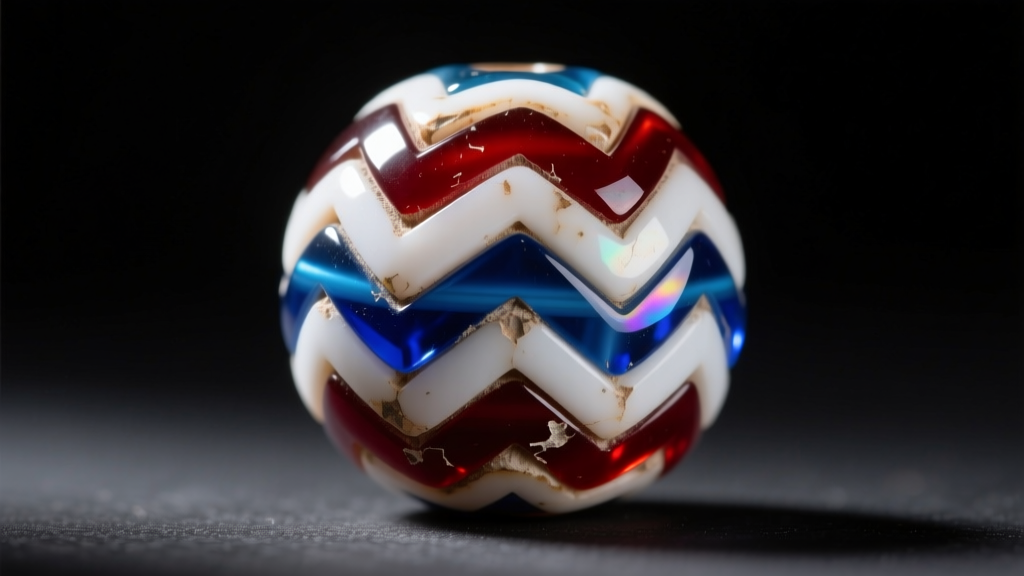
| Venetian Chevron Beads | Murano, Italy (15th-19th C.) | Drawn glass canes, 4-7 concentric layers, star-shaped cross-section, red/white/blue palette. | High (Core anchor pieces) |
| Cowrie Shells | Indian Ocean (Monetaria moneta) | Asymmetric dorsal ridge, ventral aperture, natural ivory patina, often rubbed smooth from skin contact. | Medium (Expected in multiples) |
| Carved Bone/Horn | Local Congo Basin Fauna | Hand-carved cylindrical or discoid shapes, porous surface, irregular drill holes. | Low-Medium (Adds organic authenticity) |
| Copper/Brass Manillas | European Trade (Birmingham/Bristol) | Horseshoe-shaped ingots, heavy oxidation, verdegris patina in crevices. | High (Indicates wealth/status) |
| Seed Pods & Raffia | Indigenous Flora | Irregular organic shapes, natural fiber stringing, susceptible to insect damage. | Low (Crucial for structural proof) |
Authentication Framework: Spotting Reproductions
The most common deception in the ethnographic jewelry market is the 'married' necklace. Unscrupulous dealers will purchase broken or loose vintage trade beads and restring them into a seemingly authentic pygmy necklace using modern techniques. Spotting these requires a forensic approach to wear patterns and stringing materials.
Stringing Material Analysis
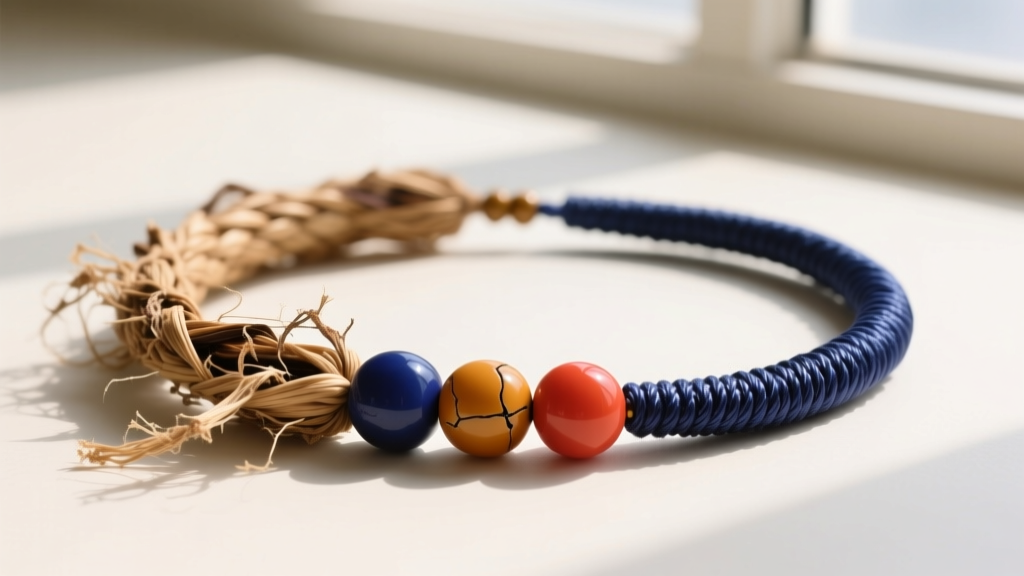
Authentic pre-1950s necklaces were strung on organic fibers such as raffia palm, bark cloth strips, or animal sinew. Under 10x magnification, natural raffia exhibits longitudinal striations and cellular degradation (cellulose hydrolysis) that appears as brittle, frayed micro-fibers. Conversely, if a loupe reveals monofilament nylon, extruded cotton, or synthetic waxed cord, the piece has been restrung. While restringing is sometimes necessary for conservation, a piece marketed as 'untouched original' with synthetic stringing is an immediate red flag.
Patina and Bead-on-Bead Friction
Glass is harder than organic materials but softer than metals. In a genuine pygmy necklace worn for decades, the glass trade beads will exhibit specific wear patterns. Look for 'flat spots' or subtle polishing on the edges where beads have rubbed against each other or against the wearer's skin. Furthermore, the drill holes of authentic bone and wooden beads will show asymmetrical widening and smooth, burnished interiors caused by decades of friction against the rough raffia cord. Modern laser-drilled or machine-stamped beads will have perfectly uniform, sharp-edged bore holes.
Ethical Sourcing and Provenance Verification
Collecting ethnographic jewelry in 2026 requires strict adherence to international cultural heritage laws. The UNESCO 1970 Convention on the Means of Prohibiting and Preventing the Illicit Import, Export and Transfer of Ownership of Cultural Property heavily impacts the trade of Central African artifacts. When acquiring a high-value pygmy necklace, demand a documented chain of custody. Pieces exported prior to 1970 with original auction house receipts or early anthropological expedition tags command a massive premium and are legally safe to trade.
'The ethical collector must differentiate between a looted cultural artifact and a legally traded ethnographic curiosity. Provenance is not just a certificate of authenticity; it is a legal shield.' — Archives of the Bead Society of Greater Washington.
Additionally, be mindful of CITES (Convention on International Trade in Endangered Species) regulations. While historical cowrie shells and vintage carved bone are generally exempt under antique waivers, importing newly carved ivory, tortoiseshell, or certain protected hardwoods disguised as vintage components is a federal offense in most jurisdictions.
Market Valuation and Pricing Tiers
The valuation of a pygmy necklace is heavily dictated by its structural integrity and bead rarity. Below is the current market framework for collectors:
- Tier 1: Museum-Quality (Pre-1920, Documented Provenance) - $2,500 to $8,000+. Features rare 7-layer Venetian chevrons, original degraded raffia stringing, and verifiable early 20th-century collection tags.
- Tier 2: Collector-Grade (Early to Mid-20th Century) - $800 to $2,400. Authentic materials with excellent patina, though stringing may have been stabilized or replaced with period-correct cotton.
- Tier 3: Decorative / Married Pieces - $150 to $500. Composed of genuine vintage trade beads but assembled recently for the fashion market. Valued strictly on the sum of its loose bead parts.
Conservation and Display Best Practices
Preserving the delicate organic components of a pygmy necklace requires museum-grade environmental controls. The juxtaposition of moisture-sensitive organic fibers and corrosion-prone copper alloys makes storage notoriously difficult.
Humidity and Light Control
Maintain a stable relative humidity (RH) between 45% and 55%. Fluctuations above 65% RH will accelerate the corrosion of brass and copper manillas, leading to bronze disease, which can chemically burn adjacent organic fibers. Conversely, RH below 30% will cause seed pods, bone, and raffia to desiccate, crack, and shatter. Display the necklace away from direct UV light, which will bleach the natural ivory tone of the cowrie shells and degrade any remaining natural plant dyes.
Archival Storage Materials
Never store ethnographic jewelry in PVC plastics or acidic cardboard boxes, which off-gas volatile organic compounds (VOCs) that react with copper and bone. Instead, wrap the necklace loosely in acid-free, unbleached cotton muslin or Tyvek sheets. Support the weight of heavy multi-strand beadwork with custom-carved Ethafoam polyethylene mounts to prevent stress fractures on the ancient stringing fibers. By treating the pygmy necklace not merely as jewelry, but as a fragile historical textile, collectors ensure these masterpieces of global trade survive for future generations.


