Ball Necklace Chain Buying Guide: Metals, Sizing, and Durability
Discover how to choose the perfect ball necklace chain. Our expert buying guide covers metal grades, wire gauges, connector types, and styling tips.

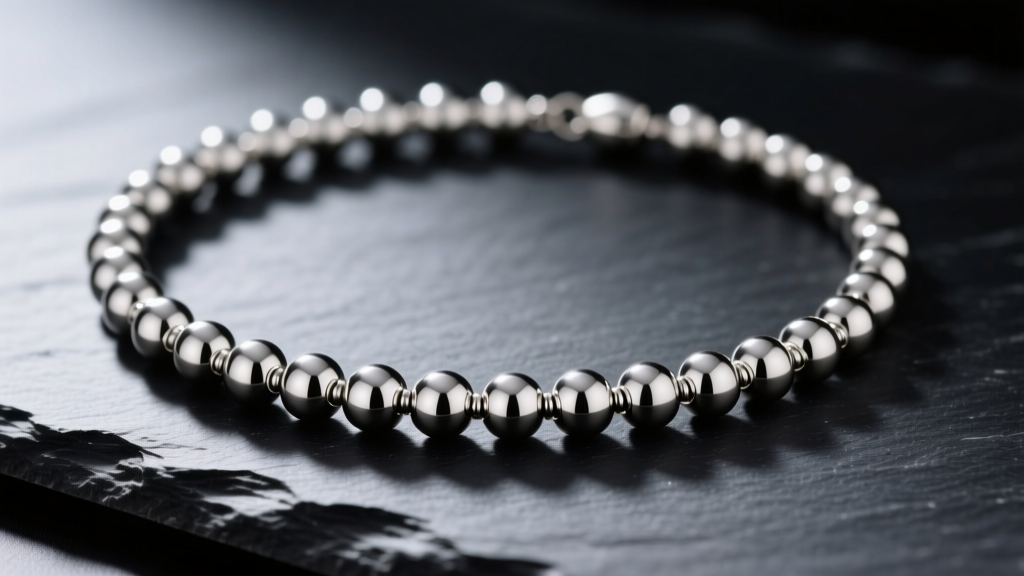
The ball necklace chain—frequently referred to as a bead chain or dog tag chain—has evolved far beyond its utilitarian military origins. Today, it is a staple in both minimalist fine jewelry and heavy streetwear aesthetics. However, because its mechanical structure differs entirely from traditional interlocking link chains, buying a ball necklace chain requires a specific understanding of its anatomy, tensile limits, and material properties. This comprehensive buying guide breaks down exactly what to look for to ensure you invest in a chain that is durable, comfortable, and proportionate to your pendants.
The Anatomy of a Ball Necklace Chain
Unlike cable, curb, or rolo chains that rely on interlocking loops, the ball necklace chain operates on a "ball and spool" mechanism. The chain consists of spherical beads (either hollow or solid) spaced apart by short lengths of wire. The ends of these connector wires are flared or hammered into a dumbbell shape, which locks them inside the hollow cavities of the adjacent beads. According to jewelry manufacturing experts at Rio Grande, the precision of this flared connector is the single most critical factor in the chain's overall lifespan. If the spool ends are too small, the chain will pull apart under minimal tension; if they are too large, the chain loses its fluid drape and becomes rigid.
Material Grades: What Will Actually Last?
The metal composition of your ball necklace chain dictates its tarnish resistance, skin compatibility, and structural integrity. Because the connector wires are incredibly thin, softer metals will bend and fail rapidly. Here is how the most common materials compare in real-world wear scenarios.
| Metal Alloy | Vickers Hardness (HV) | Tarnish & Corrosion Resistance | Best Use Case |
|---|---|---|---|
| 316L Surgical Stainless Steel | 150 - 200 HV | Exceptional (Highly corrosion-resistant) | Everyday wear, streetwear, heavy pendants |
| Sterling Silver (925) | 60 - 100 HV | Poor (Prone to sulfide tarnishing) | Delicate fine jewelry, occasional wear |
| Grade 5 Titanium (Ti-6Al-4V) | 330 - 350 HV | Superior (Hypoallergenic, inert) | Sensitive skin, active lifestyles, lightweight needs |
| Solid Brass (Unplated) | 80 - 120 HV | Poor (Oxidizes, turns skin green) | Costume jewelry, budget-friendly layering |
For daily wear, 316L stainless steel is the undisputed champion. It offers a high strength-to-weight ratio and will not oxidize from sweat or humidity. If you prefer precious metals, opt for rhodium-plated sterling silver to delay tarnishing, but be aware that the plating will eventually wear off the high-friction connector joints. Avoid cheap brass chains unless they are heavily plated with gold or rhodium, as the acidic pH of human sweat will rapidly degrade the copper alloy, leaving a green residue on your neck.
Sizing Matrix: Ball Diameter and Wire Gauge
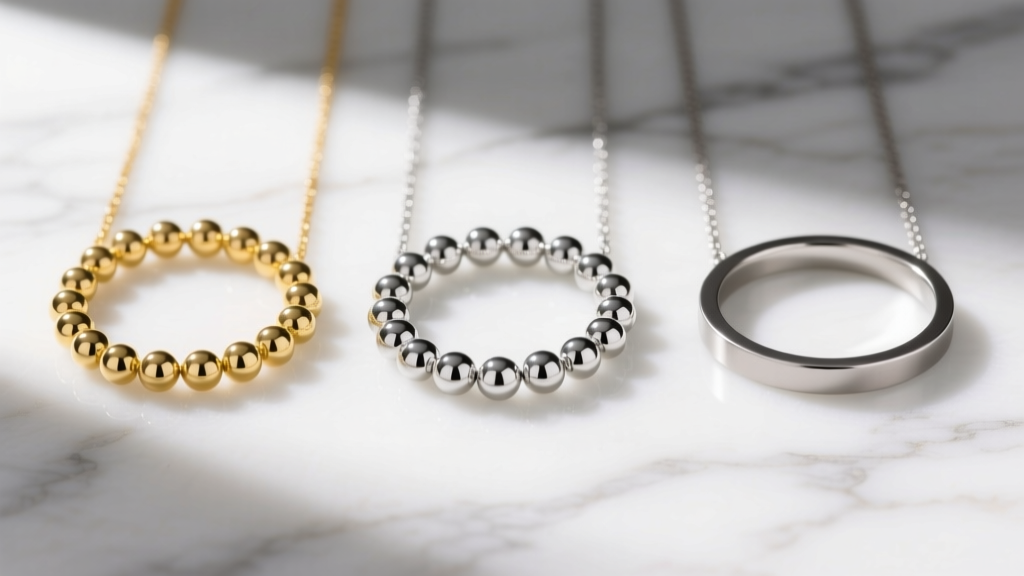
Ball chains are categorized by the diameter of the spherical beads, typically measured in millimeters. However, the wire gauge (thickness) of the connector is equally important for tensile strength. Wholesale findings suppliers like Halstead Bead emphasize that matching the chain diameter to your pendant's bail is crucial for both aesthetics and function.
- 1.2mm - 1.5mm (Delicate): Ideal for lightweight fine jewelry pendants (under 5 grams). These chains usually feature 24-gauge or 26-gauge connector wires. They offer a subtle, sparkling texture but will snap if pulled sharply.
- 2.0mm - 2.4mm (Standard): The classic "dog tag" dimension. Perfect for medium-weight pendants, engraved discs, and gemstone drops. The 2.4mm size provides excellent drape and can support pendants weighing up to 15 grams without stretching the connectors.
- 3.0mm - 4.5mm (Statement): Used primarily as standalone statement pieces in streetwear and hip-hop fashion. These heavy chains are rarely paired with pendants because the large bead diameter makes it difficult to find a pendant bail with a wide enough inner loop.
Pro-Tip for Pendant Pairing: Always measure the inner diameter of your pendant's bail. A 2.4mm ball chain requires a bail with an absolute minimum inner opening of 3.0mm to allow the connector joints to pass through smoothly without catching and bending.
Structural Weaknesses and Failure Modes
Understanding how a ball necklace chain breaks will help you avoid buying poorly manufactured pieces. The most common failure mode is connector pull-through. This occurs when the chain is subjected to sudden lateral tension (e.g., getting snagged on a door handle). The thin wire bends, the flared spool end folds inward, and it slips out of the hollow ball.
To mitigate this, high-end manufacturers use soldered connectors or solid-cast balls with precision-machined internal cavities. Cheaper, mass-produced chains often use loosely stamped hollow balls with wide entry holes, making them highly susceptible to pull-through failures. When inspecting a chain in person, gently bend it into a tight U-shape; if you see the connector wires easily sliding out of the bead cavities, do not purchase it.
Clasp Mechanics: Upgrading the Weakest Link
The standard clasp provided with most ball chains is the "ball clasp"—a hollow metal tube that the end ball snaps into via a friction fit. These are notoriously unreliable and frequently pop open during wear. If you are buying a premium ball necklace chain, look for one that terminates in a traditional lobster clasp or a magnetic neodymium clasp with a secure locking mechanism. If your chain comes with a friction-fit ball clasp, consider taking it to a local jeweler to have a stainless steel or gold-filled lobster clasp soldered on via a small jump ring. This single modification increases the chain's security by over 80%.
Maintenance and Cleaning Protocols
Because of the intricate gaps between the balls and connectors, dirt, sebum, and lotion easily accumulate on ball necklace chains. For stainless steel and titanium chains, an ultrasonic jewelry cleaner is the most effective method. The high-frequency sound waves will dislodge debris from the internal cavities without damaging the metal. However, never use an ultrasonic cleaner on sterling silver or plated brass ball chains. The intense cavitation can strip rhodium plating and accelerate the oxidation of raw silver in the hard-to-reach crevices. Instead, use a soft-bristled baby toothbrush with a few drops of mild dish soap and warm water, gently brushing along the length of the chain before patting it completely dry with a microfiber cloth.
Expert Buying Checklist
Before finalizing your purchase, run the chain through this quick quality-assurance checklist:
- Material Verification: Is it stamped 316L, 925, or Titanium? Avoid unlabeled "base metal" alloys.
- Connector Integrity: Do the spool connectors feel rigid, or do they wiggle loosely inside the beads?
- Drape Test: Does the chain lay flat against the collarbone, or does it kink and stick out at odd angles?
- Clasp Security: Is it a reliable lobster/spring ring clasp, or a high-risk friction ball clasp?
- Bail Compatibility: Will your existing pendants actually fit over the specific millimeter diameter of the beads?
By prioritizing connector mechanics and appropriate metal hardness over mere aesthetics, you will secure a ball necklace chain that offers the perfect balance of industrial edge and lasting durability.


