Expert Guide to Selecting a Baroque Pearl Pendant Necklace
Master the technical grading, setting mechanics, and chain pairing for a baroque pearl pendant necklace with our expert jeweler's deep dive.

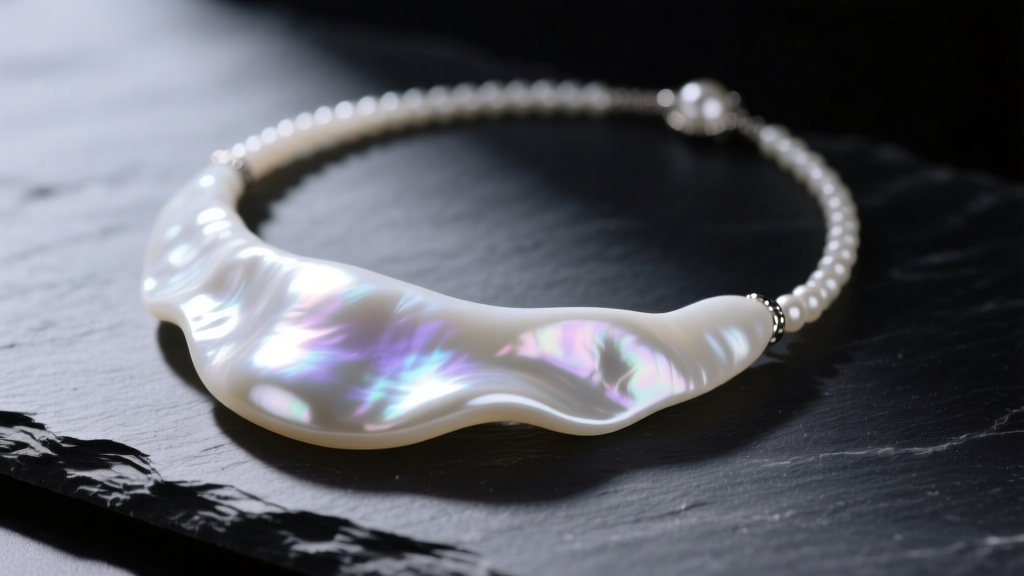
The allure of a baroque pearl pendant necklace lies in its defiance of symmetry. Unlike the perfectly spherical Akoya or the uniformly round South Sea pearls, baroque pearls are organic sculptures shaped by the unpredictable nature of mollusk mantle tissue. However, translating these irregular organic forms into durable, high-end jewelry requires a rigorous understanding of gemological grading, structural engineering, and metallurgical pairing. This expert deep dive bypasses generic styling advice to explore the technical specifications, failure modes, and precise grading metrics that dictate the quality and longevity of a baroque pearl pendant necklace.
The Anatomy of a Baroque Pearl: Nucleated vs. Keshi
Before evaluating a baroque pearl pendant necklace, a jeweler must first identify the pearl's genesis. Baroque pearls generally fall into two structural categories, which directly impact their durability and value:
- Nucleated Baroques: These pearls are grown around a spherical or shaped shell bead nucleus. The mollusk deposits nacre over the bead, but environmental stressors, water temperature fluctuations, or irregularities in the pearl sac cause the nacre to deposit unevenly, resulting in asymmetrical ridges, grooves, or teardrop shapes. The nacre thickness typically ranges from 0.8mm to 2.5mm.
- Keshi Baroques: Often a byproduct of the culturing process, keshi pearls form when the mollusk rejects the nucleus but continues to secrete nacre around a microscopic piece of mantle tissue. Because they are composed of 100% solid nacre, keshi baroques exhibit exceptional orient (iridescence) and structural density, making them highly prized for custom pendant settings.
Technical Grading Metrics for Baroque Pearls
According to the Gemological Institute of America (GIA), pearl grading relies on seven value factors. For baroque pearls, the 'Shape' category is redefined; rather than penalizing asymmetry, gemologists evaluate the aesthetic appeal and intentionality of the form. The true technical differentiators are luster, nacre quality, and surface characteristics.
Luster and Orient Evaluation
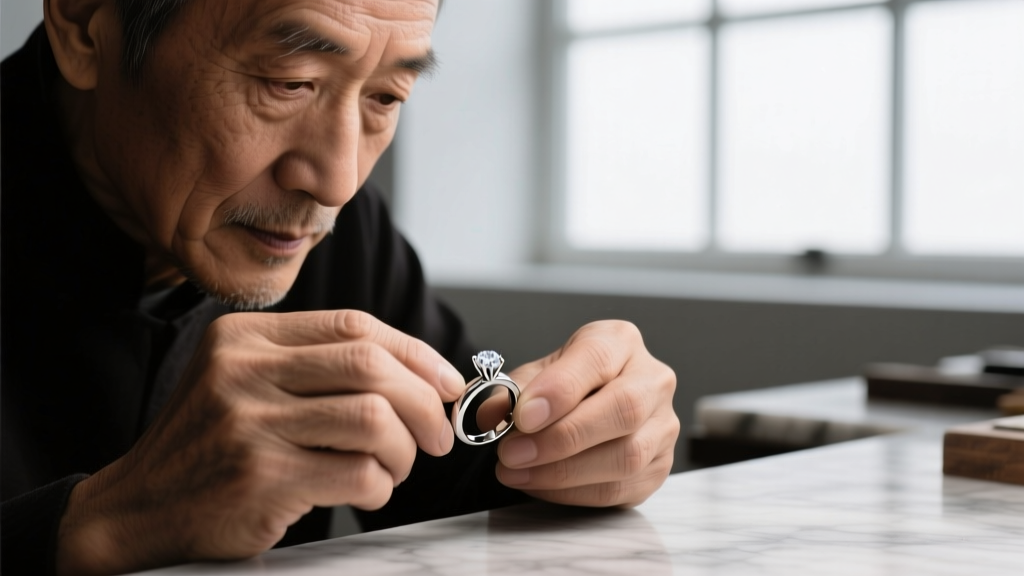
Luster is the measure of light reflected from the surface and the underlying layers of aragonite platelets. In a high-grade baroque pearl pendant necklace, you should look for 'Excellent' luster, defined by bright, sharp, and distinct reflections. Furthermore, baroques frequently exhibit orient—an optical phenomenon where light diffracts through the overlapping microscopic aragonite layers, creating a rainbow-like iridescence across the pearl's ridges. A baroque pearl lacking orient will appear chalky or dull, indicating poor crystalline alignment or overly thick, rapid nacre deposition.
Surface Topography: Blemishes vs. Character
While the American Gem Society (AGS) notes that flawless pearls are exceedingly rare, baroque pearls require a nuanced approach to surface grading. Circles, grooves, and ridges are structural characteristics, not blemishes. True blemishes include cracks, chips, or flat spots where nacre deposition failed entirely. A pendant-grade baroque pearl should have a clean 'drill zone' and a primary viewing face free of structural compromises, even if the reverse side features heavy texturing.
| Pearl Type | Average Nacre Thickness | Typical Size Range | Luster Profile | Price Range (Pendant Grade) |
|---|---|---|---|---|
| Freshwater Baroque | 0.8mm - 3.0mm (Solid Nacre) | 8mm - 14mm | Soft, satiny to metallic | $40 - $250 |
| Akoya Baroque | 0.3mm - 0.8mm | 6mm - 9mm | Sharp, mirror-like | $150 - $600 |
| South Sea Baroque | 2.0mm - 6.0mm | 12mm - 20mm+ | Satin, deep glow | $800 - $4,500+ |
| Tahitian Baroque | 1.5mm - 4.0mm | 9mm - 16mm | Metallic, high-contrast | $300 - $2,500 |
Pendant Setting and Drilling Techniques: A Jeweler's Perspective
The most common point of catastrophic failure in any pearl pendant is the drill hole and adhesive bond. Baroque pearls present unique engineering challenges because their center of gravity is rarely aligned with their geometric center.
Half-Drilled vs. Fully Drilled Configurations
For a premium baroque pearl pendant necklace, a half-drilled configuration is the industry standard. A fully drilled pearl requires a wire or chain to pass entirely through, which can cause friction, wear down the nacre at the exit points, and limit the pendant's articulation. A half-drilled pearl is mounted onto a metal peg (post), allowing the pearl to sit flush against the setting cap.
Adhesive Selection and Peg Scoring
Never use standard cyanoacrylate (super glue) for setting a baroque pearl. Cyanoacrylate degrades under UV exposure and moisture, eventually turning opaque white and creating a visible halo at the drill hole. Furthermore, it creates a rigid bond that can shatter the nacre if the pendant is dropped.
Expert Protocol: Use a two-part jeweler's epoxy (such as Devcon 5-Minute Epoxy) or a specialized flexible pearl adhesive. The metal peg must be scored with a needle file to increase surface area for mechanical adhesion. The drill hole should be exactly 0.1mm wider than the peg to allow the epoxy to form a structural sleeve, rather than being squeezed out by hydraulic pressure during insertion.
Chain Pairing: Gauge, Metal, and Length Specifications
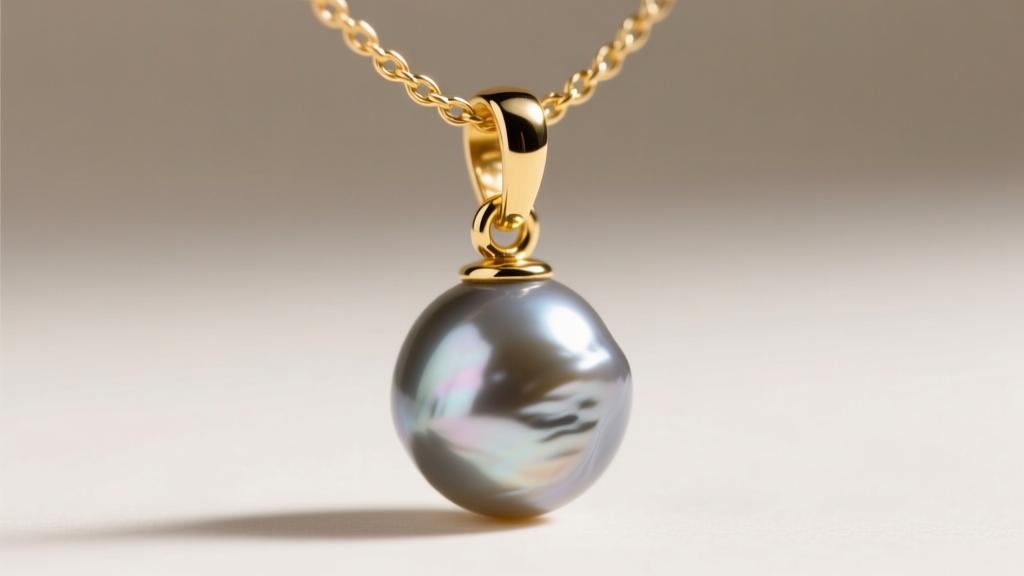
Pairing the correct chain with a baroque pearl pendant necklace is an exercise in physics and visual balance. Baroque pearls, particularly South Sea and Tahitian varieties, are denser and heavier than their spherical counterparts due to their uneven mass distribution.
Matching Chain Gauge to Pearl Weight
A 15mm South Sea baroque pearl can weigh between 4 and 7 grams. Suspending this weight on a 0.8mm or 1.0mm cable chain will inevitably lead to chain stretching, kinking, or clasp failure.
- Under 3 grams (Small Freshwater/Akoya): 0.9mm to 1.2mm cable or box chains are sufficient.
- 3 to 6 grams (Medium Tahitian/Large Freshwater): 1.3mm to 1.6mm rope, wheat, or figaro chains provide necessary tensile strength.
- Over 6 grams (Large South Sea): 1.8mm to 2.5mm solid rope or mariner chains are required to prevent the chain from cutting into the wearer's neck and to support the pendant's center of gravity.
Bail Mechanics
The bail (the loop connecting the pearl to the chain) must accommodate the chain's thickness. For heavy baroques, a 'glue-in cap bail' with a reinforced soldered loop is preferred over a simple screw-eye bail, which can unscrew over time due to the pendulum motion of the asymmetrical pearl against the wearer's chest.
Care and Maintenance: Preventing Nacre Degradation
Baroque pearls are composed of calcium carbonate and conchiolin (an organic protein). With a Mohs hardness of just 2.5 to 3.0, they are highly susceptible to chemical and mechanical degradation. To preserve the structural integrity of your baroque pearl pendant necklace, adhere to the following maintenance protocols:
- Avoid Ultrasonic Cleaners: The high-frequency cavitation bubbles generated by ultrasonic cleaners will fracture the nacre layers and dissolve the epoxy bond holding the peg.
- Chemical Isolation: Pearls must be kept away from chlorinated water, hydrogen peroxide, and acidic cosmetics. The conchiolin matrix will break down, causing the pearl to yellow and 'craze' (develop microscopic surface cracks).
- Storage Mechanics: Store the pendant flat. Hanging a heavy baroque pearl pendant necklace for long periods can cause the silk or synthetic cord (if used) to stretch, or place undue stress on the metal bail and chain links.
By understanding the gemological nuances, structural requirements, and precise material pairings detailed above, collectors and jewelers can ensure that a baroque pearl pendant necklace remains not just a striking piece of organic art, but a durable, heirloom-grade asset.


