Necklace Keychain Material Guide: Titanium vs Steel
Compare titanium, steel, and tungsten for your necklace keychain. Learn tensile strengths, chain gauges, and clasp mechanics for EDC jewelry.

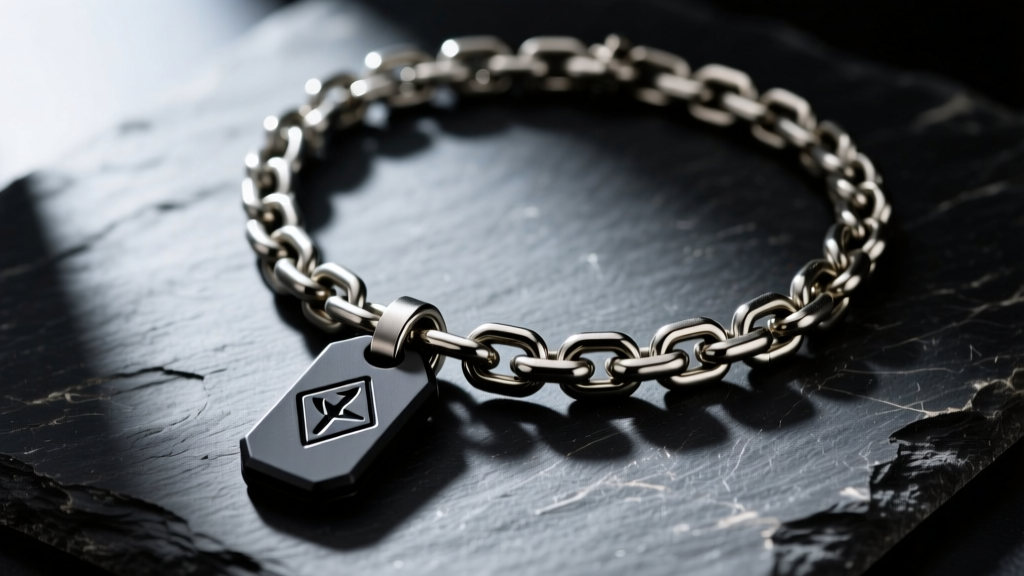
The Engineering Problem: Why Standard Chains Fail
The concept of a necklace keychain bridges the gap between everyday carry (EDC) utility and personal adornment. However, treating a keychain pendant like standard jewelry is a fast track to catastrophic failure. Keys are essentially handheld demolition tools. They are heavy, asymmetrical, and subjected to high-velocity impacts when dropped on concrete or tossed onto granite countertops. When you suspend a cluster of keys from your neck, you are introducing dynamic tensile loads and severe abrasive forces that standard jewelry was never engineered to withstand.
A standard 18-gauge (1.02mm) sterling silver cable chain has a tensile breaking point of roughly 15 to 20 pounds. A heavy set of car keys and a fob can easily generate momentary shock loads exceeding this threshold during a sudden jerk or a drop. Furthermore, the abrasive nature of key teeth will quickly degrade soft metals, leading to work-hardening, micro-fractures, and eventual chain snap. To build a reliable necklace keychain, we must look beyond traditional jewelry metals and adopt materials from the aerospace and marine engineering sectors.
Material Showdown: Titanium, Steel, and Tungsten
When selecting the primary metal for both the chain and the keychain pendant, three materials dominate the heavy-duty market. Each possesses a distinct metallurgical profile that dictates its real-world performance.
Grade 5 Titanium (Ti-6Al-4V)
Often referred to as aerospace-grade titanium, Grade 5 is an alloy composed of 90% titanium, 6% aluminum, and 4% vanadium. Unlike the commercially pure Grade 2 titanium often found in cheap body jewelry, Grade 5 offers a tensile strength of approximately 130 ksi (kilopounds per square inch). It is exceptionally lightweight—about 45% lighter than steel—making it the most comfortable option for neck carry. Titanium is also entirely hypoallergenic and immune to chloride-induced pitting, meaning it will not degrade when exposed to heavy sweat or saltwater. The primary drawback is cost; machining and polishing Grade 5 titanium requires specialized tooling, making these necklace keychains 3 to 4 times more expensive than steel equivalents.
316L Surgical Stainless Steel
316L is a marine-grade austenitic stainless steel containing molybdenum, which drastically increases its resistance to corrosion. With a tensile yield strength of around 42 ksi and an ultimate tensile strength of 75 ksi, it is robust enough for daily keychain duties. It is significantly heavier than titanium, providing a satisfying, substantial 'drop' and tactile feedback that many EDC enthusiasts prefer. According to metallurgical data from Rio Grande, 316L work-hardens slowly, meaning it can endure repeated bending and impacts without becoming brittle. It is also highly cost-effective, making it the undisputed workhorse of the heavy-duty necklace market.
The Tungsten Carbide Trap
Tungsten carbide is frequently marketed as 'scratch-proof' due to its Mohs hardness rating of 9, just below diamond. While a tungsten keychain pendant will indeed remain free of micro-scratches from key teeth, it suffers from extreme brittleness. Tungsten lacks ductility; it cannot bend or deform to absorb shock. If a heavy tungsten pendant swings and strikes a hard surface like a concrete floor or a metal workbench, it will shatter like glass. For a necklace keychain subjected to unpredictable kinetic impacts, tungsten is a structural liability and should be avoided.
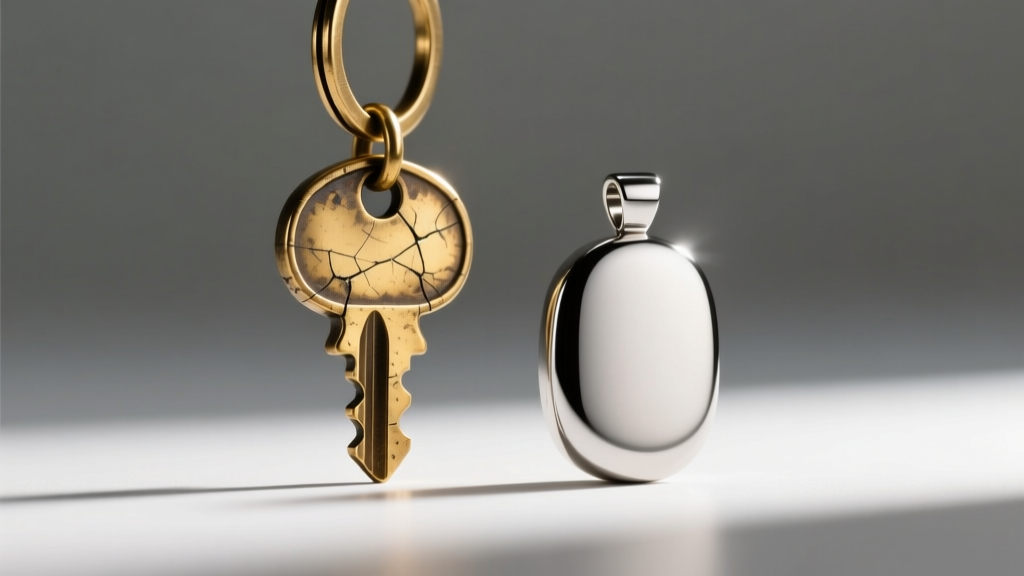
Comparative Data: Tensile Strength & Hardness
To make an informed decision, it is crucial to look at the raw mechanical properties of these alloys. The table below highlights why ductility and tensile strength matter more than surface hardness for a dynamic load-bearing accessory.
| Material Grade | Ultimate Tensile Strength | Mohs Hardness | Density (g/cm³) | Impact Resistance |
|---|---|---|---|---|
| Grade 5 Titanium (Ti-6Al-4V) | 130 ksi (895 MPa) | 5.5 | 4.43 | Excellent (High Ductility) |
| 316L Stainless Steel | 75 ksi (515 MPa) | 5.0 - 6.0 | 8.00 | Very Good (Moderate Ductility) |
| Tungsten Carbide | 50 ksi (345 MPa) | 9.0 | 15.63 | Poor (Extremely Brittle) |
| Solid Bronze (C90500) | 45 ksi (310 MPa) | 3.0 - 4.0 | 8.86 | Good (High Malleability) |
Chain Architecture and Gauge Sizing
The material is only half the battle; the chain architecture dictates how forces are distributed across the necklace. Standard cable or curb chains rely on single, unsupported soldered or unsoldered jump rings. Under the asymmetric weight of keys, these links experience torsional stress, causing them to slowly pull apart.
For a necklace keychain, you must utilize interlocking or woven chain styles. The Franco chain and the Wheat (Spiga) chain are the superior choices. A Franco chain features V-shaped links woven in a continuous, four-sided box pattern, distributing tensile loads across multiple contact points rather than a single wire. A Wheat chain uses braided, teardrop-shaped links that naturally flex without binding.
Gauge sizing is non-negotiable. While fashion necklaces utilize 18 to 20-gauge wire (0.8mm - 1.0mm), a functional keychain necklace requires a minimum of 12-gauge (2.05mm) wire for steel, or 10-gauge (2.59mm) for titanium to account for the alloy's lower density. Anything thinner risks deformation when the keys catch on a door handle or steering wheel.
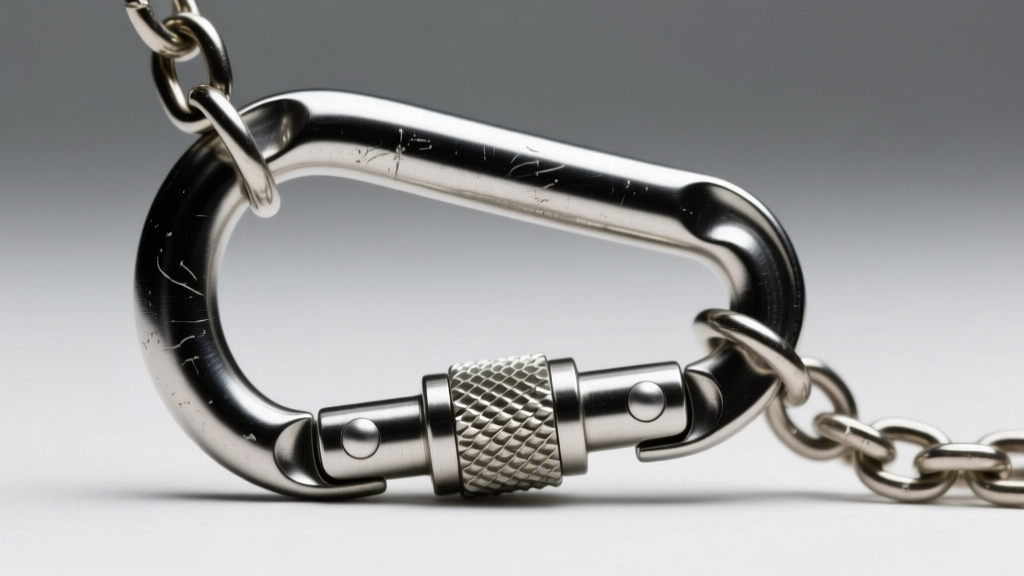
Clasp Mechanics and Failure Points
According to jewelry repair technicians at Ganoksin, the clasp is the most frequent point of failure in any heavy-load necklace. Standard lobster claws and spring rings rely on a tiny internal steel spring. Over time, the repetitive compression of this spring, combined with the ingress of pocket lint and sweat, leads to spring fatigue and sudden clasp release.
For a necklace keychain, discard the lobster clasp entirely. You must upgrade to a screw-lock carabiner or a threaded barrel clasp. A screw-lock carabiner features a threaded sleeve that physically blocks the gate from opening, eliminating the reliance on spring tension to keep your keys secure. Ensure the carabiner gate is machined from the same metal as the chain to prevent galvanic corrosion, and verify that the threading is at least 1.5mm deep to prevent cross-threading under load.
Galvanic Corrosion and Maintenance
When building a custom necklace keychain, mixing metals is a common aesthetic choice, but it introduces the risk of galvanic corrosion. If you pair a 316L stainless steel chain with a solid bronze or copper keychain pendant, the presence of an electrolyte (human sweat) will create a galvanic cell. The less noble metal (bronze/copper) will act as an anode and rapidly corrode, leading to structural weakening and severe skin discoloration.
To prevent this, maintain metallurgical consistency. Use a titanium chain with a titanium pendant, or a steel chain with a steel pendant. If you must mix metals for aesthetic contrast, use an inert barrier, such as a ceramic or anodized aluminum jump ring, to break the electrical pathway between the dissimilar metals. Regular maintenance involves ultrasonic cleaning every few months to remove abrasive silica dust and metal shavings that accumulate in the chain links, which act like lapping compound and slowly grind the metal away from the inside out.
Final Verdict: Building Your EDC Necklace
The ideal necklace keychain prioritizes tensile strength, impact resistance, and secure mechanical linkages over superficial scratch resistance. For the ultimate lightweight, corrosion-proof setup, a 10-gauge Grade 5 Titanium wheat chain paired with a threaded barrel clasp is unmatched. For those who prefer a heavier, more substantial feel on a budget, a 12-gauge 316L Stainless Steel Franco chain with a screw-lock carabiner provides bombproof reliability. By respecting the physics of pocket carry and selecting the correct alloy and gauge, your necklace keychain will transition from a fragile accessory to a lifelong EDC tool.


