2026 Trends: Best Beach Necklaces Men Are Wearing This Summer
Discover the best beach necklaces men are wearing in 2026. Our trend analysis covers saltwater-safe materials, sizing, and coastal styling tips.


The 2026 Shift: From Novelty to Refined Coastal Minimalism
As we navigate through 2026, the landscape of men's coastal jewelry has undergone a radical transformation. The era of cheap, mass-produced souvenir necklaces is definitively over. Today, the best beach necklaces men are choosing reflect a sophisticated blend of surf heritage, material science, and refined minimalism. According to recent style reports from GQ, modern men are demanding pieces that transition seamlessly from a morning surf session to an upscale seaside dinner without skipping a beat. This means prioritizing structural integrity, corrosion resistance, and understated silhouettes over flashy logos and fragile components.
The coastal jewelry market has responded by engineering pieces that actively combat the harsh realities of saltwater, UV exposure, and physical abrasion. Whether you are looking for a subtle titanium pendant or a heritage-inspired puka shell strand, understanding the anatomy of a saltwater-safe necklace is critical for making a smart investment this summer.
Material Science: Surviving the Saltwater Test
The ocean is an unforgiving environment for metals and organic materials. Saltwater is highly corrosive, accelerating oxidation and degrading weak alloys. If you are investing in premium beach necklaces men can rely on, you must scrutinize the material grade.
The Metals: 316L vs. 304 Stainless Steel and Titanium
Many budget brands advertise "surgical steel" or generic stainless steel, which usually means 304-grade alloy. While 304 is fine for indoor wear, it lacks the necessary elements to resist chloride ion corrosion found in seawater. Within a single summer of ocean swimming, a 304 stainless steel chain will develop micro-pitting, rust spots, and eventually snap.
Instead, look for 316L marine-grade stainless steel. This alloy contains 2-3% molybdenum, which specifically binds against chloride corrosion, making it the industry standard for marine hardware and high-end dive watches. For an even lighter, completely corrosion-immune option, Grade 23 Titanium (Ti-6Al-4V ELI) is the pinnacle choice. It is entirely non-reactive, hypoallergenic, and weighs roughly 45% less than steel, making it ideal for active beachgoers.
The Cords: Synthetics Over Organics
Leather and cotton are traditional choices for surfer necklaces, but they are catastrophic for daily saltwater exposure. Leather absorbs salt, which draws out its natural oils, leading to severe drying, cracking, and an unpleasant odor. Cotton acts as a sponge, retaining moisture against the skin and breeding bacteria.
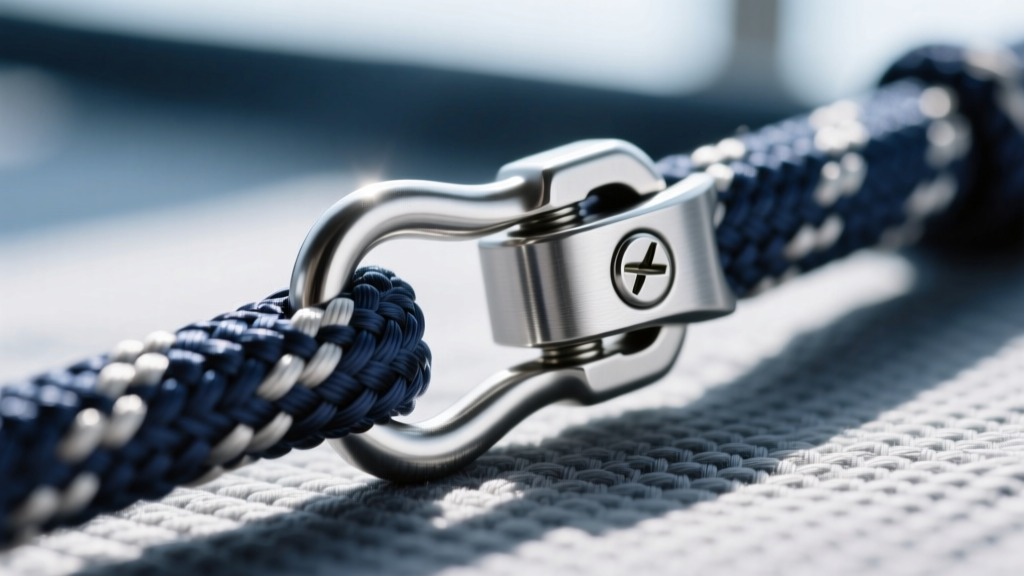
The 2026 standard for high-performance cords is UHMWPE (Ultra-High-Molecular-Weight Polyethylene), commonly known by the brand name Dyneema, or marine-grade braided polyester. These synthetic fibers are hydrophobic, meaning they repel water, dry in minutes, and possess a tensile strength that rivals steel wire.
The Hardware Problem: Why Your Clasp Will Fail
The weakest point of any beach necklace is the clasp. Standard lobster clasps and spring rings contain tiny internal steel springs. Even if the exterior is gold-plated or 316L steel, the internal spring is often cheap pot metal that will rust and seize up after a few ocean dips. To avoid losing your pendant in the surf, opt for:
- Screw-Lock Barrel Clasps: These use threaded metal barrels that screw together securely, eliminating internal springs entirely.
- Neodymium Magnetic Clasps: High-end brands now encase powerful rare-earth magnets in marine-grade epoxy or PVD-coated titanium sleeves for a seamless, spring-free connection.
- Endless Loops: Continuous chains or cords that slip over the head, completely removing the need for hardware.
2026 Trend Matrix: What is In vs. What is Out
To help you navigate the market, we have compiled a data-driven comparison of the current trends dominating the coastal jewelry space this year.
| Style Element | 2026 Trend Status | Why It Matters |
|---|---|---|
| Chunky Resin Puka | Out | Looks cheap, environmentally questionable, lacks authentic surf heritage. |
| Heirloom Conus Puka | In | Sustainable, naturally tumbled, offers unique asymmetrical aesthetics. |
| Gold-Plated Chains | Out | Saltwater strips plating in days, leaving dull brass underneath. |
| Solid 14k/18k Gold | In | Alloyed for durability, naturally resistant to tarnish and saltwater. |
| Visible Brand Logos | Out | Clashes with the quiet luxury and minimalist coastal ethos. |
| Abstract Coordinates | In | Personalized, subtle, and meaningful without being ostentatious. |
Sizing and Proportions for the Active Wearer
Length and gauge are not just aesthetic choices; they are functional necessities for the beach environment. A necklace that is too short or too thick will become a hazard in the water.
The Ideal Length: 20 to 24 Inches
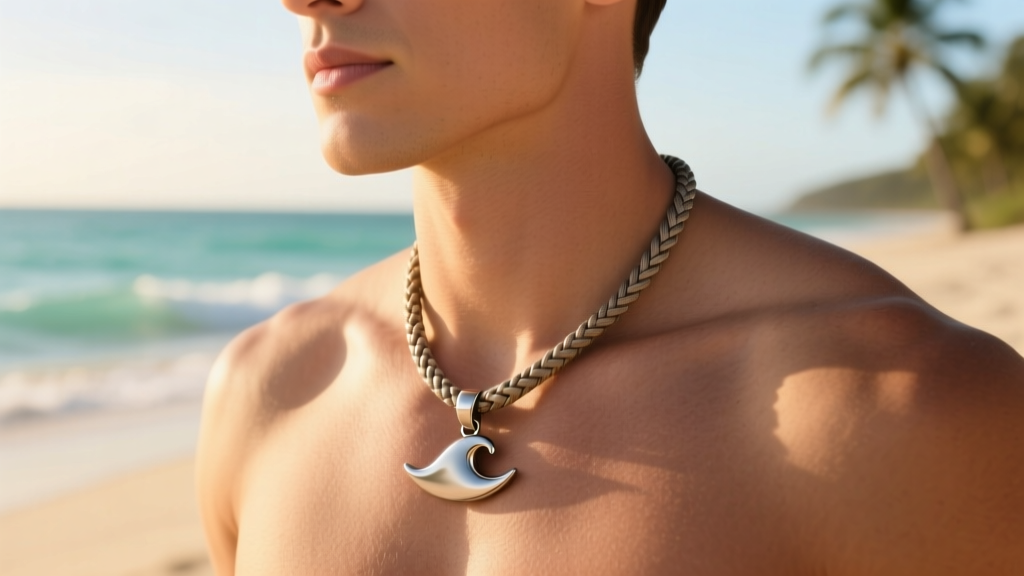
An 18-inch choker length is generally unsuitable for the beach. When swimming, your neck muscles expand, and water temperature changes can cause slight bodily swelling. Furthermore, a tight chain can easily catch on a surfboard leash or wetsuit zipper. The sweet spot for beach necklaces men prefer is 22 inches (the princess/matinee border). This length allows the pendant to rest securely on the sternum, keeping it out of the way of active movement while remaining visible above a casual linen shirt.
Cord and Chain Gauge
For chains, a 2mm to 3mm thickness offers the best balance of durability and comfort. Anything thicker than 4mm becomes heavy, pulls on neck hair, and traps sand. For synthetic cords, a 2mm braided profile provides excellent knot-holding capabilities and resists fraying against wetsuit neoprene.
Authenticating Puka: Real Cone Shells vs. Resin Fakes
The puka shell necklace is the undisputed godfather of men's beach jewelry, but the market is flooded with counterfeits. True puka is not a manufactured bead; it is the naturally occurring, ocean-tumbled apex of the Conus miliaris cone shell. The Gemological Institute of America (GIA) has extensively documented the differences between natural shells and mass-produced imitations.
True puka is not a manufactured bead; it is the naturally occurring, ocean-tumbled apex of the Conus miliaris shell. If the hole is perfectly centered, the beads are uniform in size, and the edges are perfectly symmetrical, you are likely holding dyed plastic or carved shell hash.
— GIA Gemological Report on Shell Imitations
When shopping for authentic puka, look for asymmetry. Natural shells have a slightly convex top and a concave bottom. The hole is rarely perfectly centered, and the edges will show natural wear patterns rather than machine-perfect bevels. High-end jewelers in 2026 are pairing these authentic, hand-sorted shells with 14k solid gold spacer beads and screw-lock clasps, elevating the classic surfer staple into a luxury asset.
Care Protocols for Longevity
Even the most marine-grade materials require basic maintenance to maintain their luster and structural integrity throughout the summer season. Implement these three steps to ensure your coastal jewelry lasts for years:
- The Freshwater Rinse: Immediately after exiting the ocean, rinse your necklace with fresh tap water. This prevents salt crystals from forming in the crevices of the clasp or chain links, which can cause mechanical grinding and stiffness.
- Mild Surfactant Cleaning: Once a week, soak the piece in warm water with a drop of mild dish soap. Use a soft-bristled toothbrush to gently agitate the clasp mechanism and the back of any pendants where sunscreen and body oils accumulate.
- UV and Chemical Avoidance: While titanium and 316L steel are tough, the chemical filters in modern sunscreens (particularly avobenzone) can cause temporary surface clouding on polished metals. Apply your sunscreen, let it absorb for 15 minutes, and then put your jewelry on.
By prioritizing advanced materials, precise sizing, and authentic craftsmanship, the beach necklaces men are wearing in 2026 prove that coastal style can be both rugged and deeply refined. Invest in the right metallurgy, respect the ocean's corrosive power, and your summer jewelry will easily outlast the season.


