The Beaded Necklace with Pearl: 2026 Trend Analysis
Discover 2026 styling trends for the beaded necklace with pearl. Learn how to mix gemstone beads, akoya pearls, and modern silhouettes.

The Evolution of Mixed-Media Nacre
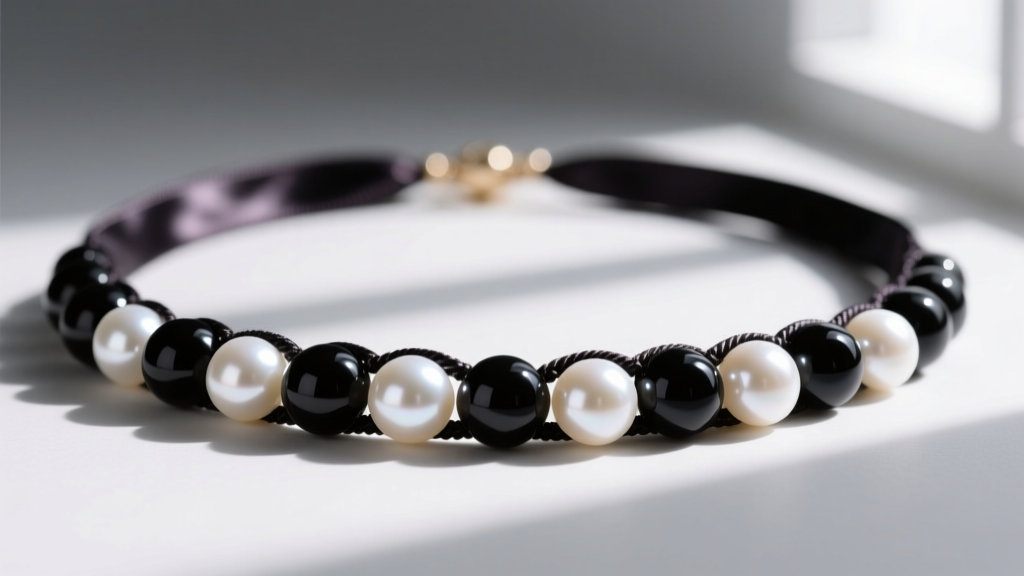
The jewelry landscape in 2026 has decisively moved away from the rigid, uniform strands of the past decade. Today, the beaded necklace with pearl represents a masterclass in textural contrast and organic asymmetry. No longer confined to the traditional archetype of matched, monochromatic pearl strands, modern designers are integrating luminous nacre with earthy, opaque, and vibrant gemstone beads. This shift reflects a broader consumer desire for "expressive materiality"—jewelry that feels curated, artisanal, and deeply personal rather than mass-produced.
Historically, mixing pearls with colored beads was relegated to costume jewelry or bohemian festival wear. However, the 2026 iteration relies heavily on high-end lapidary materials. We are seeing a surge in combinations that play with light absorption and reflection: matte stones paired with high-luster pearls, or translucent glass beads juxtaposed against dark Tahitian nacre. According to the American Gem Society, the modern consumer is highly educated on gemstone origins, demanding that the beads accompanying their pearls be ethically sourced and naturally colored, rather than synthetically dyed.
Material Matrix: Pairing Pearls with Modern Beads
When designing or sourcing a beaded necklace with pearl accents, the hardness of the materials must be carefully considered. Pearls rank at a mere 2.5 to 3.0 on the Mohs scale of mineral hardness. If strung directly against harder gemstone beads like quartz or lapis lazuli (which rank between 5.0 and 7.0), the nacre will eventually abrade and lose its luster. The 2026 standard requires either meticulous hand-knotting between every single bead or the use of soft metallic spacer beads to protect the pearl's surface.
| Bead Material | Pearl Pairing | Aesthetic Vibe | Avg. Price Range (USD) |
|---|---|---|---|
| Matte Black Onyx (6mm) | Round White Akoya (7mm) | High-contrast, modern minimalism | $450 - $800 |
| Natural Lapis Lazuli (8mm) | Baroque Freshwater (10mm) | Earthy, artisanal, bohemian luxury | $250 - $500 |
| Murano Glass (5mm) | Peacock Tahitian (9mm) | Vibrant, eclectic, Venetian-inspired | $600 - $1,200 |
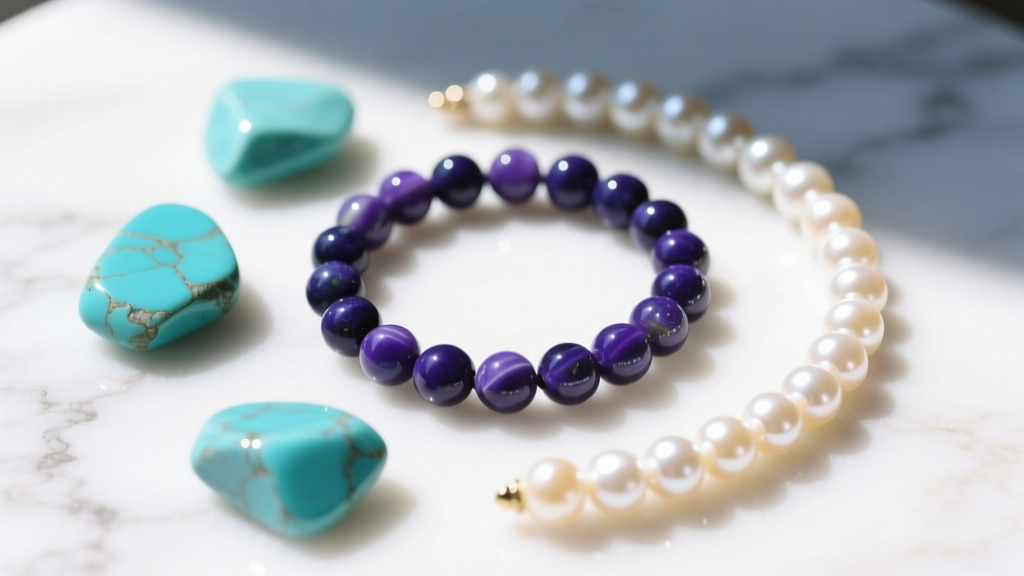
| Sleeping Beauty Turquoise (4mm) | White Keshi (6mm) | Southwestern, delicate, summer-ready | $300 - $650 |
Proportions and Sizing: The 2026 Silhouette
The architecture of the beaded necklace with pearl has shifted dramatically in terms of proportions. While the standard 18-inch princess length remains a staple for conservative office wear, the trend-forward market is dominated by two distinct silhouettes: the 15-inch tight choker and the 28-inch opera-length sautoir.
The Rhythmic Interval Technique
Rather than using a single pearl as a central pendant, 2026's top jewelers are employing the "rhythmic interval" technique. This involves placing a single, high-quality pearl at exact mathematical intervals along a strand of smaller gemstone beads. For example, a strand of 4mm lapis lazuli beads might feature a 7mm baroque pearl exactly every 1.5 inches. This creates a visual cadence that catches the eye without overwhelming the neckline. It also significantly reduces the overall weight of the necklace, allowing for comfortable, all-day wear.
The Asymmetrical Drop
Symmetry is no longer a strict requirement. The asymmetrical drop features a heavily beaded section on one side of the collarbone, transitioning into a sparse, pearl-dominant section on the other. This off-center weighting requires a precisely calibrated counterbalance, often achieved by using a heavier metallic toggle clasp at the rear of the neck to keep the focal point anchored in the correct position.
Stylist Insight: "When wearing an asymmetrical beaded necklace with pearl, let the jewelry dictate the neckline. A structured, asymmetrical boat-neck top mirrors the off-center balance of the beads, creating a cohesive, high-fashion editorial look."
Layering Frameworks for Mixed Media
Layering a beaded necklace with pearl alongside metallic chains requires a strict adherence to length gradation and visual weight. The most common mistake consumers make is clustering necklaces within a single inch of each other, leading to tangling and visual clutter. For a flawless 2026 layered stack, follow this structural framework:
- Layer 1 (The Anchor): A 14-inch or 15-inch choker made entirely of small (3mm-4mm) seed pearls or tiny glass beads. This sits flush against the collarbone.
- Layer 2 (The Bridge): An 18-inch beaded necklace with pearl accents, featuring larger 8mm gemstone beads spaced widely. This provides the primary color and texture.
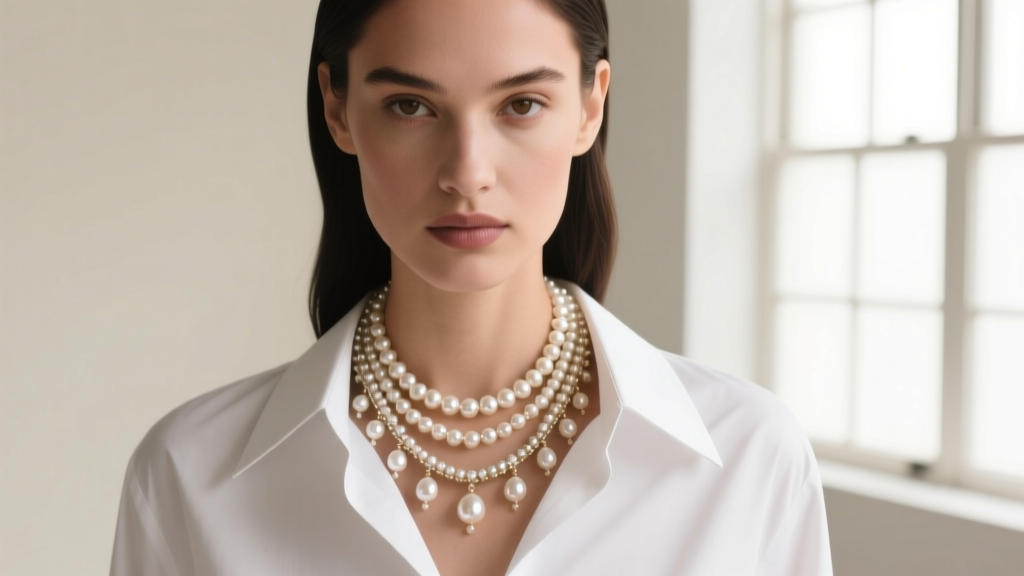
- Layer 3 (The Elongator): A 24-inch to 28-inch metallic chain (such as a 2.5mm paperclip link in 14k yellow gold) featuring a single, large baroque pearl drop at the terminus.
This 4-to-6-inch gap between layers ensures that each piece retains its individual identity while contributing to a unified, curated stack. Always ensure that the metallic chains are finished with lobster clasps rather than spring rings, as the added weight of mixed-media layering can easily pull a weak clasp open.
Sourcing, Quality Markers, and Care
As the popularity of the beaded necklace with pearl continues to climb, the market has seen an influx of treated and composite materials. When evaluating the pearls in a mixed-media piece, nacre thickness remains the ultimate indicator of longevity. According to the Gemological Institute of America (GIA), a high-quality Akoya pearl should possess a nacre thickness of at least 0.4mm. Anything thinner risks peeling or cracking, especially when subjected to the friction of adjacent gemstone beads.
Furthermore, buyers must be wary of dyed beads. Low-quality turquoise and lapis lazuli are frequently dyed with unstable organic compounds to enhance their color. If these beads are not properly sealed, the dye can transfer onto the porous surface of adjacent pearls when exposed to humidity or skin oils, permanently ruining the nacre. Always purchase from reputable jewelers who can provide transparency regarding bead treatments and who utilize high-grade, sealed silk or nylon-coated stainless steel wire for stringing. Proper care involves wiping the entire strand with a damp, lint-free cloth after wear to remove acidic skin oils, and storing the necklace flat to prevent the silk thread from stretching over time.
Conclusion
The beaded necklace with pearl has successfully transcended its traditional boundaries, emerging in 2026 as a dynamic canvas for material exploration and personal styling. By understanding the interplay of gemstone hardness, rhythmic proportions, and precise layering techniques, collectors and style enthusiasts can fully leverage this trend. Whether opting for the high-contrast drama of onyx and Akoya or the earthy charm of lapis and baroque freshwater, this hybrid silhouette offers endless versatility for the modern jewelry wardrobe.


