Beginner's Guide to Buying a Gold Sand Dollar Necklace
Discover how to choose, style, and care for a gold sand dollar necklace. Learn about karats, chain types, and sizing in our beginner-friendly guide.

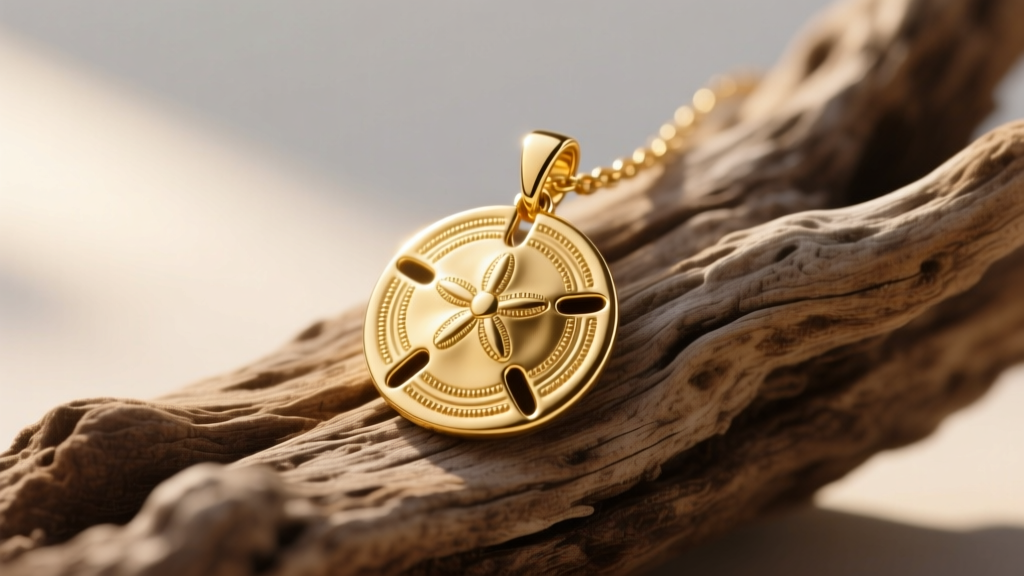
The Symbolism and Appeal of Coastal Jewelry
The ocean has long been a source of inspiration for fine jewelry, but few motifs capture the essence of the sea quite like the sand dollar. For beginners stepping into the world of coastal-chic accessories, a gold sand dollar necklace offers a perfect blend of subtle elegance and meaningful symbolism. Historically, the sand dollar is associated with peace, tranquility, and the hidden 'doves' found inside its shell, which are often linked to goodwill and spiritual protection.
However, navigating the jewelry market can be overwhelming for first-time buyers. From understanding gold purity and manufacturing techniques to selecting the right chain gauge, there are several technical details that dictate both the longevity and the price of your piece. This comprehensive guide will walk you through the essential factors to consider before making your purchase.
Decoding Gold Purity: Which Karat is Best?
Gold purity is measured in karats (K), with 24K representing pure gold. Because pure gold is too soft for everyday wear, it is alloyed with metals like copper, zinc, and silver to increase durability. According to the Gemological Institute of America (GIA), the alloy mix not only affects durability but also dictates the final color of the metal.
| Karat | Gold Content | Durability | Price Range (Approx.) | Best For |
|---|---|---|---|---|
| 10K | 41.7% | Very High | $80 - $150 | Budget-friendly, high-impact wear |
| 14K | 58.3% | High | $150 - $350 | Everyday wear, beach vacations |
| 18K | 75.0% | Moderate | $300 - $600+ | Heirloom pieces, rich color |
For a gold sand dollar necklace, 14K gold is the industry sweet spot. It provides enough structural integrity to withstand the rigors of beach environments—such as accidental bumps against rocks or the abrasive nature of sand—while maintaining a rich, warm yellow hue that mimics sunlit shores.
Manufacturing Methods: Cast vs. Die-Stamped
One of the most closely guarded secrets in jewelry retail is how the pendant is actually made. The manufacturing method drastically affects the level of detail and the structural integrity of the sand dollar.
Lost-Wax Casting (3D Detail)
High-end gold sand dollar pendants are typically created using lost-wax casting. A jeweler sculpts a 3D wax model, which is then encased in plaster and burned out, leaving a mold into which molten gold is poured. This method captures intricate, three-dimensional textures, including the radial grooves and the subtle domed center of the sand dollar. Cast pieces are generally heavier and more expensive.
Die-Striking (Flat Detail)
More affordable options are often die-struck. A flat sheet of gold is stamped under immense pressure between two steel dies. While this creates a very durable and dense piece of metal, the design is usually limited to shallow, two-dimensional engravings. If you want a pendant that looks like a real, textured sand dollar from all angles, opt for a cast piece.
Solid Gold vs. Gold Vermeil vs. Plated
Beginners often confuse gold-plated jewelry with solid gold. Understanding the difference is crucial for managing expectations regarding tarnish and lifespan.
- Solid Gold: The entire piece is made of the gold alloy. It will never tarnish or wear away, making it safe for swimming and showering.
- Gold Vermeil: According to the Federal Trade Commission (FTC), vermeil must consist of a sterling silver base coated with a minimum of 2.5 microns of gold (usually 14K or 18K). It is a great mid-tier option but will eventually require re-plating if worn daily in water.
- Gold Plated: A base metal (like brass) with a microscopically thin layer of gold. This is not recommended for coastal jewelry, as salt and sweat will quickly degrade the plating.
Selecting the Ideal Chain and Clasp
The pendant is only half the equation; the chain you pair it with dictates the necklace's overall drape and security.
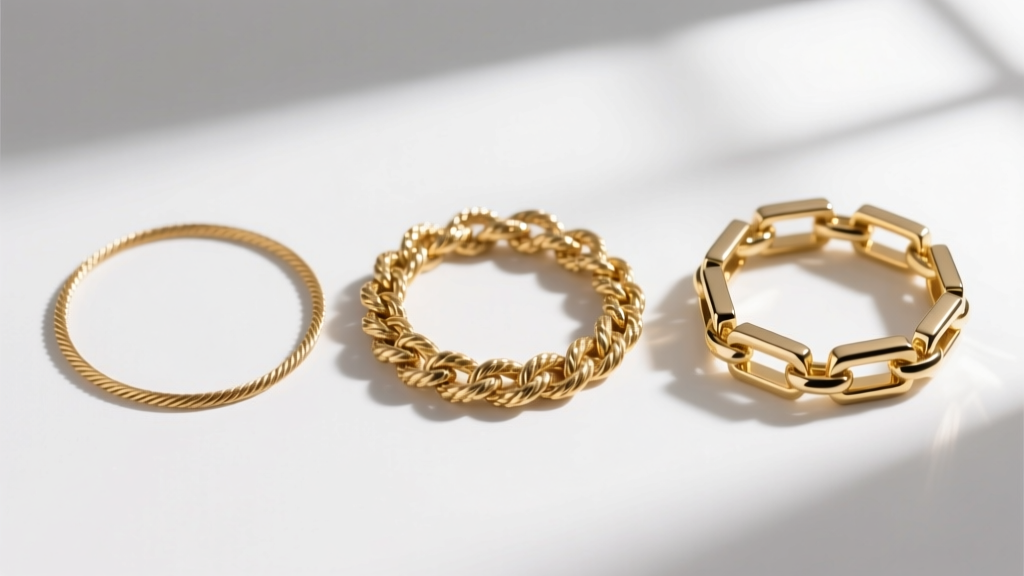
Chain Styles for Sand Dollar Pendants
Because sand dollar pendants are generally lightweight (ranging from 1.5 to 4 grams), you do not need a heavy chain. However, the chain must complement the coastal aesthetic.
- Cable Chain (1.0mm - 1.5mm): The classic choice. Its simple, uniform oval links allow the pendant to remain the focal point.
- Box Chain (1.2mm): Offers a sleek, modern, and highly reflective surface. Box chains are incredibly strong and resist kinking, making them excellent for travel.
- Rope Chain (1.5mm): Features twisted links that mimic nautical ropes. This is a highly thematic choice for ocean-inspired jewelry, though it can occasionally catch on fine hair.
Clasp Mechanics
Always check the clasp. A lobster clasp is vastly superior to a spring-ring clasp for beachwear. Spring rings have a tiny internal spring that easily fails when exposed to sand grains or salt corrosion. Lobster clasps offer a wider opening and a more secure locking mechanism, ensuring your gold sand dollar necklace stays safely around your neck.
Styling and Layering Techniques
A gold sand dollar necklace is incredibly versatile and serves as an excellent anchor piece for a layered necklace stack. To achieve a balanced, curated look, follow the 'Rule of Three' and vary your lengths by at least two inches.
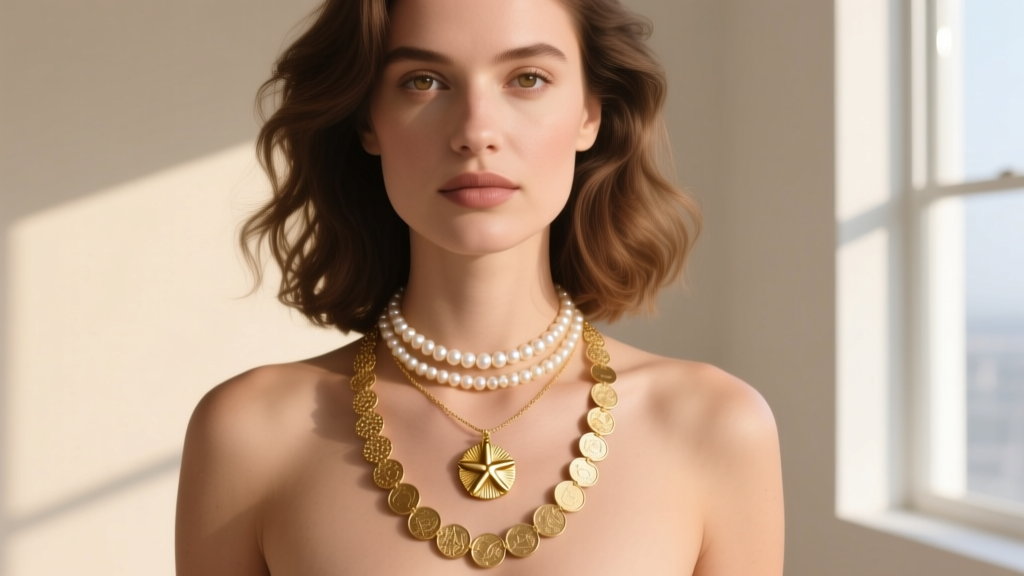
A Beginner's Layering Recipe
- The Base (14-16 inches): Start with a simple freshwater pearl choker or a delicate 14K gold herringbone chain sitting close to the collarbone.
- The Anchor (18 inches): Place your gold sand dollar necklace here. An 18-inch length ensures the pendant rests perfectly on the upper chest, avoiding awkward placement over the bust line.
- The Extension (20-22 inches): Finish with a longer, textured chain featuring a simple gold coin or a small compass pendant to draw the eye downward and elongate the neck.
Essential Care for Coastal Jewelry
While 14K solid gold is highly resistant to tarnish, the alloy metals (like copper) can still react to harsh chemicals. To preserve the intricate details of your sand dollar pendant, adhere to these maintenance rules:
- Avoid Chlorine: Never wear your necklace in a chlorinated pool. Chlorine can cause 'stress corrosion cracking' in gold alloys, leading to microscopic fractures in the pendant's delicate bail (the loop connecting it to the chain).
- Rinse After the Beach: Saltwater is highly corrosive. After a day at the ocean, rinse your necklace in lukewarm fresh water and pat it dry with a microfiber cloth.
- Skip the Ultrasonic Cleaners: While ultrasonic cleaners are great for diamond rings, the high-frequency vibrations can sometimes loosen the solder on delicate, cast sand dollar details. Stick to a soft-bristled baby toothbrush and mild dish soap for routine cleaning.
By understanding the nuances of gold purity, manufacturing techniques, and proper chain selection, you can confidently invest in a gold sand dollar necklace that will serve as a timeless, durable reminder of the sea for years to come.


