Beginner's Guide to Buying a Real 925 Sterling Necklace
Learn how to identify, buy, and care for a real 925 sterling necklace. Our beginner guide covers hallmarks, tarnish prevention, and pricing.

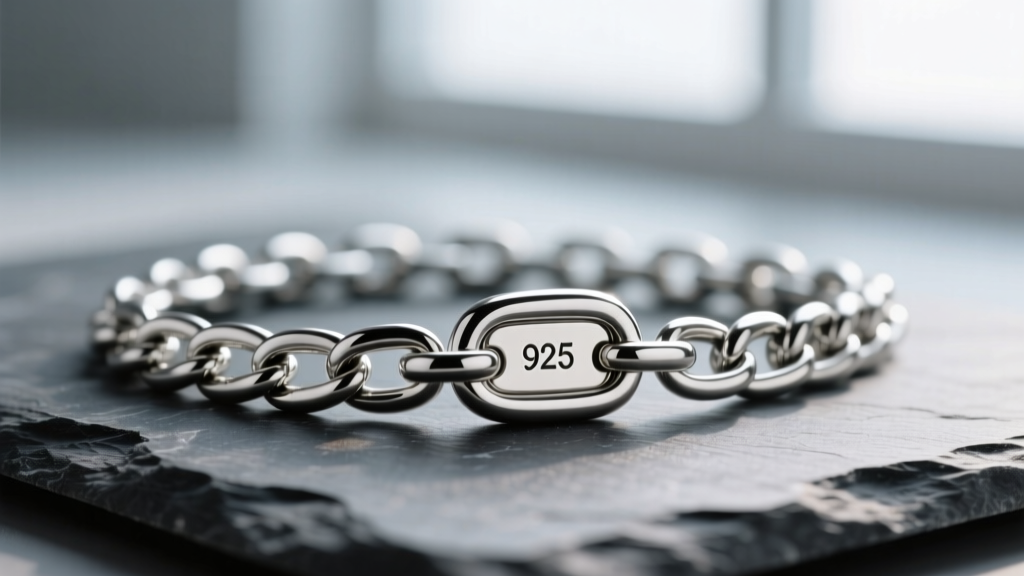
Shopping for silver jewelry can feel like navigating a minefield of misleading marketing terms. You will frequently encounter phrases like "silver-plated," "Tibetan silver," and "nickel silver"—none of which actually contain significant amounts of precious silver. For beginners looking for a durable, hypoallergenic, and valuable piece of everyday jewelry, a genuine 925 sterling necklace is the gold standard (or rather, the silver standard).
This comprehensive guide will demystify the metallurgy of sterling silver, teach you how to authenticate your jewelry like a pro, and provide exact pricing benchmarks so you never overpay for a chain again.
What Exactly Does "925" Mean in Silver Jewelry?
To understand why a 925 sterling necklace is the ideal choice, you first need to understand pure silver. In its elemental form, silver (Ag) is incredibly soft. On the Mohs scale of mineral hardness, pure 999 fine silver sits at a mere 2.5 to 3, meaning it can be easily scratched with a copper coin or bent with your bare hands. If a jeweler were to craft a delicate chain out of pure silver, the links would stretch, warp, and break under the weight of even a lightweight pendant.
To solve this, metallurgists alloy pure silver with other metals to increase its tensile strength and durability. The internationally recognized standard for "sterling silver" dictates that the alloy must contain exactly 92.5% pure silver and 7.5% secondary metals. This is where the "925" stamp comes from.
The 7.5% Alloy: Copper vs. Modern Alternatives
Historically, copper has been the primary alloying metal used in sterling silver. While copper provides excellent strength, it is also highly reactive to oxygen and sulfur, which is the exact reason why traditional sterling silver tarnishes.
In recent years, advanced metallurgical alternatives like Argentium silver have emerged. Argentium replaces a portion of the copper with germanium. This creates a 935 or 960 alloy that is highly resistant to firescale and tarnish, though it commands a 15% to 20% premium over traditional 925 sterling. According to the Silver Institute, traditional 925 remains the most widely traded and recognized standard for commercial jewelry globally.
How to Spot a Genuine 925 Sterling Necklace
Counterfeiters often stamp base metals with "925" to deceive unassuming buyers. Fortunately, authenticating silver at home requires only a few simple, non-destructive tests.
1. The Hallmark Inspection
Always examine the clasp or the back of the pendant for a hallmark. Genuine pieces will be stamped with "925", "Ster", "Sterling", or "SS". However, because stamps can be faked, a hallmark is your first clue, not your final proof.
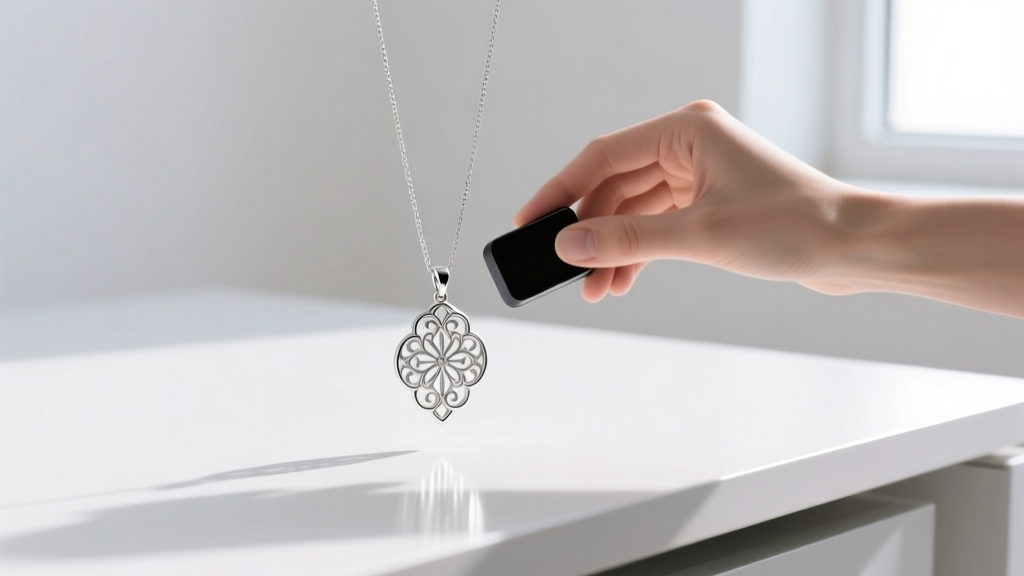
2. The Rare Earth Magnet Test
Silver is paramagnetic, meaning it exhibits no noticeable magnetic attraction. If you hold a strong neodymium (rare earth) magnet to your necklace and it snaps to the metal or feels a strong pull, the core is likely steel, iron, or nickel. Note that the tiny steel spring inside a lobster clasp will be magnetic, so test the chain links and pendants instead.
3. The Ice Test
Silver has the highest thermal conductivity of any common metal. If you place an ice cube directly on a thick silver pendant, the ice should begin melting almost instantly, far faster than it would on a countertop or a piece of stainless steel jewelry.
4. The Cloth Rub Test
Gently rub the chain with a soft, white microfiber cloth. If you see black marks on the cloth, this is actually a good sign. Real silver oxidizes and leaves a slight tarnish residue when polished. Silver-plated brass or steel will not leave these dark oxidation marks.
For absolute certainty, the Gemological Institute of America (GIA) recommends professional X-ray fluorescence (XRF) testing, but for consumer purchases, the magnet and ice tests are highly reliable indicators.
The Real Cost: Pricing Benchmarks for 2026
One of the most common beginner mistakes is misunderstanding how silver jewelry is priced. The price of a 925 sterling necklace is not just the melt value of the silver; it includes the labor, chain complexity, and brand markup. Below is a realistic pricing framework based on current raw silver markets and standard retail markups.
| Chain Style | Typical Weight (18-20 inch) | Expected Retail Price Range | Durability Rating |
|---|---|---|---|
| 1mm Cable Chain | 3 - 5 grams | $30 - $60 | Low (Prone to kinking) |
| 2mm Box Chain | 8 - 12 grams | $65 - $120 | High (Excellent for pendants) |
| 3mm Rope Chain | 15 - 20 grams | $130 - $220 | Medium (Can trap hair/skin) |
| 4mm Cuban Link | 25 - 40 grams | $180 - $350 | Very High (Heavy duty) |
| 6mm Figaro Chain | 45 - 60 grams | $300 - $550+ | Very High (Statement piece) |
Note: If you find a heavy 4mm Cuban link chain selling for $25, it is unequivocally silver-plated brass or stainless steel. The raw silver melt value alone for 30 grams of 925 silver far exceeds that price point.
Tarnish Science and Prevention Strategies
Tarnish is not a defect; it is a natural chemical reaction. Sterling silver tarnishes when the copper alloy reacts with sulfur compounds in the air, forming silver sulfide (Ag2S), which appears as a dull, yellowish, or black film on the surface. High humidity, air pollution, and even the natural pH and sulfur content of your sweat can accelerate this process.
The Electrochemical Cleaning Method
Skip the harsh chemical liquid dips sold in supermarkets, as they strip away microscopic layers of silver and can damage gemstones. Instead, use this scientifically backed, non-abrasive method to reverse tarnish:
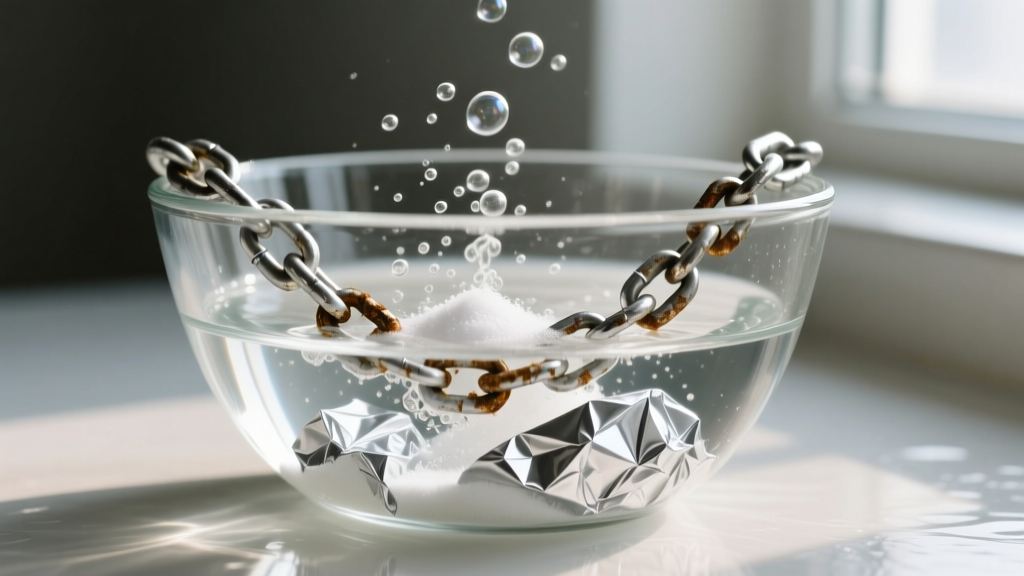
- Line a glass bowl with aluminum foil, shiny side up.
- Place your tarnished 925 sterling necklace on the foil.
- Sprinkle 2 tablespoons of baking soda over the chain.
- Pour boiling water into the bowl to submerge the jewelry.
The Science: Aluminum is more reactive than silver. In the alkaline solution created by the baking soda, an electrochemical transfer occurs. The aluminum donates electrons to the silver sulfide, converting it back into elemental silver while the sulfur bonds to the aluminum. You will notice a distinct "rotten egg" smell (hydrogen sulfide gas) and see the tarnish vanish in minutes. Rinse with distilled water and pat dry with a microfiber cloth.
Proper Storage
To prevent tarnish from forming in the first place, store your necklace in an airtight ziplock bag alongside a 3M anti-tarnish strip or a simple piece of ordinary chalk, which acts as a desiccant to absorb ambient moisture.
Common Beginner Mistakes to Avoid
1. Confusing Rhodium Plating with Solid White Gold
Many high-end 925 sterling necklaces are plated with rhodium (a platinum-group metal) to give them a bright, white-gold-like finish and prevent tarnish. This is a good thing, but beginners often panic when the rhodium eventually wears off after 1 to 3 years, revealing the slightly warmer, yellowish-white tone of the raw sterling silver underneath. This does not mean your jewelry is fake; it simply needs a professional re-plating or a good polish.
2. Sleeping and Showering in Your Chain
While water itself will not ruin sterling silver, the chlorine in tap water and the sulfates in your shampoo will accelerate tarnishing. Furthermore, sleeping in a delicate chain like a 1.5mm snake chain or cable chain creates micro-bends and friction that will eventually snap the links. The Federal Trade Commission (FTC) advises consumers to understand the care requirements of precious metals to ensure longevity.
3. Buying "Silver Filled" or "Silver Plated"
Always read the fine print. "Silver-plated" means a microscopic layer of silver over cheap brass. "Silver-filled" means a slightly thicker layer (usually 5% to 10% silver by weight) mechanically bonded to a brass core. Neither holds intrinsic melt value, and once the outer layer wears off, the brass core will oxidize and turn your skin green.
Final Thoughts
"A genuine 925 sterling necklace is an investment in versatility. It bridges the gap between casual everyday wear and formal elegance, provided you respect the metallurgy and care for it properly."
By understanding the 92.5% purity standard, verifying your purchases with simple physics tests, and utilizing electrochemical cleaning rather than abrasive polishes, your sterling silver jewelry will easily last a lifetime and develop a beautiful, personalized patina over the decades.


