Beginner's Guide to Buying and Styling a Big Cross Necklace
Learn how to choose, size, and style a big cross necklace. Discover chain pairings, metal weights, and neckline tips for a bold, balanced look.

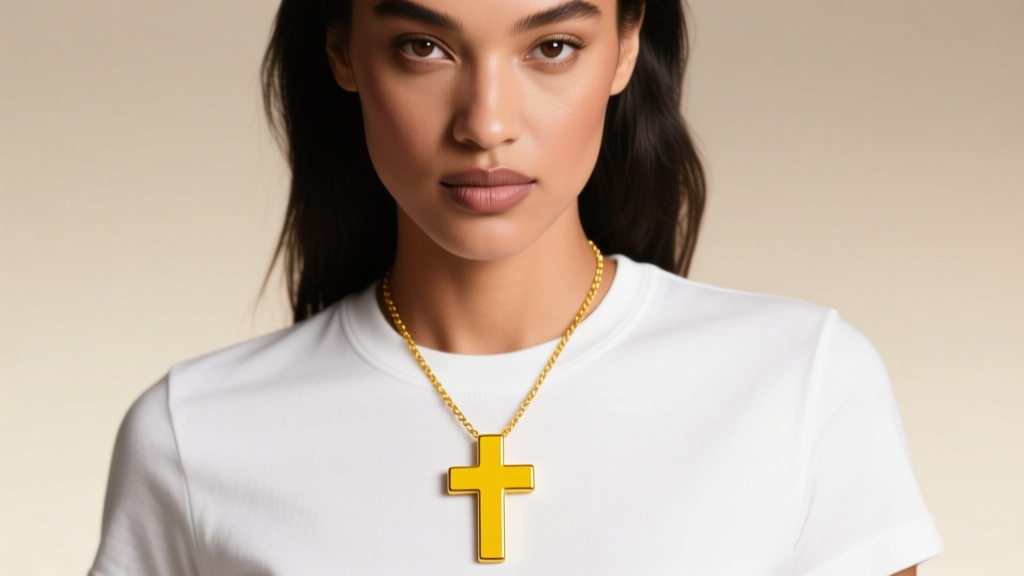
Introduction: The Appeal of the Bold Cross
When it comes to statement jewelry, few pieces carry the cultural weight and visual impact of a big cross necklace. From 90s hip-hop icons to modern high-fashion runways, the oversized cross pendant remains a staple of personal expression. However, beginners often make critical errors when purchasing their first piece—resulting in necklaces that look costumey, hang awkwardly, or break under the pendant's weight.
Styling a substantial pendant requires an understanding of proportions, metallurgy, and chain mechanics. This guide breaks down the exact specifications you need to know, from millimeter measurements to bail sizing, ensuring your investment looks intentional and lasts a lifetime.
Sizing Your Big Cross Necklace: Dimensions and Proportions
What exactly qualifies as a 'big' cross? In the jewelry industry, standard everyday crosses typically range from 0.5 inches to 1 inch (12mm to 25mm) in height. A big cross necklace generally starts at the 2-inch (50mm) mark and can extend up to 5 inches (125mm) or more for maximum streetwear impact.
Choosing the right size depends heavily on your frame and the desired drop length. A 4-inch cross on a 20-inch chain will cause the bottom of the pendant to rest around the xiphoid process (the lower sternum), which is ideal for layering over t-shirts. Conversely, the same pendant on a 24-inch chain will hang near the navel, which can look unbalanced unless intentionally styled with oversized outerwear.
| Size Category | Height (Approx.) | Width (Approx.) | Ideal Chain Length | Estimated Solid 14k Gold Weight |
|---|---|---|---|---|
| Medium-Bold | 2.0 inches (50mm) | 1.25 inches (32mm) | 18" - 20" | 8 - 12 grams |
| Large / Statement | 3.0 inches (75mm) | 2.0 inches (50mm) | 20" - 22" | 15 - 25 grams |
| Oversized / Iced Out | 4.5+ inches (115mm+) | 3.0+ inches (75mm+) | 22" - 26" | 35 - 60+ grams |
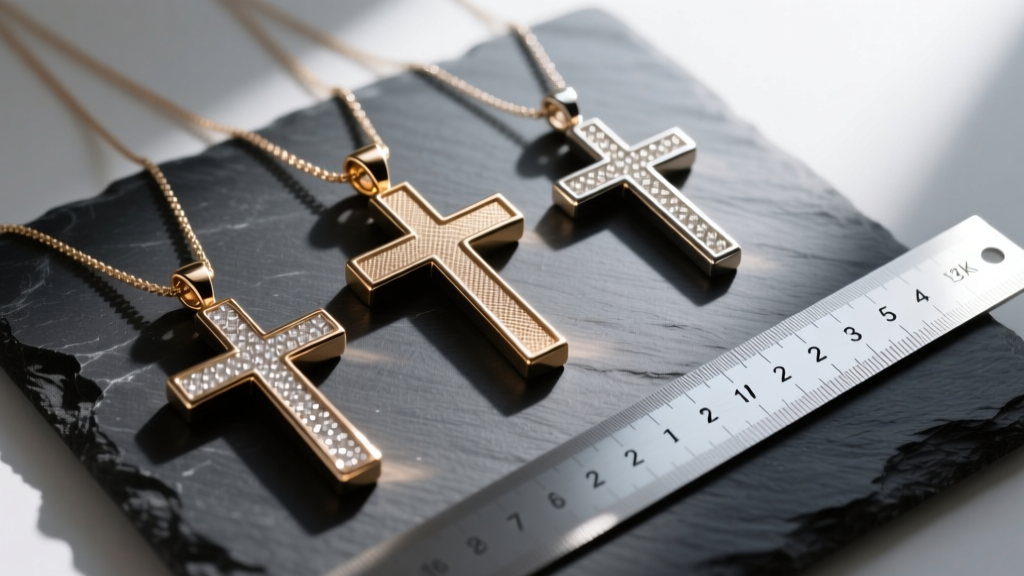
Metal Matters: Weight, Durability, and Grades
The material of your big cross necklace dictates not only its price but its longevity and how it drapes on your chest. According to the Gemological Institute of America (GIA), understanding alloy compositions is vital when buying fine jewelry.
Solid Gold (14k vs. 18k)
For a piece this large, 14k gold is generally preferred over 18k. Because 14k gold contains a higher percentage of alloy metals (like copper and zinc), it is significantly harder and more resistant to scratching and bending. An 18k gold cross of this size will be heavier, more expensive, and softer, making it prone to warping if snagged.
The Danger of Hollow and Electroformed Gold
Beginners on a budget are often tempted by 'hollow' or electroformed gold crosses. These pieces look massive but weigh only a fraction of a solid piece. Avoid these at all costs. Electroformed gold is essentially a microscopic shell of gold over a resin or base metal core. If dropped on a hard floor or bumped against a doorframe, it will dent permanently and cannot be repaired by a standard jeweler.
316L Stainless Steel: The Beginner's Best Friend
If solid gold is out of your budget, opt for 316L surgical stainless steel. As noted by the Silver Institute and broader metallurgical standards, 316L is highly resistant to tarnish, corrosion, and skin irritation. It provides the satisfying, heavy drape of a premium metal at a fraction of the cost, making it the perfect entry point for oversized pendants.
Chain Pairings: Supporting the Heavy Pendant
The most common point of failure for a big cross necklace is the chain. A heavy pendant acts as a pendulum, generating kinetic stress on the links every time you move. You must match the chain's tensile strength and width to the pendant's mass.
Understanding the Bail Bottleneck
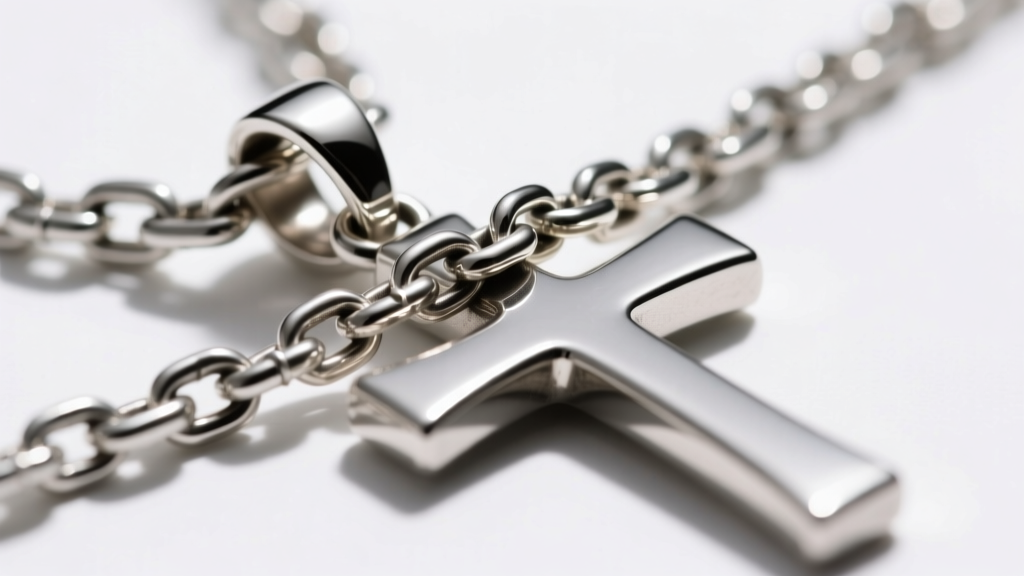
The 'bail' is the loop at the top of the cross that the chain threads through. A massive cross requires a proportionally large bail. Before buying a chain, measure the inner diameter (ID) of the pendant's bail. If the bail has a 6mm ID, you cannot use a chain wider than 5mm, or it simply will not fit.
Recommended Chain Styles for Heavy Pendants
- Cuban Link (4mm - 6mm): The undisputed king of heavy pendants. The interlocking, flat-faced links distribute weight evenly and resist snapping. A 5mm solid or semi-solid Cuban is the gold standard for a 3-inch cross.
- Figaro (3mm - 5mm): Offers a vintage, textured look. Ensure you buy a 'semi-solid' or solid Figaro; hollow Figaro links will easily crush under the weight of a large pendant.
- Rope Chain (3mm - 4mm): Excellent for light reflection, but ensure the links are tightly woven. Loose rope chains can catch chest hair and fray over time under heavy loads.
Pro Tip: Always upgrade the clasp. Standard spring-ring clasps will fail under the weight of a big cross. Ensure your chain features a heavy-duty lobster clasp or a toggle clasp rated for at least 50 grams of tensile pressure.
Neckline Matching: Where to Wear It
A big cross necklace demands visual breathing room. The neckline of your clothing will make or break the aesthetic.
The Crew Neck T-Shirt
The most foolproof canvas for a big cross is a high-quality, mid-weight crew neck t-shirt. The circular collar frames the sharp, geometric angles of the cross pendant, creating a pleasing visual contrast. Stick to 20-inch to 22-inch chains here so the pendant rests comfortably on the chest rather than disappearing under the fabric.
The Open Collar and V-Neck
Unbuttoned camp-collar shirts or deep V-necks naturally draw the eye downward, mimicking the shape of the pendant. This is an excellent styling choice for smart-casual environments. Opt for a slightly thinner chain (around 3mm) and a medium-bold (2-inch) cross to maintain an air of sophistication rather than overwhelming the outfit.
What to Avoid: The Turtleneck Trap
Wearing a large cross over a tight turtleneck often looks cluttered and restrictive. If you must wear a cross with high-neck winter wear, you need to drastically increase the chain length to 26 inches or 28 inches, allowing the pendant to hang freely over the bulk of the sweater, acting more like a lariat or opera-length necklace.
Common Beginner Mistakes to Avoid
To ensure your purchase is a success, steer clear of these frequent pitfalls:
- Ignoring the Thickness (Gauge): A chain might be wide enough (e.g., 5mm), but if it is too thin (e.g., 1mm thick), it will lack the structural integrity to hold a 30-gram pendant. Look for chains with a thickness of at least 2mm to 3mm.
- Over-icing on a Budget: If you want a diamond-encrusted (iced out) big cross, do not buy cheap cubic zirconia set in plated brass. The plating will wear off in months, turning your skin green. Instead, buy a plain, solid silver or steel cross and have a jeweler set high-quality moissanite or lab-grown diamonds into it later.
- Sleeping in the Necklace: The sheer weight and size of a big cross make it a hazard in bed. You risk bending the bail, snapping the chain, or injuring yourself. Always unclasp it before sleeping.
Conclusion
Investing in a big cross necklace is a bold style move that pays dividends when executed correctly. By prioritizing solid or high-grade metals, meticulously matching your chain width to the pendant's bail, and respecting the geometry of your clothing necklines, you can elevate this iconic piece from a mere accessory to a cornerstone of your personal wardrobe. Take your time measuring, research the metallurgy, and choose a piece that carries the weight of your personal style with ease.


