A Beginner's Guide to Choosing a Blue Tigers Eye Necklace
Discover everything about blue tigers eye necklaces. Learn how to spot real hawk's eye, understand pricing, and style this striking chatoyant gem.

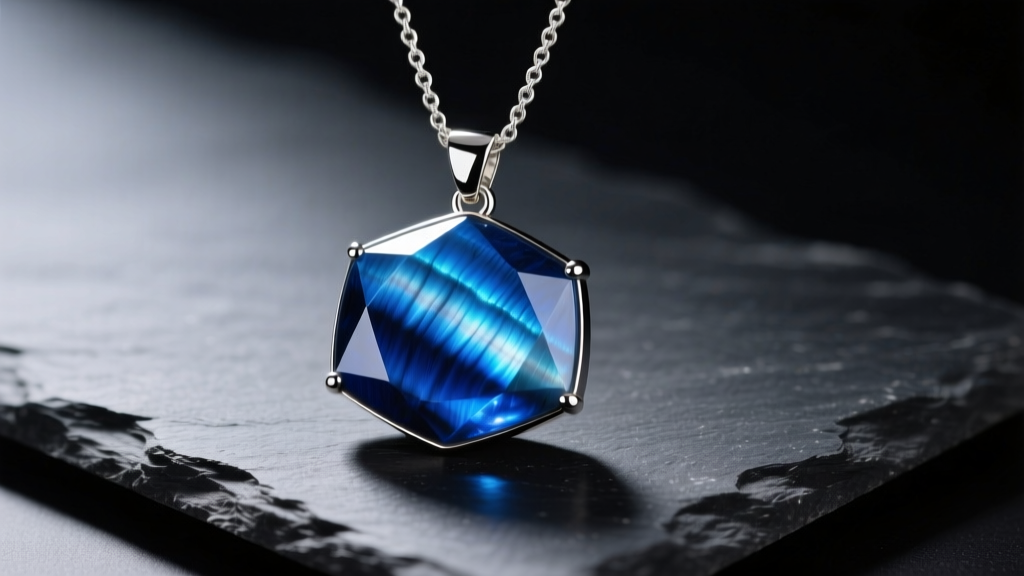
If you are exploring the world of gemstone jewelry, a blue tigers eye necklace is one of the most captivating pieces you can add to your collection. Known for its mesmerizing, shifting bands of light and deep, moody hues, this stone offers a striking alternative to traditional brown or gold tiger's eye. However, the market is currently flooded with treated, dyed, and synthetic imitations that can easily confuse first-time buyers.
In this comprehensive 2026 guide, we will break down the mineralogy of this unique gem, teach you how to authenticate natural stones, provide realistic pricing frameworks, and share expert styling tips to ensure your necklace elevates your everyday wardrobe.
What Exactly is a Blue Tigers Eye Necklace?
To understand what you are wearing, you must first understand the stone's geological origins. Standard tiger's eye is a macrocrystalline quartz (SiO2) that forms as a pseudomorph after crocidolite—a fibrous, blue asbestos mineral. As groundwater rich in silica replaces the crocidolite fibers, the iron within the fibers oxidizes, turning the stone the familiar golden-brown color.
A true blue tigers eye necklace features stones where this oxidation process was incomplete or never occurred. Because the iron remains unoxidized, the stone retains its original blue coloration. In the gemological community, this natural, unoxidized variant is more accurately referred to as Hawk's Eye or Falcon's Eye. According to mineralogical data from Mindat.org, these stones share the exact same physical properties as standard quartz, including a Mohs hardness of 7, a specific gravity of 2.64–2.71, and a refractive index of 1.54–1.55, making them highly durable for daily wear.
The Chatoyancy Effect: Why It Shimmers
The defining characteristic of any tiger's eye necklace is its chatoyancy (from the French chatoyer, meaning "to shine like a cat's eye"). This optical phenomenon is caused by the microscopic, parallel crocidolite fibers trapped within the quartz matrix. When light hits these densely packed fibers, it reflects off them in a single, concentrated band that appears to glide across the surface of the stone as you move it.

In a high-quality blue tigers eye necklace, this band of light should be sharp, continuous, and brightly contrasted against the dark, slate-blue background of the stone. If the band is diffuse, broken, or entirely absent, the stone is likely a low-grade specimen, a heavily treated piece, or a glass imitation.
Real vs. Treated: How to Authenticate Your Stone
The most critical skill for a beginner is distinguishing between natural Hawk's Eye and dyed imitations. Because natural blue tiger's eye is relatively rare compared to its brown counterpart, many mass-market jewelers take cheap, low-quality brown tiger's eye (or even agate) and dye it blue. Here is how to spot the difference:
- Color Saturation: Natural Hawk's Eye is rarely a vibrant, electric blue. It typically displays deep, muted tones of slate, navy, grey-blue, or dark teal. If the stone looks like "smurf blue" or has an unnaturally neon, uniform color, it is almost certainly dyed.
- Fiber Visibility: Under a jeweler's loupe (10x magnification), natural stones will show distinct, parallel fibrous structures. Dyed stones often show color pooling in the cracks or grain boundaries, and the fibers may be obscured by the heavy dye concentration.
- The Chatoyancy Test: Dyeing a stone often fills the microscopic gaps between the fibers, which can dull or completely kill the chatoyant effect. A vibrant blue stone with zero shimmer is a major red flag.
Authentication Comparison Chart
| Feature | Natural Hawk's Eye (Blue Tiger's Eye) | Dyed / Treated Imitation |
|---|---|---|
| Color Profile | Slate, navy, grey-blue, dark teal | Electric, neon, or uniform bright blue |
| Chatoyancy (Cat's Eye) | Sharp, bright, and highly visible | Weak, cloudy, or completely absent |
| Magnification (10x) | Clean parallel fibers, no color pooling | Dye concentrated in cracks and fissures |
| Market Price (Pendant) | $60 – $250+ | $15 – $35 |
Pricing Guide: What Should You Pay?
Understanding the pricing tiers will protect you from overpaying for treated stones or underestimating the value of a premium gem. As of 2026, the pricing for a blue tigers eye necklace generally falls into three categories based on the stone's origin and the metal setting:
- Mass-Market / Dyed ($15 – $40): Usually featuring brown tiger's eye that has been chemically dyed blue. Often set in base metals, brass, or low-grade sterling silver. These are fine for cheap fashion jewelry but lack long-term value and the dye can fade or rub off on clothing over time.
- Natural Commercial Grade ($50 – $120): Authentic, untreated Hawk's Eye beads or simple cabochons set in 925 sterling silver. The color may be slightly asymmetrical, and the chatoyancy might be visible only on certain beads or specific angles of the cabochon.
- Premium Gem Grade ($150 – $400+): Top-tier, untreated stones with deep, rich navy colors and razor-sharp, full-width chatoyancy. These are typically custom-cut into precise cabochons or elongated emerald cuts and set in 14k/18k white gold or platinum with secure bezel or prong settings.
For a beginner, the $50 to $120 range offers the best entry point to acquire a genuine, untreated stone without venturing into high-end luxury pricing.
Styling and Metal Pairings for Cool-Toned Gems
The cool, moody undertones of a blue tigers eye necklace dictate how it should be paired with metals and clothing. While standard brown tiger's eye looks exceptional in yellow gold, the slate-blue hues of Hawk's Eye are vastly enhanced by white metals.

Optimal Metal Pairings:
- 925 Sterling Silver: The most accessible and complementary choice. The bright, reflective nature of polished silver provides a crisp contrast that makes the dark blue stone pop.
- 14k or 18k White Gold: Ideal for premium pendants. White gold offers a heavier, more luxurious feel and resists tarnish better than silver, ensuring the focus remains entirely on the stone's optical effects.
- Oxidized Silver: For a vintage, rugged, or gothic aesthetic, an oxidized (blackened) silver setting blends seamlessly with the dark matrix of the stone, creating a moody, unified look.
Chain Length and Proportions:
Because blue tiger's eye is a relatively dense and heavy quartz, the chain must be sturdy enough to support the pendant. Avoid delicate, micro-link chains (under 1.2mm) for stones heavier than 15 carats. An 18-inch princess length is the most versatile, allowing the pendant to rest just below the collarbone, which perfectly frames V-neck, scoop-neck, and open-button shirts.
Care and Maintenance for Quartz Jewelry
While quartz is a durable mineral ranking at a 7 on the Mohs scale, proper care is essential to maintain the stone's polish and the metal's integrity. According to gemological care guidelines outlined by Geology.com, the fibrous inclusions within the stone can sometimes harbor microscopic fractures.
- Cleaning: Never use ultrasonic or steam cleaners. The high-frequency vibrations can exacerbate internal fractures, and the heat can damage the stone's optical properties or alter treated stones. Instead, use a soft microfiber cloth, warm water, and a drop of mild, phosphate-free dish soap. Gently scrub with a soft-bristled baby toothbrush.
- Storage: Store your necklace in a soft fabric pouch or a dedicated jewelry box compartment. While quartz is hard, it can still be scratched by diamonds, sapphires, or topaz (Mohs 8-10), and it can easily scratch softer stones like opals or pearls.
- Wear Precautions: Remove your necklace before swimming in chlorinated pools or hot tubs. Chlorine can permanently damage and discolor sterling silver settings and degrade the polish on the quartz surface over time.
Final Thoughts for First-Time Buyers
Purchasing a blue tigers eye necklace is an exercise in appreciating geological artistry. By prioritizing natural, unoxidized Hawk's Eye over chemically dyed alternatives, you ensure that your jewelry possesses genuine optical fire and lasting value. Focus on finding a stone with a sharp, dynamic band of light, pair it with a sturdy sterling silver or white gold chain, and you will own a versatile, conversation-starting piece that bridges the gap between earthy bohemia and modern elegance.


