Understanding Necklace Closures: A Beginner's Guide to Clasp Types
Discover the most secure necklace closures for your jewelry. Learn about lobster, toggle, and magnetic clasps, plus how to prevent chain failure.

Why Your Necklace Closures Matter More Than the Chain
When investing in fine jewelry, most buyers obsess over the chain's link style, the pendant's gemstone quality, or the precious metal's karat weight. However, jewelry repair bench data consistently reveals a hard truth: a necklace is only as secure as its clasp. According to the Gemological Institute of America (GIA), clasp failure and jump ring separation account for the vast majority of lost pendants and broken chains. Understanding the mechanics, metallurgy, and failure modes of different necklace closures is essential for protecting your investment.
In this beginner-friendly explainer, we will dismantle the anatomy of the most common necklace closures, evaluate their structural integrity, and provide actionable troubleshooting advice to ensure your jewelry stays exactly where it belongs—around your neck.
The Anatomy of Everyday Necklace Closures
Not all clasps are created equal. The manufacturing method and the specific alloys used for internal components dictate a clasp's lifespan. Let us break down the everyday closures you are most likely to encounter.
Lobster Claw Clasps: The Industry Standard
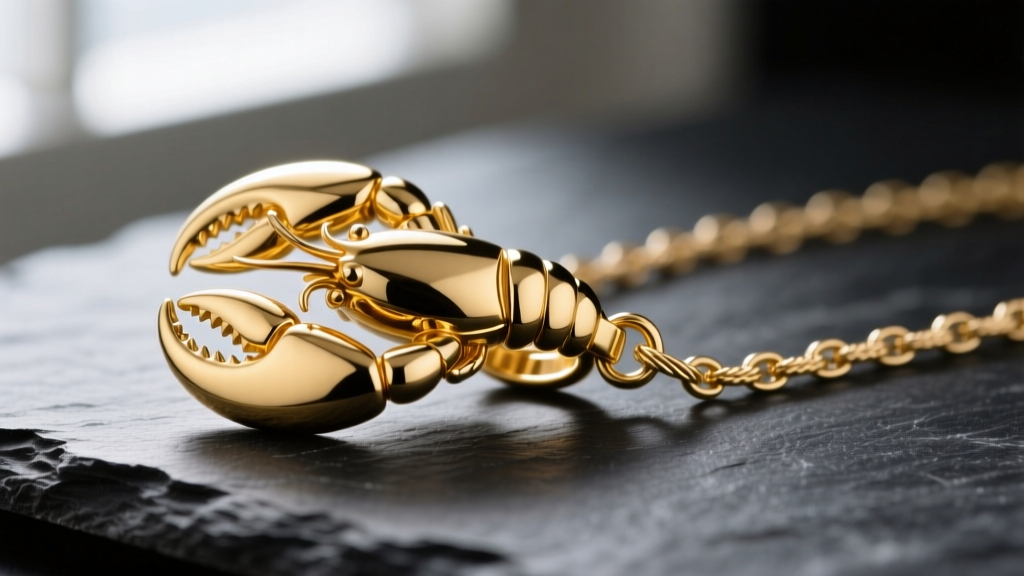
The lobster clasp is the workhorse of modern jewelry. Named for its resemblance to a lobster's pincer, it features a tiny internal spring that pushes a lever closed. However, there is a massive quality gap between cheap and premium lobster clasps.
- Cast vs. Stamped: Inexpensive lobster clasps are often cast from molten metal, leaving microscopic porosity that makes them brittle. Premium clasps are die-struck (stamped) from sheet metal, compressing the grain structure for vastly superior tensile strength.
- The Spring Secret: Even in solid 14k or 18k gold lobster clasps, the internal spring is almost always made of stainless steel or a specialized base metal alloy. Pure gold lacks the yield strength required for repetitive springback and would permanently deform after a few uses.
- Gauge Sizing: For lightweight chains (under 5 grams), a standard 16-gauge lobster clasp is sufficient. For heavy pendants or thick Cuban links, you must upgrade to a 12-gauge or 10-gauge heavy-duty lobster clasp to prevent the lever from bending under lateral stress.
Spring Ring Clasps: The Lightweight Weakling
Spring rings are the circular clasps commonly found on mass-market, lightweight chains. While they are cost-effective and unobtrusive, they are notorious for failing. The failure almost always occurs at the solder joint. Every time you push the tiny lever back to open the clasp, you introduce micro-fractures to the solder seam. Over time, work-hardening causes the solder to become brittle, eventually snapping without warning. If you own a valuable pendant on a spring ring chain, have a jeweler swap the closure for a stamped lobster clasp immediately.
Specialty Closures for Statement and Heavy Jewelry
When designing or purchasing heavier, more substantial necklaces, standard spring-loaded closures are inadequate. Specialty closures rely on physics, gravity, and mechanical locking mechanisms rather than tiny, fragile springs.
Toggle Clasps: Mastering the Physics of Drape
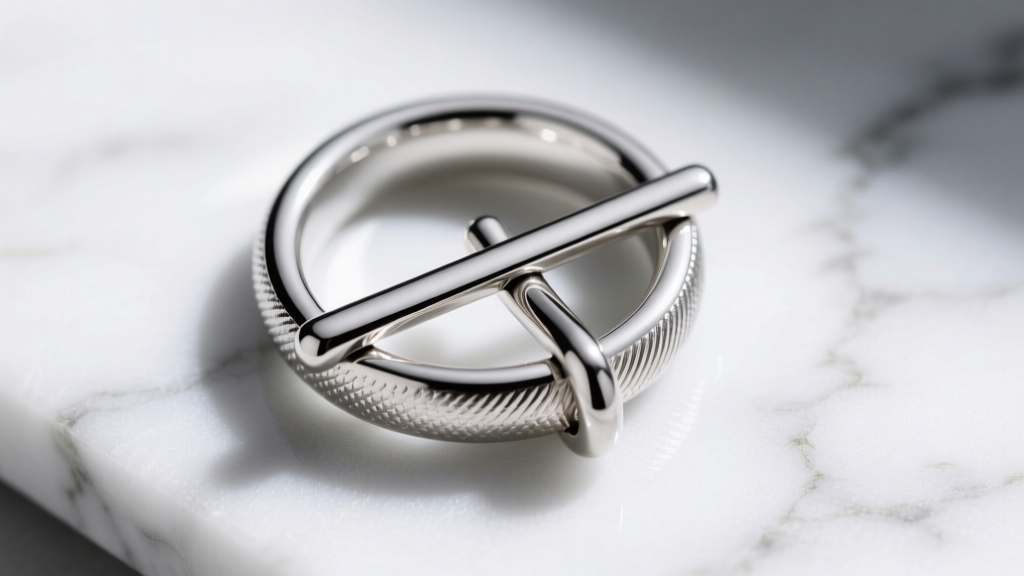
A toggle clasp consists of a T-bar that slides through a circular O-ring. It is highly secure, but only if the geometry is correct. The most common beginner mistake is pairing a toggle clasp with a chain that is too short or too stiff. A toggle relies on the weight and drape of the necklace to pull the T-bar flush against the O-ring. If the chain is too rigid, the T-bar can easily slip back through the hole. Furthermore, the T-bar must be at least 2.5 times the width of the O-ring's inner diameter to prevent accidental slippage during movement.
Box Clasps with Safety Latches
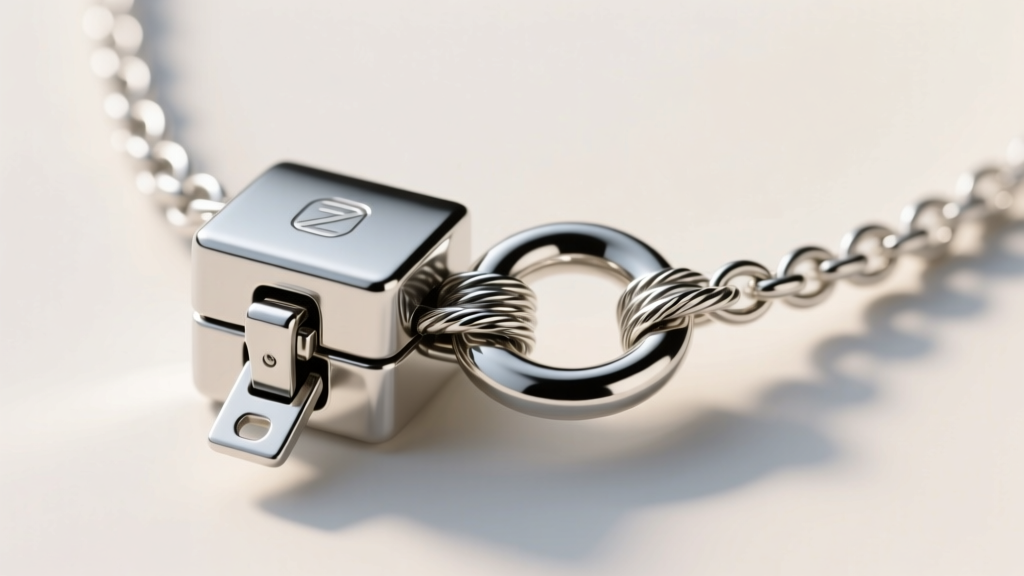
For heavy tennis necklaces and multi-strand pearl pieces, the box clasp is the gold standard. It features a folded metal 'tongue' that compresses as it slides into a rectangular box, snapping into place. However, the tongue can compress over time, leading to a loose fit. High-quality box clasps include a 'figure-eight' safety latch—a secondary wire loop that snaps over a small bead on the opposite side of the clasp. Never wear a heavy tennis necklace with a box clasp that lacks this secondary safety wire; if the tongue slips, the safety will catch the weight of the piece before it hits the floor.
Magnetic Closures: The Neodymium Revolution
Magnetic necklace closures have surged in popularity for their accessibility, particularly for individuals with limited dexterity or arthritis. Modern magnetic clasps utilize N42 to N52 grade neodymium rare-earth magnets, offering immense pull force. However, magnets are highly susceptible to lateral sheer forces. A sharp sideways tug can slide the magnets apart even if the vertical pull-force is rated at 15 pounds. Always ensure your magnetic closure includes a secondary locking mechanism, such as a twist-lock groove or a hidden jump-ring catch, to neutralize sheer force vulnerabilities.
Comparison Chart: Durability and Best Use Cases
To help you match the right closure to your specific jewelry piece, refer to this structural comparison chart based on bench jeweler consensus and industry care guidelines.
| Clasp Type | Best Use Case | Durability Rating | Primary Failure Mode |
|---|---|---|---|
| Stamped Lobster | Everyday chains, medium pendants | High | Internal spring corrosion / Lever bending |
| Spring Ring | Ultra-lightweight, inexpensive chains | Low | Solder joint fatigue and snapping |
| Toggle | Heavy statement pieces, long chains | Medium-High | T-bar slippage due to poor chain drape |
| Box w/ Safety | Tennis necklaces, multi-strand pearls | Very High | Tongue metal fatigue (loss of tension) |
| Magnetic | Accessibility needs, lightweight beads | Medium | Lateral sheer force separation |
Troubleshooting: Why Clasps Fail and How to Fix Them
Before taking your jewelry to a repair bench, you can perform some basic diagnostics and maintenance on your necklace closures at home.
Pro-Tip: Never use WD-40 or standard household lubricants on fine jewelry clasps. These products contain solvents that can degrade porous gemstones like pearls or opals and leave a gummy residue that attracts dust, ultimately jamming the mechanism further.
Fixing a Sticky Lobster Clasp
If your lobster clasp lever is sluggish or fails to snap shut completely, dirt and skin oils have likely compromised the internal spring. Use a soft toothbrush dipped in warm water and a drop of mild dish soap to gently scrub the lever opening. Rinse thoroughly and dry with compressed air. If it remains sticky, apply a microscopic drop of synthetic sewing machine oil to the lever hinge using a toothpick. Work the lever back and forth to distribute the oil.
Testing Box Clasp Tension
If your box clasp feels loose and slides out too easily, the internal tongue has lost its upward tension. You can temporarily fix this by removing the necklace and using a pair of smooth-jawed nylon pliers to gently bend the tip of the tongue upward by just 1 or 2 degrees. Do not over-bend, or the tongue will fail to enter the box entirely. If the metal shows any white stress lines at the fold, the tongue is work-hardened and must be replaced by a professional to prevent a catastrophic snap.
Final Thoughts on Securing Your Jewelry
The clasp is the unsung hero of your necklace. By understanding the mechanical limitations of spring rings, the physics required for toggles, and the metallurgy of lobster claws, you can make informed purchasing decisions and perform proactive maintenance. Always match the clasp's gauge and weight rating to the chain and pendant it supports. When in doubt, consult a certified bench jeweler to upgrade your findings—spending fifty dollars on a heavy-duty stamped lobster clasp or a secure box clasp is a minor insurance premium to protect a priceless heirloom.


