The Beginner's Guide to Choosing a Round Cross Necklace
Discover how to choose the perfect round cross necklace. Learn about metal grades, chain pairings, and sizing in our beginner-friendly guide.


When it comes to timeless jewelry that bridges the gap between personal meaning and modern aesthetics, the round cross necklace stands in a league of its own. Whether you are shopping for your first piece of fine jewelry, looking for a meaningful gift, or exploring faith-based accessories with a contemporary twist, understanding the nuances of this specific silhouette is essential. Unlike sharp-edged traditional Latin crosses, round crosses—often featuring softened tips or an intersecting circular halo—offer a softer, more versatile profile that pairs effortlessly with everyday wardrobes.
In this beginner-friendly explainer, we will break down the anatomy of the round cross pendant, decode metal hallmarks, and provide actionable frameworks for selecting the perfect chain pairing and proportion for your neckline.
Defining the Round Cross Silhouette
Before making a purchase, it is important to understand that 'round cross' generally refers to two distinct design variations in the jewelry industry. Knowing the difference will help you communicate exactly what you want to a jeweler or search more effectively online.
- The Halo Cross (Circular Cross): This design features a standard cross intersected by a continuous outer circle. The circle represents eternity or unity, while the cross maintains its traditional significance. This is highly popular in Celtic-inspired jewelry and modern minimalist designs.
- The Rounded-Edge Cross: This is a traditional Latin or Greek cross where the sharp 90-degree corners and pointed tips are filed down into smooth, convex curves. This variation is favored for its snag-free profile, making it ideal for active lifestyles and layering.
Decoding Metal Grades and Hallmarks
The longevity of your necklace depends entirely on the metal grade. Many beginners make the mistake of purchasing 'gold-tone' jewelry without checking the base metal, leading to rapid tarnishing and skin irritation. According to the Gemological Institute of America (GIA), understanding karatage and alloy composition is the first step in buying fine jewelry.
Always look for quality stamps on the bail (the loop that connects the pendant to the chain). A reputable piece will feature a '925' stamp for sterling silver, or '585' / '14K' for 14-karat gold.
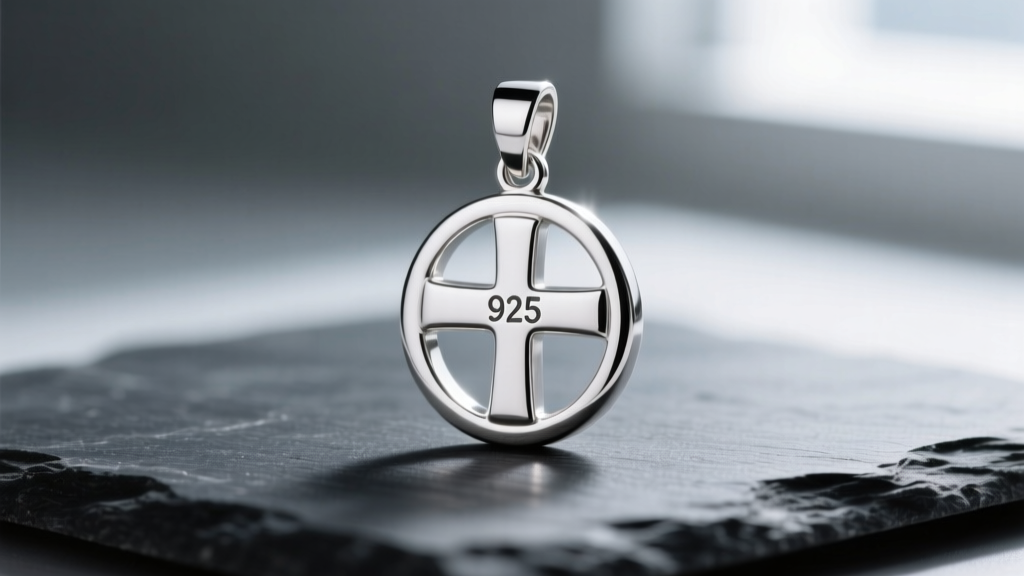
Comparing Common Metal Options
| Metal Type | Hallmark | Durability & Tarnish Resistance | Price Range (USD) |
|---|---|---|---|
| Sterling Silver | 925 | Moderate; requires occasional polishing to prevent oxidation. | $40 - $120 |
| 14k Solid Gold | 585 / 14K | Excellent; highly tarnish-resistant, ideal for daily shower/wear. | $250 - $600 |
| 18k Gold Vermeil | 925 + Gold | Good; features 2.5+ microns of gold over silver. Will eventually wear. | $80 - $180 |
| Gold-Plated Brass | None / GP | Poor; thin plating wears quickly, brass base can cause green skin. | $15 - $45 |
The Anatomy of the Bail: A Crucial Detail
Beginners often focus entirely on the pendant's face, ignoring the bail. The bail dictates how the necklace drapes and which chains are compatible. For a round cross necklace, you will typically encounter two types:
- The Standard Loop Bail: A visible metal loop soldered to the top of the cross. It is durable and allows the pendant to slide freely, but it adds vertical length to the overall silhouette.
- The Hidden Bail: A tube or loop soldered horizontally behind the top arm of the cross. This creates a seamless, modern look where the chain appears to thread directly through the pendant itself. Hidden bails are highly recommended for rounded-edge crosses to maintain the smooth, uninterrupted geometry of the design.
Selecting the Right Chain Pairing
A heavy pendant on a flimsy chain will cause the chain to snap, while a delicate pendant on a thick rope chain will look unbalanced. The American Gem Society emphasizes matching the chain's tensile strength and visual weight to the pendant. For most round cross pendants weighing between 2 and 5 grams, a chain width of 1.2mm to 1.5mm is the sweet spot.
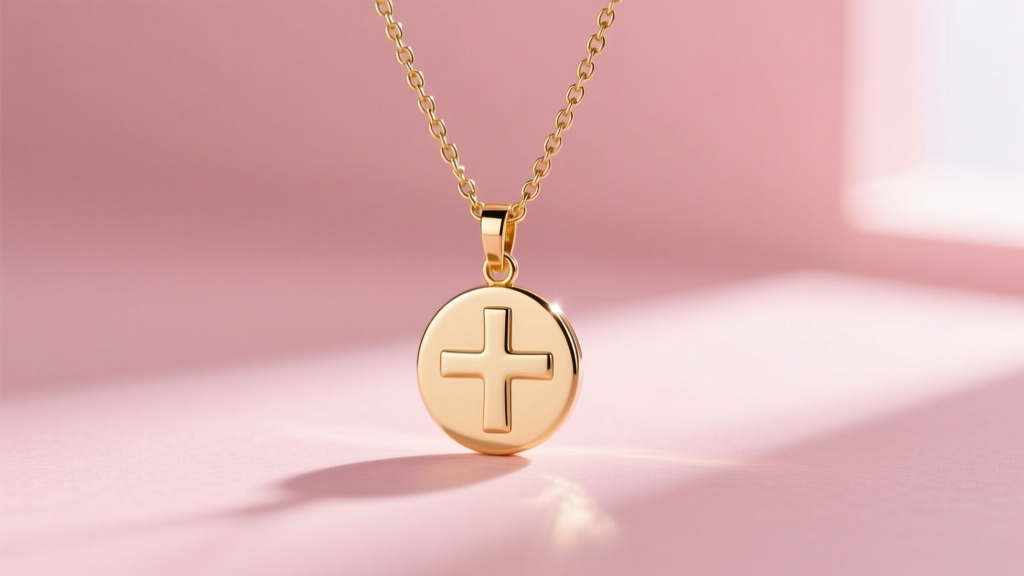
Top Chain Styles for Round Crosses
- Box Chain (1.2mm): Features square links that create a smooth, reflective surface. It is incredibly strong due to its interlocking geometry and complements the soft curves of a round cross by providing a subtle geometric contrast.
- Cable Chain (1.5mm): The classic oval-link chain. It offers a traditional, vintage feel that pairs exceptionally well with halo-style circular crosses.
- Rope Chain (1.0mm): Twisted links that catch the light brilliantly. Best reserved for highly polished, mirror-finish round crosses to maximize light reflection.
Proportion and Sizing Guide
Sizing is where many first-time buyers struggle. A pendant that looks appropriately sized on a display bust might look overwhelming or underwhelming on your actual frame. Use this sizing framework based on the pendant's longest vertical dimension (including the bail):
- 12mm - 16mm (Micro/Subtle): Ideal for layering with chokers or wearing as a delicate, barely-there piece. Best for petite frames or professional environments where jewelry must remain understated.
- 18mm - 24mm (Standard/Everyday): The most versatile size. It sits perfectly at the collarbone or upper chest and is easily visible without dominating the neckline. This is the recommended starting point for beginners.
- 30mm+ (Statement): Bold and highly visible. Best suited for streetwear, outerwear layering, or wearing over high-necked garments like turtlenecks.
Pro Styling Tip: When layering a round cross necklace, always make it the shortest piece in the stack. Pair a 16-inch round cross on a 1.2mm box chain with an 18-inch plain cable chain and a 20-inch chain featuring a small solitaire diamond or pearl drop. This creates a cascading effect that prevents the pendants from tangling.
Long-Term Care and Maintenance
To ensure your round cross necklace retains its smooth edges and brilliant finish, proper maintenance is required. Avoid wearing sterling silver pieces in chlorinated pools, as chlorine accelerates oxidation and can cause the copper alloys in the silver to pit. For solid gold pieces, a simple monthly wash in warm water with a few drops of mild dish soap, gently scrubbed with a baby toothbrush, will remove accumulated lotions and skin oils from the crevices of the cross. Always store your necklace flat or hanging to prevent the chain from knotting inside the bail.


