The Beginner's Guide to Choosing a Ruby Flower Necklace
Discover how to choose, authenticate, and style a ruby flower necklace. Learn about gemstone grades, metal pairings, and floral motif anatomy.

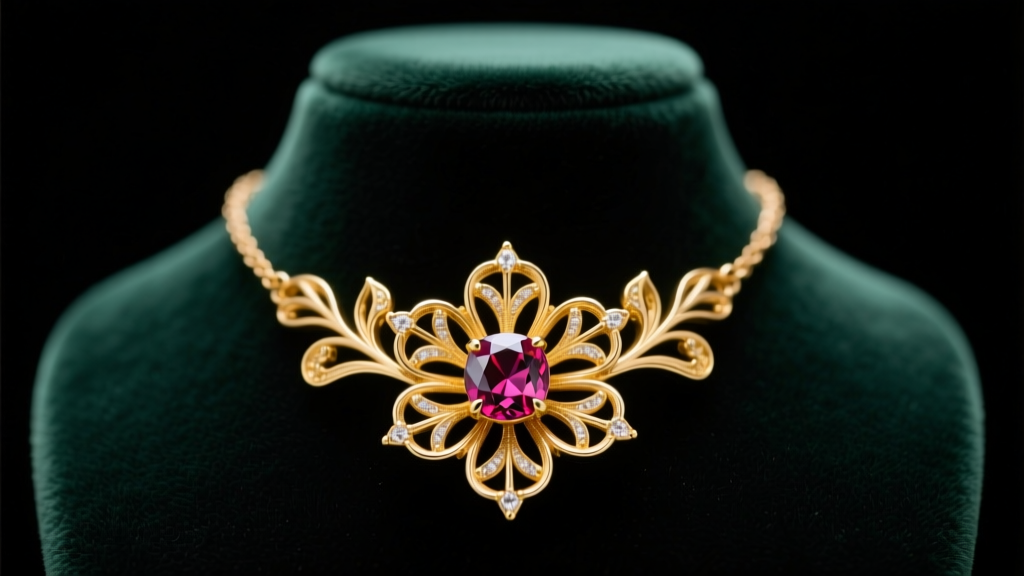
The Timeless Appeal of the Ruby Flower Necklace
When it comes to blending passionate gemology with romantic symbolism, few pieces of jewelry rival the ruby flower necklace. For beginners stepping into the world of fine jewelry, the intersection of floral motifs and precious corundum can feel overwhelming. Floral pendants have been a staple of jewelry design since the Victorian era, but pairing them with rubies—a gemstone that commands some of the highest per-carat prices in the colored stone market—requires a foundational understanding of quality, durability, and design mechanics. This guide will walk you through everything you need to know to confidently select, authenticate, and style a ruby flower necklace in 2026 and beyond.
Decoding Ruby Quality: What Beginners Must Know
The center stone or 'pistil' of a ruby flower necklace is typically the most valuable component. Rubies are the red variety of the mineral corundum, scoring a 9 on the Mohs hardness scale, making them exceptionally durable for everyday wear. However, not all rubies are created equal. Understanding the nuances of color, clarity, and treatment is critical for making an informed purchase.
Color and the 'Pigeon Blood' Standard
The most prized ruby color is often referred to as 'pigeon blood'—a vivid, highly saturated red with a subtle hint of blue or purple that prevents the stone from looking orange or pink. According to the Gemological Institute of America (GIA), color is the single most important quality factor for rubies. In the current market, Mozambican rubies from the Montepuez region are dominating the accessible luxury space, offering rich, slightly purplish-red tones that beautifully mimic the legendary, but heavily restricted, Burmese rubies of the Mogok Valley.
Treatments: Heat vs. Fracture Filling
It is an industry-standard practice to heat-treat rubies to improve their color and clarity. A heat-treated ruby is still considered natural and holds significant value. However, beginners must fiercely avoid 'fracture-filled' or 'lead-glass-filled' rubies. These stones are heavily included, low-grade rubies infused with lead glass to make them appear transparent. They are structurally unstable, highly sensitive to common household acids (like lemon juice or mild jewelry cleaners), and hold virtually no resale value. Always demand a disclosure report from the jeweler regarding gemstone treatments.
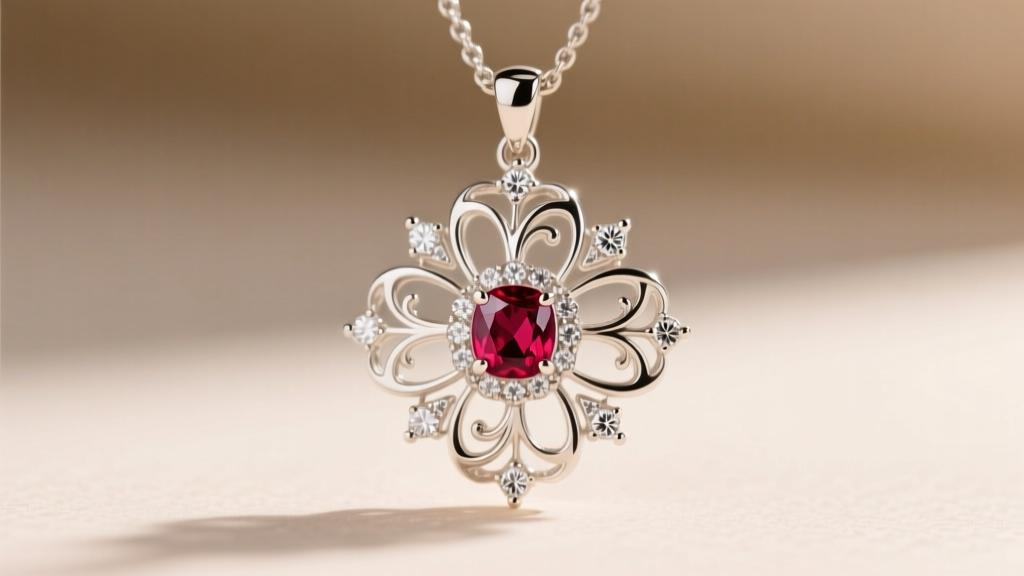
Ruby Sourcing and Pricing Tiers
To help you budget for your ruby flower necklace, it is essential to understand how origin and creation methods impact pricing. Below is a comparative breakdown of the ruby types you will encounter in the jewelry market, based on average per-carat retail pricing for a 1.00-carat center stone.
| Ruby Type | Characteristics | Avg. Price (per carat) | Best For |
|---|---|---|---|
| Natural, Unheated (Burmese) | Rare, vivid color, natural silk inclusions | $15,000 - $50,000+ | Investment collectors |
| Natural, Heated (Mozambican) | Excellent color, durable, widely available | $1,500 - $5,000 | High-end everyday wear |
| Lab-Created (Flame Fusion) | Chemically identical, flawless clarity | $50 - $150 | Budget-conscious buyers |
| Simulated (Glass/Cubic Zirconia) | Look-alike materials, no corundum content | $5 - $20 | Fashion jewelry |
Metal Pairings for Floral Motifs
The metal chosen for the 'petals' and setting of a ruby flower necklace drastically alters its aesthetic and longevity. Because rubies possess a deep, warm red hue, the underlying metal alloy will either amplify that warmth or provide a striking visual contrast.
Yellow Gold (14k and 18k)
Yellow gold is the traditional choice for floral jewelry, evoking a vintage, Victorian, or Art Nouveau aesthetic. An 18k yellow gold alloy (75% pure gold) offers a rich, buttery color that harmonizes with the warm undertones of a ruby. However, 14k yellow gold (58.3% pure gold) is often recommended for delicate floral prongs due to its higher tensile strength and resistance to bending.
White Gold and Platinum
If you want the red of the ruby to 'pop,' white metals are the ideal choice. Platinum 950 is the ultimate standard for fine jewelry; it is naturally white, hypoallergenic, and develops a soft patina over time rather than wearing away. Alternatively, 14k or 18k white gold (alloyed with nickel or palladium and plated in rhodium) offers a similar high-contrast look at a lower price point, though it will require re-plating every few years to maintain its bright white luster.
Rose Gold
Rose gold, alloyed with copper, creates a deeply romantic, monochromatic warmth when paired with rubies. This pairing is exceptionally popular for modern, minimalist flower necklaces, though the copper content can sometimes cause skin discoloration for those with high iron diets or acidic skin pH.
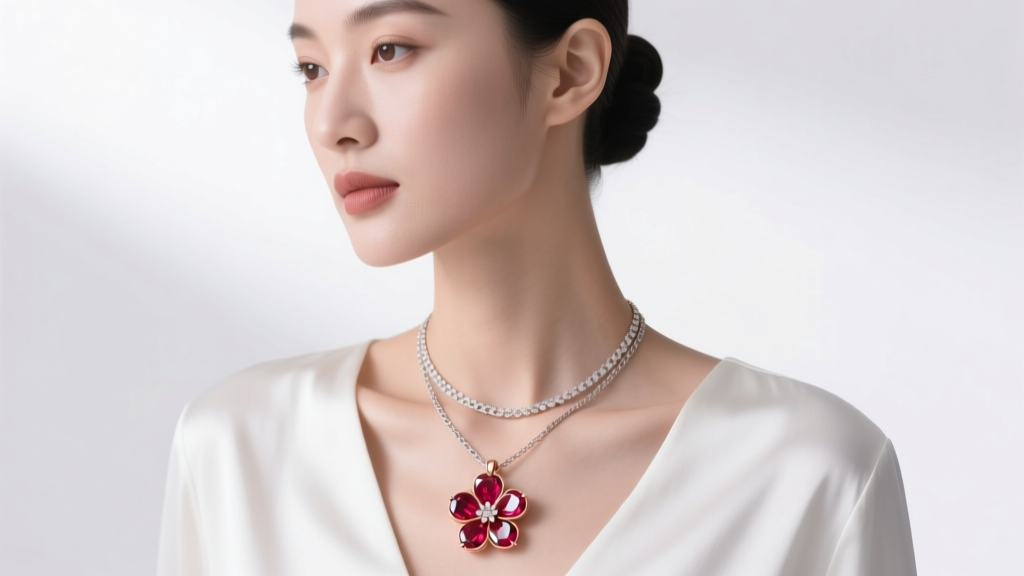
Anatomy of a Floral Pendant: Settings and Bails
The structural integrity of a ruby flower necklace relies heavily on how the gemstones are secured within the floral design. Beginners should pay close attention to the setting style, as it dictates both the safety of the stone and the amount of light that enters the gem.
- Prong Settings: Often used for the center ruby or the tips of the petals. Prongs allow maximum light return, enhancing the ruby's brilliance. Ensure the prongs are at least 0.8mm thick to prevent snagging on clothing.
- Bezel Settings: A metal rim that completely encircles the gemstone. Bezel settings are highly recommended for the outer 'petals' of a necklace if they feature smaller accent rubies, as they protect the girdle (edge) of the stone from chipping during daily wear.
- Pave Settings: Frequently used for diamond accents surrounding the ruby center. Look for 'micro-pave' with small, well-polished beads holding the stones, rather than excessive metal that can dull the sparkle.
Additionally, check the bail (the loop connecting the pendant to the chain). A standard floral pendant requires a bail with an inner diameter of at least 3mm x 4mm to accommodate a sturdy chain without causing friction wear on the metal.
Styling and Chain Length Guide
A ruby flower necklace is a versatile piece, but its impact depends heavily on the chain length and how it interacts with your neckline. The American Gem Society notes that chain length fundamentally changes the focal point of an outfit.
Optimal Chain Lengths
For a standard floral pendant measuring between 15mm and 25mm in diameter, the following chain lengths are most appropriate:
- 16 Inches (Choker/Collarbone): Sits tightly at the base of the neck. Best for deep V-necks or off-the-shoulder tops. Requires a lightweight chain (0.8mm - 1.0mm) like a delicate cable or box chain.
- 18 Inches (Princess Length): The most universal and beginner-friendly length. It rests perfectly on the collarbone and works with almost any neckline, from crew necks to button-down blouses.
- 20 to 22 Inches (Matinee Length): Sits lower on the chest. Ideal for layering over sweaters or pairing with a high-necked turtleneck. Requires a slightly heavier chain (1.2mm - 1.5mm) to support the visual weight of the longer drop.
Care and Maintenance for Ruby Jewelry
While rubies are incredibly hard, the metal settings and secondary accent stones in a ruby flower necklace require careful maintenance. Avoid using ultrasonic cleaners if your ruby has any surface-reaching fractures or if the necklace features fragile accent stones like emeralds or opals. For routine cleaning, the safest and most effective method is to soak the necklace in a bowl of lukewarm water with a few drops of mild, ammonia-free dish soap for 15 minutes. Gently scrub the back of the ruby and the floral crevices with a soft-bristled baby toothbrush, rinse thoroughly under distilled water, and pat dry with a lint-free microfiber cloth. Store the necklace flat in a fabric-lined jewelry box to prevent the chain from tangling and the ruby from scratching softer gemstones in your collection.
Final Thoughts for the First-Time Buyer
Purchasing a ruby flower necklace is an investment in both artistry and geology. By prioritizing natural or high-quality lab-created stones, demanding full treatment disclosures, and selecting a metal alloy that suits your lifestyle, you can secure a piece that will remain a staple in your wardrobe for decades. Remember to prioritize the cut and color of the ruby over sheer carat weight, as a well-proportioned 0.75-carat stone will outshine a poorly cut 1.50-carat gem every time.


