Beginner Guide to Choosing a Russian Orthodox Cross Necklace
Discover everything you need to know about buying a Russian Orthodox cross necklace, from the three-bar symbolism to the best metals and chain lengths.

The Anatomy and Symbolism of the Three-Bar Cross
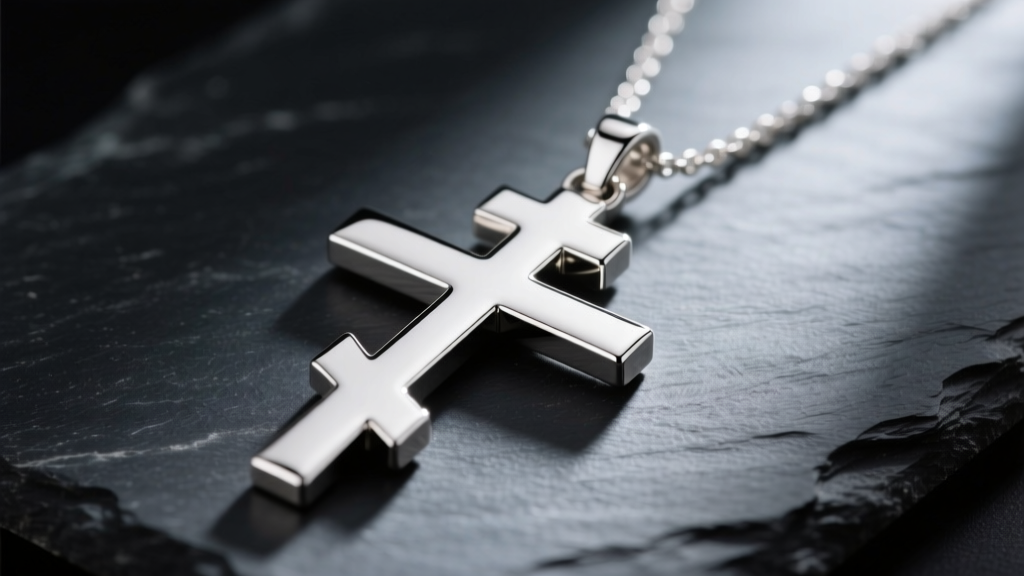
When shopping for a Russian Orthodox cross necklace, the first thing you will notice is the distinct three-bar design. Unlike the standard Latin cross, the Orthodox cross (often called the Suppedaneum or Slavic cross) features a top bar, a longer middle bar, and a slanted bottom bar. Understanding this anatomy is crucial for beginners, as it transforms the pendant from a simple accessory into a profound theological statement.
The top short bar represents the titulus, the signboard that Pontius Pilate ordered to be nailed above Christ's head. The middle bar is the main crossbeam where the hands were affixed, often inscribed with 'IC XC NIKA' (Jesus Christ Conquers). The bottom slanted bar is the suppedaneum, or footrest. According to teachings from the Orthodox Church in America, the footrest is slanted upward on the right side (pointing to heaven) to represent the repentant thief, and downward on the left side (pointing to hell) to represent the unrepentant thief. When purchasing, always verify that the slant is correct: the higher side must be on the right from the wearer's perspective.
Baptismal (Navelny) vs. Decorative Crosses
Before selecting a metal or chain, you must decide the primary purpose of your Russian Orthodox cross necklace. In Eastern Orthodox tradition, crosses generally fall into two distinct categories: baptismal and decorative.
The Baptismal Cross (Podtelny)
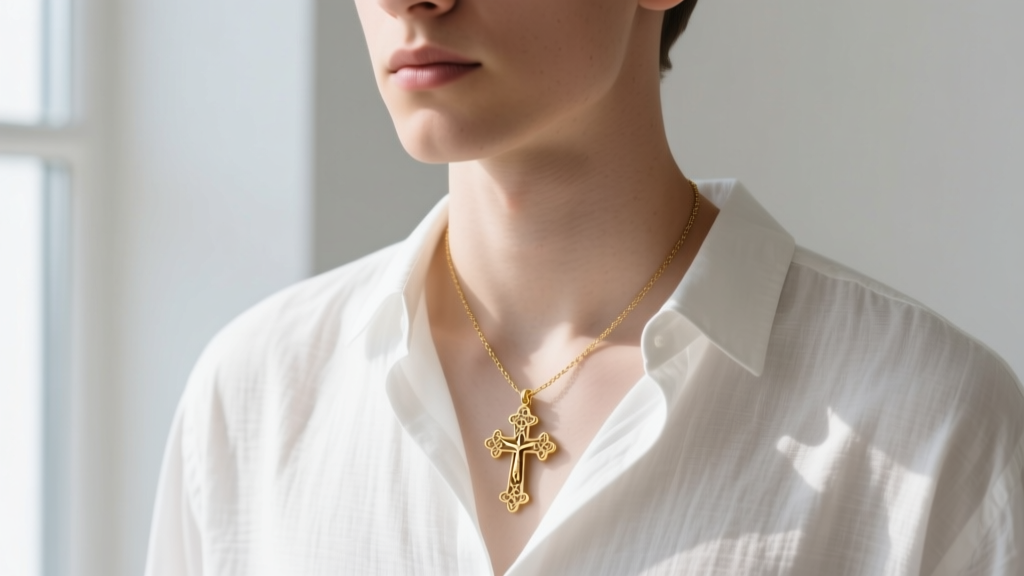
A baptismal cross is given during the sacrament of baptism and is traditionally worn under the shirt, resting against the skin at all times. Because it is meant for continuous, lifelong wear, these pendants are typically smaller (0.6 to 0.9 inches in height) and feature smooth, rounded edges to prevent skin irritation. They are rarely adorned with sharp filigree or large gemstones. If you are buying a cross for daily, under-the-shirt wear as a matter of faith, a smooth, solid-cast 14k gold or 925 silver baptismal cross is the correct choice.
The Outer Decorative Cross
Decorative crosses are worn over clothing as a public expression of faith or as a fashion statement. These are significantly larger (1.2 to 2.5 inches) and often feature intricate details like cloisonné enamel, filigree, or inset cubic zirconia. Because they catch on fabrics less frequently and are not constantly rubbing against the skin, they can afford to have sharper angles and more complex, three-dimensional relief casting.
Material Grades and Pricing Guide
The material of your pendant dictates its longevity, skin compatibility, and price. While you can find cheap alloy replicas, serious buyers should focus on precious metals or sacred woods. Below is a breakdown of the most common materials used for high-quality Orthodox pendants.
| Material | Purity / Grade | Pros | Cons | Avg Price Range |
|---|---|---|---|---|
| Sterling Silver | 925 (often Rhodium-plated) | Affordable, traditional, hypoallergenic | Tarnishes if unplated, scratches easily | $45 - $150 |
| Yellow Gold | 14k (585 stamp) | Durable, doesn't tarnish, holds value | Higher upfront cost, softer than 10k | $250 - $800+ |
| Olive Wood | Carved Jerusalem Olive | Lightweight, deeply symbolic, warm tone | Degrades with sweat/water, fragile | $20 - $60 |
| Enamel over Silver | 925 with Cloisonné | Vibrant colors, highly ornate | Enamel can chip if dropped on hard floors | $80 - $250 |
Note that in Eastern Europe and Russia, 14k gold is stamped as '585' (indicating 58.5% pure gold). If you are buying vintage or imported pieces, look for this hallmark rather than the American '14k' stamp.
Sizing, Bails, and Chain Pairing
A common beginner mistake is buying a heavy Orthodox pendant and pairing it with a flimsy chain, resulting in a broken necklace and a lost heirloom. The weight of the pendant must be balanced by the gauge (thickness) of the chain.
Matching Chain Styles to Your Pendant
- Byzantine Chains (3mm - 5mm): The gold standard for heavy, large decorative crosses. The interlocking oval links provide immense tensile strength and a luxurious, rope-like appearance that complements ornate Slavic designs.
- Rope Chains (2mm - 3mm): Excellent for medium-sized pendants. The twisted links reflect light beautifully, adding sparkle without overpowering the cross itself.
- Cable or Curb Chains (1.5mm - 2.5mm): Best reserved for small, lightweight baptismal crosses. They are discreet and comfortable for under-the-shirt wear.
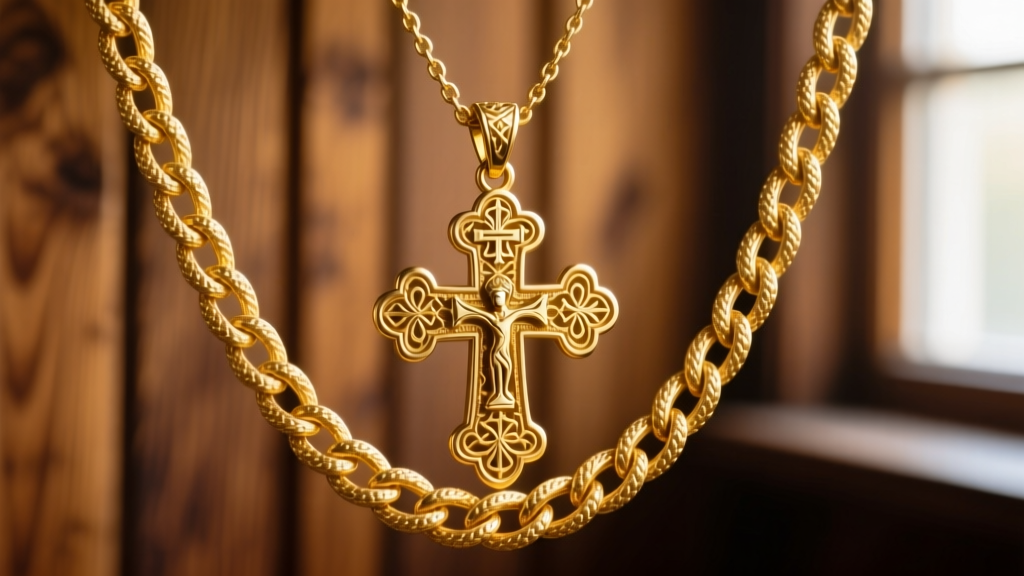
Critical Bail Sizing: The bail is the loop at the top of the cross that the chain threads through. A standard 3mm Byzantine chain requires a bail with an inner diameter of at least 4.5mm to 5mm. Always measure the inner diameter of the pendant's bail before purchasing a chain to ensure a proper fit.
Long-Term Care and Maintenance
Because Orthodox crosses often feature deep crevices, filigree, and engraved prayers on the reverse side, they are magnets for dust, skin oils, and soap scum. Regular maintenance is required to keep the details sharp and the metal bright.
Expert Tip: Never use abrasive silver dips or ultrasonic cleaners on Russian Orthodox crosses that feature black oxidation (antiquing) in the grooves. These chemicals will strip the intentional dark patina, leaving the cross looking flat and washed out.
For routine cleaning, use a few drops of mild dish soap in warm water and a soft-bristled baby toothbrush to gently agitate the crevices. If your sterling silver cross has developed heavy tarnish, use a dedicated silver polishing cloth rather than liquid pastes. Liquid pastes can get trapped in the intricate engraving of the 'Save and Protect' (Спаси и Сохрани) prayer often found on the back of Russian crosses, creating a messy white residue that is difficult to remove. For deep metal care and polishing guidelines, refer to the Gemological Institute of America (GIA) silver care resources. Dry the pendant thoroughly with a microfiber cloth before storing it in an anti-tarnish pouch.
Choosing the right Russian Orthodox cross necklace is a deeply personal journey that bridges faith, history, and personal style. By understanding the theology of the three bars, selecting the appropriate size for your intended wear, and matching it with a structurally sound chain, you ensure that your pendant will remain a cherished piece for decades to come.


