Tiger Eye Bead Necklace Repair and Care Troubleshooting
Learn how to troubleshoot, restring, and clean your tiger eye bead necklace. Expert fixes for broken strings, dull stones, and heavy bead clasps.


The Unique Challenges of Tiger Eye Bead Necklaces
A tiger eye bead necklace is a staple in both spiritual and fashion jewelry circles, prized for its striking chatoyancy and rich, earthy tones. However, beneath its beautiful surface lies a set of structural challenges that frequently frustrate wearers and jewelers alike. Tiger eye is a pseudomorph of quartz after crocidolite, giving it a Mohs hardness of 7 but a surprisingly high specific gravity of 2.64 to 2.71. This means a standard 32-inch strand of 8mm tiger eye beads can weigh upwards of 45 to 50 grams. This dense, heavy composition, combined with the fibrous internal structure of the stone, creates specific failure points in necklace construction and maintenance.
In this comprehensive troubleshooting guide, we will address the most common mechanical and aesthetic failures associated with tiger eye bead necklaces, providing actionable, professional-grade solutions to restore and protect your jewelry.
Troubleshooting String Breakage: The Weight and Abrasion Problem
The most frequent complaint regarding a tiger eye bead necklace is the snapping of the stringing material. This is rarely due to simple tensile overload; rather, it is usually caused by internal abrasion. Because tiger eye is fibrous and often tumbled in large batches, the drill holes can harbor microscopic, jagged silica edges. When strung on traditional silk or soft nylon, the heavy beads act like a saw, slowly fraying the cord from the inside out until it catastrophically fails.
Material Comparison: Choosing the Right Stringing Medium
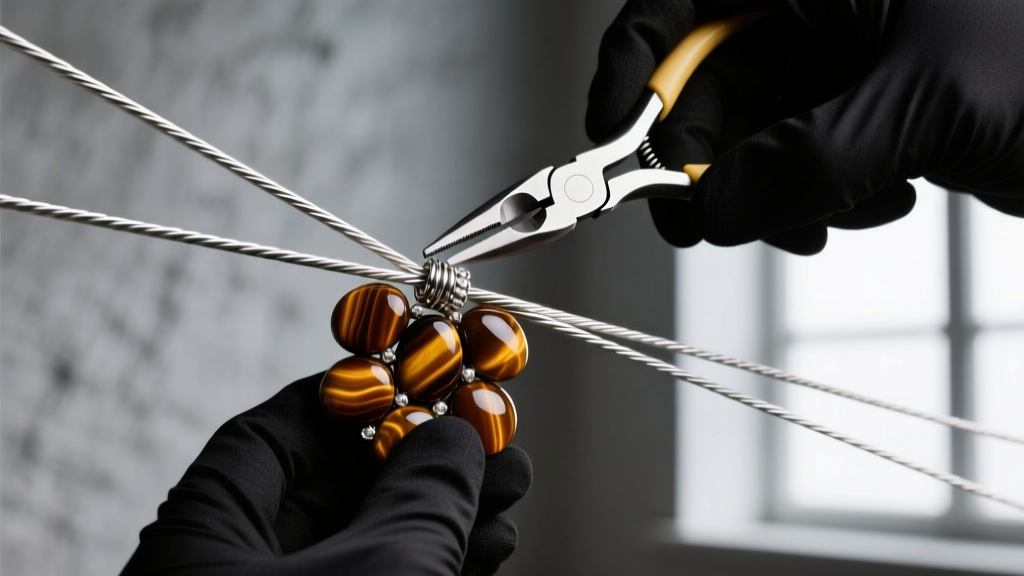
To prevent a repeat failure, you must abandon standard silk thread for heavy gemstone strands. As of 2026, advanced micro-wire technologies offer the drape of silk with the tensile strength of steel. Below is a decision matrix for restringing heavy tiger eye beads.
| Stringing Material | Diameter / Gauge | Tensile Strength | Best Use Case for Tiger Eye | Failure Risk |
|---|---|---|---|---|
| Silk Cord (Size F) | 0.35mm | Low | Knotted strands under 6mm beads only. | High (Internal abrasion) |
| Woven Nylon (S-Lon) | 0.40mm | Medium | Knotted heavy strands (requires bead reaming). | Medium (Fraying over time) |
| 49-Strand Beading Wire | 0.019" (0.48mm) | High (30 lbs) | Standard 8mm tiger eye strands, unknotted. | Low (Industry standard) |
| 49-Strand Heavy Wire | 0.024" (0.61mm) | Very High (40 lbs) | Large 10mm+ beads or multi-strand designs. | Very Low (Maximum durability) |
According to the experts at Fire Mountain Gems' EncycloBEADia, using a 49-strand stainless steel beading wire coated in nylon provides the best drape while completely eliminating the risk of internal sawing. If you must use knotted nylon for a traditional look, you must first use a diamond-coated bead reamer to smooth the interior of every single tiger eye bead.
Diagnosing Dullness and Color Fading
If your tiger eye bead necklace has lost its luster or the color appears to be leaching, you are likely dealing with treated stones or improper cleaning methods. While natural brown tiger eye is completely stable, the jewelry market is flooded with enhanced variants.
- Red Tiger Eye: This is almost always brown tiger eye that has been gently heated to oxidize the iron content. It is stable and will not fade, but extreme heat (like a jeweler's torch) can cause thermal shock and cracking.
- Blue Tiger Eye (Hawk's Eye): Natural blue tiger eye is rare and expensive. Most commercial blue strands are dyed. If the color is rubbing off on your skin or clothing, the dye is surface-level and poorly sealed.
- Loss of Chatoyancy: The "cat's eye" effect is caused by light reflecting off parallel asbestos fibers replaced by silica. If the beads look flat and opaque, they may be heavily oiled, waxed, or coated with a polymer that has degraded over time.
Safe Cleaning Protocol for Tiger Eye
Never use ultrasonic cleaners or steamers on a tiger eye bead necklace. The high-frequency vibrations can shatter beads that have internal micro-fractures, which are common in this stone. Furthermore, ultrasonic waves will strip away any protective wax coatings applied by the manufacturer. Instead, follow this safe cleaning framework:
- Mix lukewarm distilled water with a single drop of pH-neutral dish soap (like Dawn).
- Dampen a microfiber cloth in the solution—do not submerge the necklace, as water can degrade the stringing wire's nylon coating over time.
- Gently wipe each bead individually, following the grain of the chatoyancy bands.
- Buff dry immediately with a clean, dry flannel cloth to restore the natural polish.
Fixing Clasp Failures on Heavy Bead Strands
A 50-gram tiger eye bead necklace exerts significant kinetic force on its clasp when the wearer moves, bends, or pulls on the strand. Standard spring-ring clasps and small lobster claws will inevitably fail, either by the internal spring breaking or the jump ring pulling open.
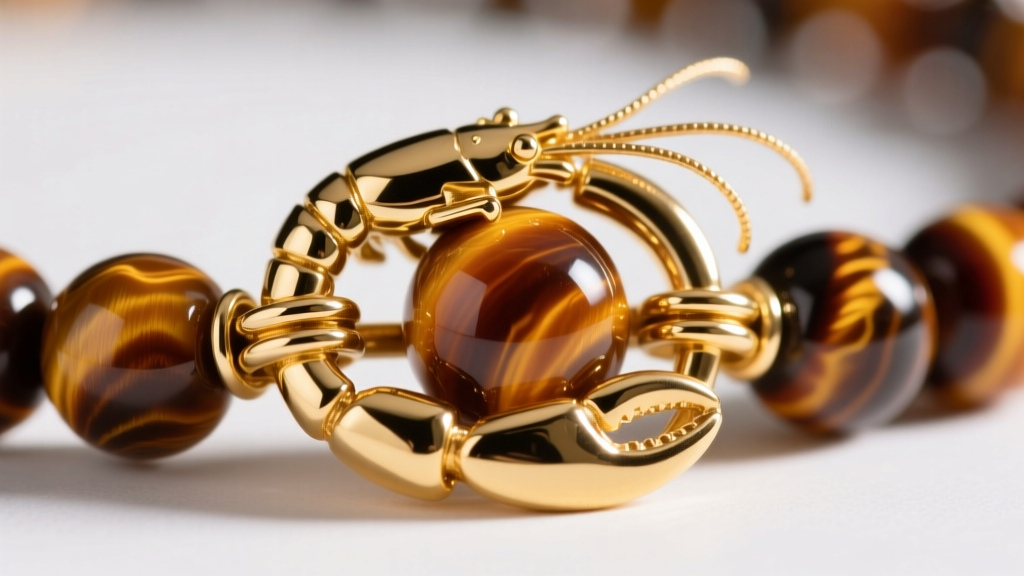
The Solution: Upgrade your findings. For heavy tiger eye strands, transition to a heavy-duty box clasp with a figure-8 safety catch, or a neodymium magnetic clasp with a 12mm glue-in pad. Crucially, you must use wire guards (also known as French wire or cable thimbles) where the beading wire loops through the clasp. The wire guard prevents the metal clasp from sawing through the nylon coating of your beading wire, a common point of failure that ruins an otherwise perfect restringing job.
Authenticity Check: Is Your Tiger Eye Glass?
Because of the high cost of premium, perfectly matched tiger eye beads, the market is saturated with chatoyant glass imitations. If your necklace is suffering from mysterious scratching or feels unusually light, it may be fake. According to mineralogical data from Mindat.org, true tiger eye has a specific gravity and hardness that glass cannot perfectly mimic.
The Temperature Test: Hold a bead against your cheek or the inside of your wrist. Real quartz-based tiger eye will feel noticeably cool to the touch and will take several seconds to warm up to your body temperature. Glass or plastic imitations will feel room-temperature or warm almost instantly.
The Flash Test: Rotate the bead under a single, direct light source (like a smartphone flashlight). Real tiger eye will display a sharp, distinct band of light that moves smoothly across the fibrous surface. Glass imitations often have a muddy, diffuse glow or a "painted on" stripe that lacks depth and optical depth.
Summary Checklist for Long-Term Maintenance
To ensure your tiger eye bead necklace remains a durable and striking accessory, perform this bi-annual checklist:
- Inspect the Wire: Check the areas immediately adjacent to the clasp for any fraying of the nylon coating. If bare steel is visible, restring immediately.
- Check the Crimps: Ensure the crimp beads are tightly folded and not sliding along the wire. A sliding crimp means the tension is wrong and the necklace is at risk of snapping.
- Storage: Store the necklace flat or hanging. Never toss it into a jewelry box where heavier pieces can scratch the polished surface of the tiger eye beads.
By understanding the unique mineralogical properties of tiger eye and applying professional jewelry-making techniques, you can easily troubleshoot and resolve the most common issues, ensuring your necklace remains both beautiful and structurally sound for decades.


