Expert Guide to Choosing a Seed Pearls Necklace: Sizing and Grading
Master the technical details of a seed pearls necklace. Learn millimeter sizing, nacre grading, silk knotting, and how to spot authentic freshwater gems.

The Technical Definition of Seed Pearls
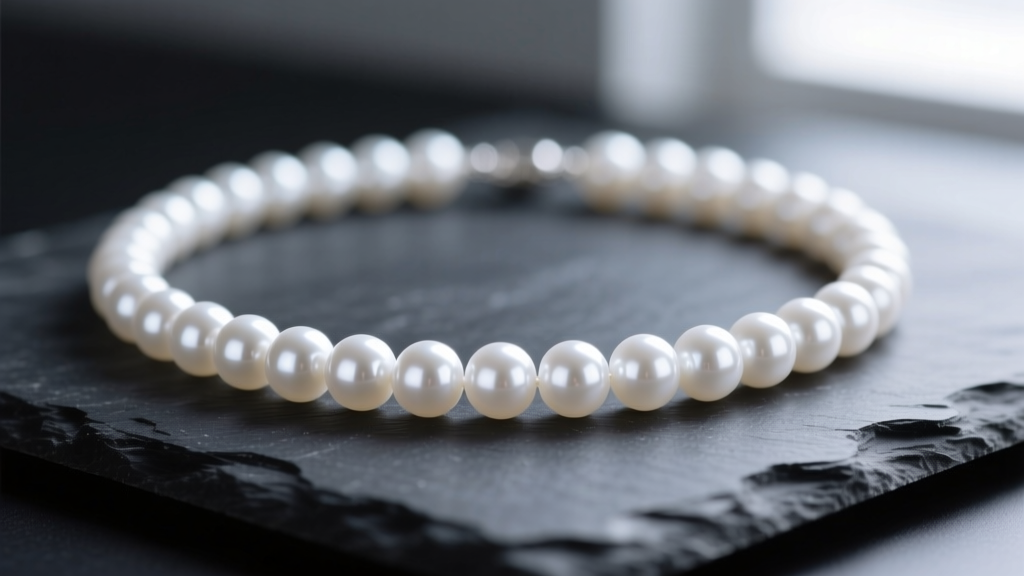
In the gemological community, the term 'seed pearl' is not merely a marketing descriptor for small pearls; it represents a strict size classification with unique structural and manufacturing challenges. According to the Gemological Institute of America (GIA), seed pearls are strictly defined as pearls measuring under 3.0 millimeters in diameter. However, among master jewelers and pearl purists, true seed pearls are often considered to be those falling under the 2.0mm threshold.
Historically, seed pearls were natural accidents of pearl formation, harvested from wild river mussels or saltwater oysters. Today, the market is dominated by cultured freshwater seed pearls and, much more rarely, cultured Akoya seed pearls. Because of their diminutive size, creating a high-quality seed pearls necklace requires sorting through tens of thousands of harvested pearls to find matching specimens in terms of luster, surface cleanliness, and exact millimeter diameter. This intense labor is the primary driver of cost in fine seed pearl jewelry, rather than the raw material itself.
The Millimeter Matrix: Sizing and Uniformity
When evaluating a seed pearls necklace, uniformity is the ultimate marker of quality. Human eyes are exceptionally adept at detecting micro-variations in spherical objects. A strand that fluctuates between 1.5mm and 2.2mm will look chaotic and poorly crafted, whereas a strand locked in at a precise 1.8mm will exhibit a fluid, liquid-like drape.
| Classification | Diameter Range | Visual Profile & Use Case | Relative Market Rarity |
|---|---|---|---|
| Micro Seed | Under 1.2mm | Resembles fine sand; used in pavé settings or micro-macramé. | Extremely Rare |
| Fine Seed | 1.2mm - 1.8mm | Delicate, lace-like drape; ideal for multi-strand torsades. | Rare |
| Standard Seed | 1.8mm - 2.5mm | Classic vintage profile; versatile for single or layered strands. | Common |
| Small Freshwater | 2.5mm - 3.0mm | Transitional size; offers more individual pearl presence. | Abundant |
To achieve a 16-inch princess-length necklace using 2.0mm fine seed pearls, a stringer requires approximately 200 perfectly matched pearls. Sourcing these from standard 'hanks' (the industry standard bundle of 12 to 16 temporary strands) often requires purchasing and sorting through five or six hanks, discarding or repurposing the slightly oval, blemished, or off-color specimens.
Nacre Architecture and Luster Grading
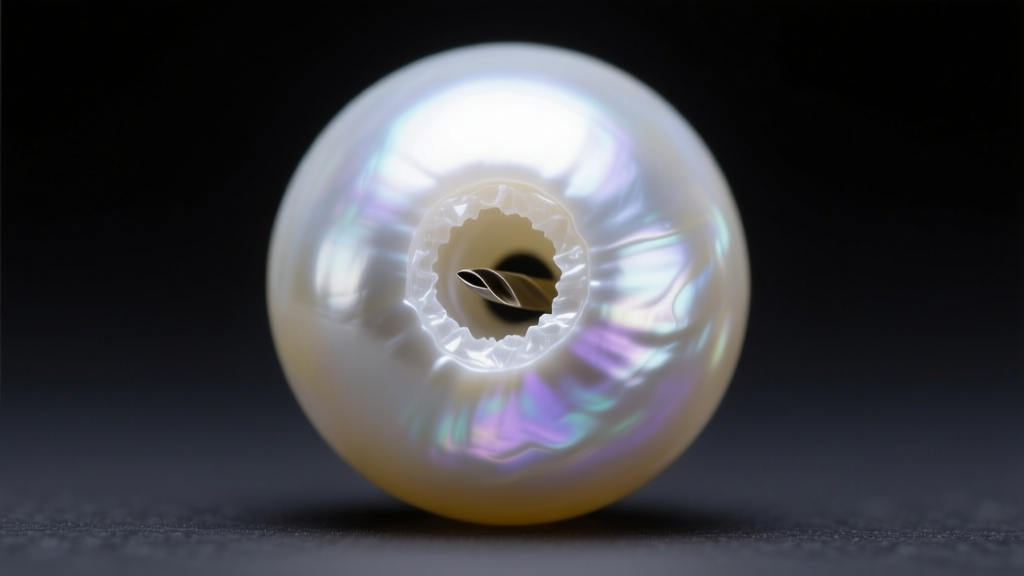
The optical performance of a seed pearls necklace is dictated by its nacre quality. Because seed pearls are so small, the depth and crystalline structure of the nacre are paramount.
Freshwater vs. Akoya Seed Pearls
The vast majority of seed pearls on the market are freshwater, cultured via tissue nucleation. This means a tiny piece of donor mantle tissue is inserted into the host mussel, resulting in a pearl that is 100% solid nacre from the core to the surface. This solid nacre structure makes freshwater seed pearls incredibly durable and resistant to chipping, even at the 1.5mm size.
Conversely, Akoya seed pearls are bead-nucleated. A mother-of-pearl bead core is implanted, and the oyster secretes nacre over it. In a 2.0mm Akoya seed pearl, the bead core might be 1.5mm, leaving only 0.25mm of nacre on all sides. While Akoya seed pearls boast a sharper, more mirror-like luster due to the tightly packed aragonite platelets characteristic of saltwater pearls, their thin nacre makes them more vulnerable to wear and tear over decades of use.
Evaluating Luster and Orient
When inspecting a strand, look for the sharpness of the light reflection. The GIA grades pearl luster on a scale from Excellent to Poor. In fine seed pearls, you want an 'Excellent' or 'Very Good' rating, where the light source reflects crisply on the surface rather than appearing hazy or chalky. Additionally, high-quality freshwater seeds may exhibit 'orient'—an iridescent play of colors just beneath the surface caused by light diffracting through the overlapping aragonite crystals.
Expert Insight: Never judge the luster of a seed pearls necklace under harsh, direct LED spotlighting, which can artificially enhance poor pearls. Evaluate the strand in diffused, natural daylight or under soft fluorescent lighting to see the true depth of the nacre's glow.
Stringing Mechanics: Drill Holes and Cord Selection
The structural integrity of a seed pearls necklace relies entirely on the stringing architecture. The drill holes in true seed pearls are microscopic, typically ranging from 0.3mm to 0.5mm in diameter. This extreme restriction eliminates most standard jewelry cords and necessitates specialized materials.
- Size 0 or Size A Silk Thread: Traditionalists prefer pure silk (such as Griffin or Purist brands). Size 0 (0.30mm) or Size A (0.35mm) silk is required to pass through 0.4mm drill holes. However, because the silk is so fine, traditional knotting between every pearl is often abandoned; the knots would be larger than the pearls themselves or impossible to pull through the micro-holes. Instead, the strand is strung continuously without knots, or knotted only in sections.
- Micro-Knotting Techniques: Master stringers use specialized micro-knotting tools and ultra-fine silk to place tiny knots between 1.8mm to 2.5mm pearls. This prevents total loss if the strand breaks but requires immense skill and increases the labor cost significantly.
- Synthetic Beading Wire: For unknotted, high-durability strands, jewelers often use 0.010-inch or 0.012-inch flexible stainless steel beading wire (like Soft Flex). This provides superior tensile strength compared to silk but sacrifices the traditional fluid drape, resulting in a slightly stiffer necklace.
Hardware Integrity: Clasps and French Wire
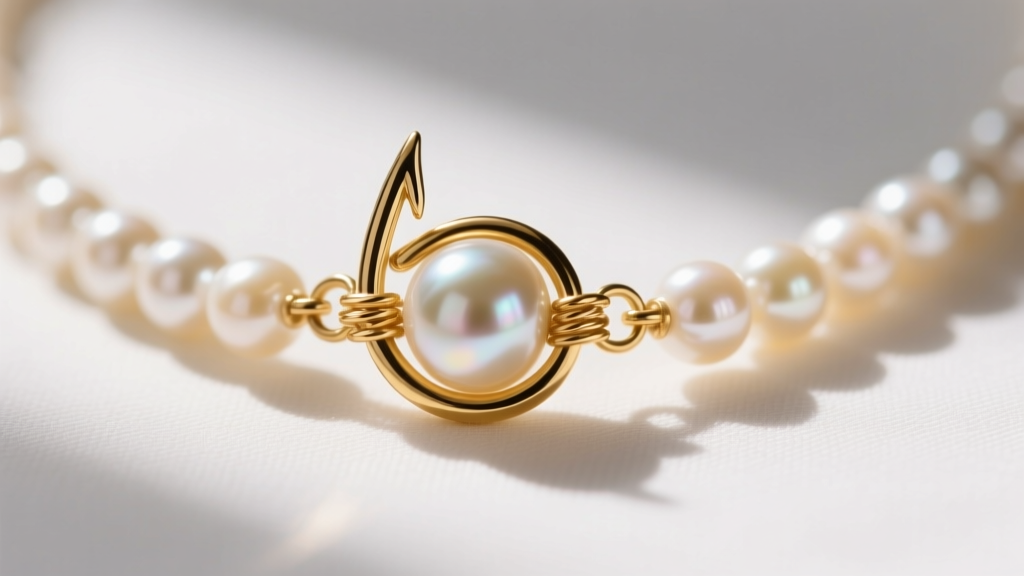
A delicate strand of seed pearls requires a clasp that balances security with proportional aesthetics. Heavy lobster clasps or oversized spring rings will pull the back of the necklace down and disrupt the drape. The industry standard for fine seed pearls is the 14k or 18k gold fishhook clasp or a micro-box clasp with a figure-eight safety catch.
Critically, the transition point between the pearl strand and the metal clasp is the highest stress point on the necklace. Authentic, high-end seed pearl necklaces will always feature French wire (also known as bullion). This is a microscopic, coiled spring of fine gold or silver that the silk thread passes through before looping into the clasp ring. The French wire acts as a protective sleeve, preventing the metal clasp from sawing through the delicate silk thread over years of friction and movement. If a seed pearls necklace lacks French wire or protective metal grommets at the clasp, it is a sign of inferior manufacturing and will require premature restringing.
Structural Maintenance and Restringing
Due to the ultra-fine stringing materials required, a seed pearls necklace demands rigorous maintenance. Silk thread degrades when exposed to the natural acids in human sweat, cosmetics, and environmental humidity.
If worn weekly, a seed pearl strand strung on silk should be professionally inspected and restrung every 18 to 24 months. Never use ultrasonic cleaners or steamers on seed pearls; the high-frequency vibrations can fracture the nacre, especially near the high-stress areas of the drill holes. Instead, clean the necklace by gently wiping it with a lint-free microfiber cloth dampened with distilled water, and lay it flat to dry to prevent the silk from stretching under the weight of wet pearls. For comprehensive care standards, refer to the guidelines provided by the Pearl Paradise Education Center, which outlines the chemical sensitivities of calcium carbonate gemstones.
Ultimately, investing in a seed pearls necklace is an investment in master craftsmanship. By scrutinizing the millimeter uniformity, verifying the nacre origin, and inspecting the stringing hardware, you ensure the piece will maintain its structural integrity and luminous beauty for generations.


