How to Wear Multiple Necklaces Without Tangling: A Layering Guide
Learn how to wear multiple necklaces without tangling. Master chain weights, length gaps, and clasp types for a flawless, knot-free layered look.


The Physics of Tangling: Why Chains Knot
Learning how to wear multiple necklaces without tangling is less about luck and more about understanding basic physics. When you layer jewelry, you are introducing multiple metal surfaces that interact through friction, static electricity, and kinetic movement. Tangling occurs primarily when chain links are of similar sizes, allowing them to interlock like gears. Furthermore, lightweight chains (under 1.5mm in width) lack the gravitational pull to lay flat against the sternum, causing them to float, twist, and wrap around neighboring strands. According to jewelry manufacturing experts at Rio Grande, the geometry of the chain link dictates its structural rigidity and its propensity to catch on adjacent metals. By strategically varying link geometry, weight, and length, you can completely eliminate the frustrating knotting that plagues most layered necklace stacks.
The Golden Rule: Length Gaps and Weight Distribution
The most common mistake beginners make is stacking necklaces with only a half-inch difference in length. When chains sit at the exact same focal point on the chest, they rub together with every breath and movement. To prevent this, you must enforce a strict minimum 2-inch gap between each layer. However, length alone is not enough; you must also graduate the weight of the chains. A heavy outer chain will act as an anchor, pulling the entire stack downward and keeping the layers separated.
| Layer Position | Ideal Length | Minimum Chain Width | Recommended Weight | Primary Function |
|---|---|---|---|---|
| Base (Choker) | 14" - 16" | 1.0mm - 1.5mm | Lightweight (under 5g) | Sits high on the clavicle; anchors the top of the stack. |
| Middle (Princess) | 18" - 20" | 1.5mm - 2.5mm | Medium (5g - 12g) | The focal point; usually holds the primary pendant. |
| Outer (Matinee) | 22" - 24" | 2.5mm - 4.0mm | Heavy (12g+) | Acts as a gravitational anchor to prevent upward migration. |
As noted in Blue Nile's necklace education guide, understanding standard necklace lengths is crucial for achieving the correct visual cascade. If your middle chain is 18 inches, your outer chain must be at least 20 inches, though 22 inches provides a much safer buffer against tangling.
Selecting Tangle-Resistant Chain Profiles
Not all chains are created equal. The physical profile of the metal links determines how easily they will snag on one another. If you want a knot-free stack, you must avoid mixing chains with similar open-link profiles, such as layering two delicate cable chains or two rolo chains. Instead, mix closed or semi-closed link structures.
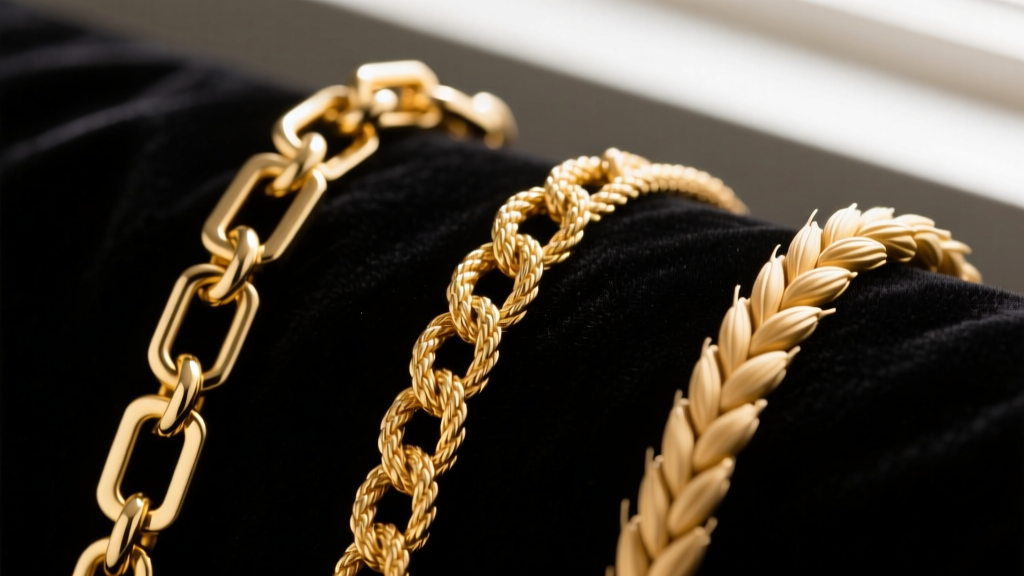
Best Chain Profiles for Layering
- Box Chains: Composed of square, interlocking links with flat surfaces. The flat edges slide smoothly past other chains, making them highly resistant to catching. A 1.5mm box chain is an ideal middle layer.
- Wheat (Spiga) Chains: These feature a braided, directional pattern. Because the links are woven tightly together and point in a single direction, they act almost like a solid wire, leaving no gaps for neighboring chains to slip into.
- Snake Chains: Made of tightly joined wavy rings that form a smooth, flexible tube. They are entirely snag-proof, though they can be stiff and prone to permanent kinking if bent sharply.
- Herringbone Chains: Flat and fluid, these lay completely flush against the skin. They are excellent base layers but should not be layered with heavy pendants, as they kink easily under localized stress.
Profiles to Avoid in Multi-Layer Stacks
Avoid using delicate Rope Chains (under 2mm) as middle layers. The twisted, textured surface of a thin rope chain acts like Velcro, catching on the microscopic gaps of other chains. Similarly, Figaro and Curb chains, while beautiful on their own, have wide, flat links that easily hook onto thinner chains when the wearer moves.
Hardware Hacks: Clasps, Spacers, and Connectors
The hardware you use to secure your necklaces plays a massive role in how they behave throughout the day. Standard spring-ring clasps are notorious for spinning around to the front of the neck, pulling the chain into a twist that eventually migrates down and tangles with other layers.
Pro-Tip: Always upgrade your base and middle layers to lobster claw clasps. The weighted lever of a lobster clasp naturally pulls the hardware to the back of the neck, keeping the chain aligned and reducing rotational twisting.
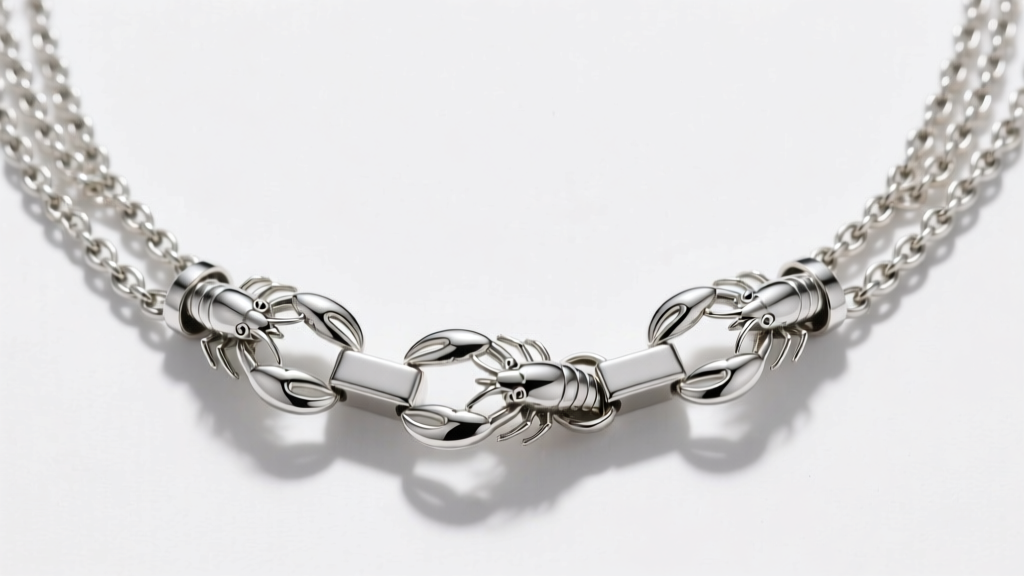
The Multi-Strand Spacer Bar Solution
If you are entirely opposed to the physics of tangling, the ultimate cheat code is a multi-strand spacer bar (also known as a slide clasp or tube clasp). This single piece of hardware features multiple attachment points (usually 2 to 5) that lock your chains together at the nape of the neck. Because the chains are held at fixed intervals at the back, they cannot cross over one another. When purchasing spacer bars, look for 14k gold-filled or solid sterling silver options with secure locking mechanisms, typically ranging from $45 to $120 depending on the metal weight and brand.
The Pendant Pendulum Effect
Pendants introduce a kinetic variable known as the pendulum effect. A heavy pendant on a lightweight chain will swing wildly with your body's movement, wrapping the chain around any adjacent strands. To mitigate this, the weight of the pendant must be proportionate to the chain's tensile strength and width. A general rule of thumb in jewelry design is that the pendant should weigh no more than three times the weight of the chain itself. If you are layering a heavy medallion or gemstone drop, ensure it is on a thicker, rigid chain (like a 3mm wheat or box chain) and place it on the outermost layer where it has room to swing without intersecting the inner layers.
Material Friction and Static Electricity
The finish of your metal impacts friction. High-polish metals (like rhodium-plated sterling silver or polished 18k yellow gold) have microscopic smoothness that allows strands to glide over one another. Conversely, brushed, matte, or hammered finishes create microscopic ridges that increase surface friction, encouraging chains to grip and twist. Furthermore, during winter months, static electricity generated by synthetic clothing (like polyester or nylon blends) can cause ultra-fine chains (under 1mm) to become magnetically attracted to one another. Wearing natural fibers like cotton, silk, or wool, or applying a light mist of anti-static spray to your clothing, can drastically reduce this invisible tangling force.
Emergency Detangling Protocol
Even with perfect technique, a knot may occasionally occur. Never pull the ends of a tangled necklace stack; this tightens the links and can permanently warp the metal or break the clasp. Instead, follow this professional jeweler's detangling method:
- Lay it Flat: Place the tangled mass on a hard, smooth surface like a glass table or ceramic plate.
- Lubricate: Apply a generous amount of baby powder, cornstarch, or a drop of baby oil directly to the center of the knot. This eliminates the metal-on-metal friction.
- Use Precision Tools: Take two straight sewing pins or beading awls. Insert the tips into the center of the knot and gently wiggle them outward to loosen the links.
- Work Outward: Once the center node is loose, gently pull the chains away from the center. Wipe clean with a microfiber jewelry cloth before storing.
By mastering chain geometry, enforcing strict length gaps, and utilizing the right hardware, you can wear a stunning, multi-layered necklace stack with absolute confidence, knowing your jewelry will remain perfectly cascaded from morning to night.


