How to Choose Your First Semi Precious Beads Necklace
Learn how to choose, authenticate, and style a genuine semi precious beads necklace with our expert guide on stringing, stone grading, and fakes.

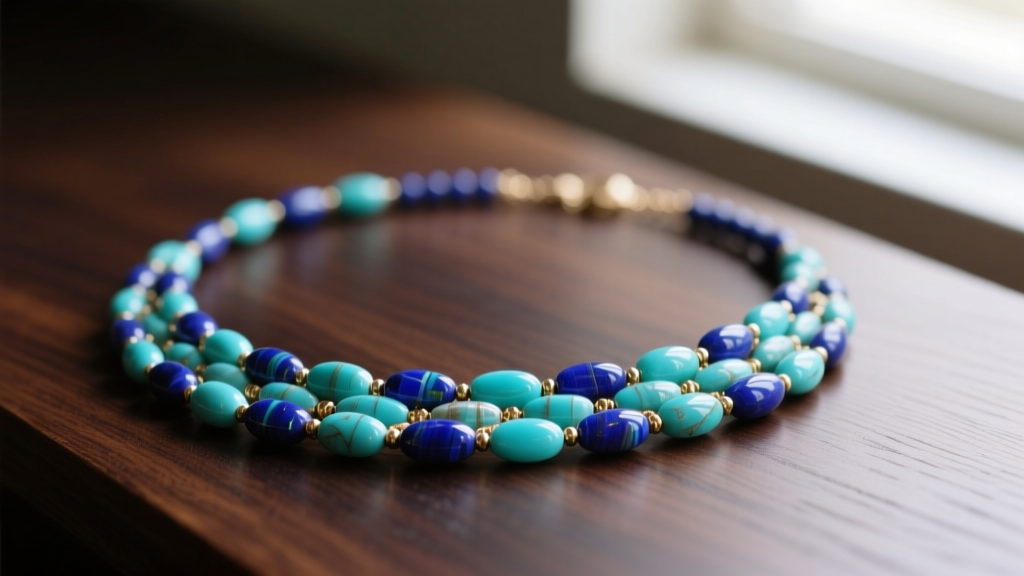
Stepping into the world of gemstone jewelry can feel overwhelming. Between varying stone grades, complex stringing materials, and a market flooded with dyed imitations, finding a high-quality piece requires a bit of insider knowledge. If you are looking to invest in your first genuine semi precious beads necklace, this beginner-friendly explainer will walk you through the exact metrics jewelers use to evaluate quality, durability, and authenticity.
What Does 'Semi-Precious' Actually Mean?
Before diving into buying guides, it is crucial to understand the terminology. The term 'semi-precious' is largely considered a commercial misnomer by modern gemologists. According to the Gemological Institute of America (GIA), the distinction between 'precious' (diamond, ruby, sapphire, emerald) and 'semi-precious' (everything else) is an outdated Victorian marketing construct.
In reality, a high-grade jadeite or tanzanite bead can be far rarer and more valuable than a low-grade diamond. When shopping for a semi precious beads necklace, you are essentially looking at a vast spectrum of mineral and organic beads—including amethyst, lapis lazuli, turquoise, rose quartz, and garnet. The value is determined by the stone's color saturation, clarity, cut uniformity, and origin, rather than an arbitrary 'semi-precious' label.
The Anatomy of a Quality Beaded Necklace
A beautiful stone is only as good as the material holding it together. The stringing medium dictates the drape, durability, and lifespan of your necklace. Here are the three industry-standard stringing materials you should look for:
- Multi-Strand Beading Wire: For heavy or sharp-edged beads (like faceted garnet or quartz), look for 49-strand stainless steel wire coated in nylon. The Soft Flex Company recommends a .018-inch or .019-inch diameter for most medium-to-large gemstone beads. This provides a supple drape while resisting kinking.
- Griffin Silk Cord: For softer, high-end stones like turquoise or lapis lazuli, traditional knotting on 100% silk cord (typically Size 2 or Size 3) is preferred. Silk is gentle on the bead holes and allows the necklace to drape fluidly against the collarbone.
- Waxed Linen or Nylon: Often used in rustic or bohemian designs, heavy-duty waxed nylon (like C-Lon) is excellent for macramé-style bead wrapping, though it lacks the elegant drape of silk or coated wire.
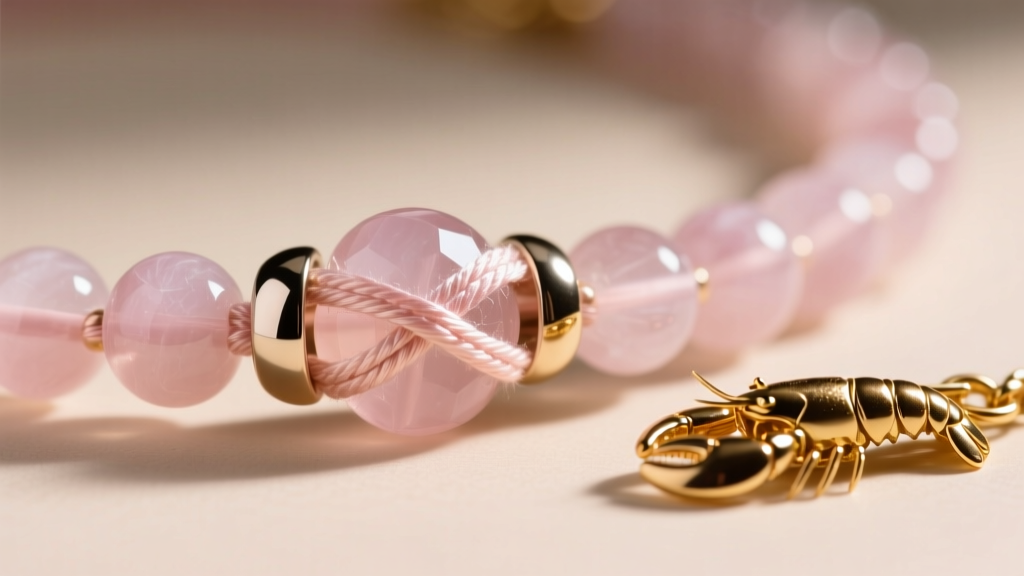
Pro Tip: Always inspect the 'findings' (clasps and crimps). A quality semi precious beads necklace will use a solid lobster clasp or a heavy-duty toggle, secured by a metal crimp cover that hides the crushed wire. Avoid necklaces where the raw wire is visibly pinched and exposed near the clasp, as this leads to premature fraying.
Spotting Fakes: Glass, Resin, and Dye
The most common pitfall for beginners is purchasing dyed howlite or magnesite masquerading as turquoise, or green glass sold as jade. Here is a practical framework for authenticating your beads:
The Acetone Test
Many low-grade stones are heavily dyed to mimic premium colors. Take a cotton swab dipped in pure acetone (nail polish remover) and rub it firmly against a single bead in an inconspicuous area. If the swab picks up blue or green pigment, the stone is dyed. Genuine turquoise or lapis lazuli will not bleed color onto the swab.
The Thermal Conductivity Test
Gemstones are excellent thermal conductors, while glass and plastic are insulators. Press the bead against your cheek or the inside of your wrist. Real stone will feel noticeably cool to the touch and will take several seconds to warm up to your body temperature. Glass or resin beads will feel room-temperature or warm almost instantly.
Visual Inclusion Analysis
Use a 10x jeweler's loupe to examine the bead's surface. Natural stones will feature internal fractures, mineral pockets, or color banding. If you see perfectly uniform color, or tiny, perfectly spherical air bubbles trapped inside the bead, you are likely looking at molded glass or poured resin.
Durability Guide: Mohs Hardness Scale for Beads
Not all beads can withstand daily wear. The Mohs Hardness Scale measures a mineral's resistance to scratching. When choosing a semi precious beads necklace, you must match the stone's hardness to your lifestyle.
| Gemstone | Mohs Hardness | Porosity & Sensitivity | Best Use Case |
|---|---|---|---|
| Amethyst (Quartz) | 7.0 | Low porosity; fades in prolonged UV light | Everyday wear, safe for occasional water exposure |
| Rose Quartz | 7.0 | Low porosity; can fracture if dropped | Everyday wear, keep away from harsh impacts |
| Jade (Nephrite) | 6.0 - 6.5 | Extremely tough (interlocking fibers) | High-impact daily wear, highly durable |
| Lapis Lazuli | 5.0 - 6.0 | Porous; sensitive to acids and hot water | Occasional wear, strictly dry-clean only |
| Turquoise | 5.0 - 6.0 | Highly porous; absorbs oils and cosmetics | Occasional wear, put on after applying perfume |
Always apply your perfumes, lotions, and hairsprays before putting on a porous stone necklace. Turquoise and lapis lazuli can permanently absorb cosmetic chemicals, leading to dull, discolored beads over time.
The Importance of Knotting and Spacing
If you are investing in premium stones like high-grade lapis lazuli, natural turquoise, or jade, look for a necklace that features hand-knotting between each bead. Knotting serves two critical purposes:
- Abrasion Prevention: Gemstones have varying hardness levels. If a harder bead constantly rubs against a softer bead, it will slowly drill into the softer stone, enlarging the drill hole and degrading the bead's value. Knots act as a physical buffer.
- Security: If a silk-strung necklace snaps, the knots ensure you only lose one bead rather than watching the entire strand scatter across the floor.
For beaded necklaces strung on coated steel wire, knotting is impossible. Instead, look for 'spacers'—tiny metal or seed beads placed between the main gemstones to prevent bead-on-bead friction.
Styling Your Beaded Necklace for Everyday Wear
Styling a semi precious beads necklace in 2026 is all about balancing organic textures with refined silhouettes. Here are three foolproof styling frameworks:
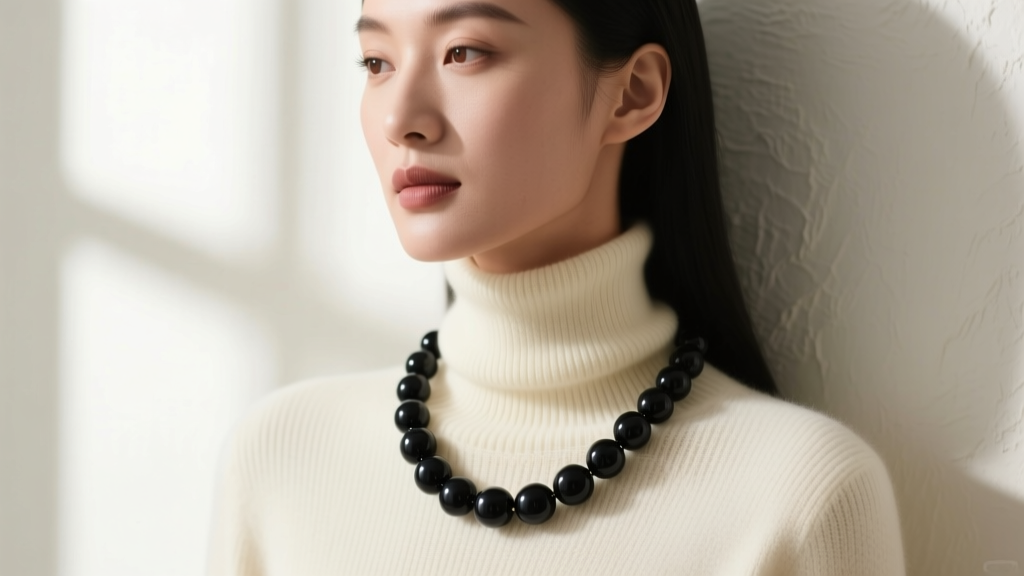
- The Opera Length Layer: A 32-inch matte onyx or sodalite bead necklace worn over a cream cashmere turtleneck creates a striking, elongating vertical line. The matte finish of the stone contrasts beautifully with the soft knit of the sweater.
- The Choker Stack: For a modern edge, pair a 16-inch turquoise bead choker with a delicate 18-inch gold chain featuring a small diamond or pearl pendant. The mix of organic stone and refined metal bridges the gap between casual and formal wear.
- The Monochromatic Gradient: Look for necklaces that feature a gradient of a single stone family—such as pale lavender transitioning to deep purple amethyst. These statement pieces should be worn alone over a simple, solid-colored blouse to let the natural color zoning of the stones take center stage.
By understanding the stringing materials, verifying authenticity, and respecting the Mohs hardness scale, you can confidently select a semi precious beads necklace that is not only visually stunning but built to last a lifetime.


