How to Restore and Repair a Vintage Pool of Light Necklace
Learn how to troubleshoot, clean, and repair a vintage pool of light necklace. Fix tarnished wire wraps and restore cloudy rock crystal quartz spheres.

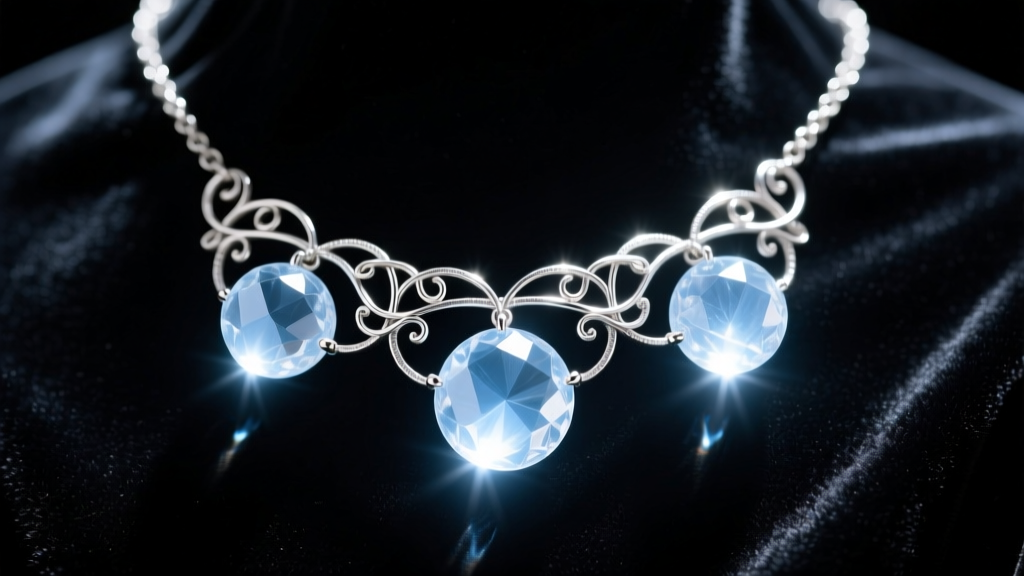
The Anatomy and Optical Physics of a Pool of Light Necklace
The pool of light necklace is a masterclass in lapidary optics and Edwardian-era craftsmanship. Originating in the late 19th and early 20th centuries, these necklaces feature perfectly spherical, highly polished rock crystal quartz beads encased in a delicate silver wire wrap. The term "pool of light" refers to the optical illusion created when light enters the quartz sphere, undergoes total internal reflection, and bounces back to the viewer's eye, making the stone appear as though it is glowing from within.
However, owning and maintaining a vintage pool of light necklace comes with a unique set of structural and aesthetic challenges. Because the optical effect relies entirely on the pristine condition of the quartz surface and the precise tension of the silver wire, any degradation—whether from tarnish, micro-scratches, or stringing failure—immediately destroys the illusion. According to the Gemological Institute of America (GIA), rock crystal quartz has a Mohs hardness of 7, making it durable but still susceptible to chipping if the silver wire (Mohs 2.5) is wrapped with improper tension or if the beads knock against one another.
Troubleshooting Cloudy Quartz Spheres
The most common complaint among collectors is that their quartz spheres have lost their signature glow, appearing cloudy or milky. Before assuming the stone itself has degraded, you must troubleshoot the environmental and structural factors causing the optical failure.
1. Surface Contamination and Oil Buildup
Quartz is highly oleophilic, meaning it attracts and holds onto skin oils, lotions, and sebum. A microscopic layer of oil on the back or sides of the sphere will alter the refractive index at the surface boundary, causing light to leak out of the sides rather than reflecting forward. To resolve this, use a mild, ammonia-free dish soap and a baby-soft toothbrush. Gently brush the crevices where the silver wire meets the quartz. Never use ultrasonic cleaners on vintage pool of light beads; many antique quartz spheres contain microscopic liquid inclusions or internal stress fractures that can shatter under high-frequency vibrations.
2. Micro-Abrasions from Wire Friction
If cleaning does not restore the glow, inspect the back of the sphere under a 10x jeweler's loupe. Over decades of wear, the silver wire can shift slightly, grinding against the quartz and creating a frosted, micro-abraded patch. Because the "pool of light" effect requires a perfectly smooth, mirror-like polish on the back hemisphere to act as a convex mirror, any frosting will scatter the light. Unfortunately, this cannot be fixed at home. The wire wrap must be carefully unwound by a master jeweler, the sphere re-polished on a lapidary wheel using cerium oxide, and the wire re-tensioned.
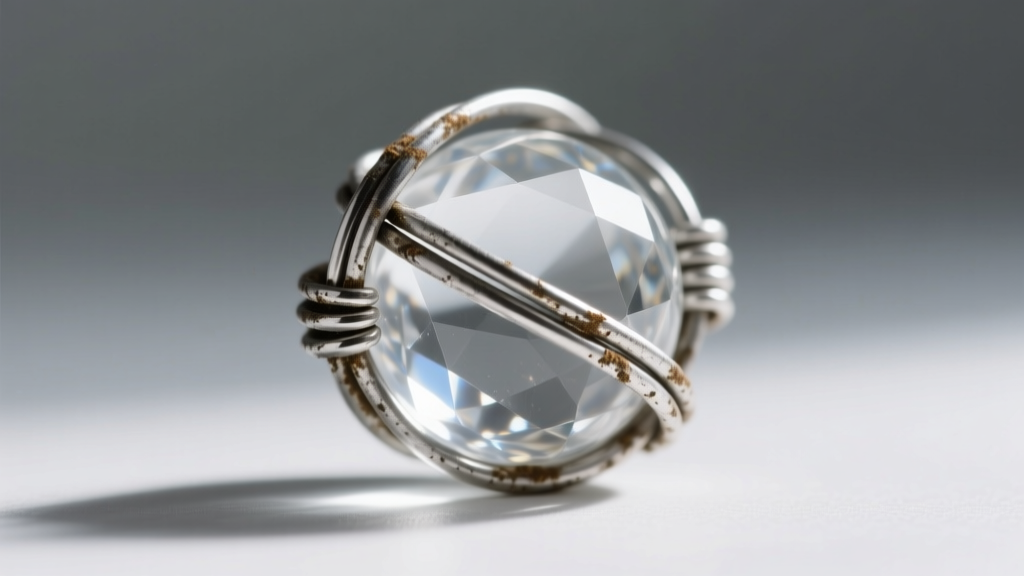
Addressing Silver Tarnish Without Damaging the Quartz
The silver wire used in antique pool of light necklaces is typically sterling silver or coin silver, both of which are highly prone to sulfide tarnishing. The challenge lies in removing the black silver sulfide layer without scratching the adjacent quartz or stripping the intentional patina from the wire crevices, which provides visual depth.
- Avoid Silver Dip Solutions: Chemical silver dips (like Tarn-X) contain thiourea and hydrochloric acid. These harsh chemicals can seep into the microscopic gaps between the wire and the quartz, leaving a white, powdery residue that is nearly impossible to extract, permanently clouding the stone.
- The Aluminum Foil Method: For heavy tarnish, line a glass bowl with aluminum foil, add boiling water, a tablespoon of baking soda, and a pinch of salt. Submerge the necklace for exactly 60 to 90 seconds. The electrochemical reaction transfers the sulfur from the silver to the aluminum. Rinse immediately in distilled water and pat dry with a microfiber cloth.
- Precision Polishing: For localized tarnish, use a silver polishing cloth treated with jeweler's rouge. Fold the edge of the cloth to slip beneath the wire wraps, polishing the silver without dragging abrasive compounds across the quartz surface.
Structural Failures: Restringing Heavy Quartz Spheres
Rock crystal quartz is dense, with a specific gravity of 2.65. A standard 10mm quartz sphere weighs approximately 1.4 grams. A 30-inch Edwardian rope necklace featuring 35 spheres places nearly 50 grams of dynamic tensile stress on the stringing material, compounded by the sharp, unpolished edges of the bead holes. Original pieces were often strung on silk cord or thin silver wire, both of which degrade, stretch, or snap over time.
Choosing the Right Stringing Material
When restringing a pool of light necklace, you must balance flexibility (so the necklace drapes elegantly) with sheer tensile strength. Below is a decision matrix for modern restringing materials.
| Material | Diameter / Gauge | Tensile Strength | Pros & Cons for Quartz Spheres |
|---|---|---|---|
| French Silk Cord | Size F (0.40mm) | Low | Pros: Historically accurate, beautiful drape. Cons: Degrades from sweat, easily sliced by quartz hole edges. |
| Nylon Beading Thread (e.g., Silamide) | 0.30mm | Medium | Pros: Resists moisture, better abrasion resistance than silk. Cons: Can stretch over time under heavy quartz weight. |
| 49-Strand Micro Stainless Steel (Nylon Coated) | 0.015" (0.38mm) | Very High (40+ lbs) | Pros: Impervious to sharp quartz holes, zero stretch, excellent drape. Cons: Requires crimp beads and wire guardians at the clasp. |
For a durable, modern repair that respects the drape of the original piece, 49-strand micro stainless steel beading wire (such as Beadalon or Soft Flex in 0.015" diameter) is the industry standard. Always use sterling silver wire guardians (French wire) at the clasp loop to prevent the steel cable from sawing through the antique silver jump rings.

Authentication: Vintage Quartz vs. Glass Reproductions
Because the pool of light necklace has been widely reproduced since the 1970s, troubleshooting often begins with authentication. Many modern replicas use molded glass instead of carved rock crystal. According to Lang Antiques' Antique Jewelry University, Edwardian and Art Deco pieces exhibit specific construction hallmarks that modern mass-produced replicas lack.
The Thermal and Optical Tests
Glass is singly refractive (SR) and an amorphous solid, meaning it lacks a crystalline structure. Rock crystal quartz is doubly refractive (DR) and crystalline. While testing for double refraction on a perfectly round sphere is difficult without specialized lab equipment, you can perform a thermal conductivity test. Quartz is a highly effective thermal conductor compared to glass. When you press a genuine quartz sphere against your lower lip or the inside of your wrist, it will feel distinctly, almost shockingly, cold to the touch and will take longer to warm to your body temperature than a glass bead of the exact same size.
Inspecting the Wire Wrap Tension
On a genuine antique pool of light necklace, the silver wire is applied by hand. You will notice slight, organic variations in the tension and spacing of the wire wraps. The wire is usually anchored at the top and bottom of the sphere with a tiny, hand-soldered jump ring or a tightly coiled finish. In contrast, modern cast-metal replicas often feature a rigid, molded "cage" that simply snaps together, or machine-wound wire that is perfectly uniform but lacks the structural integrity to hold the sphere securely when subjected to the dynamic movement of being worn.
When to Seek Professional Lapidary Intervention
While cleaning tarnish and restringing the necklace are manageable tasks for an advanced hobbyist, certain failures require a professional. If a quartz sphere has chipped near the drill hole, or if the silver wire wrap has suffered from metal fatigue and snapped at the solder joints, do not attempt a DIY fix. Super glue and wire pliers will only introduce adhesives that cloud the quartz and scratch the silver. A master jeweler with lapidary experience can carefully unspool the antique wire, re-polish the chipped edge, and re-solder the silver joints using a laser welder, which prevents the heat damage that traditional torch soldering would inflict on the adjacent quartz crystal.


