The Ultimate Beginner Guide to Styling a Silver Skull Necklace
Discover how to choose, style, and care for your first silver skull necklace. Learn about silver grades, chain types, and outfit pairings in this guide.


The skull motif has transcended its rebellious, subculture roots to become a versatile staple in modern menswear and androgynous fashion. Whether you are drawn to the memento mori philosophy or simply appreciate the edgy aesthetic, a silver skull necklace is an excellent entry point into statement jewelry. However, buying your first piece involves more than just picking a design you like. From understanding metal purity to matching chain weights and avoiding catastrophic cleaning mistakes, this beginner-friendly explainer will equip you with the technical knowledge needed to make a smart, lasting purchase.
Decoding Silver Grades: What Are You Actually Buying?
When shopping for a silver skull necklace, the term "silver" is often used loosely. To ensure you are getting a durable, high-quality piece, you must understand the metallurgical differences between common silver alloys. According to the Federal Trade Commission Jewelry Guides, specific hallmarks are legally required to denote silver purity in the United States.
- 925 Sterling Silver: Composed of 92.5% pure silver and 7.5% copper or other alloys. This is the industry standard for skull pendants because the added copper provides the tensile strength needed to hold intricate details like teeth, cracks, and eye sockets without bending.
- 999 Fine Silver: 99.9% pure silver. While highly tarnish-resistant, it is far too soft for detailed skull casting. If a jeweler claims a highly detailed skull is fine silver, be skeptical—it will easily dent and lose its shape.
- Argentium Silver (935 or 960): A modern alloy where some of the copper is replaced with germanium. It offers superior tarnish resistance and a brighter white luster, making it a premium choice for low-maintenance wearers.
| Silver Type | Purity | Tarnish Resistance | Best Application |
|---|---|---|---|
| 925 Sterling | 92.5% | Moderate | Intricate skull details, everyday wear |
| 999 Fine | 99.9% | High | Soft, simple casts (rare for skulls) |
| Argentium 935 | 93.5% | Very High | Low-maintenance, bright silver skulls |
Selecting the Right Chain and Skull Proportions
A common beginner mistake is pairing a heavy, oversized skull pendant with a thin, delicate chain. This not only looks visually unbalanced but can also cause the chain to snap or the bail (the loop connecting the skull to the chain) to warp over time. The GIA Gem Encyclopedia notes that proper weight distribution is critical for the longevity of precious metal jewelry.
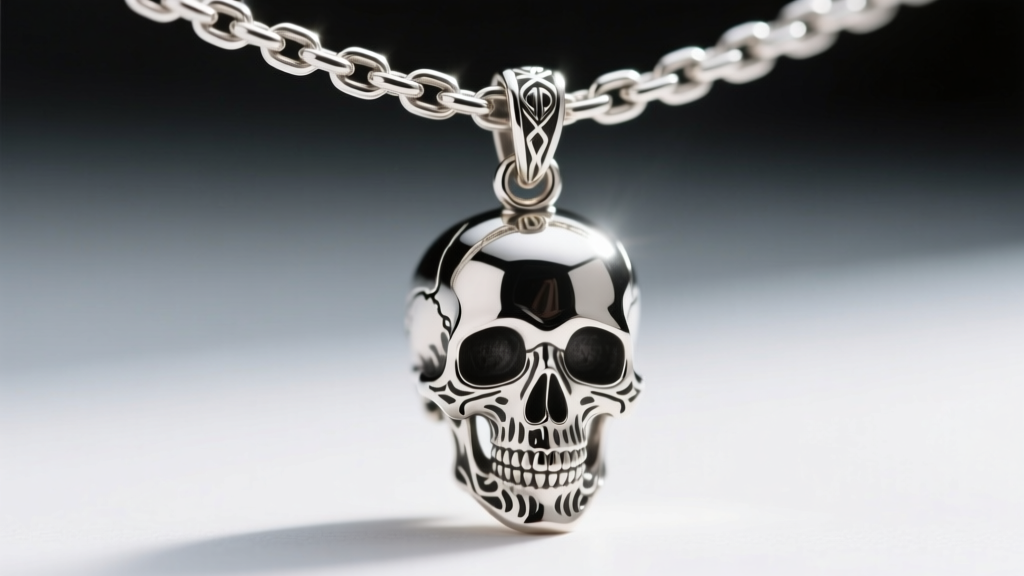
Chain Pairing Guidelines by Skull Weight
When evaluating chains, consider both the visual aesthetic and the structural integrity required to support your pendant.
- Lightweight Skulls (5g - 15g): Best paired with a 2mm to 3mm Cable or Box Chain. These chains offer a classic, minimalist backdrop that lets the skull pendant take center stage.
- Medium Skulls (15g - 30g): Require a 3mm to 5mm Figaro or Rope Chain. The Figaro’s alternating link pattern adds a vintage, textured vibe that complements the macabre nature of a skull, while the rope chain's twisted links provide excellent tensile strength.
- Heavy Skulls (30g+): Demand a 5mm+ Cuban Link or Wheat Chain. Heavy skulls exert significant downward force; a thick Cuban link distributes this weight evenly across the neck and prevents the clasp from being pulled forward.
How to Style a Skull Pendant for Everyday Wear
Integrating a skull necklace into your daily wardrobe doesn't require a complete gothic or biker overhaul. The key to modern styling is contrast and intentionality. Treat the skull as a focal point that grounds an otherwise simple outfit.
Mastering the Neckline
The neckline of your shirt dictates the ideal chain length. For a standard crewneck t-shirt, a 20-inch to 22-inch chain allows the skull to rest just below the collarbone, creating a clean visual break. If you prefer V-necks or unbuttoned henleys, opt for a 24-inch chain so the pendant sits in the center of the exposed chest, elongating the torso.
Stylist Tip: If you want to layer your silver skull necklace with other chains, follow the "Rule of Thirds." Keep the skull on a 22-inch chain, layer a simple 18-inch silver herringbone chain above it, and add a 26-inch beaded chain below. This prevents the chains from tangling and creates a curated, tiered look.
Essential Care and the "Oxidized" Warning
Proper maintenance is where most beginners fail. Silver naturally reacts with sulfur in the air to form silver sulfide (tarnish). While a simple polishing cloth is usually the answer, skull necklaces require a specialized approach due to a technique called oxidation.
Many high-quality skull pendants are intentionally treated with liver of sulfur by the jeweler to darken the recessed areas (like the eye sockets and nasal cavity). This "antiqued" or "oxidized" finish provides crucial three-dimensional contrast.
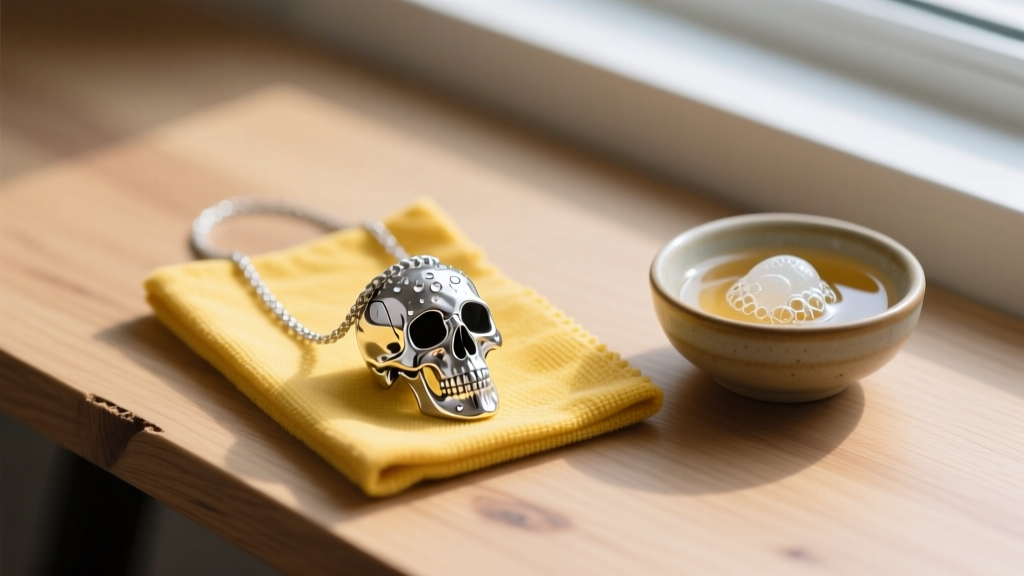
What NEVER to Do
Never use chemical silver dips, ultrasonic cleaners, or the popular internet hack of boiling silver in aluminum foil and baking soda. These methods strip away tarnish indiscriminately. If you use them on an oxidized skull necklace, you will remove the intentional black detailing, leaving you with a flat, bright white, and visually boring piece of metal.
The Correct Cleaning Protocol
- Use a treated jeweler's cloth (such as a Sunshine cloth) which contains micro-abrasives and polishing compounds.
- Gently rub only the raised, high-polish areas of the skull (the cranium, cheekbones, and teeth).
- Avoid pressing the cloth deep into the crevices to preserve the dark oxidized contrast.
- Store the necklace in an anti-tarnish ziplock bag with a silica gel packet to control humidity.
Frequently Asked Questions
Is a silver skull necklace appropriate for a professional environment?
Yes, provided you scale it appropriately. A small, subtle sterling silver skull (under 15mm) worn on a thin chain tucked slightly under a collared shirt or a fine-knit sweater adds a touch of personal edge without violating corporate dress codes.
Why does my silver skull turn my skin green?
The green discoloration is not a sign of fake silver, but rather a chemical reaction between the copper in the 925 sterling alloy and the acids and salts in your sweat. Keeping the back of the pendant polished and wiping it down after wearing it in hot weather will prevent this reaction.
Should I choose a polished or matte finish?
For beginners, a dual-finish (oxidized recesses with polished high points) is the most versatile. It hides daily wear-and-tear scratches better than a mirror polish and provides the best visual depth for the skull's anatomy.


