Krista Bow Necklace Buying Guide: What to Look For
Discover what to look for when buying a Krista bow necklace. Learn about metal grades, pavé quality, chain types, and how to spot authentic craftsmanship.

The Anatomy of the Perfect Krista Bow Necklace
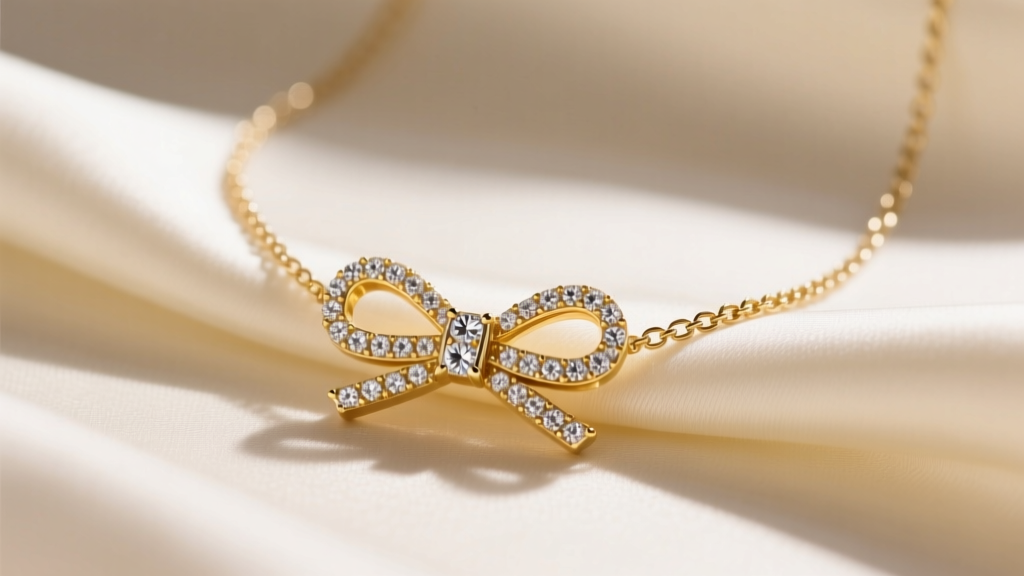
The 'Krista' bow necklace has cemented itself as a hallmark of the modern coquette-meets-fine-jewelry aesthetic. Far from a fleeting fast-fashion fad, the authentic Krista silhouette represents a masterclass in delicate metallurgy and precise gemstone setting. Characterized by an asymmetrical or perfectly tailored ribbon motif, this specific style bridges the gap between playful nostalgia and heirloom-quality craftsmanship. As we move through 2026, the demand for these intricate pendants has surged, bringing with it a flood of mass-market imitations. Knowing how to evaluate the structural integrity, metal purity, and gemstone quality of a Krista bow necklace is essential for making a sound investment.
When evaluating the anatomy of this specific pendant, proportions are everything. A true Krista-style bow typically measures between 14mm and 18mm in width, with a drop length of roughly 12mm to 15mm. This specific scale ensures the piece is visible enough to serve as a focal point over a silk blouse, yet delicate enough to layer with longer 20-inch or 24-inch chains. The bail—the loop that connects the bow to the chain—should be seamlessly integrated or hidden behind the top 'knot' of the bow to maintain the illusion of a floating ribbon.
Metal Purity and Finish: 14k vs. 18k Gold
One of the most critical decisions when purchasing a high-end bow necklace is selecting the right gold alloy. While 18k gold (75% pure gold) offers a richer, deeper yellow hue, it is inherently softer. For a motif with thin, protruding 'tails' and delicate loops, 18k gold is highly susceptible to bending or warping if snagged on clothing.
Conversely, 14k gold (58.5% pure gold) is the industry standard for intricate, daily-wear pendants. The higher percentage of alloy metals—such as copper, silver, and zinc—provides the necessary tensile strength to hold the bow's shape over decades of wear. If you prefer white gold, ensure the piece features a thick rhodium plating to mask the natural yellowish tint of the white gold alloy, but be prepared to have it re-plated every 12 to 18 months to maintain that crisp, silvery finish.
Evaluating the Pavé and Gemstone Quality
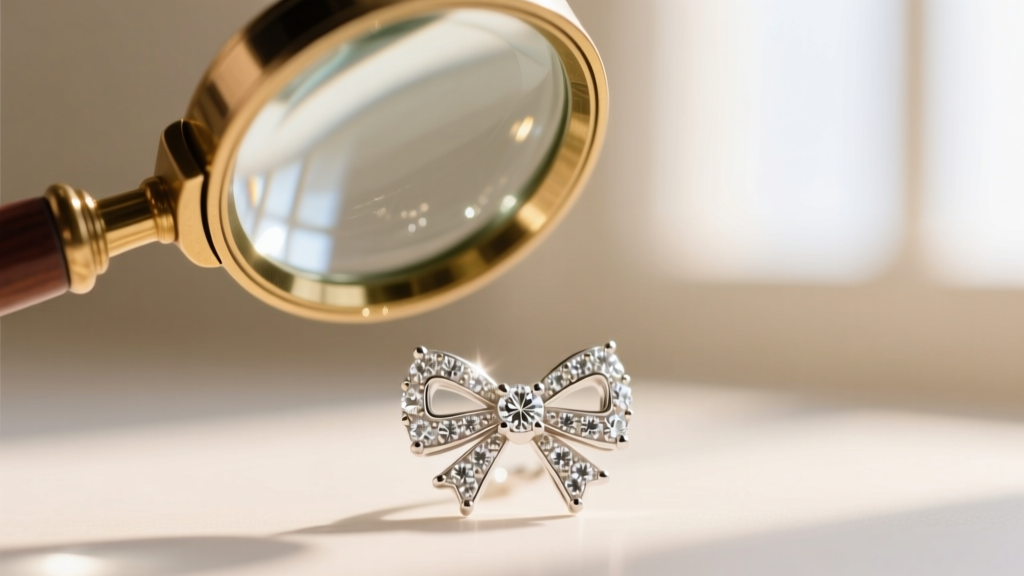
Many Krista bow necklaces feature micro-pavé diamonds across the surface of the ribbon. The difference between a breathtaking piece and a cloudy, lifeless one lies entirely in the quality of the melee (small diamonds) and the setting technique.
The 4Cs for Bow Pendant Melee
According to the Gemological Institute of America (GIA), diamond melee is often single-cut (fewer facets) rather than full-cut. For a bow necklace, you want to seek out full-cut melee (57 or 58 facets) to maximize light return. Furthermore, look for stones in the G-H color range with VS (Very Slightly Included) clarity. Lower grades (like I1 or J-K) will appear cloudy or yellowish when set in tight micro-pavé clusters, completely ruining the 'liquid light' effect the bow is meant to emulate.
Beware of bead-set simulants. High-quality pieces use tiny beads of the actual gold alloy pushed over the girdle of the diamond to hold it in place. Cheap knockoffs often use industrial adhesives or 'mushroomed' metal that eventually wears down, causing stones to fall out.
Chain Selection: Supporting the Silhouette
The chain is just as important as the pendant. A heavy chain will overpower the delicate bow, while a chain that is too thin will snap under the pendulum effect of daily movement.
- Box Chain (0.9mm - 1.1mm): The absolute best choice for a Krista bow. The square, interlocking links provide exceptional tensile strength and resist kinking, allowing the bow to lay perfectly flat against the collarbone.
- Cable Chain (1.0mm): A classic choice that offers a more traditional, vintage look. However, the round links are more prone to twisting, which can cause the pendant to flip backward.
- Rolo Chain (1.2mm): Too heavy for most authentic Krista bows. The thick, round links distract from the intricate pavé work on the pendant.
Clasp Mechanics and Security
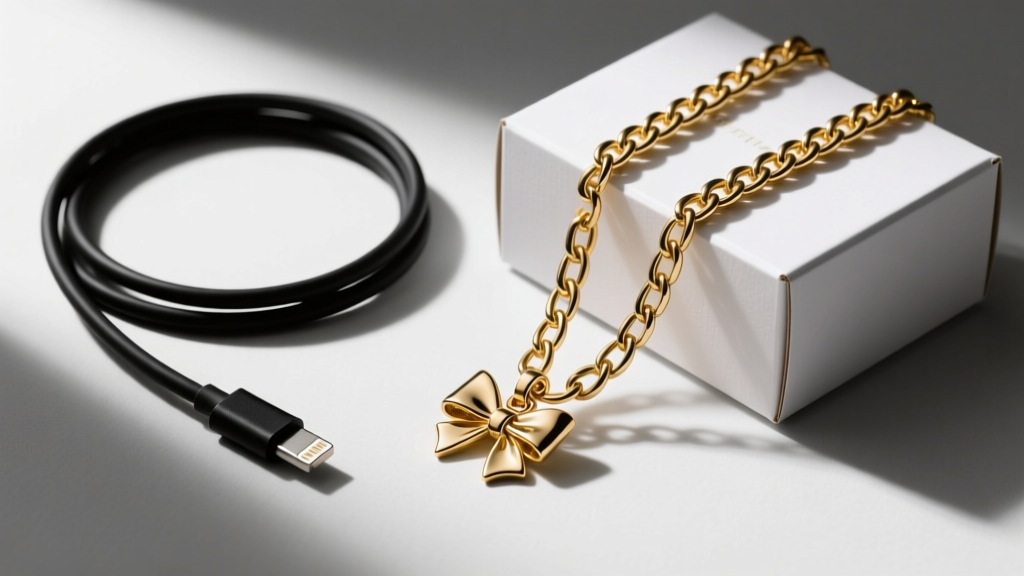
Never accept a spring-ring clasp on a fine jewelry bow necklace. Spring rings are notoriously difficult to operate with one hand and feature a tiny internal spring that frequently fails. Insist on a 5mm or 6mm lobster clasp, which offers a secure, self-closing mechanism. For added versatility, look for a chain that includes a 2-inch extender with a small gold bead at the very end; this prevents the clasp from sliding around to the front of your neck and allows you to adjust the bow's placement for different necklines.
Pricing Tiers and Authenticity Markers
Understanding the market pricing will help you avoid overpriced fashion jewelry masquerading as fine jewelry, as well as suspiciously cheap 'deals' that indicate hollow construction or fake stones.
| Tier | Price Range | Materials & Construction | Verdict |
|---|---|---|---|
| Fashion / Replica | $40 - $150 | Gold-plated brass, cubic zirconia, glue-set stones. | Avoid for longevity; plating will wear off. |
| Demi-Fine | $250 - $600 | Gold vermeil (thick plating over sterling silver), lab-grown diamond melee. | Great for trend-followers; requires careful maintenance. |
| Fine Jewelry (Authentic) | $800 - $2,500+ | Solid 14k/18k gold, natural or premium lab-grown diamonds, bead-set pavé. | Investment grade; heirloom durability and resale value. |
Care and Maintenance for Delicate Motifs
The intricate loops and tight pavé settings of a Krista bow necklace require specific care. Never use an ultrasonic cleaner on a micro-pavé bow necklace. The high-frequency vibrations can easily shake loose the tiny diamonds held by microscopic metal beads. Instead, clean your piece weekly using a soft-bristled baby toothbrush, warm water, and a drop of mild dish soap. Gently brush the underside of the bow—where skin oils and lotion accumulate—to restore the diamonds' brilliance. Always store the necklace flat or hanging; tossing it into a jewelry box will inevitably cause the delicate chain to tangle through the bow's loops, risking structural damage when you try to pull it apart.


