A Beginner's Guide to Buying a Three Diamond Necklace
Discover how to choose the perfect three diamond necklace. Learn about carat weights, clarity grades, chain styles, and pricing in this beginner guide.


A three diamond necklace—often referred to as a trilogy or three-stone pendant—is one of the most enduring and versatile designs in fine jewelry. Traditionally symbolizing a couple's past, present, and future, this design has transcended its romantic origins to become a staple of everyday luxury. Whether you are purchasing your first fine jewelry piece or looking for a meaningful gift, navigating the nuances of diamond quality, chain mechanics, and pricing can feel overwhelming.
This beginner-friendly explainer breaks down the exact specifications you need to know to make a confident, informed purchase. We will cover diamond grading for smaller stones, the structural integrity of chain links, and realistic pricing tiers so you can find a piece that offers both exceptional beauty and lasting value.
Understanding Stone Arrangement and Settings
The visual impact of a three diamond necklace is largely dictated by how the stones are arranged and secured. Before evaluating diamond quality, you must decide on the structural design of the pendant itself.
Graduated vs. Equal Weight
- Graduated Arrangement: The center stone is noticeably larger than the two side stones (e.g., a 0.20ct center flanked by two 0.10ct stones). This creates a focal point and mimics the look of a classic solitaire with added sparkle.
- Equal Weight Arrangement: All three diamonds are identical in size (e.g., three 0.15ct stones). This offers a more modern, symmetrical aesthetic and provides a continuous line of brilliance across the collarbone.
Prong Configurations
For small diamonds, jewelers typically use either three-prong or four-prong settings. Three-prong settings expose more of the diamond's surface area, maximizing light return and making small stones appear slightly larger. However, four-prong settings offer superior security. If you plan to wear your necklace daily, especially during active routines, a four-prong setting is highly recommended to prevent stone loss over time.
Decoding Diamond Quality for Small Stones
One of the most common mistakes beginners make is overpaying for high clarity and color grades in small diamonds. The GIA Diamond Buying Guide emphasizes that the 4Cs (Cut, Color, Clarity, Carat) scale differently for melee and small accent stones compared to large center stones.
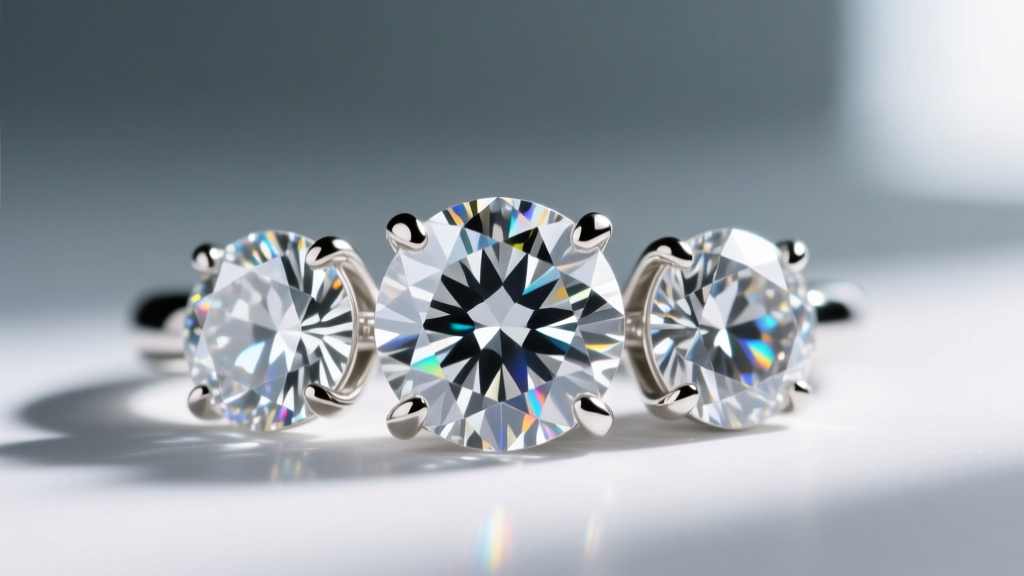
In diamonds under 0.20 carats, inclusions are incredibly difficult to see without magnification, and subtle color differences are masked by the setting and light reflection. Therefore, prioritizing an Excellent or Very Good cut is paramount, as cut quality is the sole driver of a diamond's sparkle.
Recommended Grades by Total Carat Weight (TCW)
| Total Carat Weight (TCW) | Ideal Clarity Grade | Ideal Color Grade (White Gold/Platinum) | Ideal Color Grade (Yellow Gold) |
|---|---|---|---|
| 0.15 - 0.30 ct | SI1 - SI2 | G - H | I - J |
| 0.35 - 0.60 ct | VS2 - SI1 | F - G | H - I |
| 0.75 - 1.00+ ct | VS1 - VS2 | E - F | G - H |
By targeting these specific grades, you avoid the "flawless premium"—the inflated price charged for VVS or Flawless clarity in stones where those characteristics are entirely invisible to the naked eye.
Chain Selection: Gauge, Style, and Clasps
The pendant is only half the equation; the chain is the structural foundation. A heavy three diamond pendant on a flimsy chain is a recipe for a lost piece of jewelry. When evaluating chains, you must consider gauge thickness, link style, and clasp mechanics.
Gauge and Link Styles
For pendants weighing between 1.5 and 3.0 grams (typical for a 0.50 TCW necklace in 14k gold), a chain gauge between 0.8mm and 1.2mm is ideal. Anything thinner than 0.7mm is prone to kinking and snapping under tension.
- Cable Chains: The classic choice. They are durable, easy to repair, and allow the pendant to slide freely.
- Box Chains: Composed of square links, these offer a more substantial, reflective look and are incredibly resistant to breaking, though they can sometimes catch on fine body hair.
- Rope Chains: While beautiful, the twisted links can sometimes interfere with the pendant bail, causing the necklace to sit unevenly.
The Clasp Rule
Never accept a spring-ring clasp on a fine diamond necklace. Spring rings are difficult to operate, prone to mechanical failure, and offer a weak point of entry for thieves or accidental snags. Always insist on a lobster claw clasp, which features a secure, spring-loaded locking mechanism that is vastly superior for everyday wear.
2026 Pricing Guide by Total Carat Weight
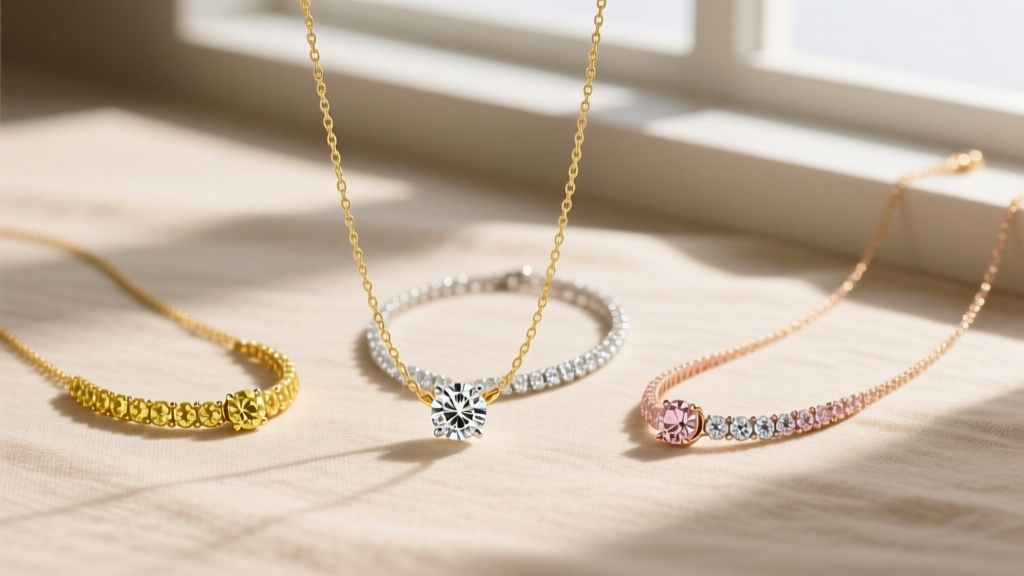
Pricing for a three diamond necklace varies wildly based on the retailer, the metal purity, and the diamond origin (natural vs. lab-grown). The table below outlines realistic retail price ranges for natural, earth-mined diamonds set in solid gold or platinum.
| Total Carat Weight (TCW) | 14k Gold Price Range | 18k Gold / Platinum Price Range |
|---|---|---|
| 0.25 ct (Lightweight) | $450 - $700 | $650 - $950 |
| 0.50 ct (Standard) | $900 - $1,500 | $1,300 - $2,100 |
| 0.75 ct (Substantial) | $1,800 - $2,800 | $2,400 - $3,600 |
| 1.00 ct (Luxury) | $3,000 - $4,500 | $4,000 - $6,500 |
Pro Tip: If these prices exceed your budget, consider a lab-grown diamond alternative. Lab-grown trilogy necklaces offer identical chemical and optical properties at roughly 40% to 60% less than the natural diamond prices listed above.
Layering Rules and Everyday Styling
The three diamond necklace is a masterclass in versatility. Its linear design makes it the perfect anchor piece for a layered necklace stack. To achieve a curated, professional look without tangling, follow the "Two-Inch Rule."
When layering, ensure there is at least a two-inch difference in length between each chain. For example, pair your 16-inch three diamond choker with an 18-inch delicate cable chain featuring a small solitaire, and finish with a 20-inch paperclip link chain. This staggered approach prevents the pendants from clustering together and scratching one another, while allowing each piece to catch the light independently.
Maintenance and Professional Care
Because a three diamond necklace features multiple settings, it requires slightly more maintenance than a simple solitaire. Over time, the friction of clothing and skin oils can accumulate beneath the stones, dulling their brilliance and loosening the prongs.
According to the GIA Diamond Care guidelines, the safest at-home cleaning method involves soaking the necklace in a bowl of warm water with a few drops of mild, ammonia-free dish soap for 15 minutes, followed by gentle brushing with a baby-soft toothbrush. Avoid ultrasonic cleaners for small, pave-style, or heavily included diamonds, as the high-frequency vibrations can shake loose stones from worn prongs.
Finally, schedule a professional prong check with a bench jeweler every 12 to 18 months. They will use a microscope to inspect the structural integrity of the six to twelve prongs holding your trilogy stones, ensuring your investment remains secure for a lifetime of wear.


