Essential Styles of Chains for Necklaces: Beginner Guide
Discover the essential styles of chains for necklaces. Learn about gauge sizes, metal grades, and pendant pairings in this beginner-friendly guide.

Understanding Chain Anatomy and Link Geometry
When shopping for jewelry, beginners often focus entirely on the pendant, treating the chain as an afterthought. However, the chain is the structural foundation of your necklace. Understanding the styles of chains for necklaces requires looking at link geometry, soldering techniques, and tensile strength. A chain's durability is dictated by how its links interlock and whether those links are soldered (closed with a microscopic weld) or unsoldered (simply bent shut). Unsoldered chains can pull apart under as little as two pounds of tension, while soldered, structurally sound chains can withstand significantly more stress. In this guide, we break down the core chain styles, material grades, and gauge thicknesses to help you make an informed, long-lasting purchase.
The 6 Core Styles of Chains for Necklaces
While there are dozens of novelty chain designs, 95% of fine jewelry relies on six foundational styles. Each has distinct structural properties, aesthetic profiles, and failure modes.
1. Cable Chain: The Minimalist Standard
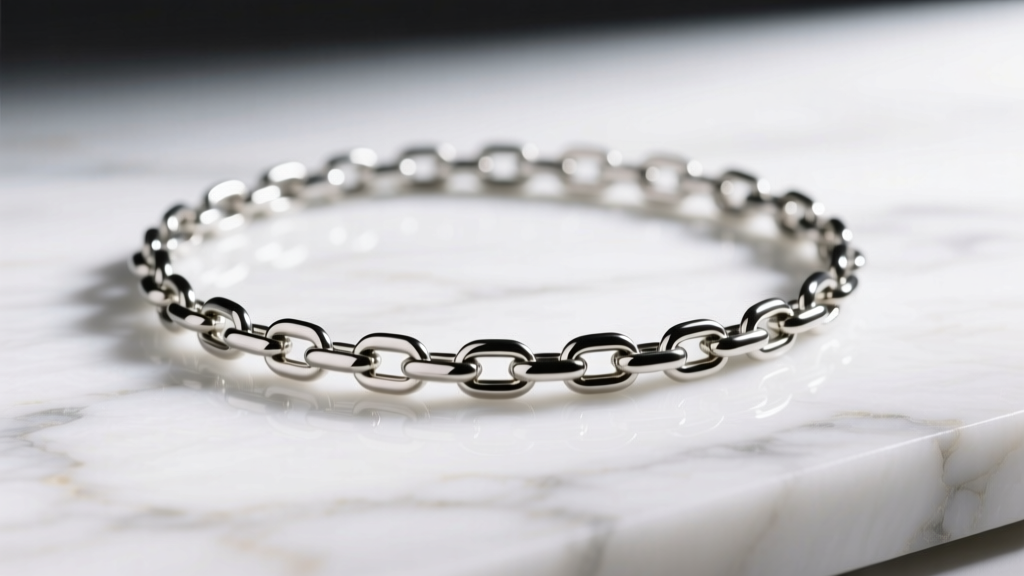
The cable chain is the most traditional and ubiquitous style, featuring uniform round or oval links connected to one another. For fine jewelry, always opt for soldered cable chains. Unsoldered cable chains (often found in cheap fashion jewelry) will easily snap if a pendant is too heavy. Cable chains are best suited for lightweight pendants (under 5 grams) and offer a delicate, minimalist aesthetic that doesn't distract from the focal piece.
2. Curb Chain: The Everyday Workhorse
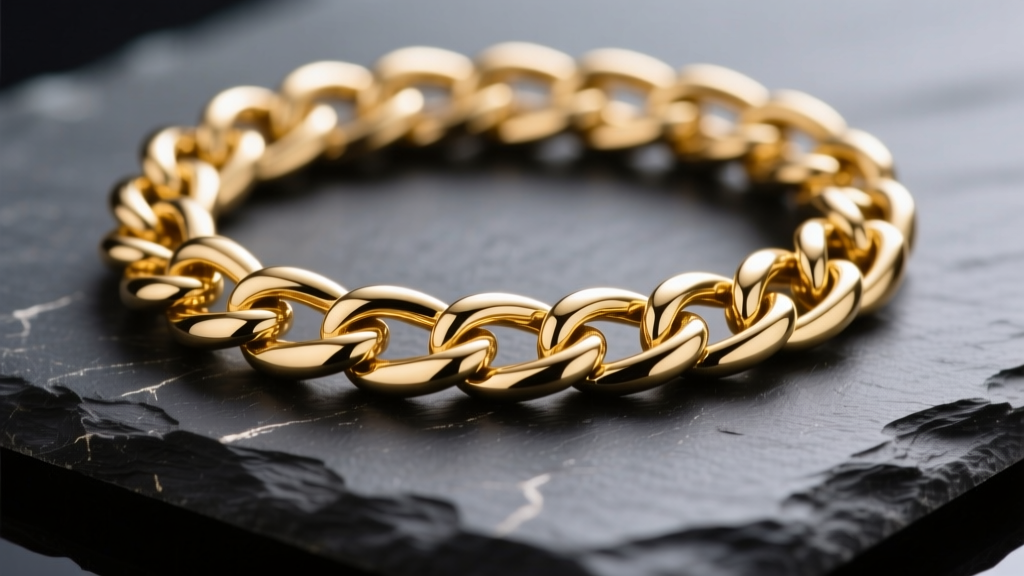
Curb chains feature links that have been flattened and twisted so they interlock tightly and lie perfectly flat against the skin. This flat geometry distributes tension evenly across the link, making curb chains exceptionally durable. They are highly resistant to kinking and stretching, making them the ultimate everyday workhorse for both men's and women's jewelry. Look for 'diamond-cut' curb chains if you want extra facets that catch the light without needing gemstones.
3. Figaro Chain: The Patterned Classic
Originating in Italy, the Figaro chain is a variation of the curb chain that features a distinct pattern—typically three short, round links followed by one elongated oval link. This alternating rhythm adds visual interest and texture. While stylish, the elongated links can occasionally catch on thick fabrics. Figaro chains are generally robust, but if a long link bends, it can distort the chain's lay-flat profile.
4. Box Chain: The Structural Powerhouse
Box chains are constructed from square, geometric links that fit seamlessly together to form a continuous, four-sided tube. Because of their rigid, interlocking architecture, box chains are incredibly strong relative to their thickness. A 1.2mm box chain can support significantly more weight than a 1.2mm cable chain. They are the premier choice for medium-to-heavy pendants and are highly resistant to snapping, though they can stretch if subjected to sudden, sharp yanking.
5. Rope Chain: The High-Sparkle Statement
Rope chains are created by twisting small metal links into a helix, mimicking the appearance of a twisted rope. This multi-dimensional structure reflects light from dozens of angles, creating immense sparkle even in plain metals. However, their complex geometry is also their Achilles' heel: rope chains are notorious for snagging fine body hair and threads. Once a rope chain snaps, the twisted links unravel, making them notoriously difficult and expensive for jewelers to repair invisibly.
6. Snake Chain: The Sleek but Fragile Option
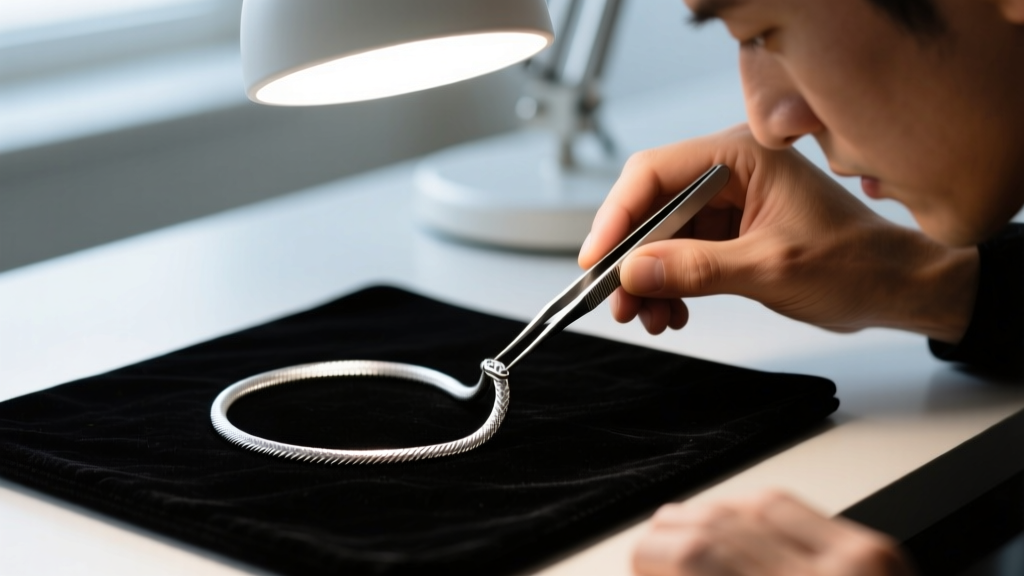
Snake chains consist of tightly joined, slightly wavy rings that form a smooth, flexible, tubular surface resembling snake skin. They offer a sleek, modern, and highly polished look. Beginner Warning: Snake chains are highly susceptible to kinking. If bent sharply or slept in, the tight bands crease and permanently ruin the chain's fluid drape. They also tend to catch fine body hair. Never hang a heavy pendant on a thin snake chain, as the weight will pull the tubular structure apart.
Gauge Thickness and Pendant Weight Matrix
Choosing the right style is only half the battle; selecting the correct gauge (thickness in millimeters) is critical for structural integrity. Use this matrix to match your chain gauge to your pendant's weight.
| Gauge (mm) | Tensile Strength | Ideal Pendant Weight | Best Chain Styles |
|---|---|---|---|
| 0.8 - 1.0mm | Low | Under 5g (Lightweight) | Cable, Snake |
| 1.2 - 2.0mm | Medium | 5g - 15g (Standard) | Box, Curb, Figaro |
| 2.5 - 4.0mm | High | 15g - 30g (Heavy) | Curb, Rope, Box |
| 5.0mm+ | Very High | 30g+ (Statement) | Curb, Rope |
Material Grades: What Actually Lasts?
The physical style of the chain must be paired with the correct metallurgical grade. According to the Gemological Institute of America (GIA), the purity of your metal directly impacts its hardness and scratch resistance.
- Sterling Silver (925): Composed of 92.5% pure silver and 7.5% copper. The copper adds necessary strength but makes the metal prone to sulfur-induced tarnishing. For low-maintenance silver chains, look for pieces with a rhodium flash plating.
- Stainless Steel (316L): Often labeled as surgical steel, 316L contains molybdenum, which provides exceptional resistance to corrosion and tarnish. It is highly rigid, hypoallergenic, and budget-friendly, but its hardness makes it nearly impossible for jewelers to solder or repair if broken.
- 14k Gold (58.3% Pure): The optimal sweet spot for everyday gold chains. The alloy mix (often zinc, copper, or silver) provides enough hardness to prevent box chains from stretching and curb chains from warping.
- 18k Gold (75% Pure): Richer in color but significantly softer. 18k gold is excellent for intricate, lightweight rope chains but is generally too soft for heavy, load-bearing box or cable chains.
Troubleshooting Common Chain Failures
Even high-quality chains experience wear and tear. Proper maintenance, as outlined by Jewelers of America, can extend the life of your jewelry by decades. Here is how to handle common issues:
Fixing a Kinked Snake Chain
If your snake chain kinks, do not pull it. Pulling will tighten the crease and snap the internal bands. Instead, lay the chain flat on a smooth glass surface. Place a soft microfiber cloth over the kink and gently roll a smooth, cylindrical object (like a glass spice jar) back and forth over the area to coax the metal bands back into horizontal alignment.
Untangling a Rope Chain
Rope chains tangle easily due to their textured surface. To untangle one without breaking the links, lay it flat and sprinkle a small amount of baby powder or talcum powder over the knot. The powder acts as a dry lubricant, reducing metal-on-metal friction. Use two straight sewing pins to gently tease the links apart from the center outward.
Upgrading Your Clasp
The clasp is usually the weakest point of any necklace. Most entry-level chains come with spring ring clasps, which are inexpensive, difficult to operate with one hand, and prone to internal spring failure. If you are attaching a valuable pendant, take your chain to a jeweler and have the spring ring replaced with a lobster claw clasp (for chains under 4mm) or a box clasp with a safety latch (for chains over 4mm).
Pro Tip: Always check the 'jump ring'—the small circular ring that connects your pendant to the chain. Ensure it is fully closed and, ideally, soldered. An open jump ring will eventually slide through the chain links or pull apart, resulting in the loss of your pendant.
Final Styling Tips for Beginners
When layering different styles of chains for necklaces, contrast is key. Pair a delicate 1.0mm cable chain with a heavier 3.0mm curb chain to create visual depth. Ensure there is at least a two-inch difference in length between layered chains (e.g., 16 inches and 18 inches) to prevent the metal links from constantly rubbing against one another, which causes premature micro-abrasions and weakening. By understanding the mechanics, materials, and geometry of your chains, you transition from simply buying jewelry to curating a resilient, lifelong collection.


