How to Make Pearl Necklace Designs: A Sourcing & Buying Guide
Master how to make pearl necklace designs with our expert sourcing guide. Learn what to look for when buying loose pearls, silk thread, and clasps.

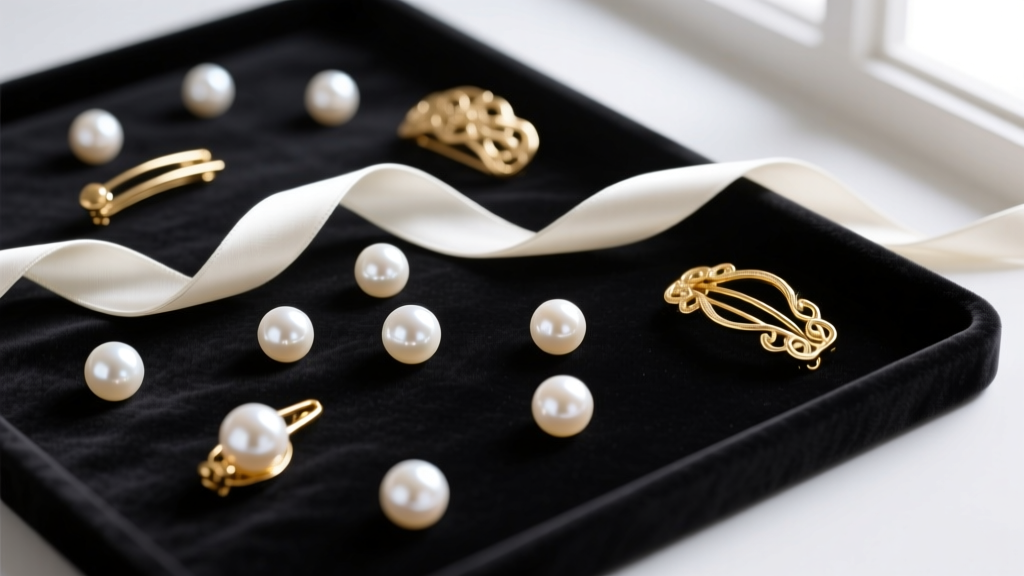
The Foundation: Sourcing Loose Pearls for Custom Designs
When learning how to make pearl necklace pieces that rival fine jewelry boutiques, the entire project hinges on the quality of your raw materials. Unlike buying a pre-strung strand, sourcing loose pearls allows you to curate the exact luster, overtone, and graduation profile of your design. However, navigating the wholesale and semi-wholesale pearl market requires a keen eye for gemological grading.
According to the Gemological Institute of America (GIA), pearl value is determined by seven factors: size, shape, color, luster, surface quality, nacre thickness, and matching. For a classic knotted necklace, you must prioritize nacre thickness and luster above all else.
Nacre Thickness and Luster Grading
Nacre is the crystalline substance secreted by the mollusk. Thin nacre (under 0.2mm) will eventually peel or crack, exposing the bead nucleus beneath. When sourcing Akoya pearls, look for a minimum nacre thickness of 0.4mm, which is typically found in AAA or Hanadama grades. For Tahitian and South Sea pearls, the legal minimum for export is often 0.8mm, but premium strands boast 2.0mm to 3.0mm of nacre. Luster should be sharp and mirror-like; you should be able to see a distinct reflection of your own eye in the pearl's surface. Avoid chalky or dull pearls, as no amount of polishing will restore their orient.
Freshwater vs. Saltwater Sourcing Economics
If you are building a business or making high-end gifts, understanding the pricing tiers is crucial. A strand of AAA-grade 7.0mm round freshwater pearls might cost between $40 and $80 total. In contrast, a matched strand of 7.0mm AAA Akoya saltwater pearls with rose overtones will cost between $400 and $800. Freshwater pearls are solid nacre (tissue-nucleated), making them incredibly durable for everyday wear, while saltwater pearls (bead-nucleated) offer that coveted, mirror-like luster.
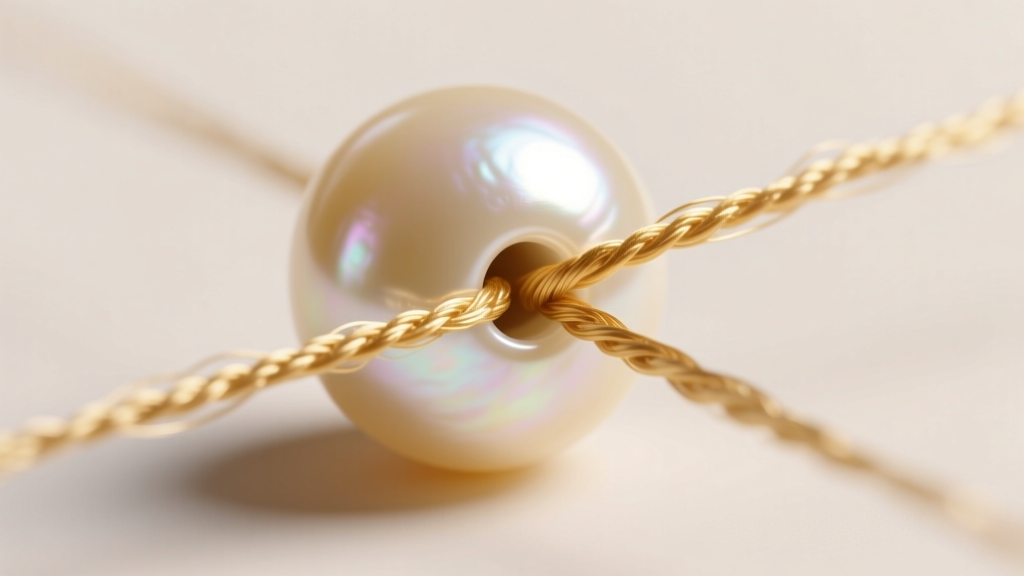
Stringing Materials: Silk, Synthetics, and Sizing
The structural integrity of your necklace relies entirely on the stringing material. While modern synthetic threads like PowerPro or WildFire offer immense tensile strength, traditionalists and high-end jewelers still rely on 100% silk thread for knotting. Silk has a natural 'grab' that keeps knots tight, and it drapes with a fluid, liquid-like elegance that synthetics cannot replicate.
The Griffin Silk Thread Standard
Griffin is the industry standard for pearl stringing. Their silk comes pre-threaded with a twisted wire needle, which saves hours of frustration. However, choosing the correct thickness (gauge) relative to your pearl's drill hole is where most beginners fail. If the thread is too thin, the knots will pull through the drill hole. If it is too thick, it will fray or snap when pulled tight.
| Pearl Diameter | Standard Drill Hole | Griffin Silk Size | Thread Diameter |
|---|---|---|---|
| 5.0 - 6.0mm | 0.5mm | Size 2 | 0.45mm |
| 6.5 - 7.5mm | 0.6mm | Size 4 | 0.55mm |
| 8.0 - 9.0mm | 0.7mm | Size 6 | 0.70mm |
| 9.5mm+ | 0.8mm | Size 8 | 0.80mm |
Always request the exact drill hole size from your pearl supplier. Standard Asian-market drilling is usually 0.5mm to 0.6mm, but custom US drilling can vary.
French Wire and Bead Tips
Never let the clasp rub directly against the silk thread or the final pearl. The friction will cut the silk within months. You must use French wire (also known as bullion or gimp), which is a microscopic, coiled metal spring. You thread the silk through the coil, creating a flexible, metal-shielded loop for the clasp jump ring. Buy French wire in 14k gold-filled or sterling silver, typically in 0.7mm or 0.9mm outer diameters.
Selecting Clasps and Findings
The clasp is both a functional necessity and a design element. When figuring out how to make pearl necklace styles that feel luxurious, avoid cheap base-metal lobster clasps. They detract from the pearls and are prone to spring failure.
- Ball Clasps (Pearl Clasps): The traditional choice. A spherical clasp that mimics a large pearl. Ensure it has a dual-safety figure-8 latch. Look for 14k solid gold or heavy vermeil options.
- Fishhook Clasps: Highly secure and low-profile. The hook slides into a decorative box and catches on an internal pin. Excellent for heavy, multi-strand pearl necklaces.
- Magnetic Clasps: Ideal for accessibility, but must be used with caution. Only buy neodymium magnetic clasps with a secondary locking mechanism (like a twist-lock or safety chain). A strong magnet alone can detach if pulled sideways.
When sourcing findings, suppliers like Rio Grande offer excellent wholesale tiers for sterling silver and gold clasps specifically engineered for pearl stringing, complete with properly sized soldered jump rings.
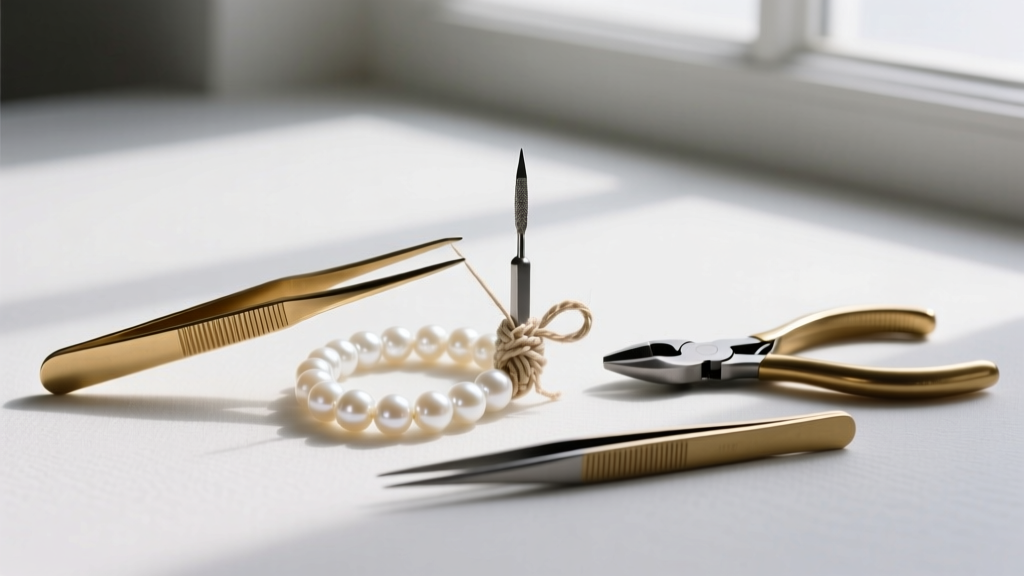
Essential Tools for the Aspiring Pearl Smith
You cannot achieve professional, tight knots with just your fingers. Over time, the oils and friction from your skin will also degrade the silk. Investing in the right tools ensures uniform knot spacing and protects your materials.
- Knotting Awl (Beading Awl): A tool with a sharp, needle-like metal tip and a comfortable wooden or rubber handle. You use the awl to push the knot down flush against the pearl before tightening. Look for an awl with a 0.6mm to 0.8mm tip diameter.
- Fine-Tipped Tweezers: Essential for manipulating the delicate French wire and guiding the pre-attached wire needle through tight drill holes. Brass-tipped tweezers are preferred as they are softer than steel and won't scratch your pearls or findings.
- Flush Cutters: Used to trim the silk thread cleanly without leaving frayed tails. A high-quality micro-flush cutter (like those from Lindstrom or Tronex) will cut the silk perfectly flush, allowing you to hide the tail inside the adjacent pearl's drill hole using a tiny drop of flexible jewelry adhesive (like G-S Hypo Cement).
- Pearl Sorting Tray: A multi-grooved velvet or flocked plastic tray. Before stringing, you must lay out your pearls to check for color consistency and graduate the sizes symmetrically from the center clasp to the ends.
Troubleshooting Common Sourcing Mistakes
'The most expensive mistake a beginner makes is buying a beautiful strand of pearls with 0.8mm drill holes, only to realize their preferred clasp design requires a heavy 1.0mm wire that won't fit. Always map your findings before you buy your pearls.'
Another frequent error is ignoring the 'matching' factor. When you buy loose pearls by weight or in bulk hanks, up to 20% of them may have slight variations in overtone or surface blemishes. Always order 15% more pearls than your calculated strand length requires. For an 18-inch necklace using 7mm pearls, you need roughly 65 pearls. Order at least 75 to ensure you can cull the mismatches and achieve a flawless final strand.
Finally, be wary of 'color-treated' or irradiated pearls sold as natural black Tahitians or deep gold South Seas. If the price seems impossibly low (e.g., a 10mm black pearl strand for $150), the pearls are likely dyed freshwater pearls. Always ask the supplier for a disclosure of any treatments, as dyed pearls can bleed onto your silk thread when exposed to moisture or skin acidity, ruining the entire piece.


